In the quiet stretches of Nangalkot Thana in Cumilla, where the landscape unfolds in gentle layers of green, and the sky feels broader than time itself, stands Khodeja Villa, a vacation home that speaks softly, but confidently, to its surroundings. Designed by Ground One, led by architect Mohammed Shahnawaz Bappy. He understands that this residence needed to balance comfort with calm, openness with privacy. Surrounded by greenery and generous setbacks, it suggested a house that would serve as a place of rest and continuity, particularly for the client’s retired father.
In an era of hurried construction and imported materials, Khodeja Villa stands out for its authenticity. The project was commissioned by Rezwanul Haque, who wanted a retreat that is simple yet evocative, modern but never detached from its roots. With a site area of 1,520 m² and a built-up area of 465 m², the design journey strikes a balance between rural practicality and architectural style. It embraces the monsoon winds that move horizontally, the bright sun that pierces through open fields, the quiet hum of rural life, and the cultural memory embedded in local building traditions.
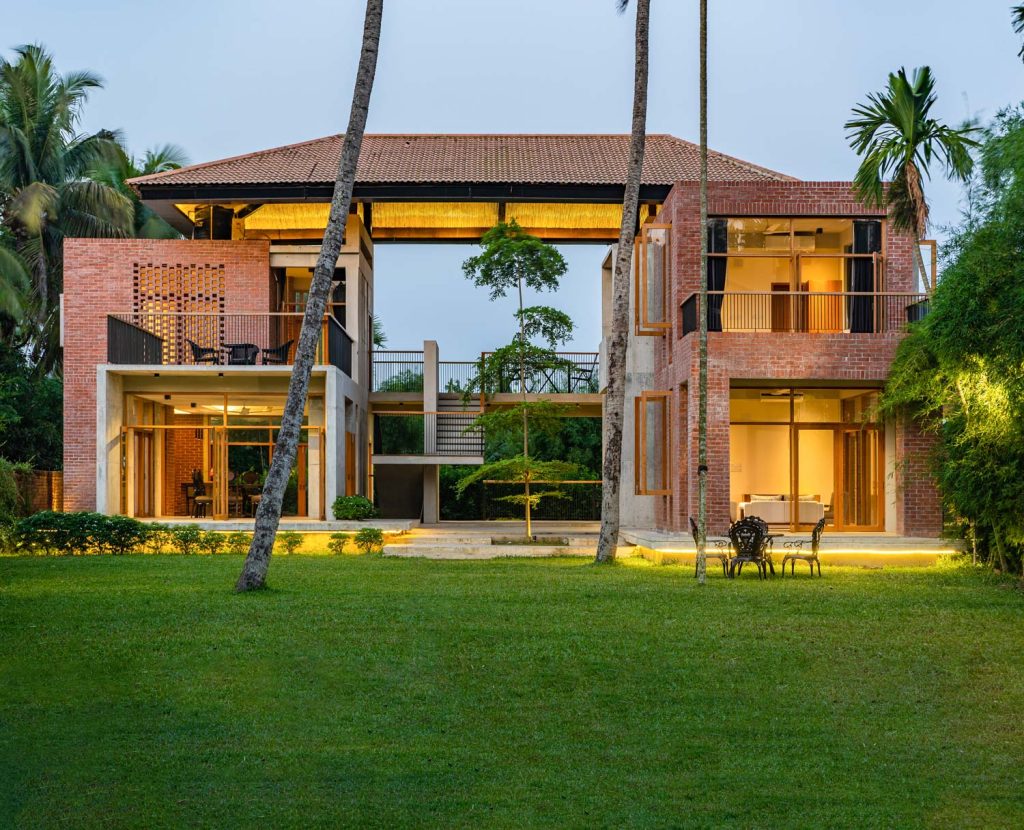
From the outset, the architect resisted imposing a foreign vocabulary on this design. The question was not how to make a bold statement, but how to let the structure settle into the earth, “as if it had always belonged there.” The answer came through a grounding palette: brick, concrete, bamboo, terracotta tiles, wood, and the familiar Chouchala-inspired roof.
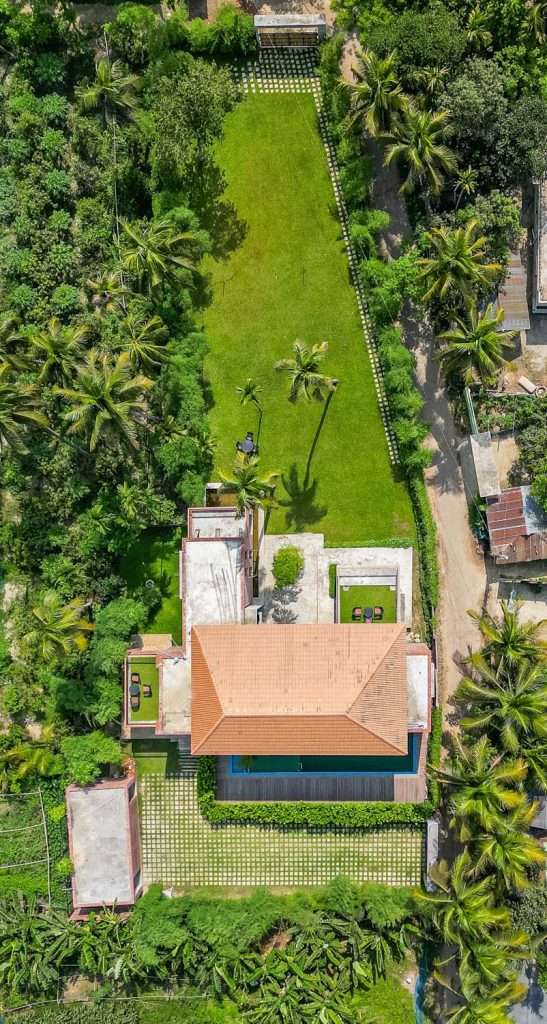
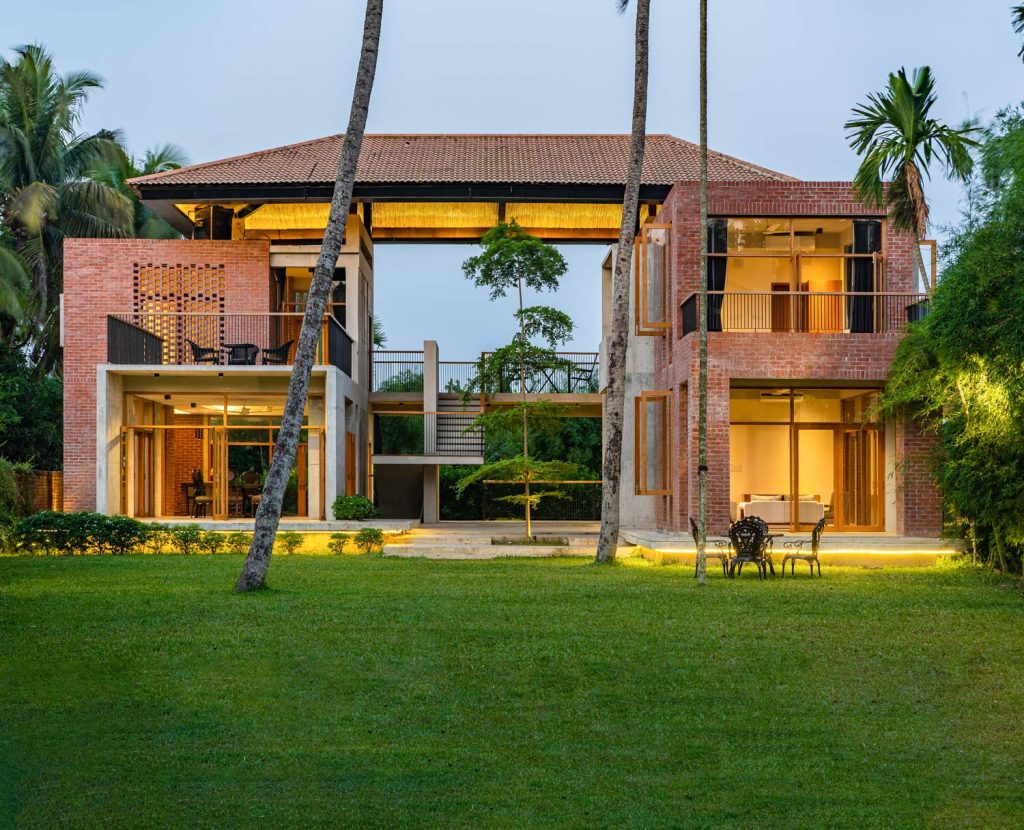
The building is divided into two elongated volumes, oriented north–south, responding to wind, sun, and open vistas. Between these two volumes lies the heart of the home, a semi-open verandah, a shaded central court reminiscent of the traditional Bengali “Uthhan. In this place, conversations spill into the dusk, where monsoon rain becomes theatre, where afternoon dust settles softly on terracotta, where the architecture pauses to inhale, where family voices echo with the same warmth as clay tablets drying in the sun.
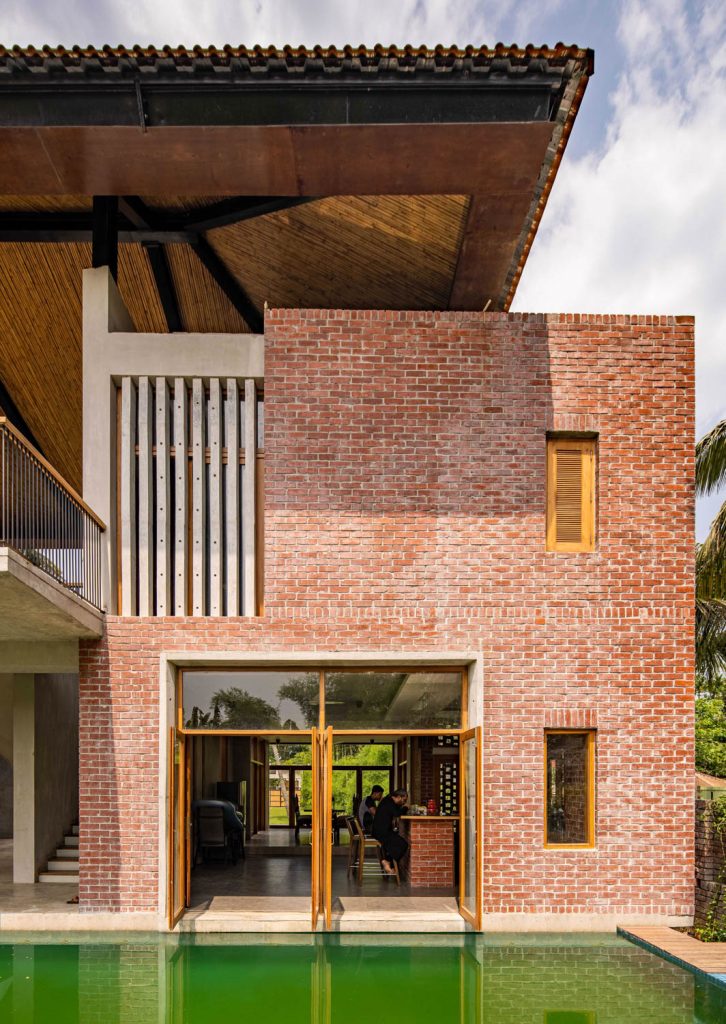
The verandah is sheltered by a traditional chouchala roof, reinterpreted with a modern, climatic logic. The roof layers with mud tiles, steel plates, and bamboo panelling offer insulation, durability, and nostalgia all at once. It is a quietly brilliant response to the region’s heavy rain and intense heat, merging vernacular wisdom with contemporary technique.
Khodeja Villa’s design plan reveals a thoughtful hierarchy of space. The architects divide the home into two clear zones; one is the Public Wing, which contains the living room, dining area and guest room. The second zone is the Private Wing. This quieter block houses bedrooms and intimate family spaces, deliberately placed away from the approach. In rural homes, such spaces were essential: they held stories, midday naps, evening tea, and the movement of life across generations.
The architects honour that heritage while shaping it into a refined contemporary gesture.
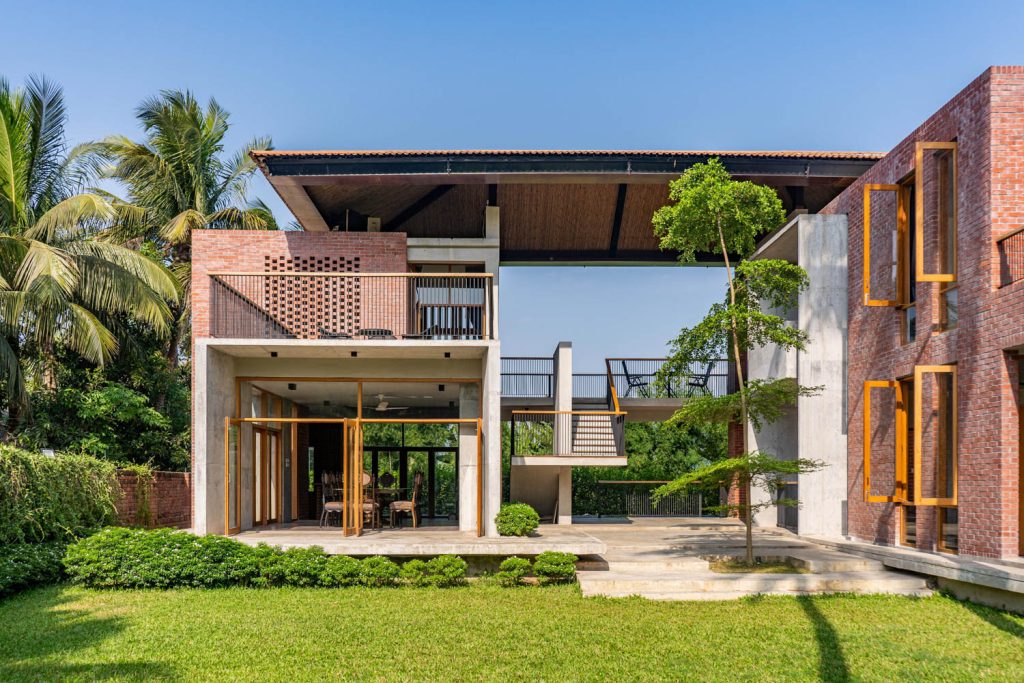
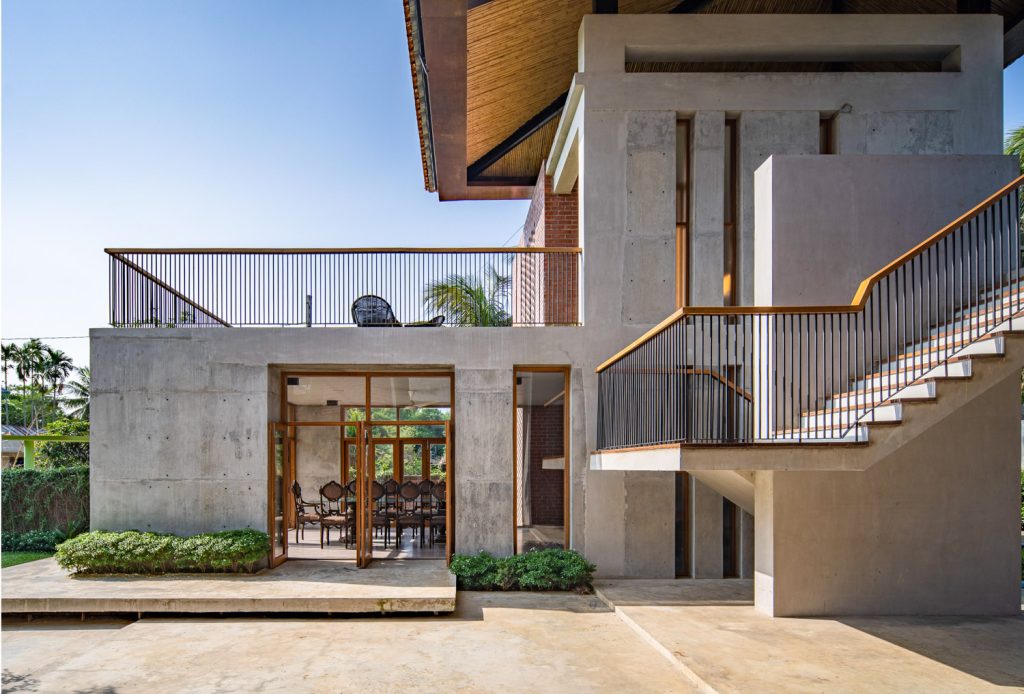
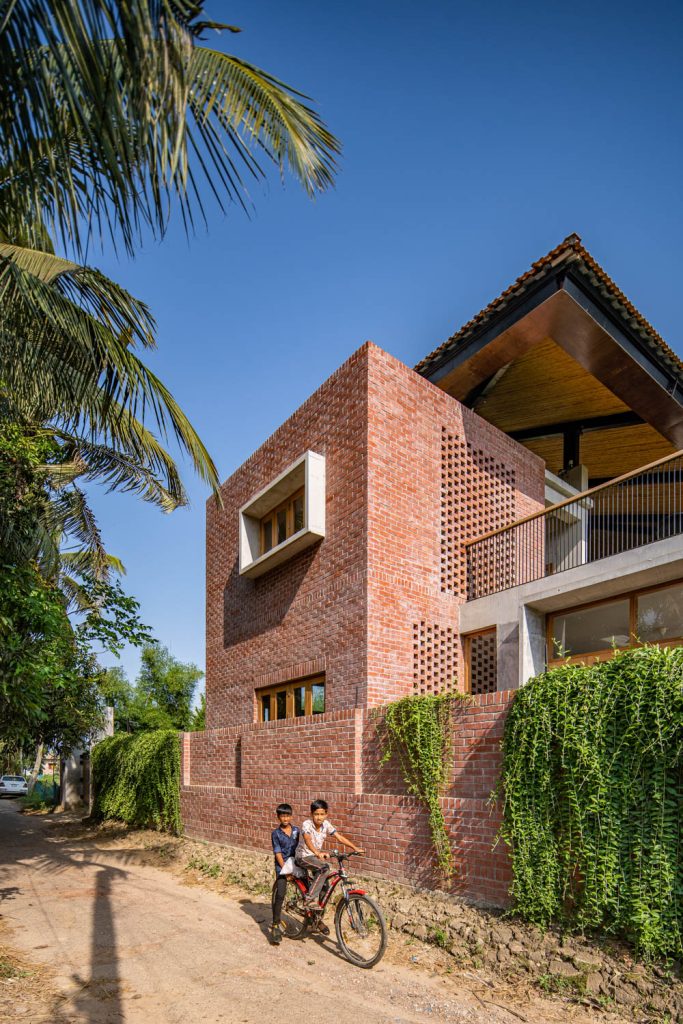
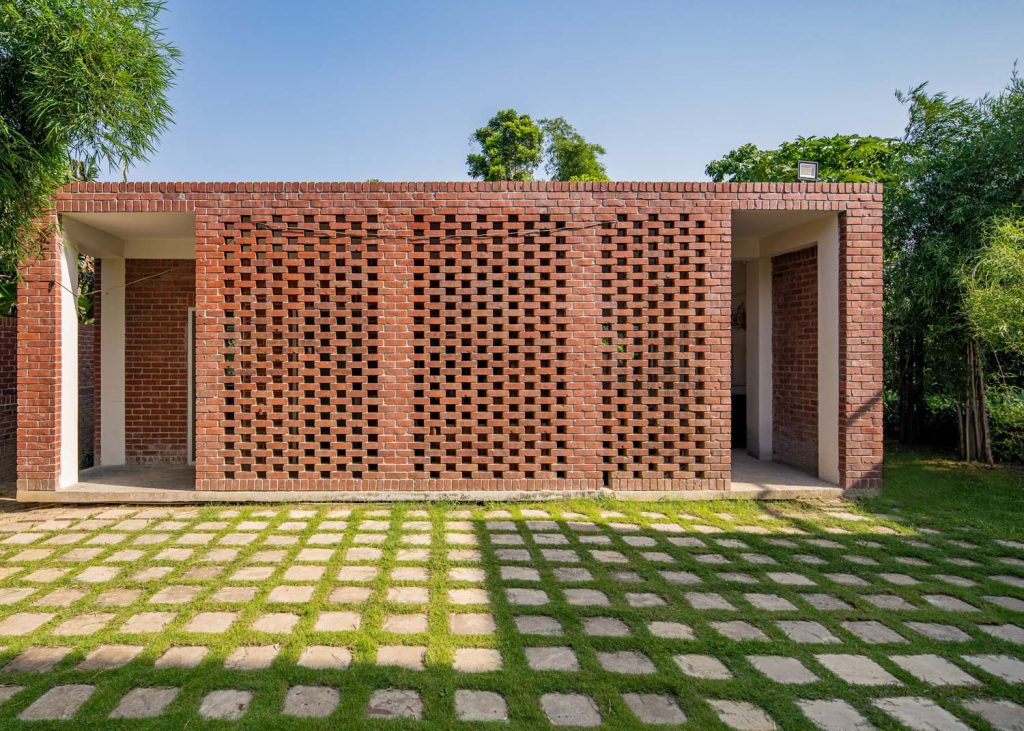
One of the project’s most compelling aspects is how local construction techniques meet modern assembly. The structure relies on conventional R.C.C., but the envelope speaks another language altogether. As the structure reveals, Mud tiles laid over metal plates create a durable, leak-proof system, ideal for monsoon climates. Bamboo panels add insulation and soften heat gain. Exposed Brick Walls stand as tactile textures, celebrating craftsmanship and reducing the need for heavy surface finishes.
The breezes of Cumilla do not arrive politely; they sweep across fields, carrying moisture, light, and the scent of rain. Rather than resisting this climate, the architects choreograph it. The shaded courtyard formed by the two building masses is a passive cooling engine. It pulls air through the home, reduces heat, and creates shifting patterns of shadow throughout the day. The outcome reflects an architectural humility, sophisticated thinking executed through regional wisdom. Climate is architecture here, not an afterthought.
Stepping into Khodeja Villa, one senses a quiet integrity in the material choices. Nothing is loud. Nothing tries too hard. Instead, the architecture relies on texture, light, proportion, and the slow unfolding of space. The exposed brick meets daylight with grainy softness. The concrete surfaces hold shadows and blend with the earth-toned palette. The wooden windows and doors recall the memory of rural homes, while their glass panels allow the landscape to breathe inward. Terracotta tiles warm the floors under bare feet, echoing the soil outside.
In rural Bangladesh, construction is not just labour; it is tradition. The masons, carpenters, and craftsmen who built Khodeja Villa brought with them generational knowledge. The exposed brick joints, the bamboo alignments, the mud tiles placed one against another, these are the fingerprints of local hands.
The design team, Imtiaz Zafree, Rajeeb Ahmed, Noman Yusuf, Dhrubo Joyti, and Asif M Noeem, worked closely to ensure that every detail was resolved with clarity and respect to rural construction culture. Architecture becomes a canvas for nature’s own performance. Even though Khodeja Villa is deeply rooted in rural vernacular, its planning is undeniably contemporary.
The architects manage to achieve a rare harmony in a home that feels both traditional and modern, both grounded and elegant.
This is the quiet intelligence of good residential architecture; it does not need to announce itself. It simply works. Khodeja Villa is not merely a weekend retreat. It is a reminder of how architecture can remain rooted without being nostalgic, modern without being indifferent. The design respects its context not through imitation but through understanding of climate, culture, materials, and human routine. In its simplicity lies its sophistication. In its rural heart lies its contemporary strength. In its verandah, courtyard, and thoughtful planning lies
a timeless truth is good architecture listens first, then speaks.
And in Khodeja Villa, what it speaks is tender, grounded, and deeply human.