
In a year marked by unrest and heartbreak, architecture searches for meaning. The proposal for the Serpentine Pavilion 2025 by Marina Tabassum Architects rises from a deeply personal and political ground. It is shaped by the memory of a mass uprising in Bangladesh, by the grief of young lives lost, and by the urgent question of how we stand together in fractured times.
The word that anchors the proposal is simple. Unity.
Across the world, 2024 has carried stories of war, protest, intolerance and fear. Differences of opinion have hardened into divisions. Cultural respect feels fragile.
In this climate, the pavilion is imagined not only as a summer structure in London but as an act of resistance.
It asks how we can sit together again. How we can listen. How we can create space for dialogue without erasing difference.
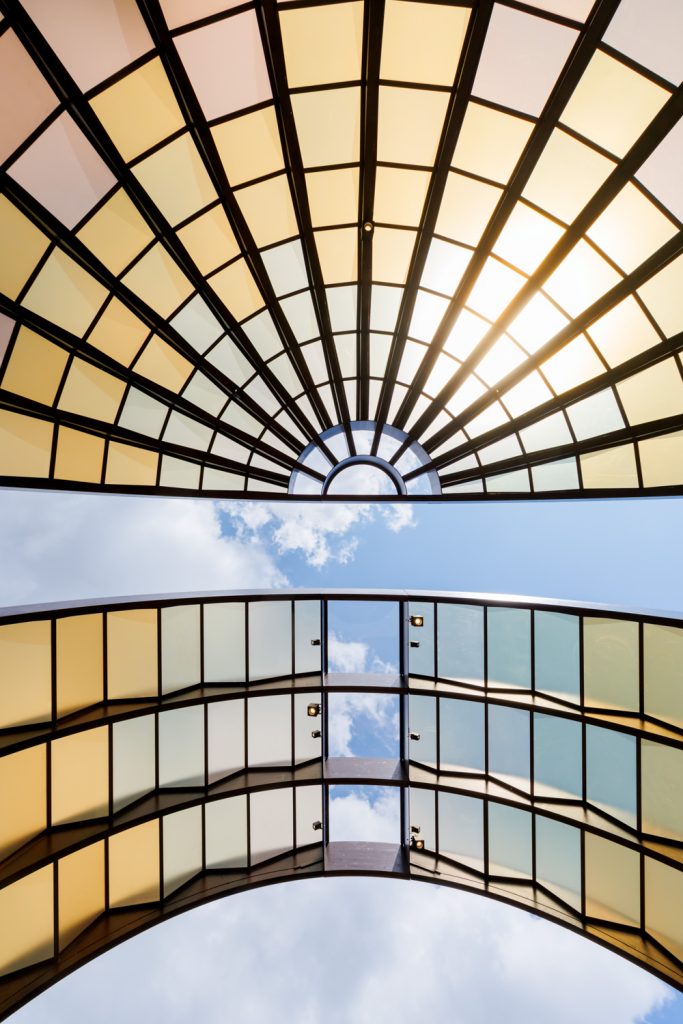
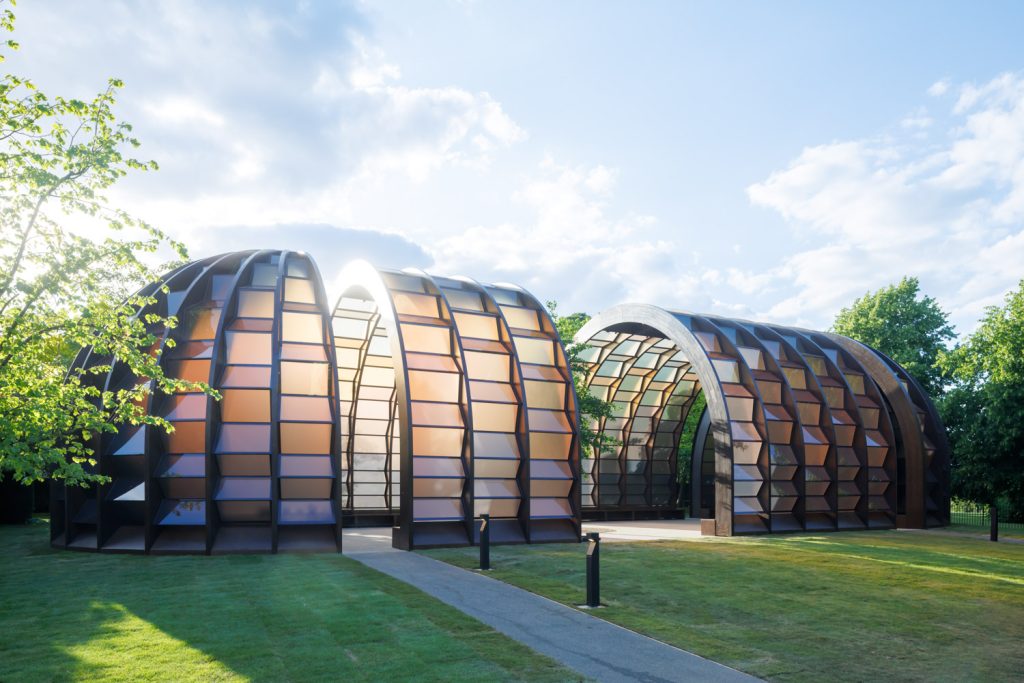
Set in Kensington Gardens, the Serpentine Pavilion has always been a seasonal ritual. Each summer, it invites the public into an architectural conversation. MTA’s proposal leans into that tradition while widening its emotional reach. The design is composed of four vaulted segments placed in a linear sequence. Together they form a capsule-like volume, elongated in the north-south direction and covering 268 square meters, including a central court.

The form is gentle and clear. Four independent structures stand side by side, visually merging into one continuous vaulted body. The shape recalls garden canopies that filter light through foliage. It also carries an echo of the shamiyana of South Asia, the temporary fabric pavilion raised for weddings, festivals and religious gatherings. In both references, the idea is gathering. A place where people come together.
The pavilion is divided into zones that encourage different kinds of connection. At one end, a café and bookshelves create a welcoming threshold. This is where strangers might share a table or browse through pages in quiet comfort. Next, an arched seating space allows for group conversations and small events. Talks, readings and discussions can unfold here, supported by the natural intimacy of the curved enclosure.
At the heart of the capsule, the structure opens to the sky. A circular water fountain marks this central court. It aligns axially with the tower of the nearby Serpentine Gallery, creating a visual dialogue between the permanent gallery and the temporary pavilion. The fountain celebrates the London summer.

It reflects light, sky and movement. It is a pause in the sequence, a shared breath between conversations.
On the opposite end, a space is dedicated to children. Here, a mini theatre and an exhibition area invite play, performance and expression. The inclusion of children is not incidental. It is a reminder that unity must be built across generations. In giving children a stage, the pavilion proposes that imagination and joy are part of civic healing.

The pavilion sits parallel to the gallery, dividing the ground into two courts. A forecourt welcomes visitors from the park. An inner court forms a more intimate zone between the pavilion and the gallery. This careful positioning creates layers of access. It allows the public to move freely while also framing moments of focus.
Material choices reinforce the themes of memory and renewal. Wood forms the main structural frame. The architects hope to use reclaimed timber, giving past material a new purpose. The vertical wooden frames connect to horizontal members, creating four rigid vaulted units that read as one.

Between these frames, a lightweight fabric façade wraps the structure in a zigzag pattern. The fabric is intended to be translucent and weather-resistant, allowing daylight to filter through and produce a soft glow. The team is exploring laminated jute as a possibility. Jute grows abundantly in the deltas of Bangladesh and is exported worldwide. By bringing this material to London, the pavilion quietly connects geographies. It carries a piece of one landscape into another.
The fabric skin, inspired by the shamiyana tradition, speaks of temporary architecture as celebration. It suggests that even short-lived structures can hold deep cultural meaning. Inside, reclaimed wooden flooring grounds the gathering spaces in warmth. Circulation paths and open areas are finished in cement, providing durability and contrast. Yet the proposal does not end with the summer.

Yet the proposal does not end with the summer.
The architects imagine a second life for the pavilion.
After its time in Kensington Gardens, it could become a library. In an era shaped by misinformation, book bans and unfiltered digital noise, a public library stands as a hopeful gesture. It is a place where knowledge is shared, not shouted. Where curiosity replaces fear. Where community is built through learning.

This idea of the afterlife extends the concept of unity beyond a single season. The pavilion would not simply disappear. It would transform. Its arches would shelter shelves. Its gathering spaces would become reading rooms. Its fabric skin would continue to filter light onto pages and people. The proposal for the Serpentine Pavilion 2025 is not loud. It does not rely on spectacle. Instead, it offers a calm and open form, ready to be filled with voices. It draws from Bangladesh and speaks to London. It remembers loss and proposes togetherness.

Under its vaulted canopy, unity is not a slogan. It is an action.