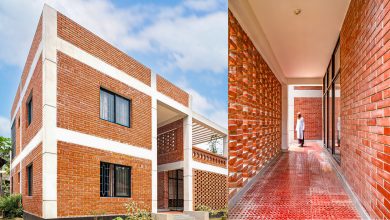
Along the sunlit shores of Cox’s Bazaar, home to the world’s longest sea beach, rises a striking single-family residence known as Jol Angina. Designed by the Bangladesh-based firm 3 Points Consultant, with Tapon Kanti Sarker as the principal architect and Tanveer Hasan as the associate architect, this home is a celebration of water, light, and space. At the heart of the house is its most captivating feature, the water court, inspired by the words of Loren Eisley: “If there is magic on the planet, it is contained in water.” Here, water is not just decorative; it is the soul of the home.

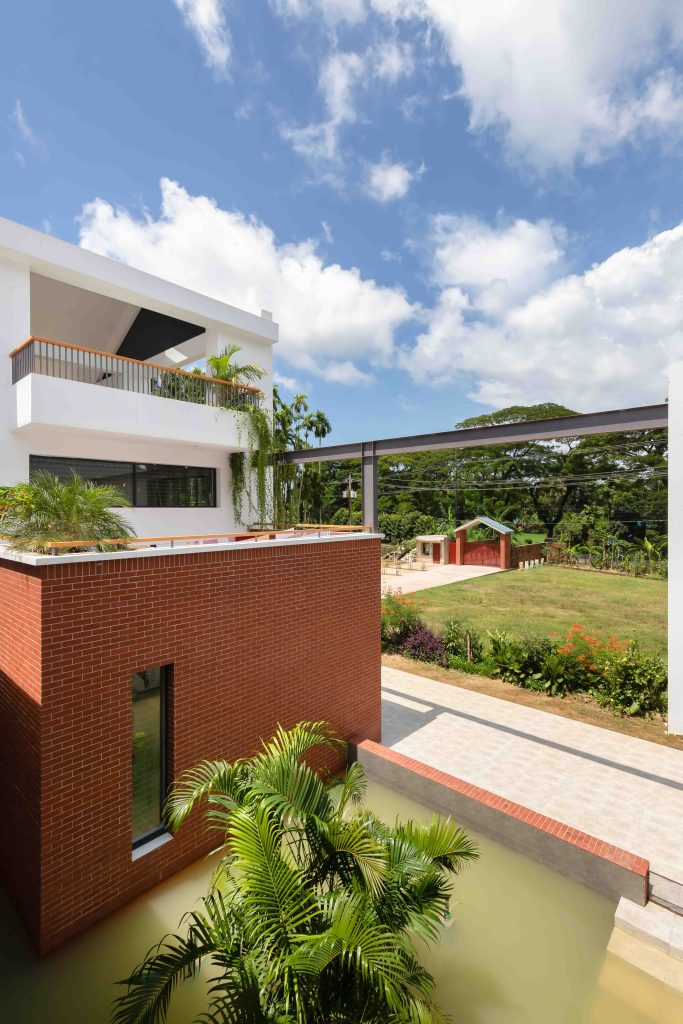
The concept behind Jol Angina is simple yet profound. The water court serves as the center, around which the entire house is organized. It symbolizes calm, connection, and continuity. “We wanted the house to revolve around this central water body, not just sit beside it,” explains Hasan. The result is a duplex that feels both open and intimate, where every room enjoys a visual or physical link to the water, nature, and sunlight.
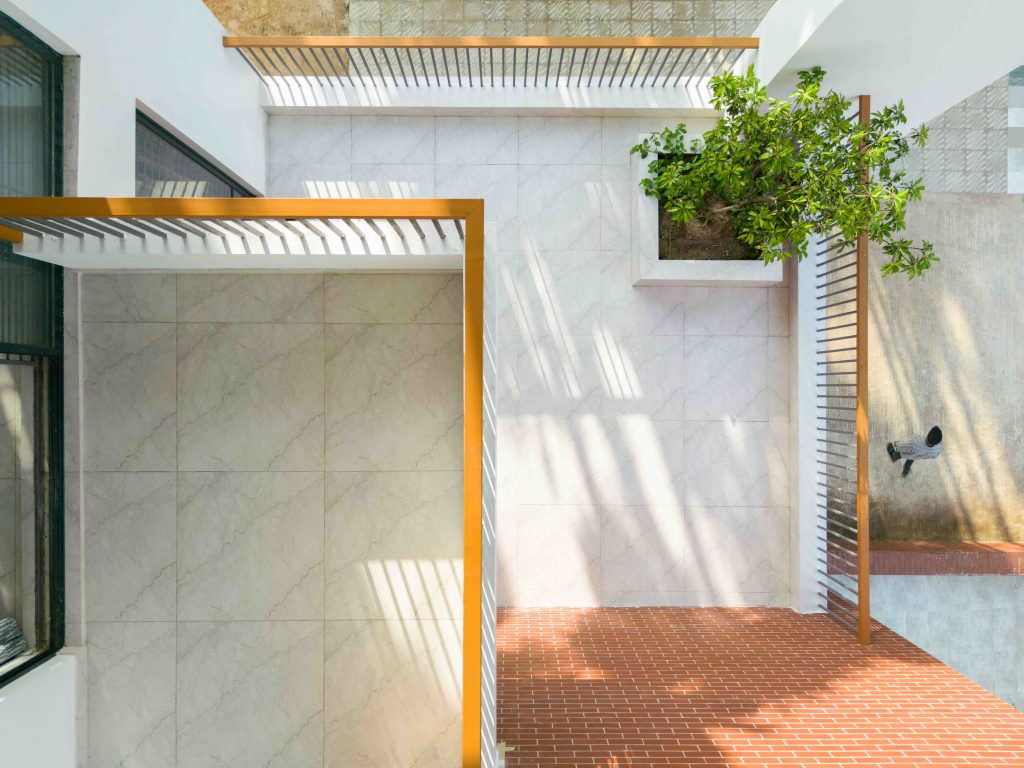
The house spans three levels, covering a total of 9,880 square feet, including the water court. The ground level extends over 4,200 square feet, the first floor 3,900, and the second floor 1,780. This vertical arrangement allows for a clear separation between public and private spaces while maintaining fluidity. The ground floor hosts living zones and dining areas with double-height spaces, creating a sense of openness. Above, bedrooms and private zones enjoy seclusion, yet remain visually connected through voids and terraces overlooking the water court.
The coastal location of Jol Angina played a decisive role in shaping every aspect of its design. Cox’s Bazaar, with its tropical climate, salty sea air, and close proximity to the Bay of Bengal, inspired a residence that not only responds to the environment but celebrates it. The house is carefully oriented along a north–south axis to capture the steady coastal breezes while managing the intensity of tropical sunlight in a natural way. To further enhance comfort, shaded verandas, ventilated roofs, and open courtyards are strategically placed throughout the home, helping to maintain a cool and pleasant interior environment. The water court, positioned at the heart of the residence, contributes to passive cooling by gently releasing moisture into the surrounding air, creating a soothing and refreshing atmosphere. “We wanted the house to breathe with the climate, not fight it,” explains Tapon Kanti Sarker, emphasizing the project’s harmonious approach to its coastal context.
Inside Jol Angina, the spatial planning carefully balances openness and privacy, ensuring that each area of the home feels thoughtfully designed and comfortable. The double-height living and dining areas create a sense of visual drama, drawing the eye upward and filling the spaces with natural light, while the private bedrooms are tucked away on the upper levels to provide quiet retreats for family members. Semi-open areas surrounding the water court are intentionally designed to be flexible, serving as spaces for family gatherings, meditation, or relaxed play. Layered zoning further enhances the home’s functionality, with public zones primarily located on the lower level and private zones positioned above. Terraces, voids, and visual connections link the different areas, allowing a seamless flow between spaces while maintaining a strong sense of unity throughout the house.

Materiality was carefully chosen to handle Cox’s Bazaar’s coastal climate while creating a warm, natural atmosphere. Semi-polished floor tiles define indoor spaces, while paved tiles enhance outdoor areas. Ceilings are left natural, walls are finished with plaster and ceramic tiles, and timber accents bring warmth. Moisture-resistant finishes, treated wood, and anti-salt chemicals protect against humidity and corrosion. Locally sourced materials such as bricks, timber, and metals reduce environmental impact and ensure resilience. “We wanted textures that feel real, tactile, and enduring,” Hasan notes. Natural light interacting with these materials adds rhythm and depth, changing the atmosphere from morning to evening.

Construction posed unique challenges. Large openings and double-height volumes required careful structural planning to avoid heavy columns. Waterproofing and drainage systems were crucial for monsoon resilience. Built-in furniture and services were integrated early in the design, maintaining clean lines and spatial clarity. Collaboration with local contractors on timber and roof work ensured craftsmanship that contributes both beauty and authenticity.
Lighting in Jol Angina complements its design. Large picture windows bring in daylight, reflected by the water court, reducing reliance on artificial light. At night, warm indirect lighting highlights textures, while pendant lights in double-height areas and subtle underwater lights in the water court create a serene ambiance. “Lighting was about highlighting moments, not just illuminating rooms,” explains Sarker. Acoustic comfort and privacy were also priorities. Solid partitions and slabs separate floors, while green buffer zones and the water court distance the house from external noise. Combined with open-air ventilation, shaded terraces, and cross-ventilation strategies, the result is a comfortable interior that remains connected to nature without compromising privacy.

At its core, Jol Angina is a home built for a single family seeking serenity and closeness to nature. Open social areas encourage togetherness, while private zones provide retreat. The water court is central not just in plan but in experience, a space where the family can gather, reflect, or simply enjoy the rhythm of water. “The water court is the living, sensory heart of the house,” says Hasan.
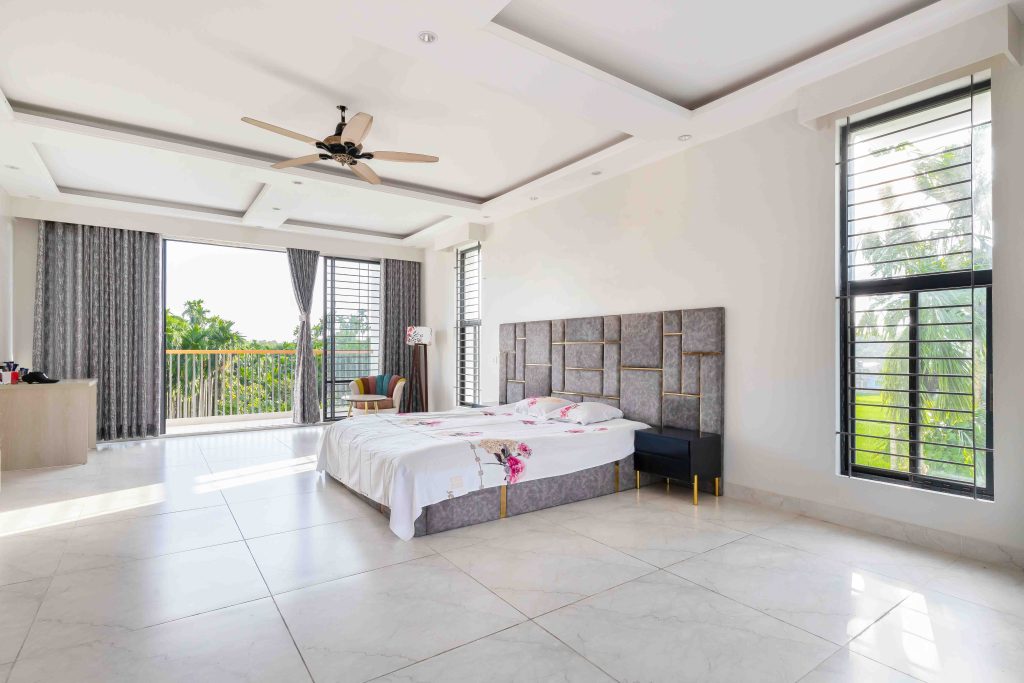
The result is a serene, contemporary residence that celebrates simplicity and nature. Every detail, from materials to spatial planning, lighting to ventilation, reinforces the feeling of calm. The home responds to its environment, allowing the family to experience light, water, and air in harmony. Looking back, Sarker reflects, “If we were to reinterpret the design today, we would explore solar integration and advanced sustainable materials, but the essence would remain the same, a home shaped by water, light, and tranquility.”

Jol Angina stands as an example of thoughtful design that merges aesthetics, function, and environment. The house demonstrates that even in a modern duplex, architecture can evoke a poetic connection to nature, offering a lifestyle that is calm, flexible, and deeply human. It is a home where water shapes life, light brings it alive, and every corner feels carefully considered yet effortlessly natural.