Afshana Akhter Mim does not rush into art. She arrives quietly, carrying stories shaped by time, touch, and long observation. Her practice grows from a childhood spent watching people moving through daily rituals, unspoken emotions passing between gestures, small moments that often go unnoticed. These early impressions stay with her and later become the emotional backbone of her work.
One of her earliest encounters with art comes from the television program Moner Kotha by Mostofa Monwar. Its reflective pace and philosophical depth introduce her to art as a space for inner dialogue rather than display. It is here that she first understands that images can hold silence, questions, and feelings. The decision to pursue art takes shape gradually and becomes concrete during her academic years at the University of Rajshahi, Charukala, where she completes both her Bachelor’s and Master’s of Fine Arts.
As a student, Mim experiments freely. Materials shift, ideas wander, and curiosity leads the way. Over time, her practice slows down and turns inward. Craft becomes central not as a technique alone, but as a way of thinking. She learns patience through making, understanding that ideas need time to settle and reveal themselves. Skill matters, but consistency, attention, and trust in the process matter more.
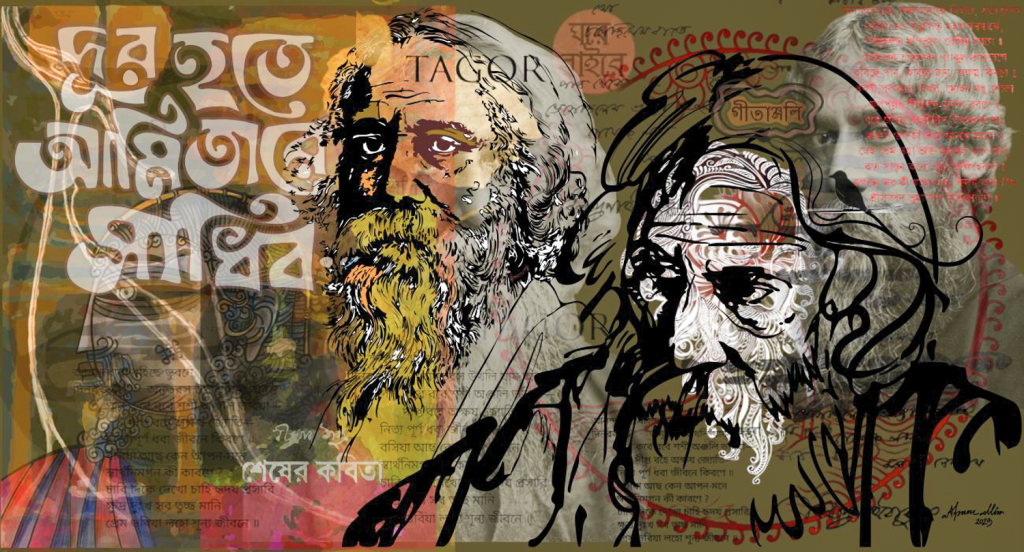
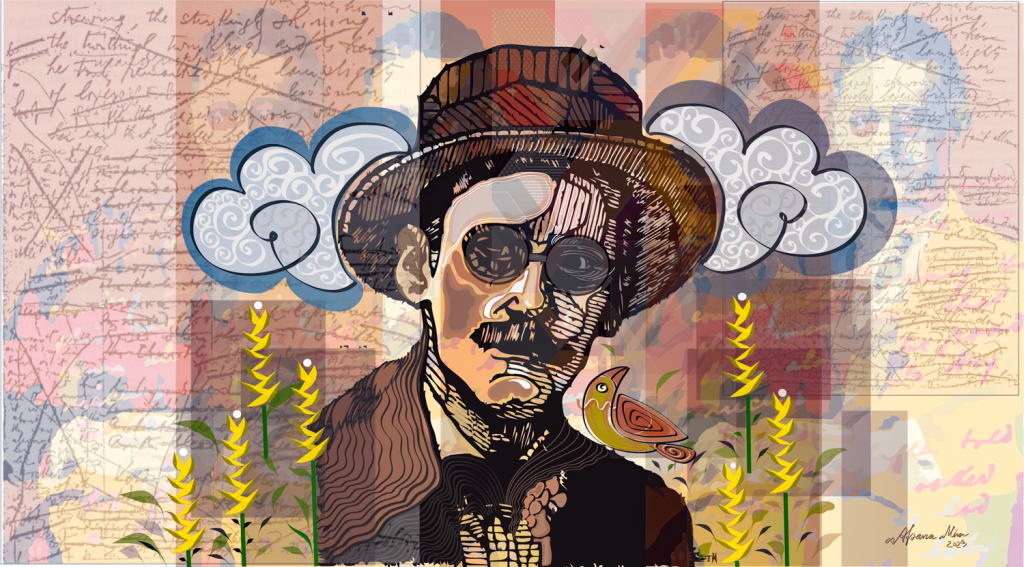
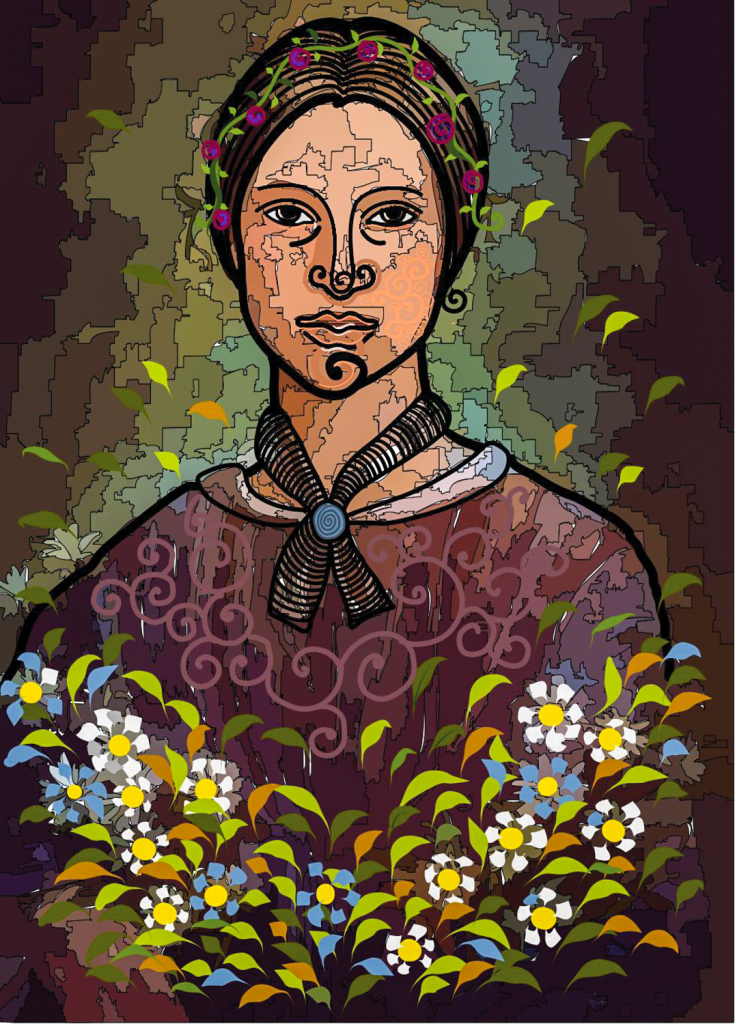
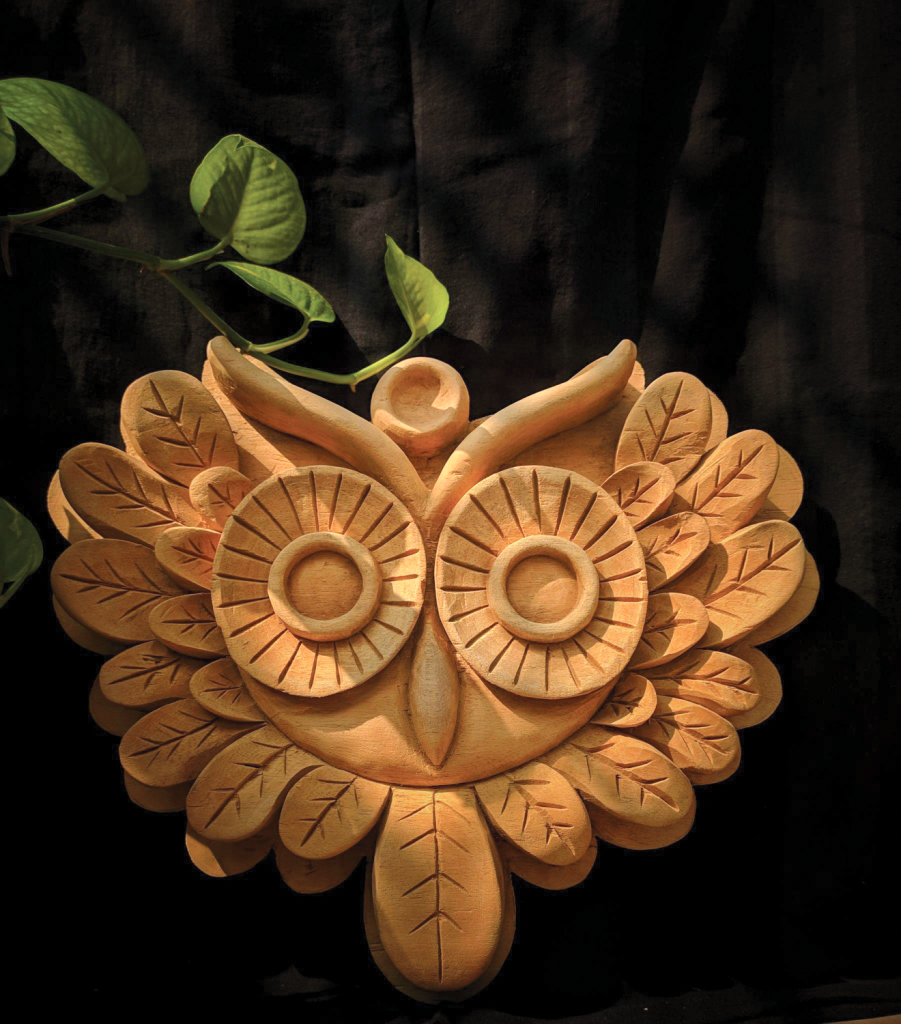
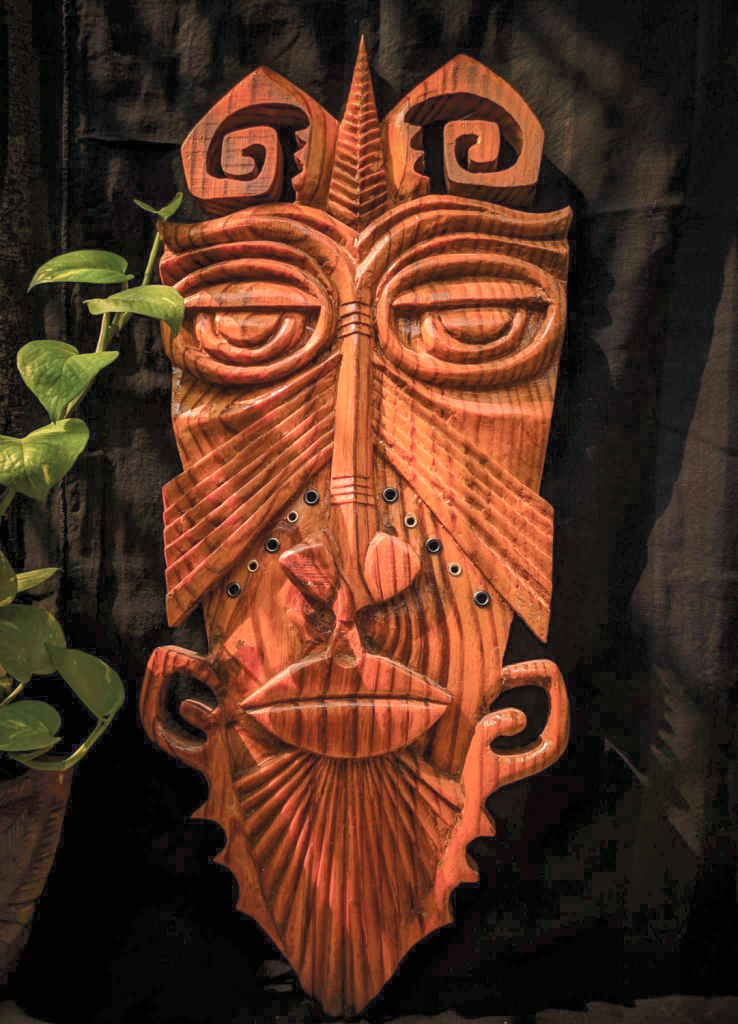
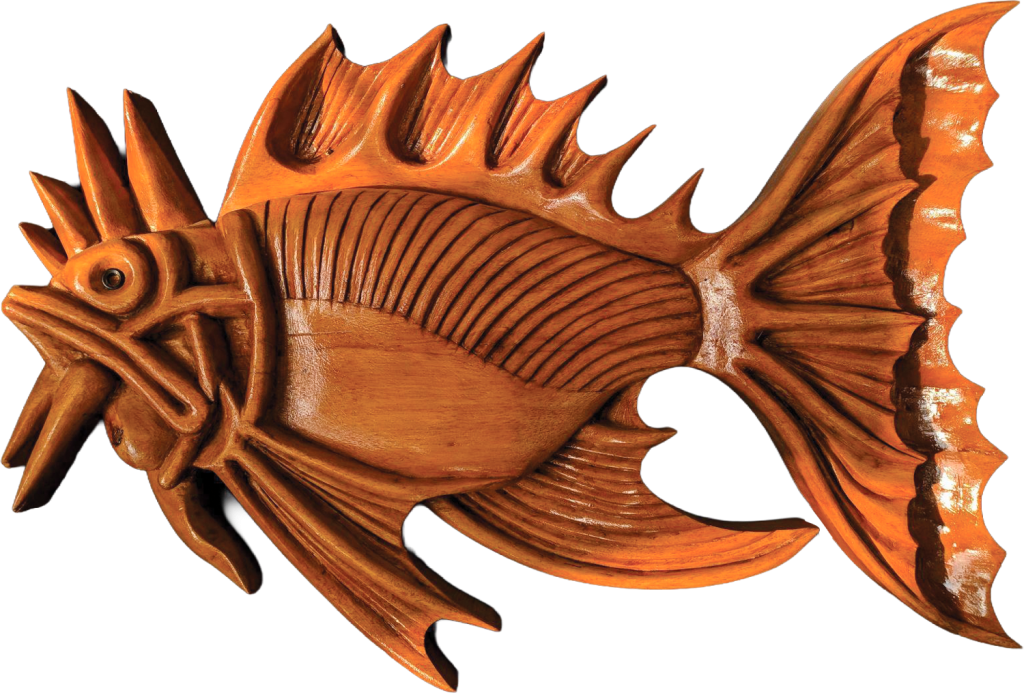
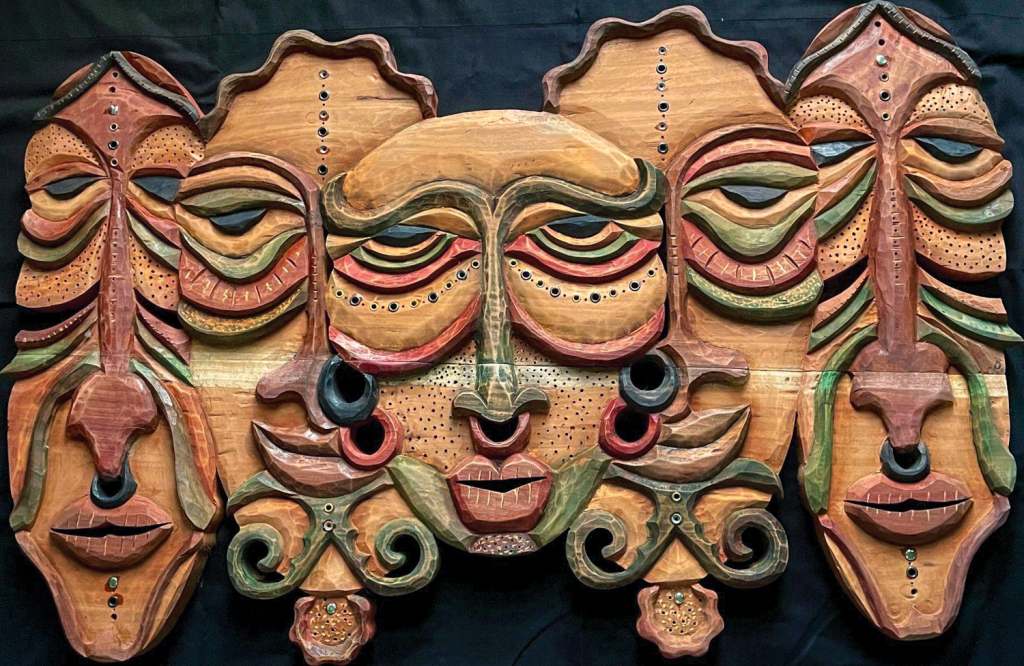
Her practice spans wood carving, tapestry, screen printing, digital illustration, poster design, and watercolour. Among these, wood remains her most trusted medium. There is something uncompromising about it. Wood does not allow hesitation. Every cut stays. That permanence shapes her relationship with the material. Working with wood demands care, restraint, and respect, qualities that echo the emotional weight of her narratives.
“Wood forces me to slow down. It creates a direct connection between my hands and what I’m feeling. Every mistake stays, and that honesty matters to me.” Mim says.
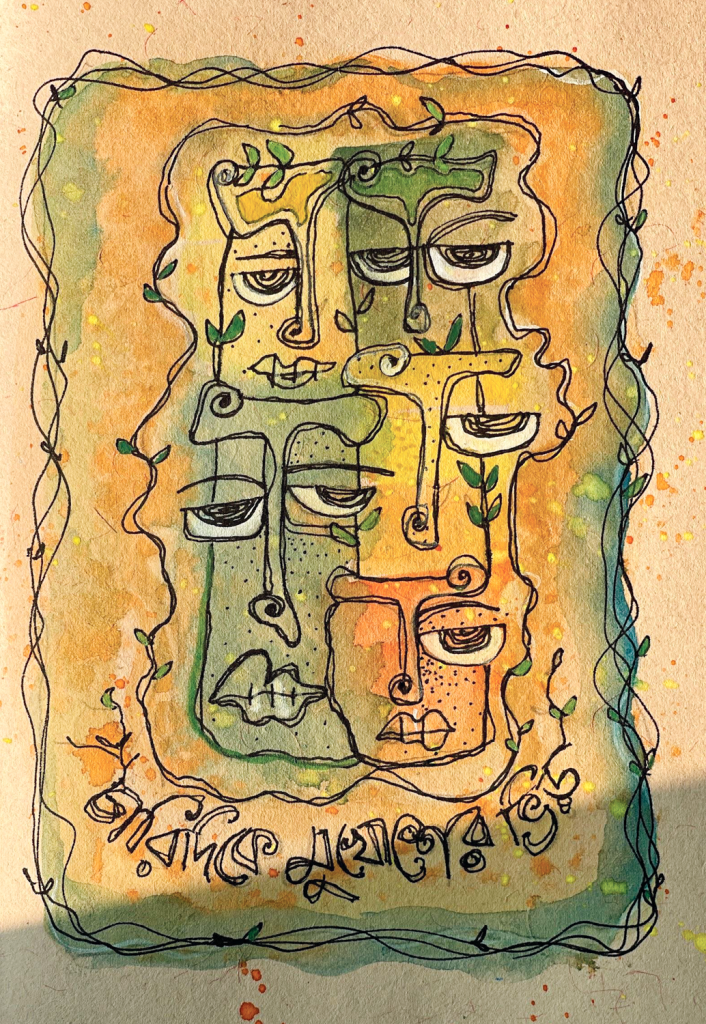
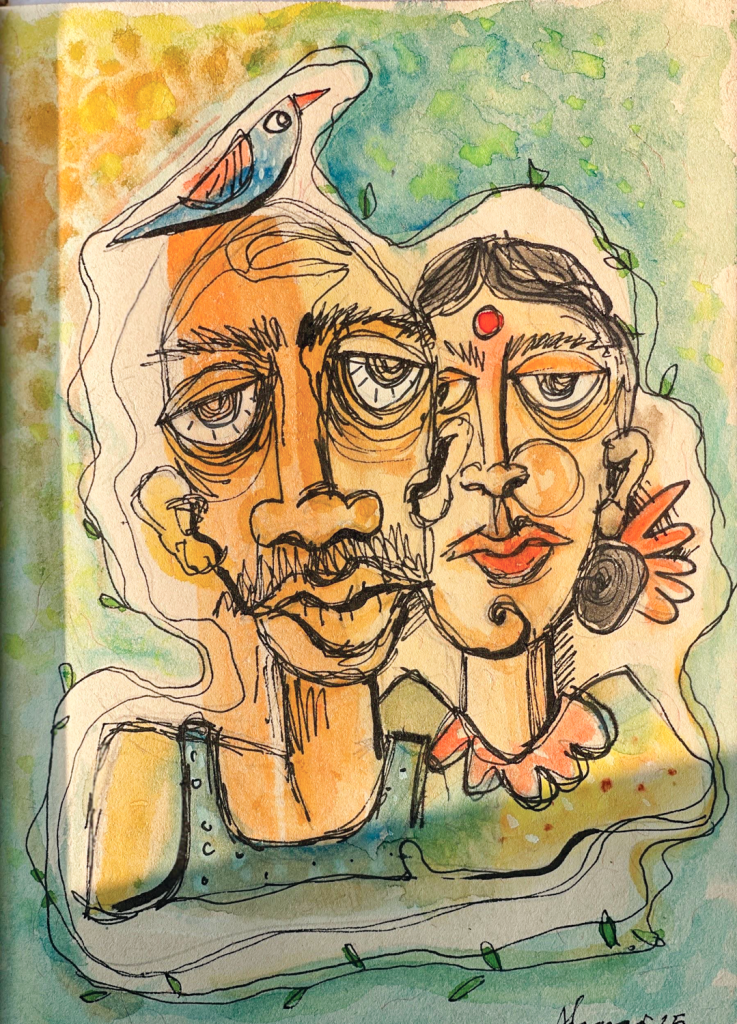
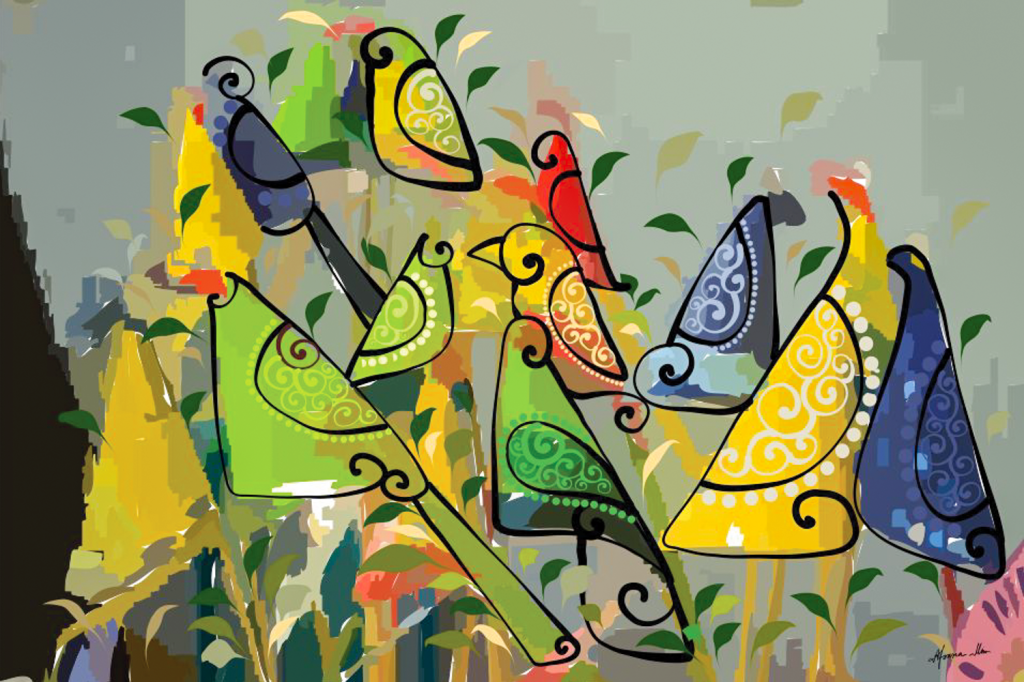
Visually, her works carry echoes of Oriental and South Asian traditions. Stylised human figures, symbolic animals, and folk references appear throughout her work as ornament. These elements are carriers of memory and emotion. Hindu mythology enters her practice in this same way. These ancient stories, she believes, remain relevant because they mirror contemporary emotional realities.
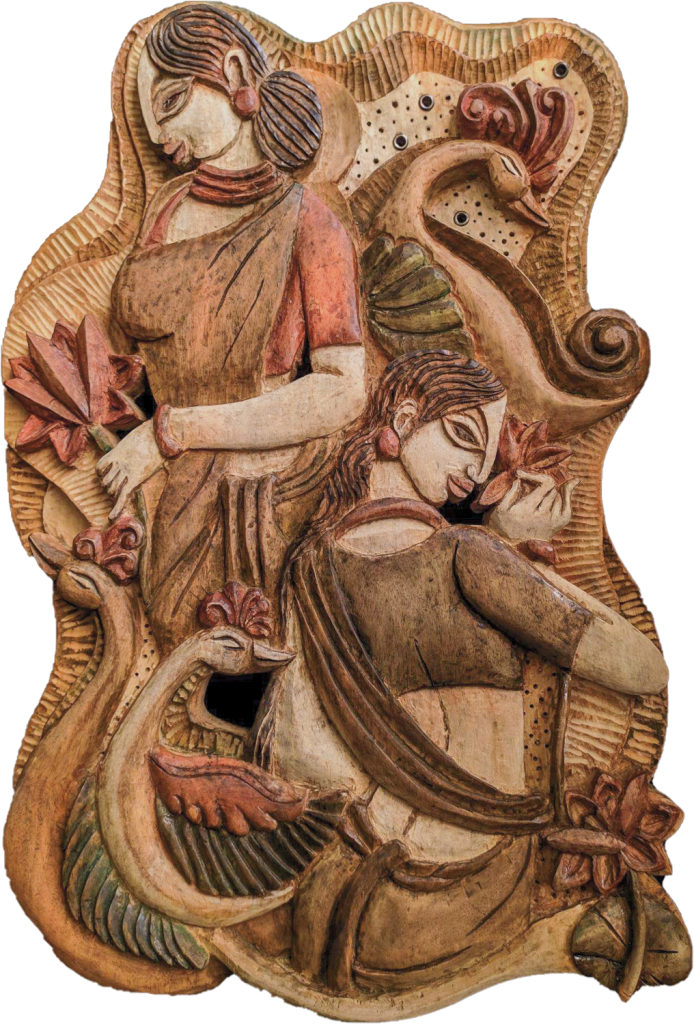
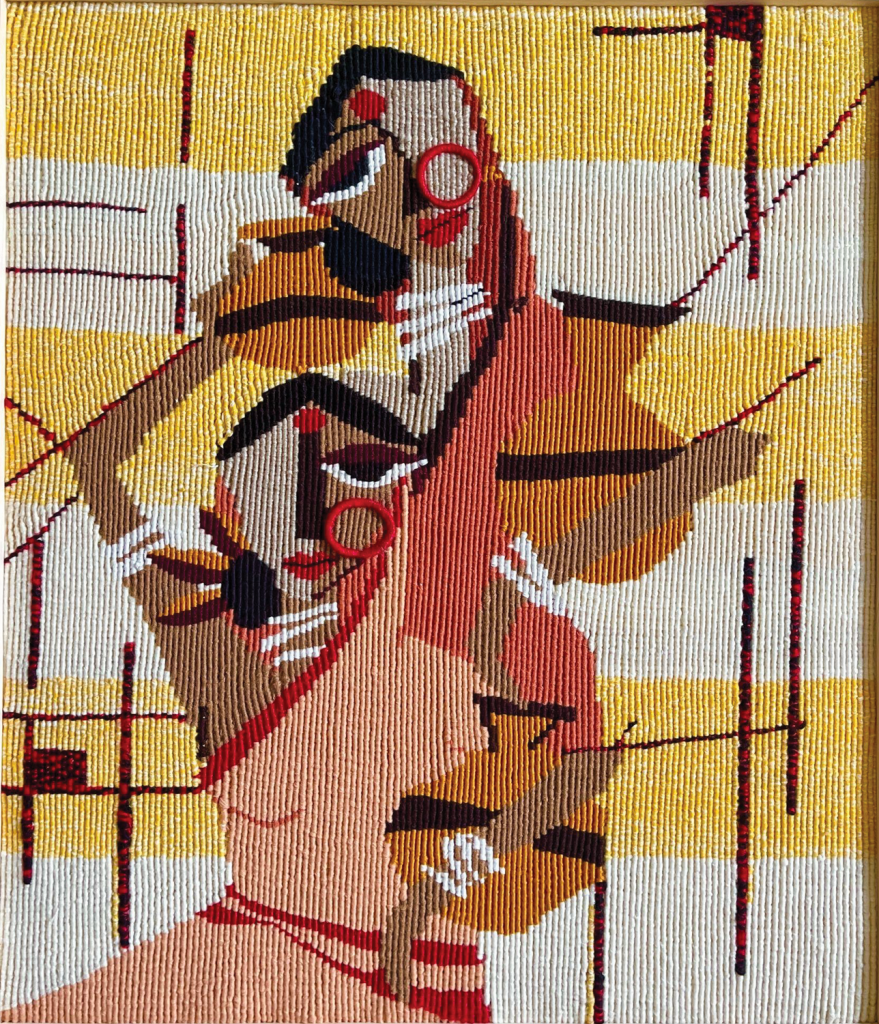
One such work, Mitali (Alliance), reflects this approach with quiet clarity. The piece portrays two women, inspired by Mim’s own childhood friendships and the mythological figures Anusuya and Priyamvada from Shakuntala. The work speaks of companionship, how friendships formed early in life offer protection, care, and continuity. The figures in Mitali do not demand attention; they hold it gently.
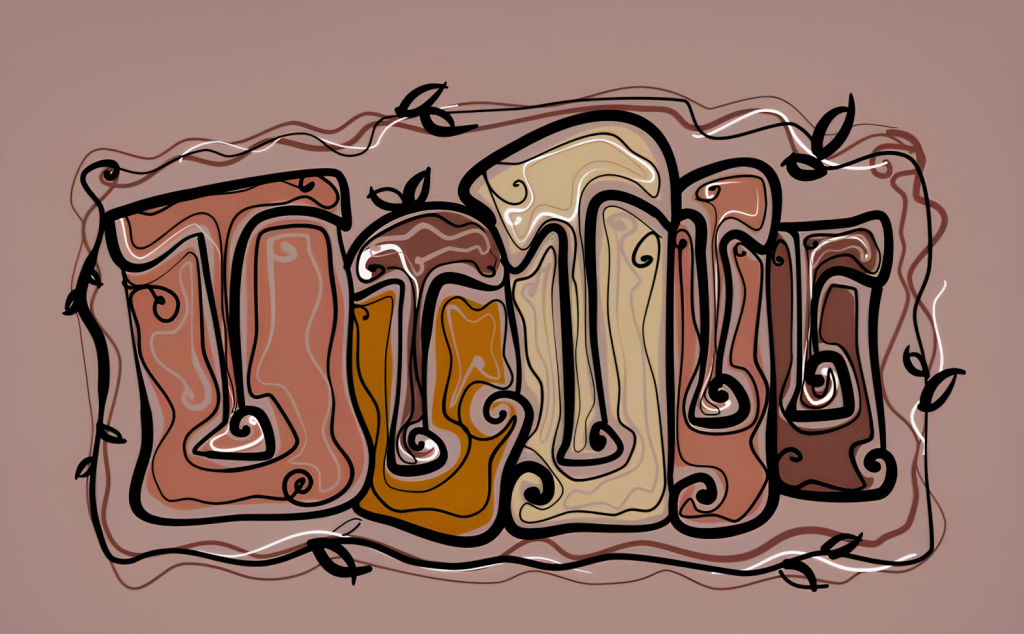
Transformation is another recurring concern in her practice. In the Metamorphosis series, Mim turns her attention inward, exploring how the human psyche shifts through experience. Pain, hope, loss, and growth are not presented dramatically. Instead, they appear through subtle changes in form, texture, and posture. These works suggest that becoming is often silent, that the most significant changes happen gradually, without announcement. Alongside wood, Mim works with mixed media and textile-based forms, particularly tapestry. Here, the challenge lies in balancing the different materials to coexist without overpowering one another.
In her textile-based works such as Whispers of Dusk, Dreams Beneath, and Weight of Domesticity, the thread becomes a quiet narrator, carrying emotional weight through repetition and labour.
Personal memory runs through her entire body of work. Childhood observation, friendship, emotional endurance, and internal shifts surface repeatedly, often through symbolic imagery. Yet her work never feels closed or self-contained. There is space for the viewer to enter, to find something familiar within the narrative.
“I want people to recognise their own emotions in my work,” she says. “Art should feel shared, not distant.”
Mim’s participation in exhibitions such as the 1st International Virtual Art Exhibition by ZOBRA the Art Village (2020), the 24th National Art Exhibition (2021), and the 10th Oriental Painting Exhibition (2025) has strengthened her confidence. International exposure, in particular, affirms the universality of her visual language and the emotional accessibility of her themes, confirming that quiet work can travel far.
Alongside her studio practice, she currently works as a Designer at Aarong. Her engagement with craft, heritage, and contemporary design informs her artistic thinking. Commercial design teaches her discipline and clarity, while her personal work offers emotional freedom. Rather than competing, the two practices remain in conversation.
Challenges persist in a limited workspace, material access, and moments of creative uncertainty, but persistence defines her approach. When she encounters creative blocks, she turns to reading as a way to reflect and recalibrate. Looking ahead, Mim hopes to create a large-scale, immersive installation that brings together wood carving, textile, and narrative space, allowing viewers to walk through stories shaped by memory, mythology, and transformation.
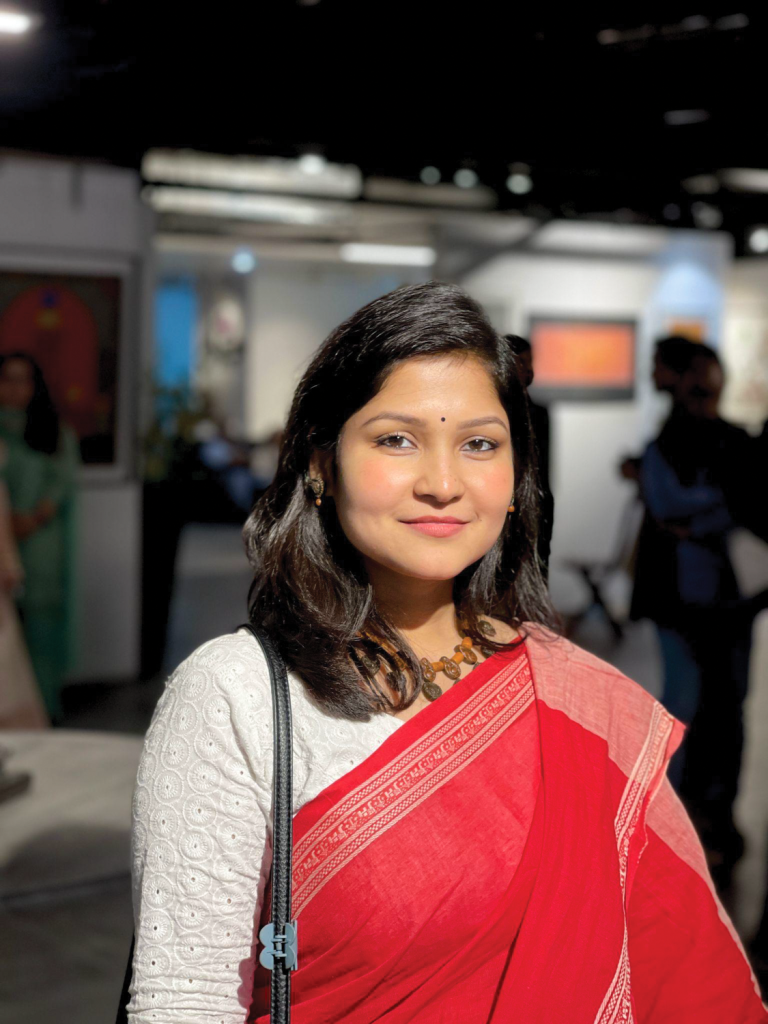
Afshana Akhter Mim’s work does not ask for attention. It waits. In the grain of wood, the tension of thread, and the stillness of form, her art holds space for reflection, quietly reminding us that meaning often lives in what we choose to observe and remember.