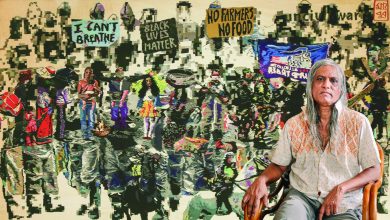
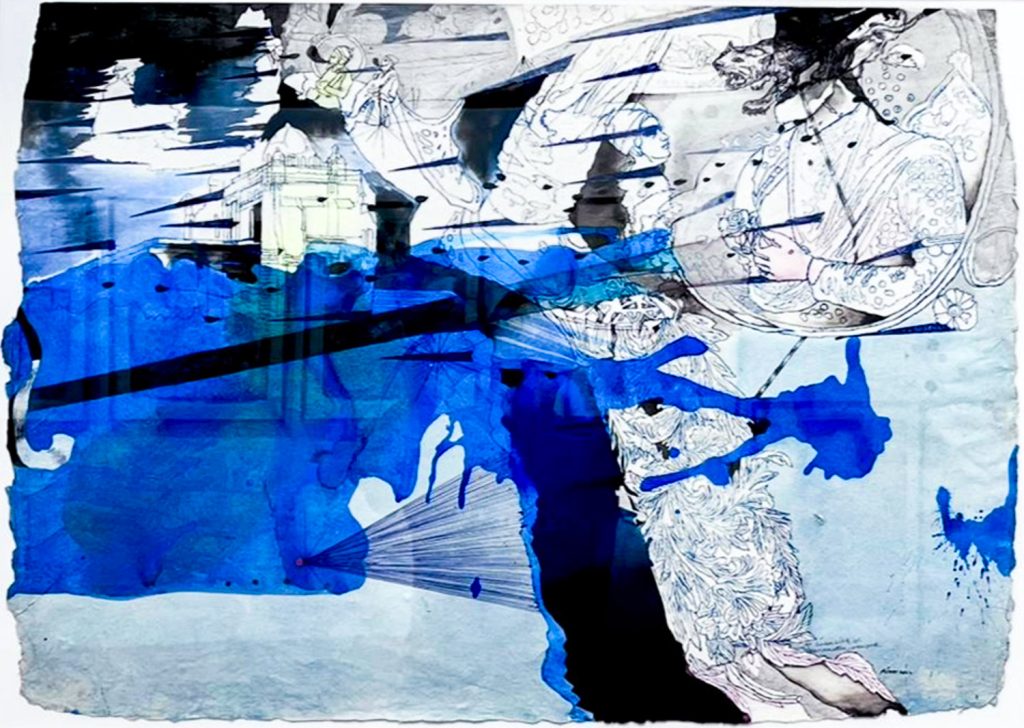
New York-based Artist Firoz Mahmud’s work begins where certainty ends. On uneven sheets of handmade paper, figures emerge, fade, and return much like the histories he carries with him. In southern Bangladesh, where rivers swell, stability is temporary. This awareness of fragile ground and shifting lives runs quietly through his work today. Horses, skeletons, scripts, animals, and architectural fragments gather on the page, not to illustrate history, but to question it. Who arrived? Who remained? Who was erased? For Firoz, drawing is not an act of decoration; it is a way of staying with these questions, patiently.
“History is never finished; it keeps leaking into the present,” he reflects.

Born in 1974 in Khulna, a southern district shaped by rivers, cyclones, and the vast presence of the Sundarbans, Firoz grew up surrounded by the movement of water, people, and stories. Human life means adapting, migrating, and surviving. These early realities quietly embed themselves into his consciousness, long before they become the conceptual backbone of his art.
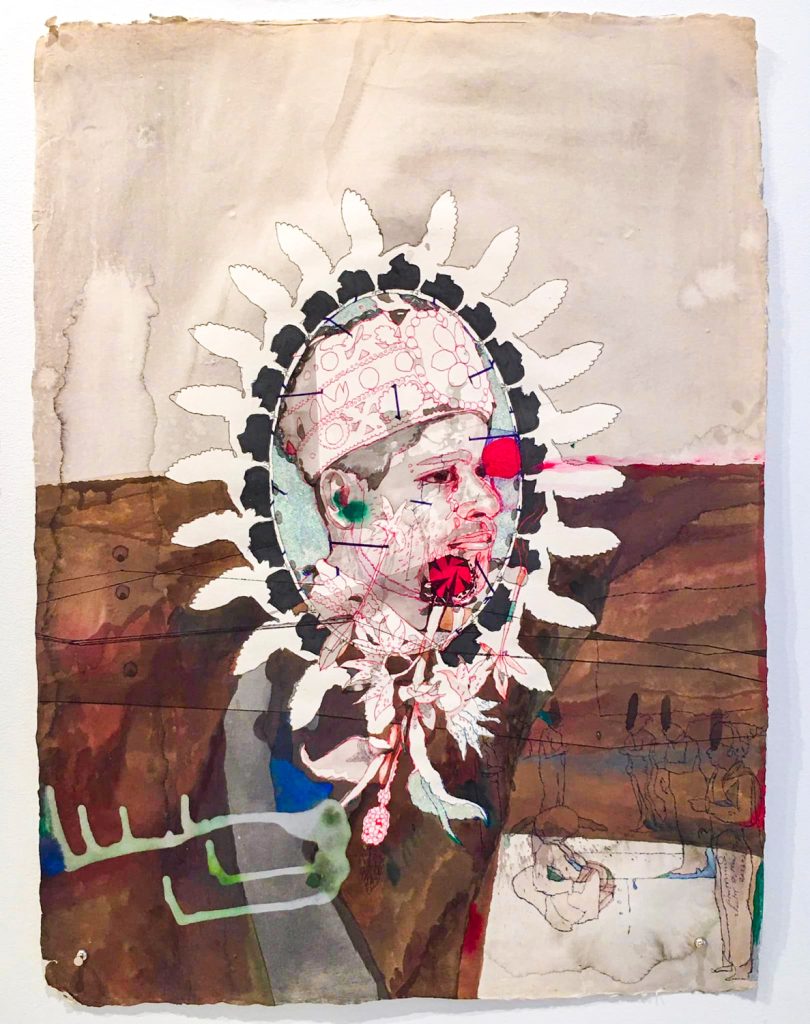
Firoz’s intellectual foundation is shaped at home. His father, Md. Abdul Mazed was an assistant headmaster, lawyer, poet, historian, and social reformer who created an environment saturated with books and dialogue. From his grandfather and father, Firoz absorbs stories of Bengal’s past as pre-colonial pride, colonial disruption, and post-independence uncertainty. Geography (Vugol) and history (Itihash) fascinate him more than mathematics. These early influences later resurface as motifs, forts, palaces, traders, flora, animals, and invaders layered across his artworks like palimpsests.
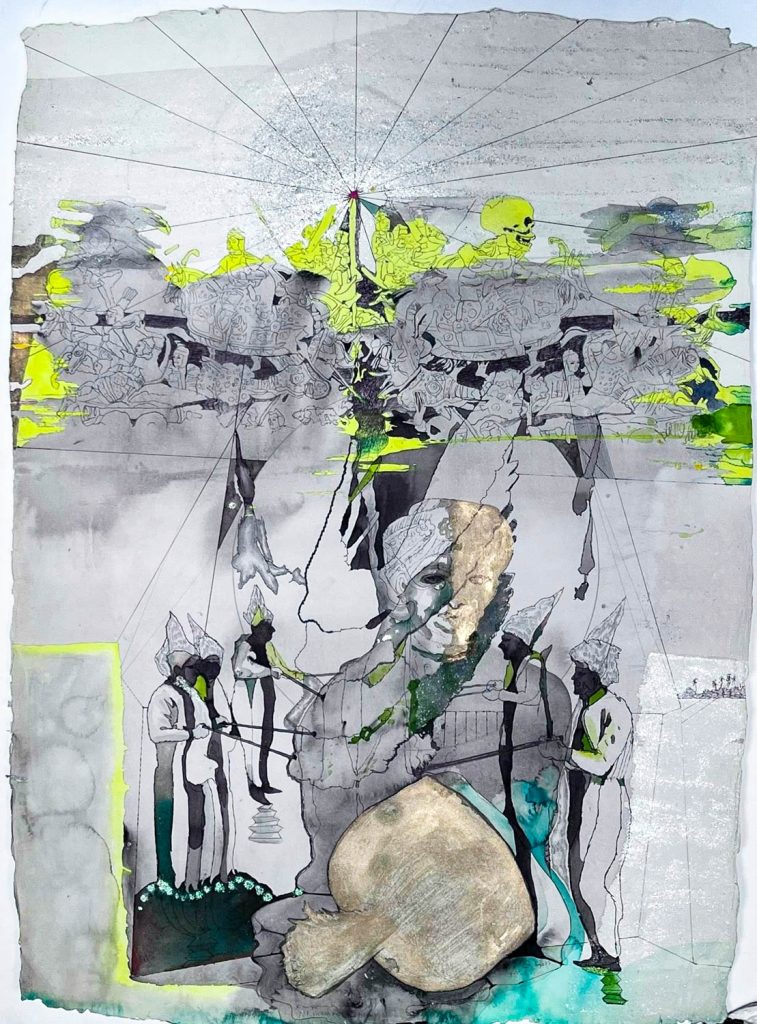
As a child, Firoz frequently visits his grandparents’ home near the Sundarbans, an experience that becomes formative in its own right. The mangrove forests, with their quiet menace and ecological balance, teach him about coexistence and fragility. By the mid-1980s, he was studying at Shishu Academy, participating in Notun Kuri, and becoming deeply invested in reading and observation.
At the age of twelve, prolonged illness disrupts his education. Physical weakness, breathing difficulties, and isolation pull him inward. Yet this period sharpens his attention. Drawing becomes a means of survival, a way to remain present. Even during illness, he competes in art contests across Khulna, Jessore, Barishal, and Dhaka, earning national recognition while Bangladesh itself wrestles with political unrest and authoritarian rule. Bangladesh in the late 1980s is restless, wounded, and searching for its voice. So is he.
In 1989, a visit to Dhaka for his mother Rabiya Khanom’s medical treatment led him to the Institute of Fine Arts, University of Dhaka. The experience is decisive. Encouraged by seniors from Khulna, he sits for the admission test and passes, and begins formal training in fine arts. The transition is brutal. Hostel life is unforgiving, overcrowded, unstable, and materially scarce. He struggles academically at first, unable to adapt to institutional expectations of drawing and composition. Persistence, however, defines his trajectory.
Gradually, he builds discipline through sketching, watercolour, pastel, and oil painting. Early works, such as Bloody, but Fresh, Maser Bazar (Fish Market by New Market), and Poronto Bikel, reveal an observational realism rooted in everyday life, markets, bodies, and urban fatigue. These works carry a social pulse, attentive to class, labour, and vulnerability.
The turning point of his career arrived in the late 1990s and in the early 2000s when Firoz received a fellowship as a research artist at the Rijksakademie van Beeldende Kunsten and moved to Amsterdam. Immersed in a rigorous international environment, he encounters artists, curators, thinkers and theorists from across the world including the contemporary famous artists are Otobong Nkanga, James Beckett, Praneet Soi, Erick Beltrán, Kan Xuan, Rosa Barba, Mark Bauer, Banu Cennetoglu, Jeremiah day, David Maljkovic, Tjebbe Beekman, Sonia Khurana, Kristof Kintera, Ananth Joshi & others and among mentors and professors are artists Luc Tuymans, Nalini Malani, Michelangelo Pistoletto, Hou Hanru, Stan Douglas, Richard Deacon among many artists, curators and thinkers. Here, his practice shifts decisively from medium-based painting to research-driven contemporary and conceptual frameworks in art. Drawing remains central, but now functions as inquiry rather than depiction.
He reflects, “Art, for me, is not about finishing an image, it is about staying with a question.”

Amsterdam is followed by extended periods in Tokyo, where he did in-depth research at the Tokyo University of the Arts (Geidai). Japanese philosophies such as Ikigai (purpose) and Kaizen (continuous improvement) quietly merge with his Bengali sensibility. Precision, patience, and restraint begin to shape his surfaces. Each city challenges him. Each city sharpened and revitalised its awareness of belonging and alienation. His work becomes slower, denser, and more layered conceptually and materially.
New York offers yet another context. Exhibiting at venues such as Pace University Art Gallery and participating in academic and curatorial discussions, he encounters global discourses on migration, post-colonialism, and identity politics. Rather than diluting his voice, these encounters sharpen it. His position as a South Asian artist navigating Western institutions becomes a critical lens rather than a limitation.

Over the years, Firoz Mahmud has participated in numerous significant exhibitions and biennials, including the Bangkok Art Biennale, Congo Biennale, Ostrale Biennale, Lahore Biennial, Dhaka Art Summit, Setouchi Triennale (BDP), Aichi Triennial, Sharjah Biennale, Cairo Biennale, Echigo-Tsumari Triennial, Immigrant Artist Biennial NYC, Geumgang Nature Art Biennale, and Asian Biennale.

Besides, he exhibited in many museums, foundations and galleries, including exhibitions across Europe, East Asia, South Asia, Africa, and the United States, where he exhibited on global and regional crises, intensified his focus on displacement, migration, refugee, climate and war crises. The Rohingya refugee crisis informs his long-term project, titled Soaked Dream, a multi-layered body of work combining drawing, sculpture, performance, and community-based documentation. Refugee camps, border zones, and vulnerable landscapes become both subject and collaborator. Here, art becomes a witness.
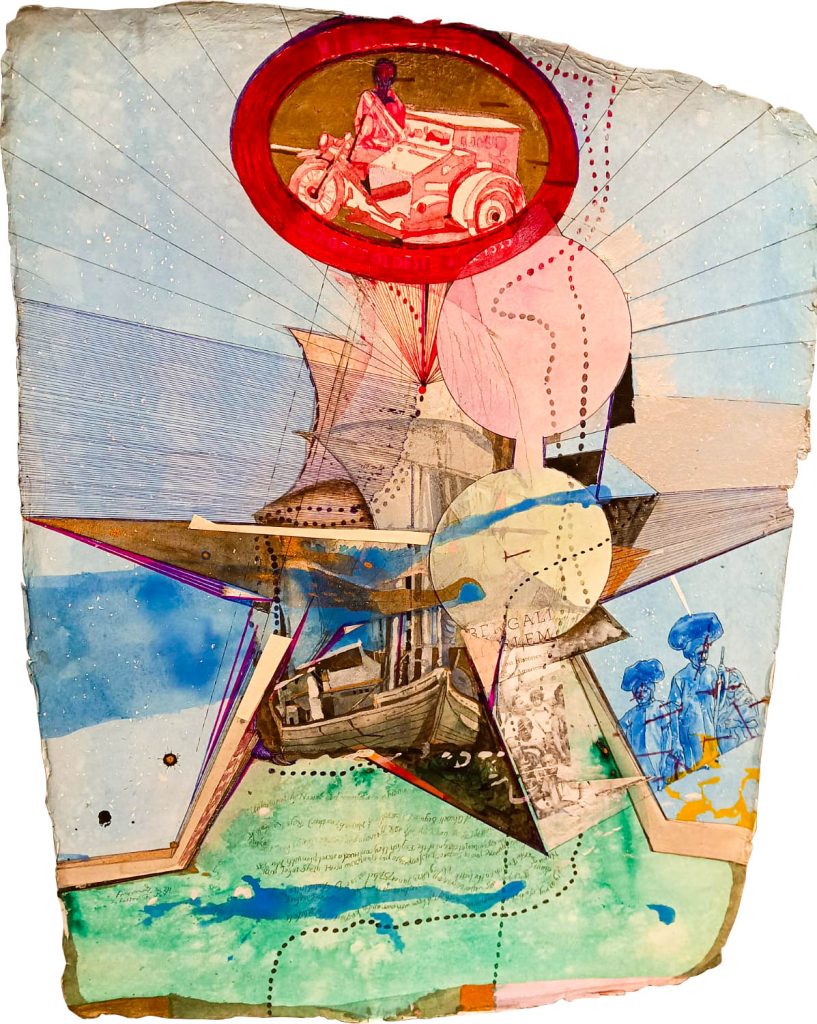
“I don’t want to speak for people; I want my work to stand beside them,” he says.
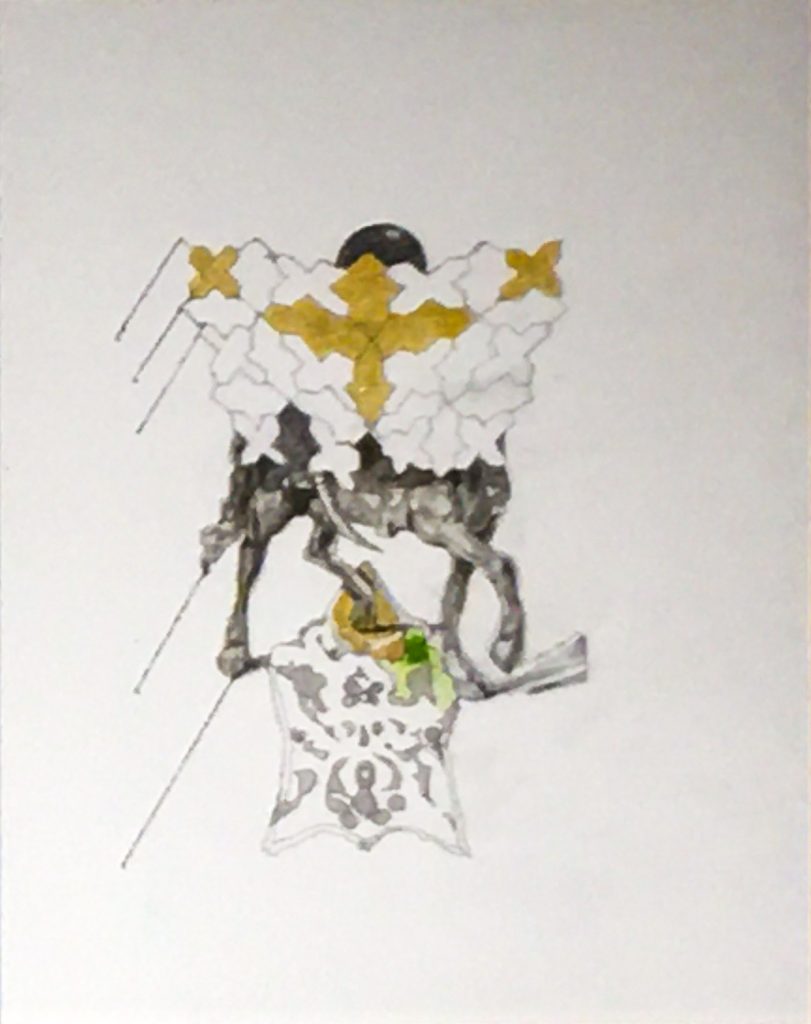
Firoz has been working on mixed media on paper art projects and Layapa stencil oil painting projects for the last 10 years. Materially, his practice becomes distinctive. He works on handmade paper with uneven edges, refusing the authority of polished surfaces. Using dry ink, acrylic, oil, halite (NaCl), pearl pigments, and pen, he builds slow accumulations of imagery. Salt crystallises, lines erode, figures partially disappear, mirroring the instability of memory and history itself.
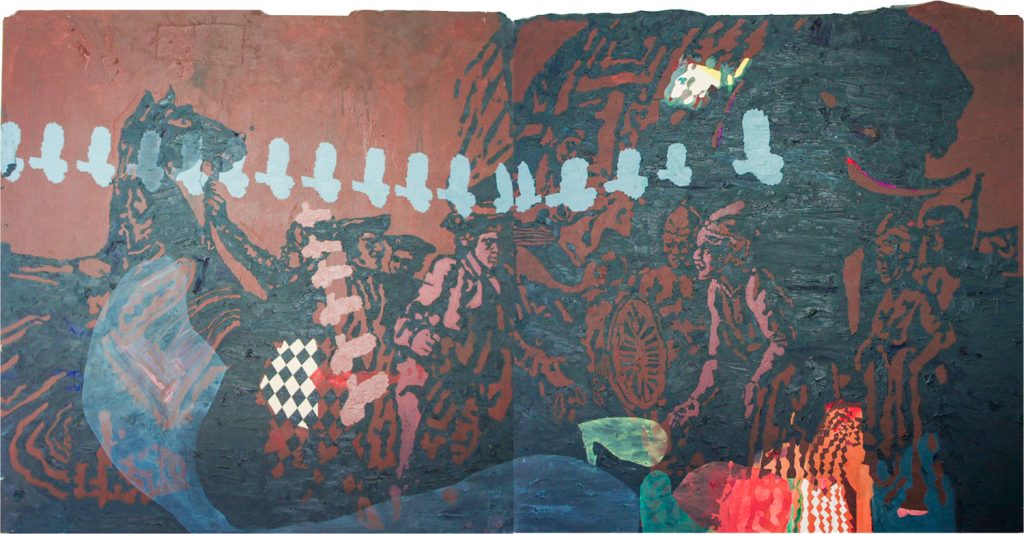
In the series of works such as Drawing Reverberation, Syncretic Ascension, and related series artist predominantly emphasised Islamic cultures, Mughal motifs, colonial figures, native flora and fauna, animals, tigers or skeleton of tigers, Mughal forts and relics, mosques, and botanical metaphors also coexist in these series. These are not linear histories but overlapping temporalities, pre-colonial, colonial, and post-colonial, folded into one plane.
“I believe in lousy times for the stellar,” Firoz remarks, a phrase that captures both irony and endurance.His art accepts contradiction. Beauty and violence share the same surface.
Beyond exhibitions, Firoz remains deeply engaged in pedagogy and dialogue. He delivers lectures, participates in panel discussions, and mentors younger artists across Asia and beyond. Yet he resists institutional authority, preferring conversation over instruction.
“I don’t want to lose my culture, history, and legacy, but I also don’t want to freeze them,” he says simply.
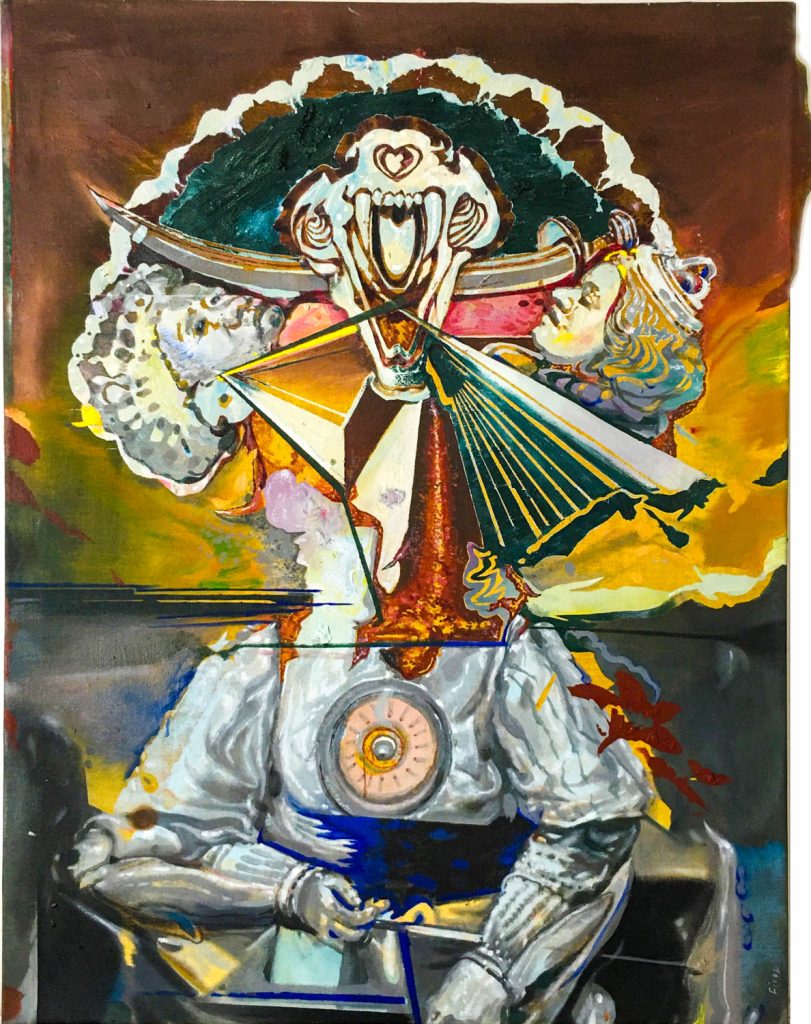
Today, Firoz Mahmud stands as one of Bangladesh’s most significant contemporary artists, who is globally engaged and exhibits. His work asks viewers to slow down; to read images the way one reads a damaged manuscript with care, patience, and humility. His works do not shout; they linger.


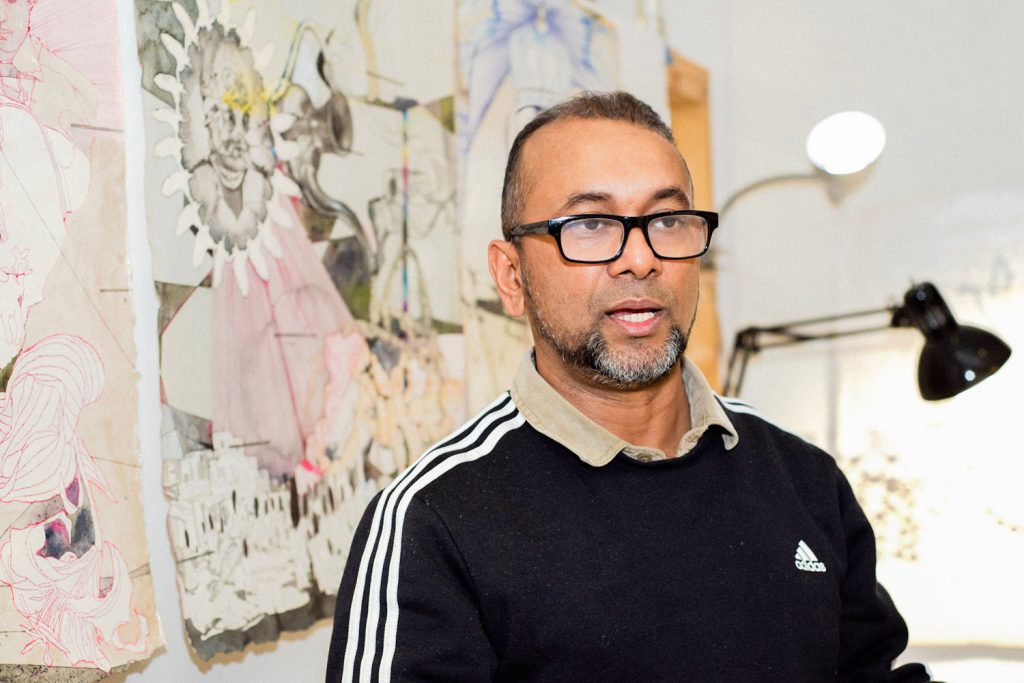
In an era driven by speed and spectacle, his art offers something quieter and far more lasting: attention.