“Pichu Daak” stands as a large multi-generational residence in Mina Para, Kushtia. Designed in 2024 for Md. Halimuzzaman, the house spans approximately 22,900 square feet. While the architectural structure exists as a complete built form, the interior design is developed entirely by DWA (Depth Work Architects). Architect Rownok Ul Jesan, A K M Shamsul Arefeen, and Farzana Islam work exclusively on the interior planning, material articulation, and spatial experience of the home. From the beginning, their focus was clear. To create an interior that feels connected, breathable, and practical for a large family living together across generations. As the design team expresses
our responsibility is to shape beautiful spaces while thoughtfully supporting the life lived within them.
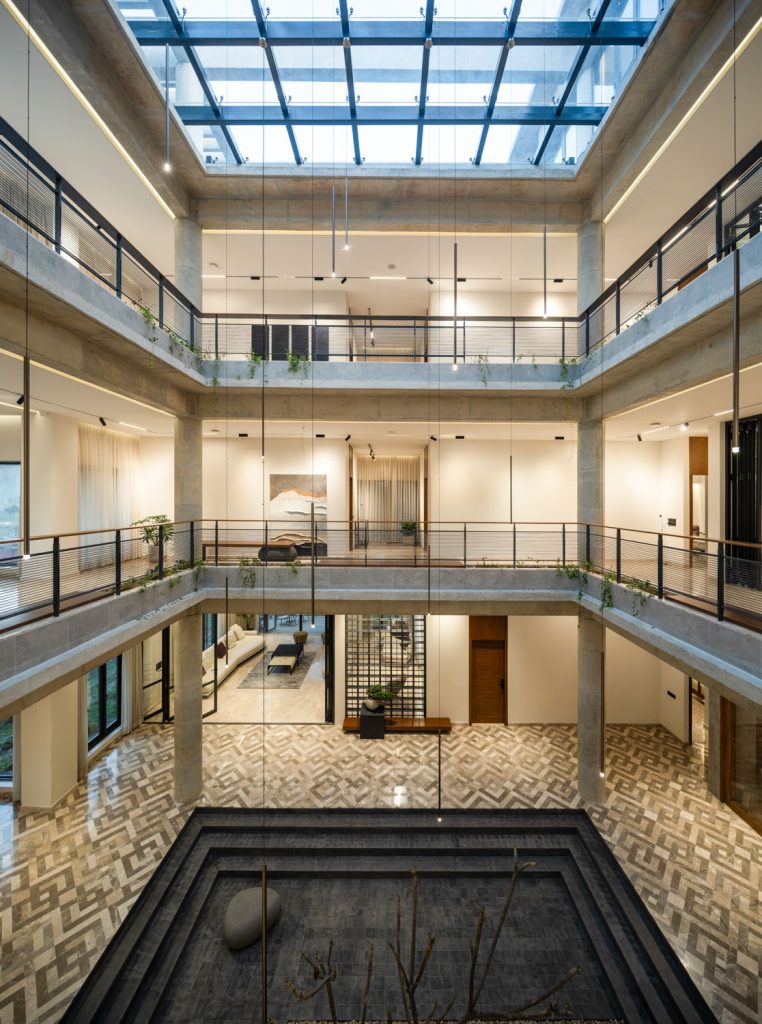
Rather than dividing the house into isolated rooms, the interior planning revolves around a central courtyard. This courtyard functions as the heart of the home. It structures movement, orientation, and daily interaction. Its triple-height atrium rises through the core, allowing daylight and natural ventilation to travel vertically across levels. During the day, reliance on artificial lighting is significantly reduced.
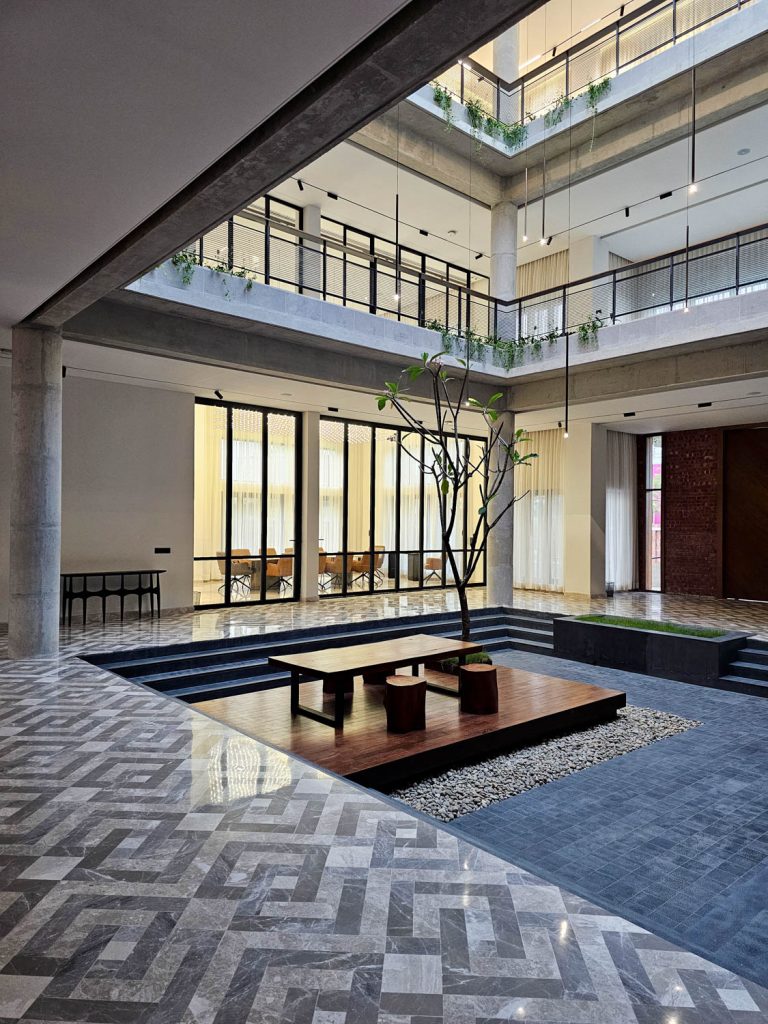
A Kath Golap tree placed within the courtyard softens the incoming sunlight. As the day progresses, shadows move gently across the marble-patterned floors, creating a living rhythm inside the house. From most major rooms, there is either direct or filtered visual access to this central volume. It keeps such a large residence legible and emotionally connected.
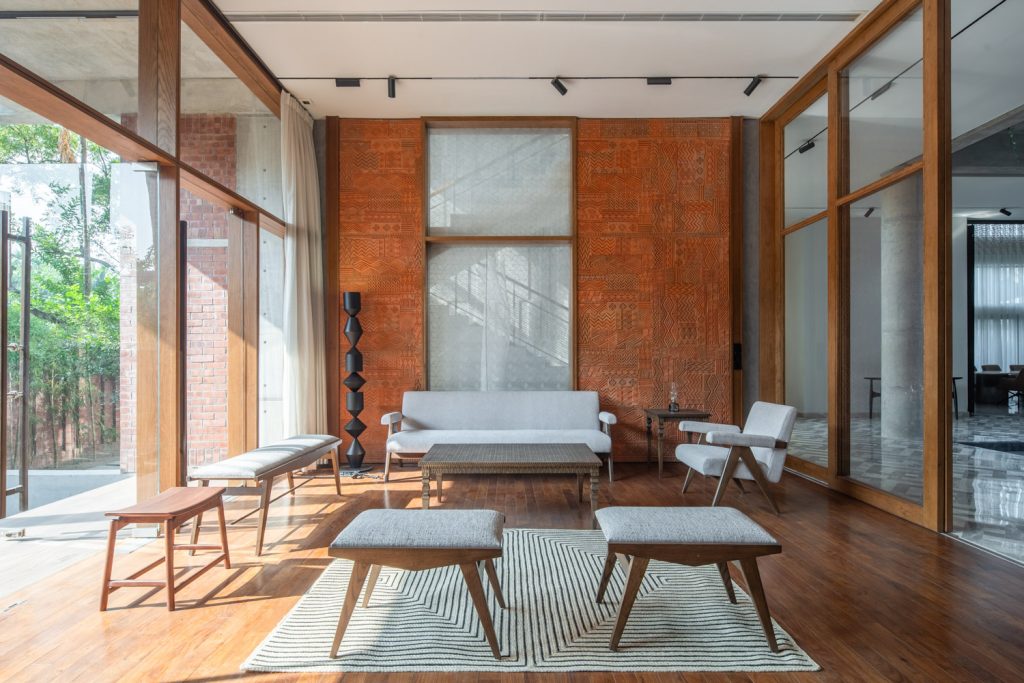
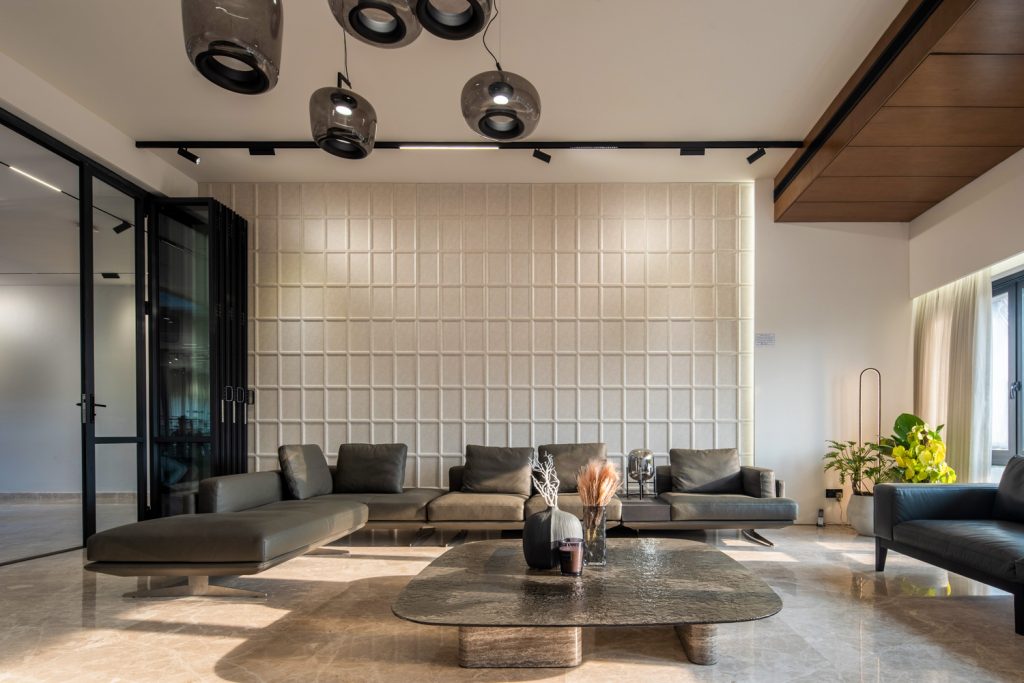
The ground floor operates as the social interface of the residence. A formal living room sits near the entrance, allowing guests to enter comfortably without disturbing private family areas. Circulation flows logically from the entry to the living space and then toward the dining area.
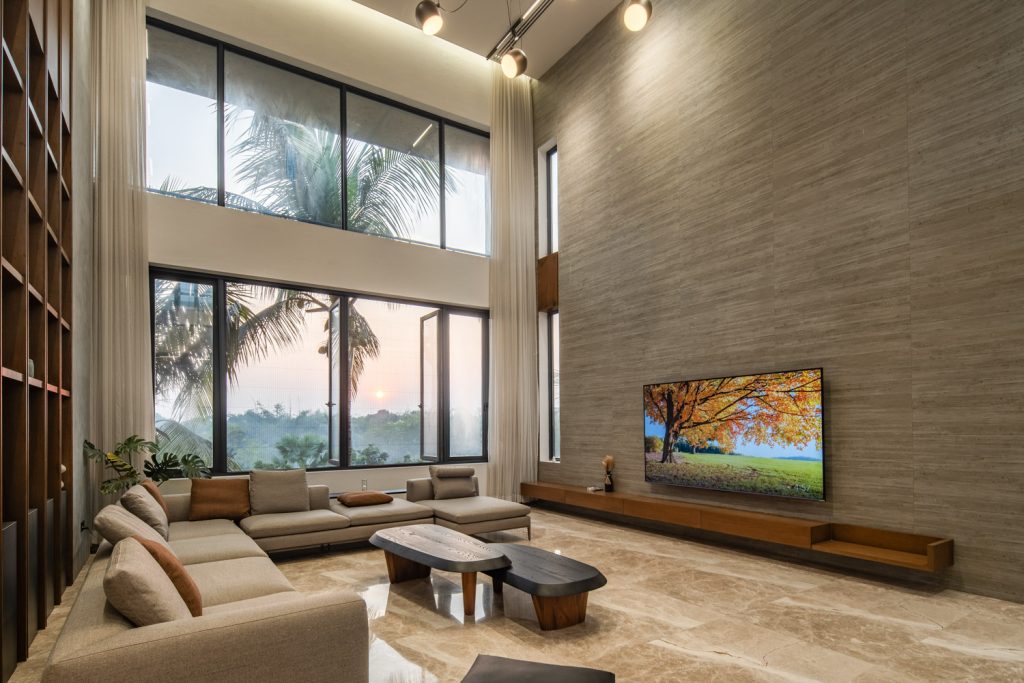
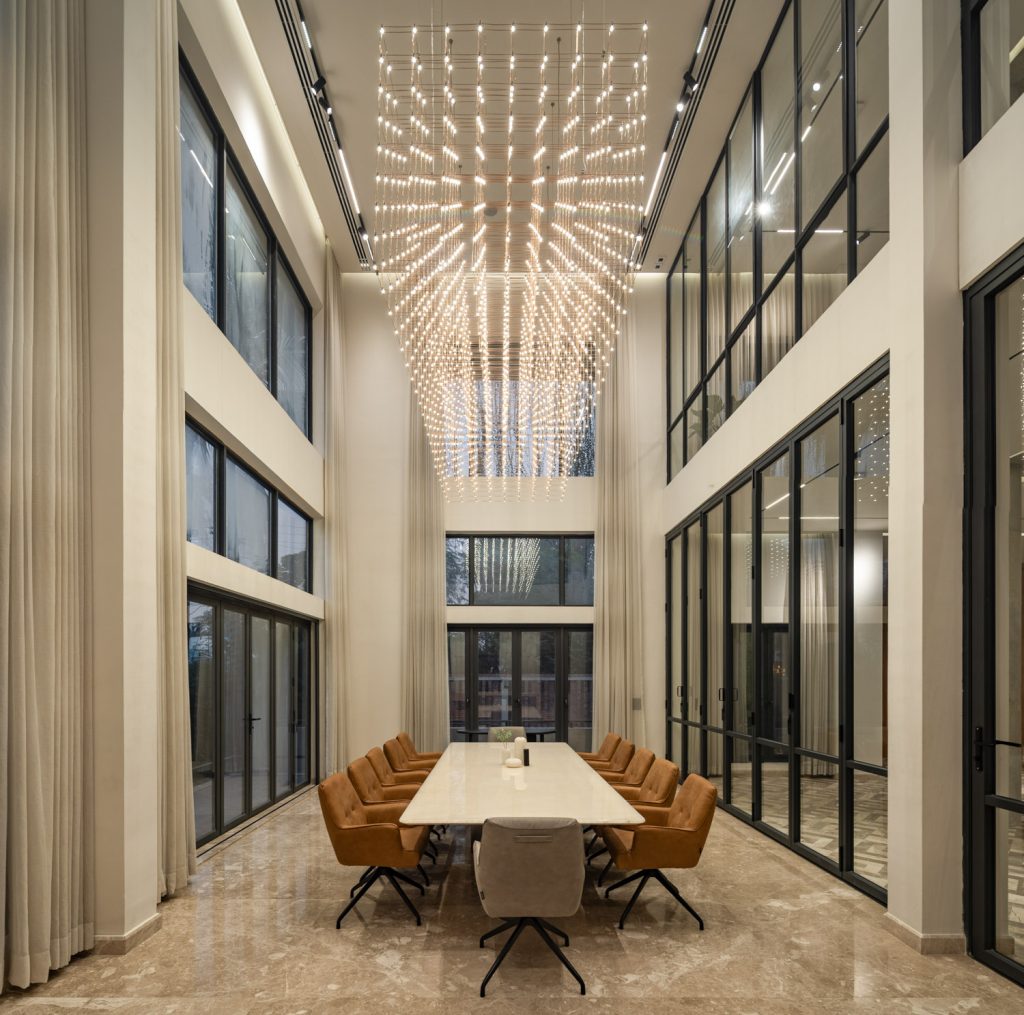
The dining space is one of the most dramatic interiors in the house. The double-height volume immediately draws the eye upward. A sleek marble dining table anchors the room with quiet elegance. Above it, a modern chandelier cascades from the ceiling in a delicate grid of lights. The repetition of glowing points creates depth and movement within the tall void. The polished marble surface reflects the shimmer above, creating a refined atmosphere.
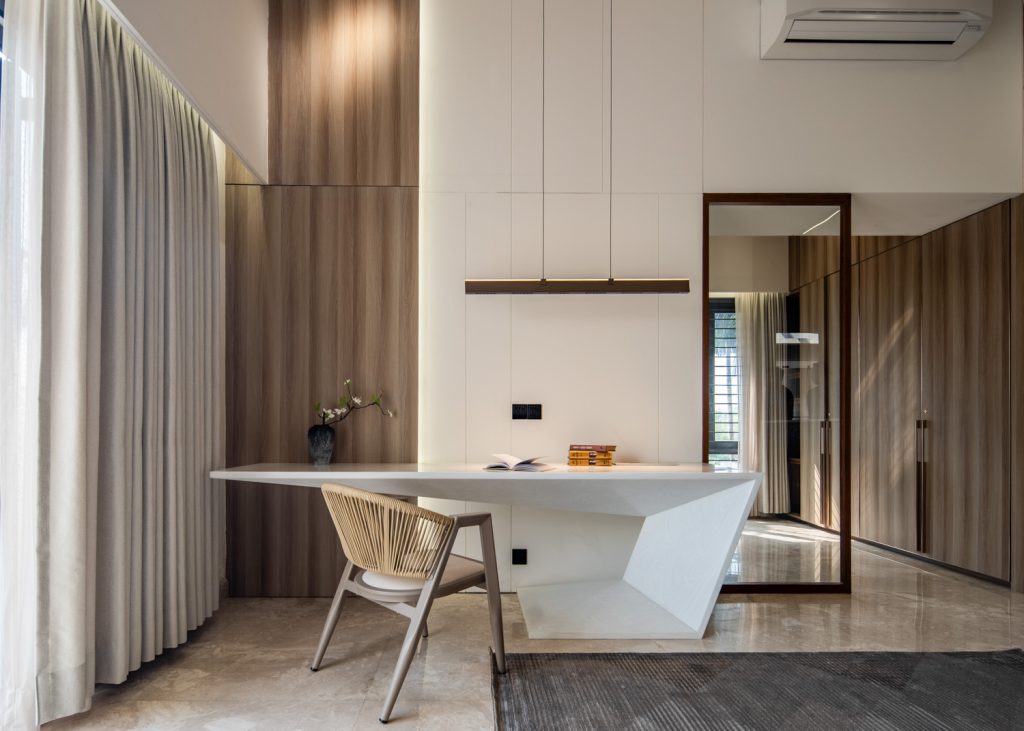
The dining area connects to a fully equipped closed kitchen. In a large family home where cooking is frequent and elaborate, this separation ensures efficiency without disturbing social gatherings.
Deeper inside the plan sits the family living area. Here, warmth becomes more pronounced. Wooden flooring enhances comfort underfoot, and geometric-pattern terracotta-finished walls introduce natural texture and thermal comfort. The earthy tone absorbs light softly, reducing glare and creating a grounded atmosphere. Internal partitions use woven fabric sandwiched between glass panels. This detail allows filtered light to pass through while maintaining privacy.
On the ground floor, a bedroom is dedicated to the grandmother, Dida’s room. A traditional palonko bed and solid wooden furniture were selected to evoke familiarity and emotional security. Accessibility was carefully considered with minimal level changes and easy circulation. A powder room serves both guests and residents.
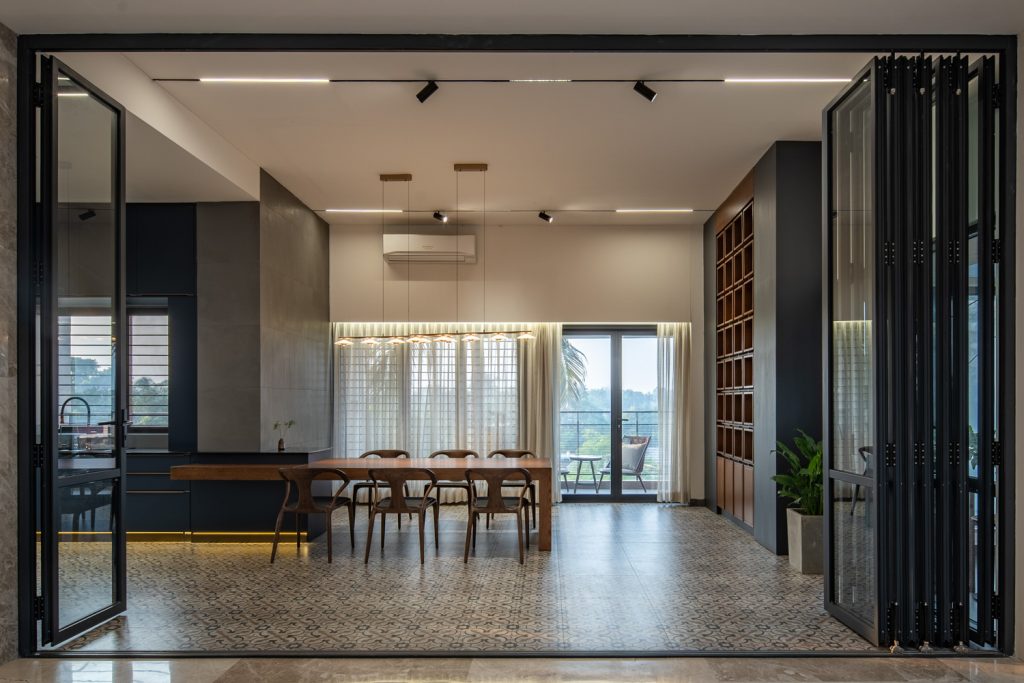
Geometric marble patterns in varied grey and beige tones are carefully composed across the ground floor. The design feels dynamic yet controlled. It recalls traditional floral motifs without direct imitation.
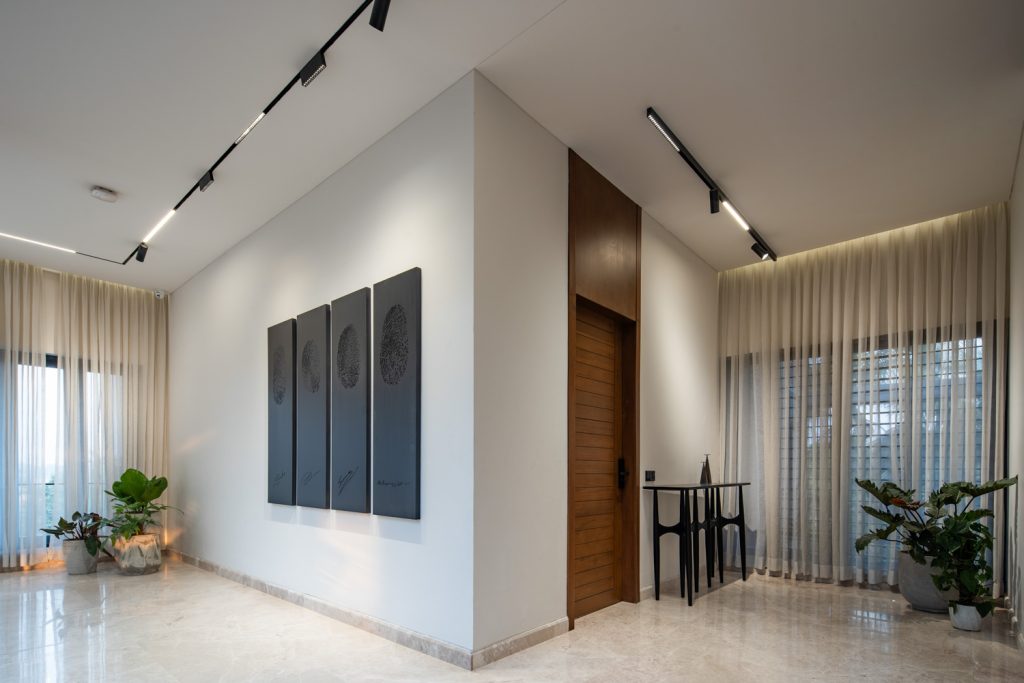
Material selection throughout the interior follows a disciplined and consistent approach. Openings are fitted with EDF-framed double-layer glass windows, improving thermal insulation and reducing heat transmission. All doors are made of solid wood, chosen for durability and natural warmth.
Polished marble flooring dominates the interior due to its cooling properties, appropriate for the local climate. Within the courtyard, flame-finished granite ensures slip resistance and durability, complemented by wooden decking that softens the outdoor experience.
The colour palette is dominated by grey and beige tones. This restrained colour range creates a calm, balanced, and timeless atmosphere.
The first-floor shifts into a more private domain. A lounge opens onto a front-facing terrace, creating a transitional indoor-outdoor experience and improving cross ventilation. A compact breakfast area with a dry kitchen supports daily routines without requiring movement to the main kitchen below. Three bedrooms with attached toilets occupy this level, each proportioned carefully with adequate storage and natural light. A servant’s room with an attached toilet is positioned efficiently to maintain operational flow without affecting family privacy.
The second floor becomes the primary family gathering level. Three additional bedrooms open toward individual verandas, which act as thermal buffers against direct sunlight while extending the rooms outward. A central family living space maintains a visual link to the courtyard below.
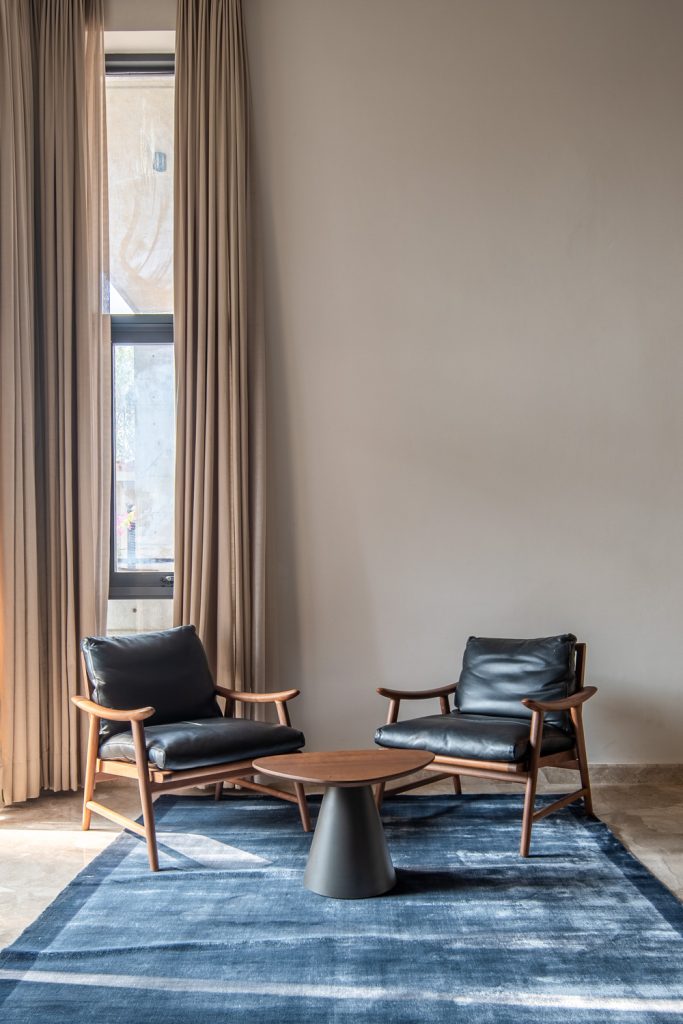
Here, a double-height space combined with a slit light well creates dramatic light play across wooden-textured, concrete-finish walls. The opposite wall integrates wooden shelving against a skim-coated painted surface, maintaining tonal harmony. A wooden centre table anchors the space, reinforcing material continuity. Even at upper levels, the vertical void ensures the house feels unified.
A dining space with a dry kitchen allows flexibility during gatherings. The library is positioned under controlled daylight from above. Low and comfortable seating encourages long reading sessions. The design remains simple and calm.
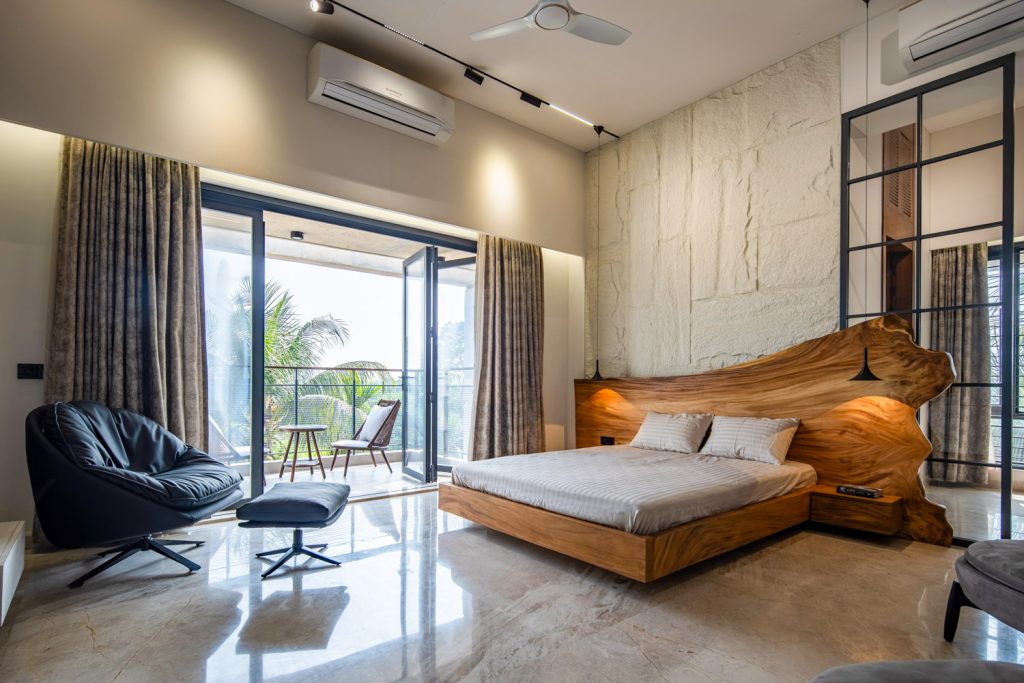
The uppermost level introduces leisure functions. An additional bedroom offers flexibility for family members. Raw wood furniture and stone-textured walls reflect a quieter, more tactile material expression. The barbecue terrace is semi-open with wooden flooring, rustic cabinetry, flame-burnt granite counters, and handmade wooden trunk lights, establishing a celebratory environment. Above, a green terrace with planting improves thermal performance while creating a usable outdoor environment.
Ultimately, “Pichu Daak” reads as a contemporary courtyard house. It does not imitate rural architecture. It studies it, extracts its logic, central open space, layered privacy, climatic sensitivity and reinterprets those principles in a structured, modern framework. As the design team reflects
This home is about continuity between generations, between inside and outside, and between tradition and present living.
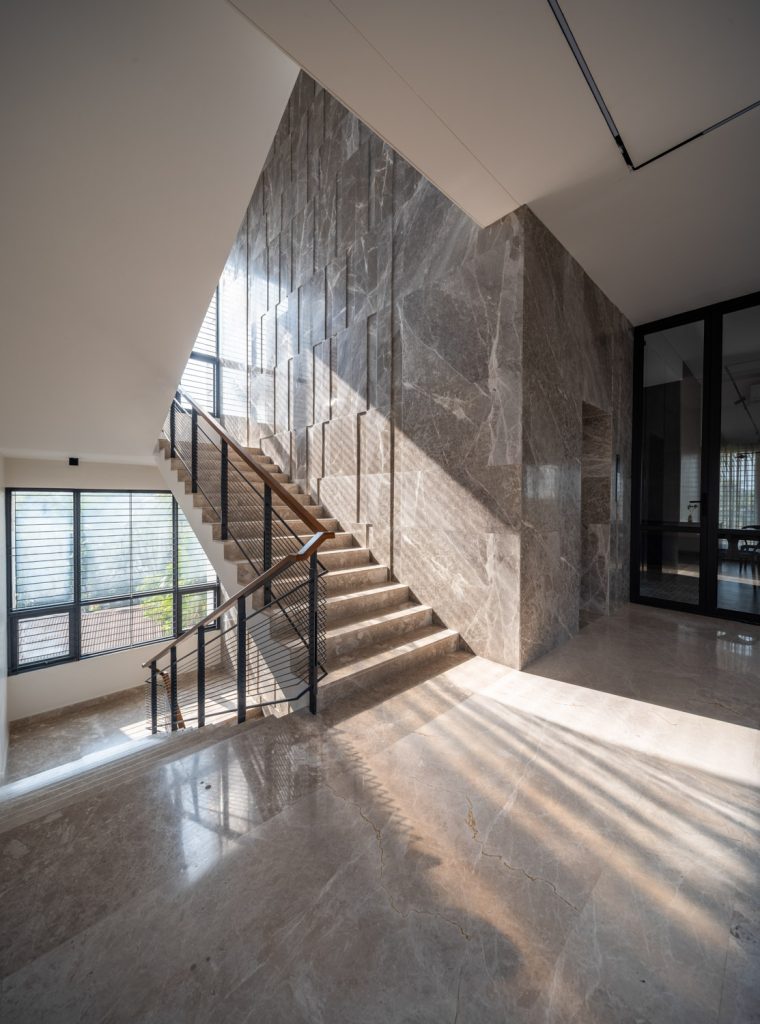
The result is not an ornamental interior, but a practical and enduring one. Through clarity of planning, restraint in materials, and a disciplined interior language, the residence achieves balance, longevity, and quiet strength.