Text by Shrabony Sarker
There is something quietly fearless about Kazi Muhammad Taki. At twenty-six, Taki carries a degree in Pharmaceutical Sciences from North South University. He understands chemical compounds, measured precision, and laboratory discipline. Yet when you stand before his canvases, none of that feels clinical. What you feel instead is pulse colour that seems to breathe, surfaces that carry emotion rather than calculation.
Born on 25 May 1999 and raised in Cumilla, with ancestral roots in Habiganj, Sylhet, Taki grew up in motion. His father’s government job meant frequent transfers. New towns, new classrooms, new skies. For a young boy, that constant shifting could have been disorienting. For Taki, it became an archive of images of fields fading into dusk, roadside trees blurred by travel, monsoon clouds hanging heavy over unfamiliar roofs. He began painting landscapes as a child. At first, they were attempts to hold onto what kept changing. Trees were carefully outlined. Rivers were calm and obedient. The horizon was always steady. But something restless lived underneath.
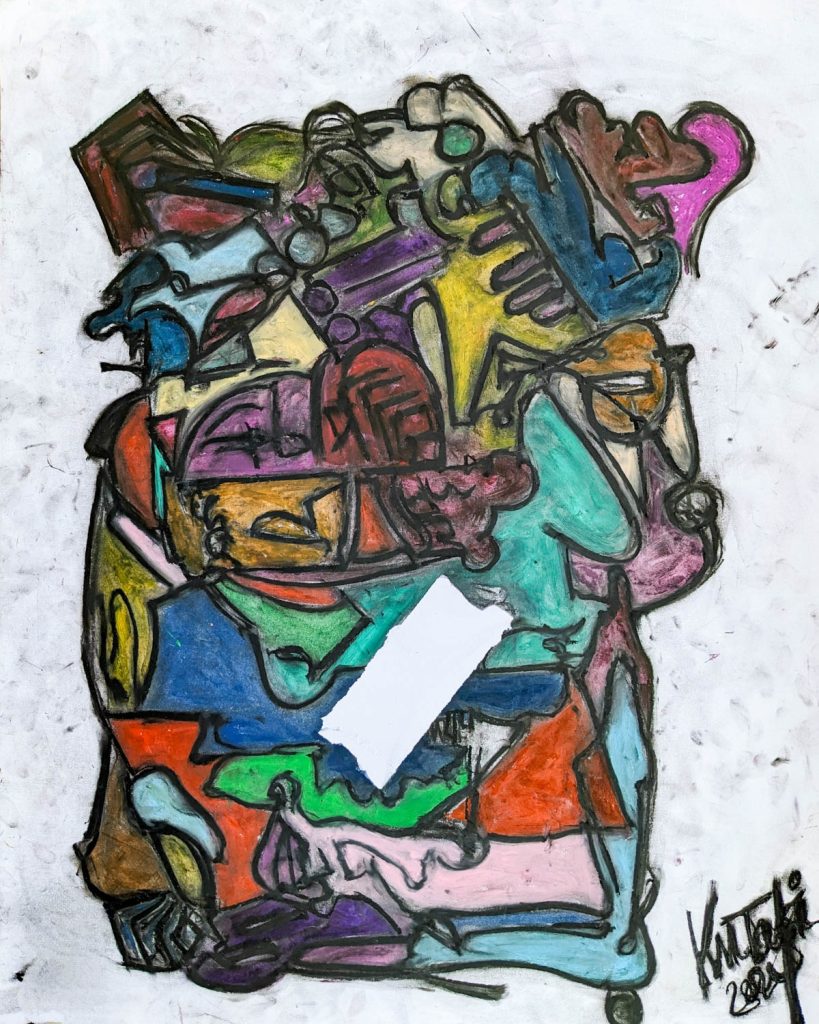
In 2016, the restlessness surfaced. The trees dissolved into strokes. The rivers broke into movement. The horizon disappeared entirely. He stopped trying to recreate what he saw and began responding to what he felt. That was the year abstraction entered his life as a dramatic shift and as a quiet liberation. Taki says
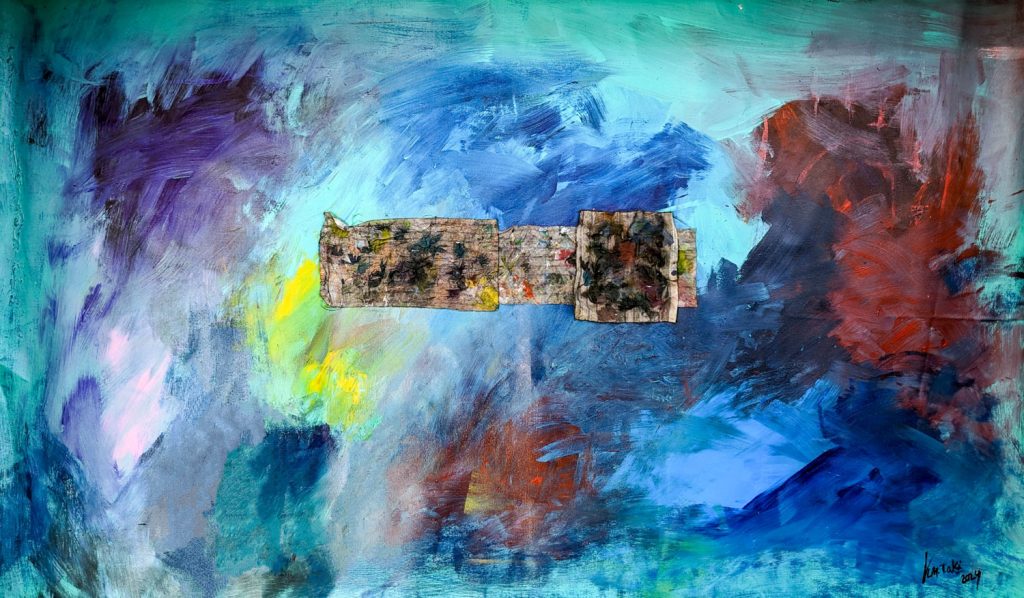
I was never trying to be different. I was just following what felt honest on the canvas.
He often describes his process as “playing with colours,” but the word play should not be mistaken for carelessness. His play is instinctive and attentive. He layers pigments the way someone might layer memories, some transparent, some opaque, some partially erased. The result is depth that cannot be rushed.
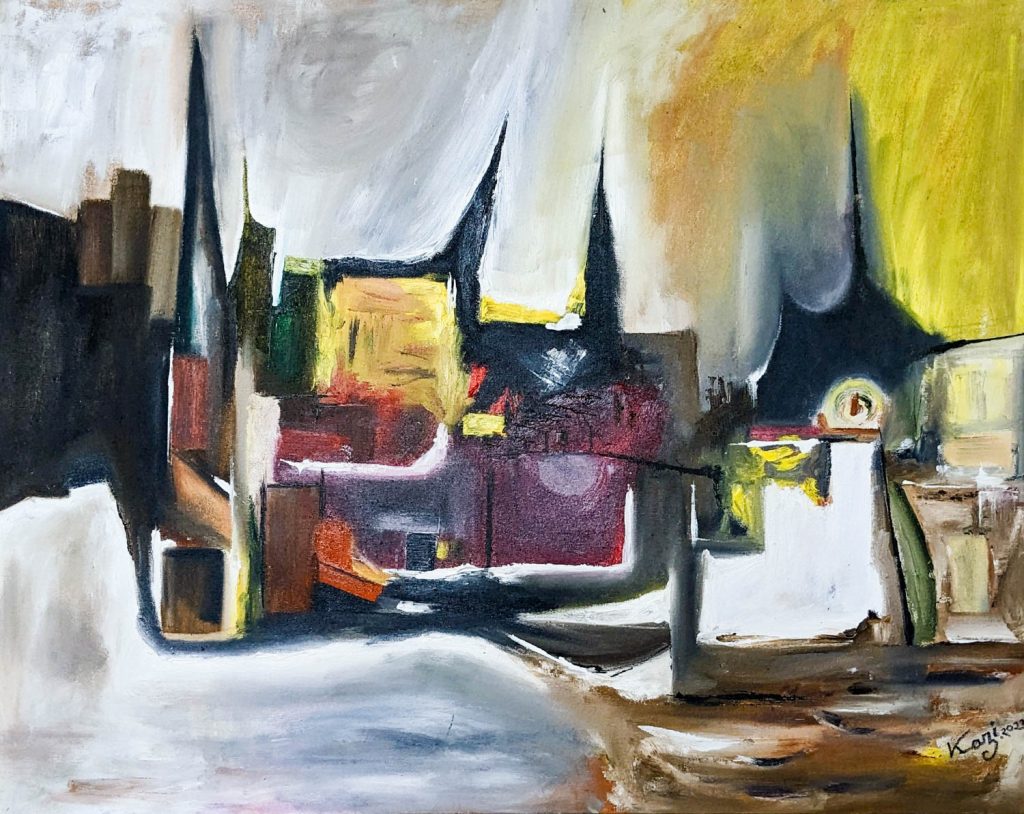
When he moved to Dhaka for higher studies at North South University, his days were filled with lectures, labs, and pharmaceutical theories. But nights often belonged to the canvas. Around 2017–18, he began sharing his work on social media. At first, it was a casual way to show friends what he was making. Then came his first sale. That moment changed everything. Selling a painting was not only about money. It was about connection. A stranger saw themselves in his colours and decided to live with them. That exchange, deeply personal and yet entirely wordless, affirmed his path. He began to understand that art could move beyond the studio and into people’s lives.
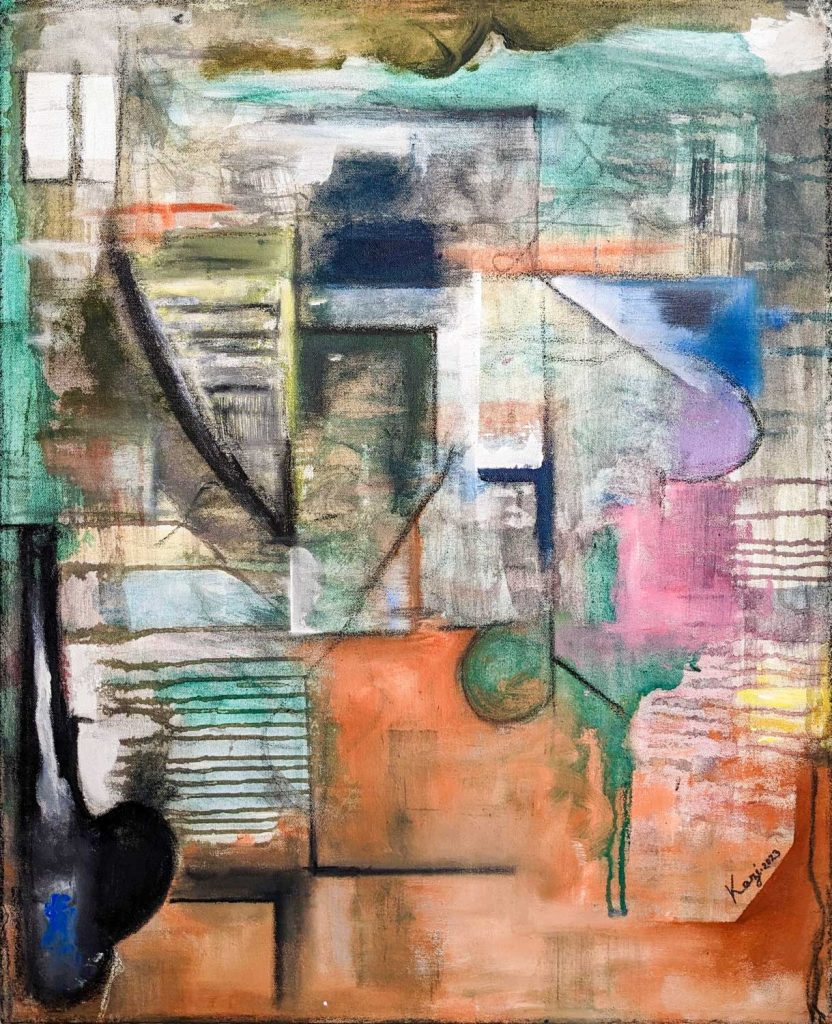
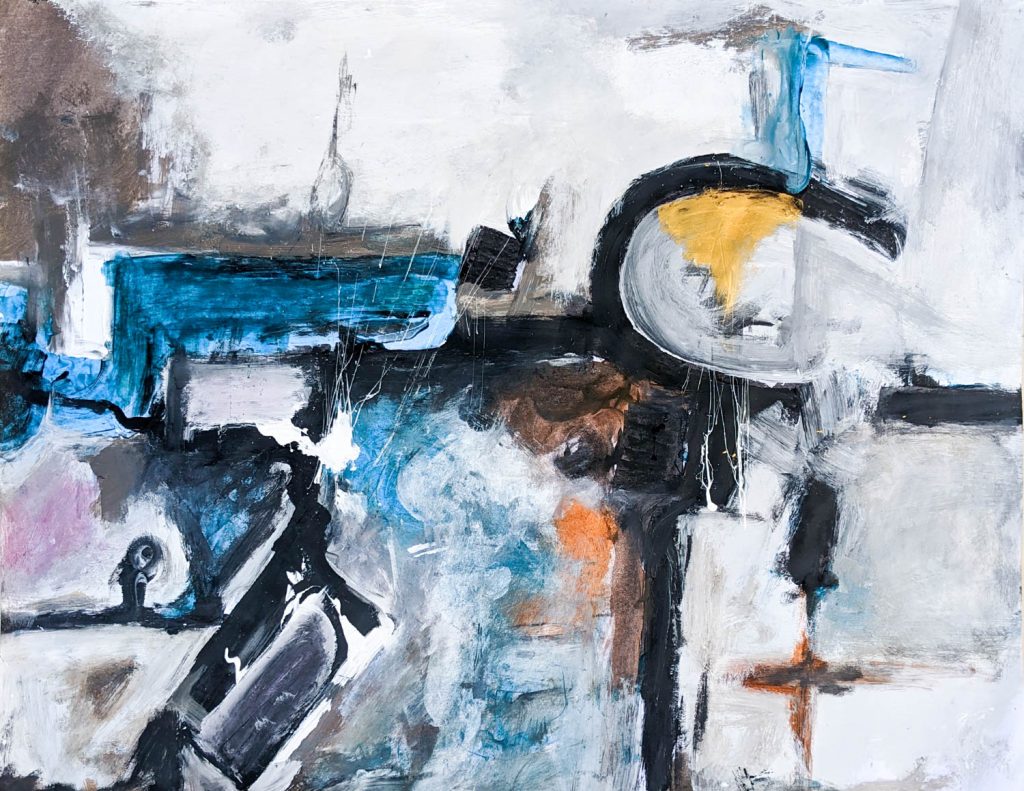
His abstract works are driven by bold chromatic decisions. There is a noticeable confidence in his use of saturated hues, cobalt blues colliding with burnt oranges, crimson layered against muted greys, sudden bursts of yellow breaking through dense compositions. Yet beneath the vibrancy lies control. His canvases are not chaotic; they are orchestrated. Each layer suggests a process of building and erasing, intuition balanced with restraint. One might sense that his scientific education quietly informs this discipline.
The patience required in the laboratory’s careful observation, the measured steps to find a subtle echo in his studio practice. He approaches each painting as both experiment and exploration. The result is work that feels spontaneous.
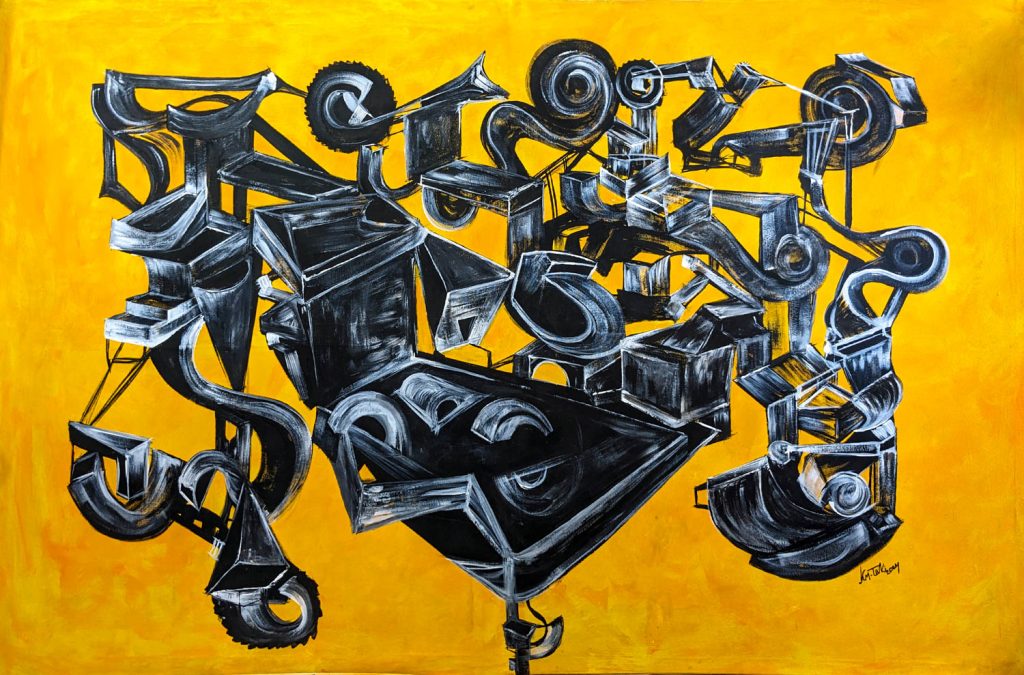
Over the years, his consistency has opened significant doors. He has collaborated with corporate clients such as Shanta Holdings and Navana Real Estate, bringing his expressive canvases into architectural and interior spaces. His paintings have been displayed at the State Guest House Jamuna and the Chief Advisor’s Office, where art meets governance in quiet dialogue. Recently, exhibiting at Gallery Chitrak marked a deeply personal milestone for the formal recognition of his journey within Dhaka’s contemporary art scene. But the path to becoming a full-time artist was not without friction.
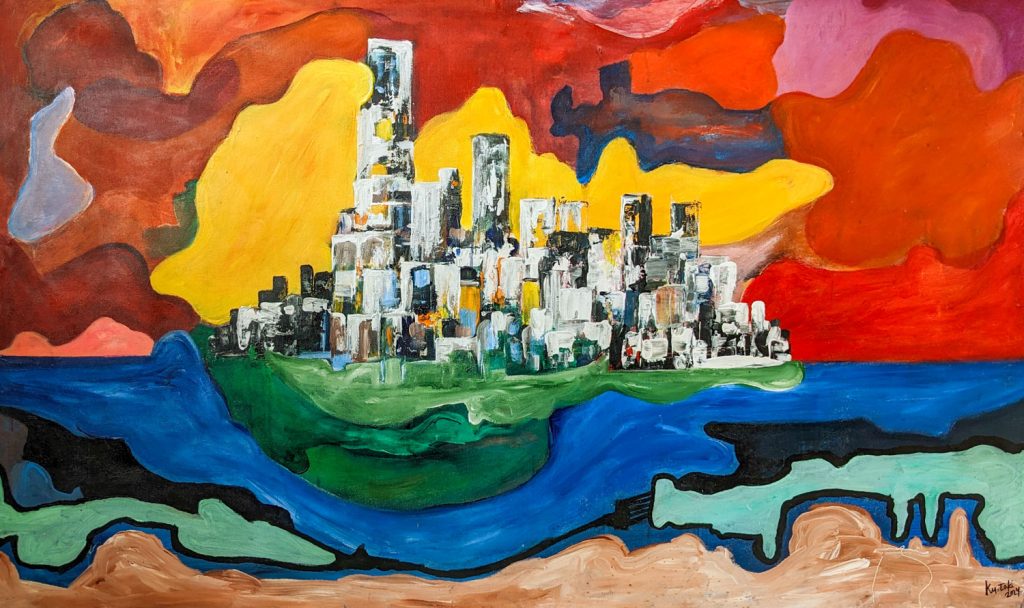
With a pharmacy degree in hand, a stable career path was clearly laid out before him. For his father, it seemed like the obvious direction was secure, respected, and predictable. Choosing art instead meant choosing uncertainty. The decision was neither impulsive nor romantic. It required persistence, long hours, and faith not only in his talent but also in the slow process of building a name.
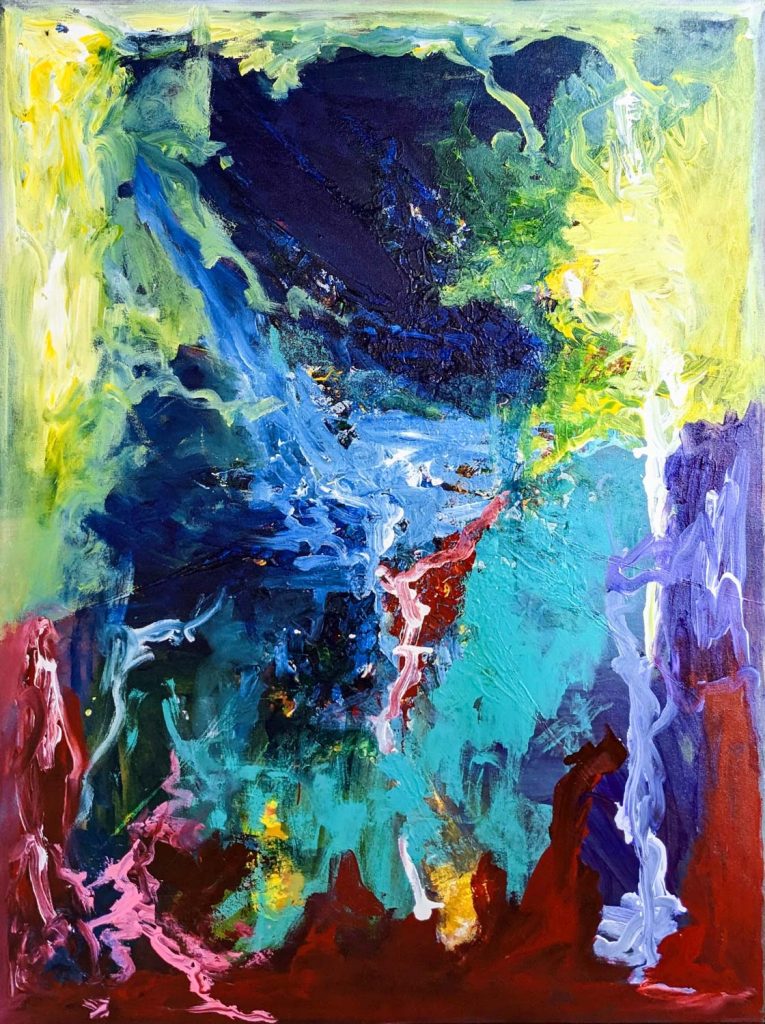
Over time, as exhibitions grew and commissions multiplied, doubt softened into support. Today, his family’s support stands firm behind him. In Taki’s work, one senses a search for emotional texture. His abstraction is not purely formal; it carries mood. Some canvases feel like monsoon skies as heavy, layered, restless. Others breathe with lightness, as if washed by morning sun. He often works in cycles, returning to certain colour families repeatedly, almost as if revisiting states of mind. He rarely titles his works in ways that restrict interpretation. For him, abstraction is an open conversation. In Taki’s Word,
“If someone sees something completely different from what I felt, that’s beautiful. It means the painting is alive.”
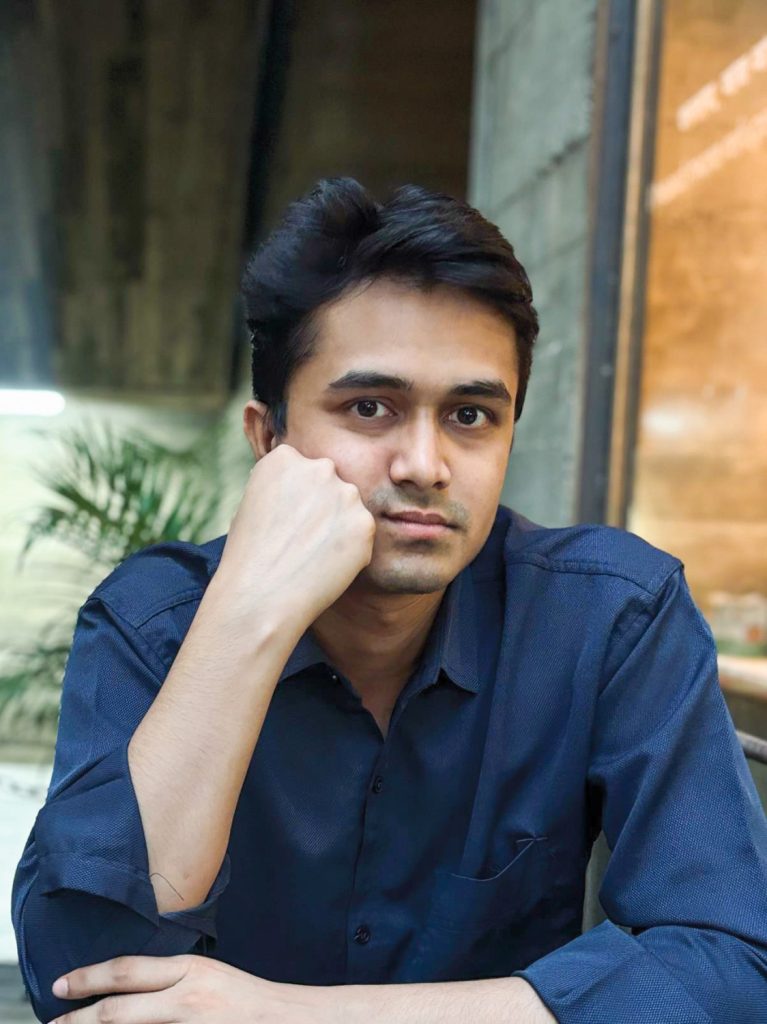
At twenty-six, Taki is still evolving. There is no grand manifesto or forced philosophy. Only an honest commitment to colour and the courage to trust it. He did not reject science; he simply followed the space where he felt most awake. And perhaps that is what makes his journey quietly powerful. He reminds us that identity does not have to be singular. You can understand molecules and still be moved by monsoon skies.
For Kazi Muhammad Taki, colour is not applied to canvas. It inhales, exhales, and lives.