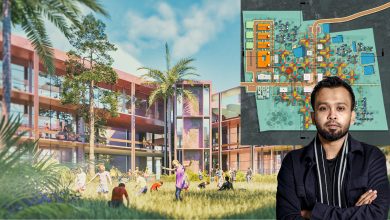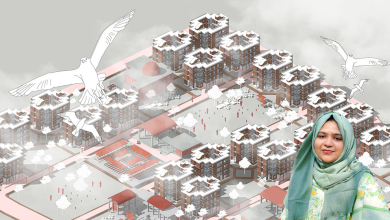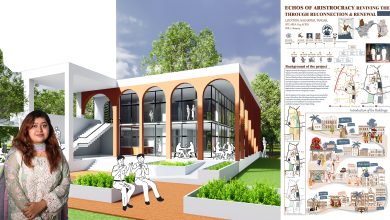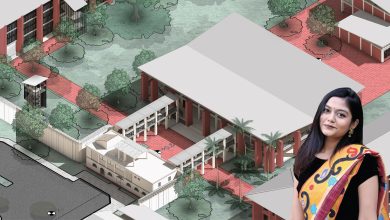
Md. Arafat Rahman Dewan, a student of Bangladesh University of Engineering and Technology (BUET), developed his 2024 thesis project ‘Reimagining Rajshahi New Market: A Public Place for the 21st Century’ guided by Dr. Md Ashikur Rahman Joarder and Md Tariquzzaman. In this work, he turns his architectural attention toward one of Rajshahi’s most familiar urban anchors: the Rajshahi New Market.
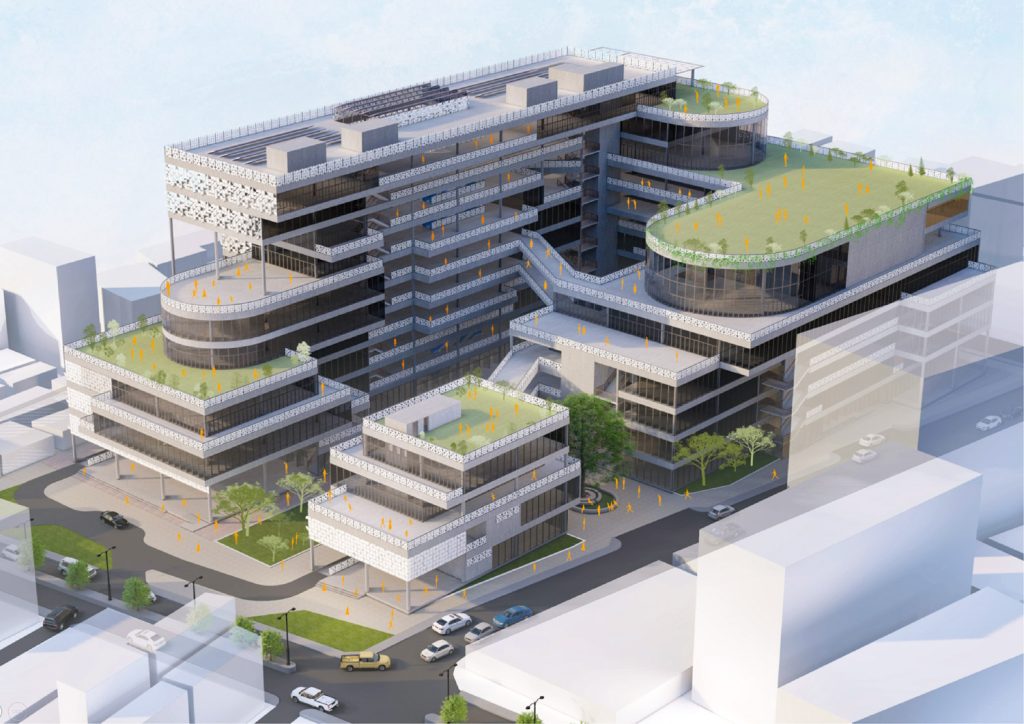
For generations, the market has carried the pulse of the city, its noise, trade, waiting, wandering, and countless memories now stand as a tired monument. Its passages grow heavy with time; its air grows still; its brightness dims. And yet, beneath the dust, the place continues to hum like an old melody the city never truly forgets. Arafat’s thesis steps into this fading landmark with a question: Must renewal mean replacement, or can architecture rediscover what time has obscured?
His proposal answers through a sequence of architectural gestures rooted in restraint and respect. First, he divides the massive block into three volumes, carving an urban passage that lets light, wind, and pedestrians flow through the heart of the market. What was once an introverted mass becomes permeable a place stitched back into the city’s movement and atmosphere.

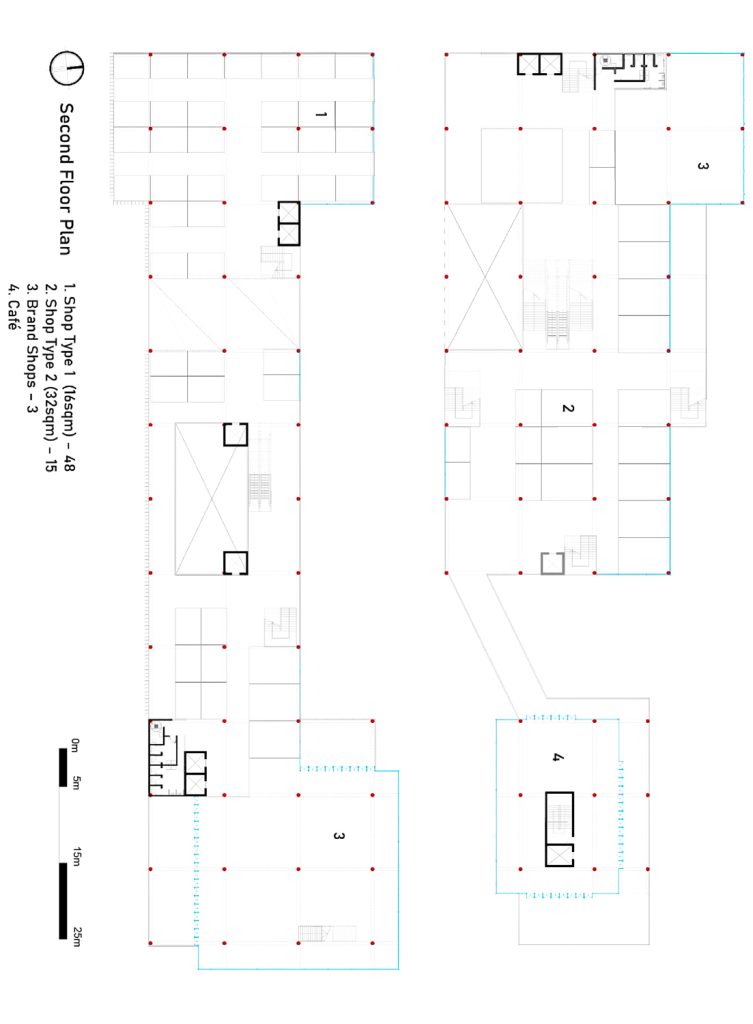
Inside, the chaotic old market reorganizes itself into a legible structure. Corridors become clearer pathways; cramped interiors open into pockets of air, where people can move, pause, connect, and breathe.
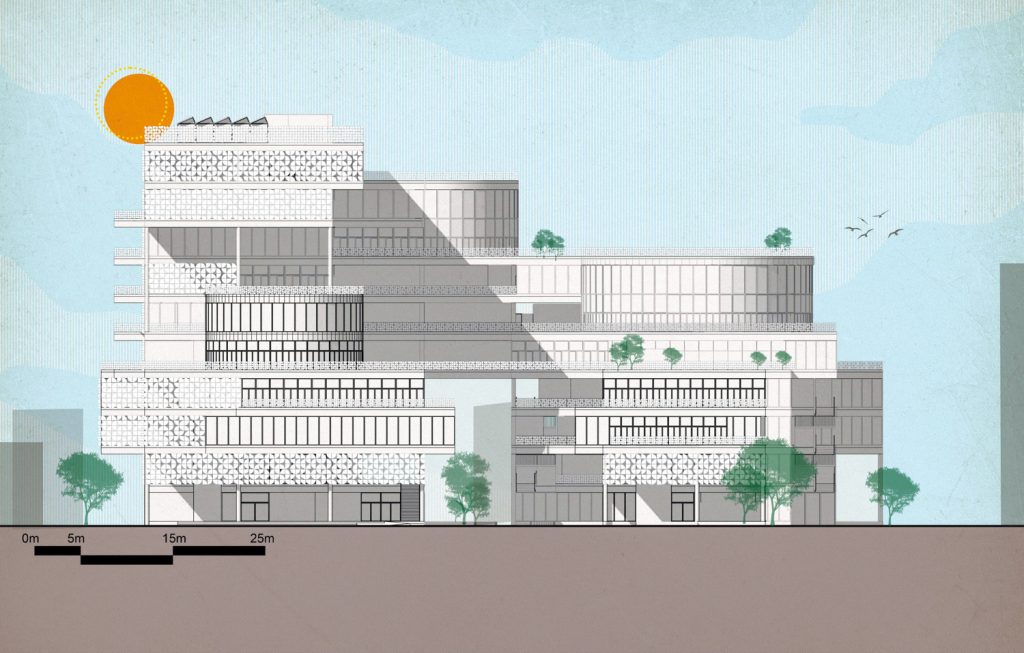
Finally, the climate becomes not a threat but a design partner. Arafat shapes a building that cools itself through ventilation corridors that draw in the breeze, shaded plazas that soften the heat, terraces and courtyards that breathe green life into the structure.Here, comfort arises from nature, not machinery.
Throughout this transformation, Arafat refuses to erase the market’s memory. Instead, he restores its scale, rhythm, and emotional weight, proving that architecture can evolve while honoring the layers beneath it.
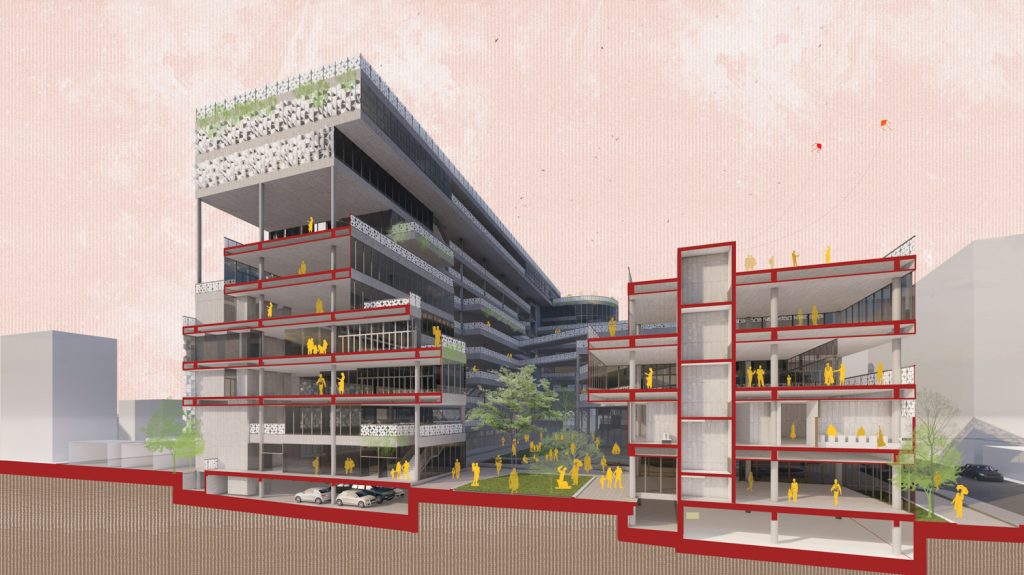
In his vision, Rajshahi New Market emerges as a contemporary civic ground open, breathable, and deeply rooted in its city. It becomes a reminder that Bangladeshi architecture can move forward not by discarding the past, but by reimagining it with care.