- A Room Without Walls
Within Parallels, Jubair Hasan Architects presents A Room Without Walls, an installation that reflects their approach to climate, context, and culture. Led by architects Jubair Hasan and Tahmida Afroze, the practice treats design as a process of listening, learning, and responding to place. Their work begins with terrain, water, vegetation, labour, and material realities, allowing each project to grow from its surroundings rather than from fixed formulas.
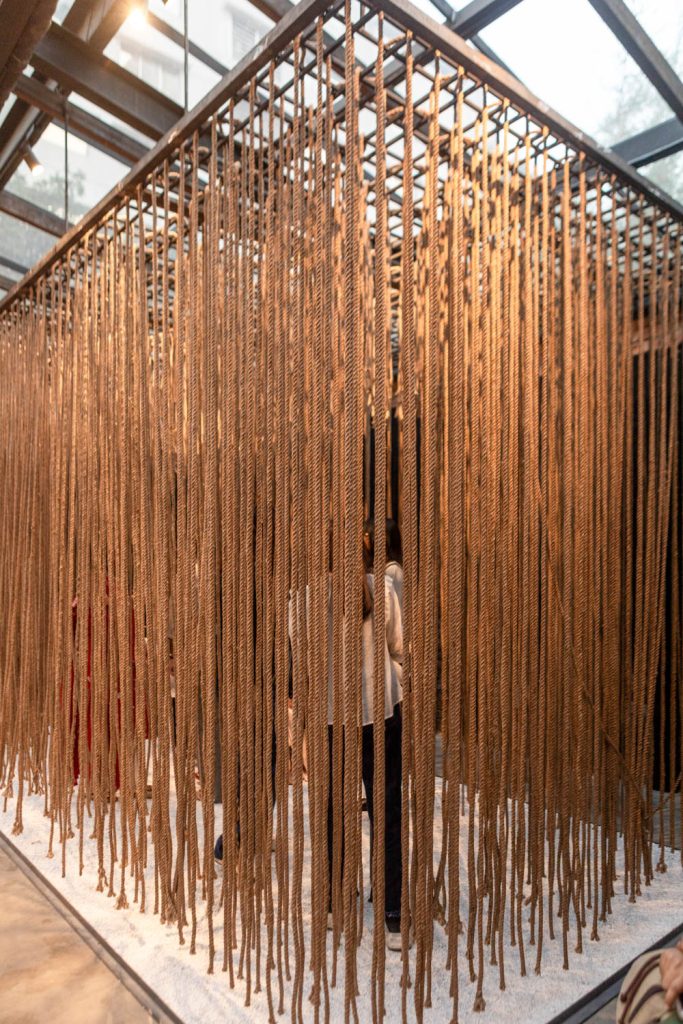
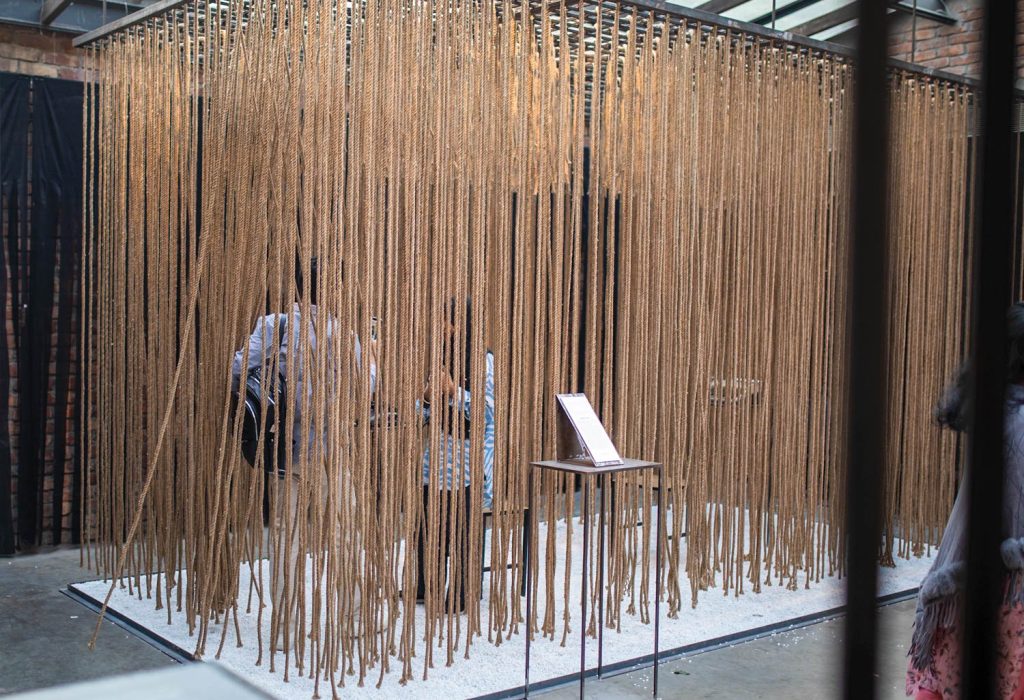
The installation forms a quiet spatial experience within a public setting. A field of vertically suspended ropes creates a light, porous enclosure where boundaries between inside and outside begin to blur. From a distance, it appears almost transparent. As visitors step closer, the ropes gently brush against the body, making them aware of movement, breath, and presence.
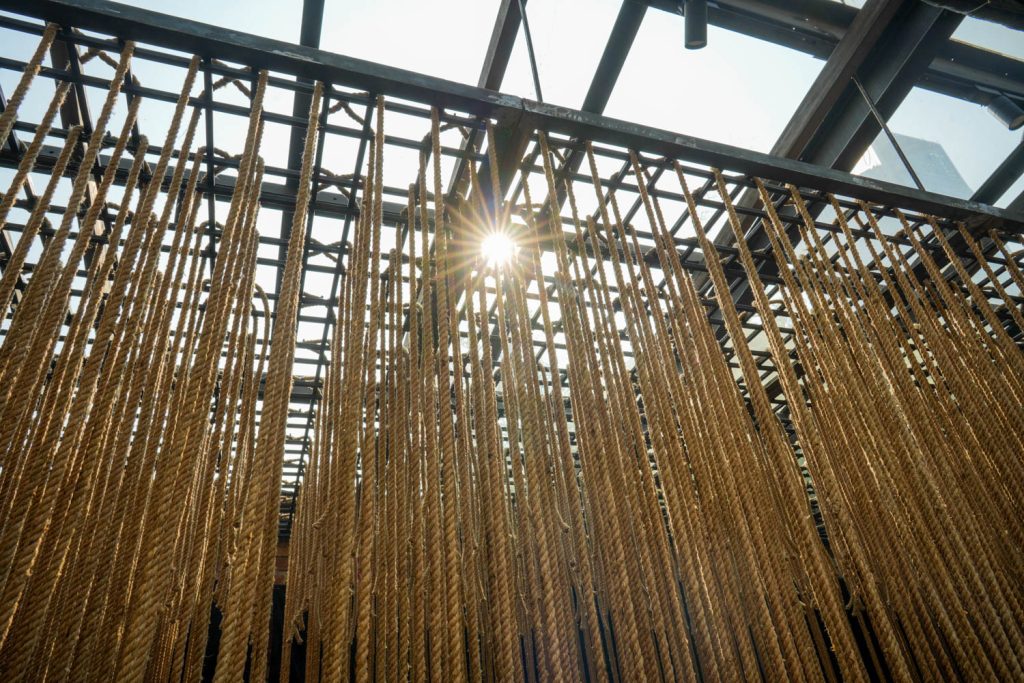
There is no fixed path. People may pause, stand, or walk through at their own pace. The space encourages reflection while remaining open and shared. It shows how a room can exist without walls, defined by feeling rather than solid form.
The project also speaks about building in the tropical delta, where materials are imperfect, and construction evolves through dialogue with the site. These realities shape an architecture that is adaptable, grounded, and humane.

Within the exhibition, the installation offers a moment of calm, curiosity, and awareness in the middle of the city, reminding us that architecture can be simple, responsive, and deeply connected to everyday life for people seeking pause and connection in changing urban environments today.
2. READING BETWEEN TIME & SPACES
At Parallels, Kazi Fida Architects presents Reading Between Time & Spaces, an installation that explores how architecture unfolds through time, environment, and human presence. Led by architect Kazi Fida Islam, the practice approaches space as something fluid and responsive rather than fixed or closed.
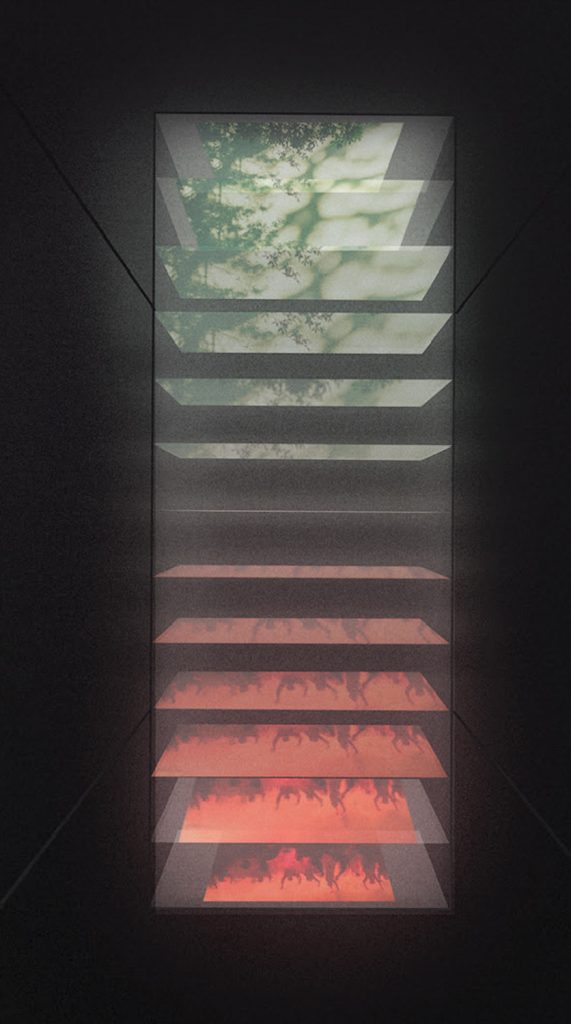
The project brings together layered projections, structural fragments, and environmental references to create a shifting spatial experience. Images of light, vegetation, movement, and built surfaces overlap, allowing visitors to sense how spaces change with season, mood, and occupation. Interior and exterior are treated as one continuous field where wind, rain, and daylight enter gently and shape everyday use.

Concrete, steel, and glass appear not as static materials but as active participants, negotiating balance with nature and people. The installation shows how architecture can remain open, adaptive, and incomplete, inviting interpretation instead of imposing a final form. Visitors move through layers of sound, image, and shadow, experiencing architecture as an event.
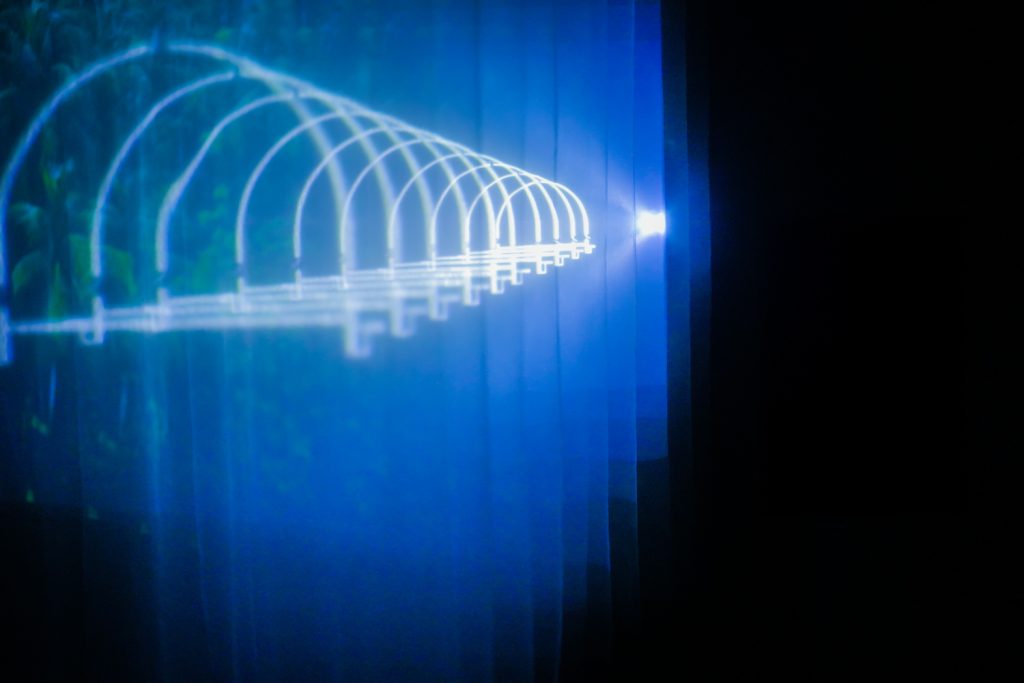
This work reflects the studio’s broader approach, where projects respond to context, climate, and social life. It emphasizes gathering, pause, and reflection, suggesting that meaningful spaces grow from relationships between structure, environment, and community.
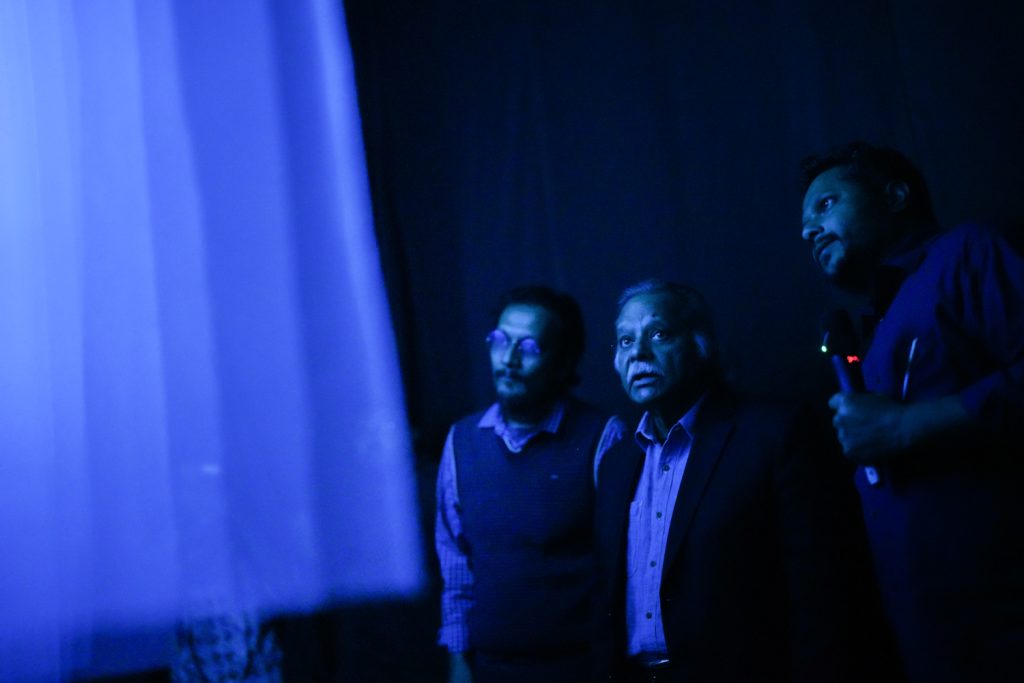
Within the exhibition, the project encourages viewers to read architecture as a living process. It reminds us that buildings evolve through time, care, weather, memory, and the rhythms of human life. It also invites dialogue among architects, students, and visitors, opening questions about belonging and responsibility, and how design can remain sensitive to place while embracing change across generations and futures today.
3. Memory Loop
At Parallels, Form.3 Architects presents Memory Loop, an installation that brings the layered history of Dhaka into a tangible experience. Founded in 2010 by Md. Didarul Islam Bhuiyan (Dipu) and A.K.M. Muajjam Hossain (Russel), Form.3 Architects focuses on creating architecture that responds to local culture, climate, and history while connecting to broader global contexts.
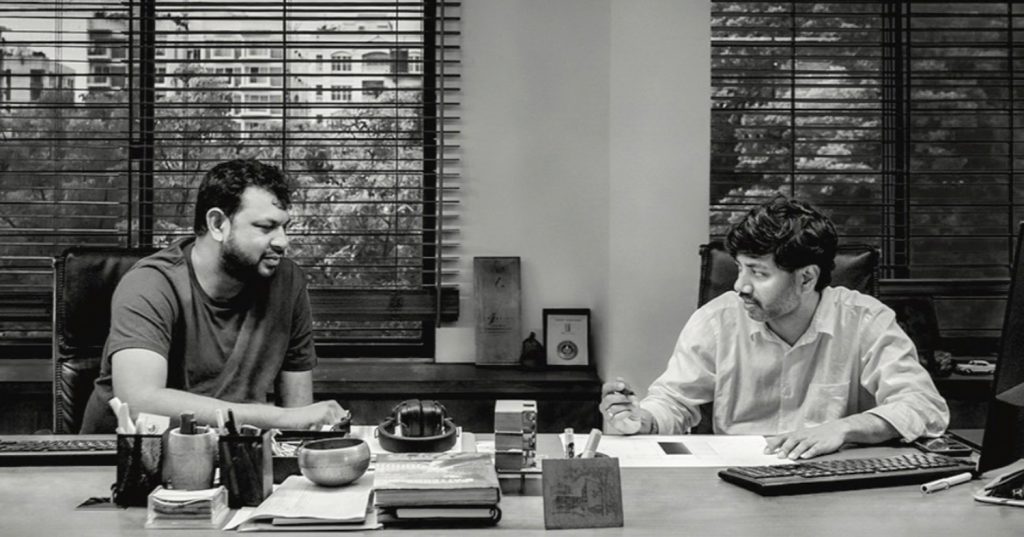
Memory Loop draws from the studio’s work on the Conservation and Redevelopment of Old Dhaka Central Jail, a site that has witnessed centuries of the city’s life, from Afghan and Mughal forts to a colonial prison, and now part of the modern urban fabric. The installation translates this historical continuum into space, layering fragments from different eras to evoke continuity and memory. Visitors move through subtle forms, handcrafted details, and material gestures that blend old and new, highlighting how past moments continue to resonate in the present.
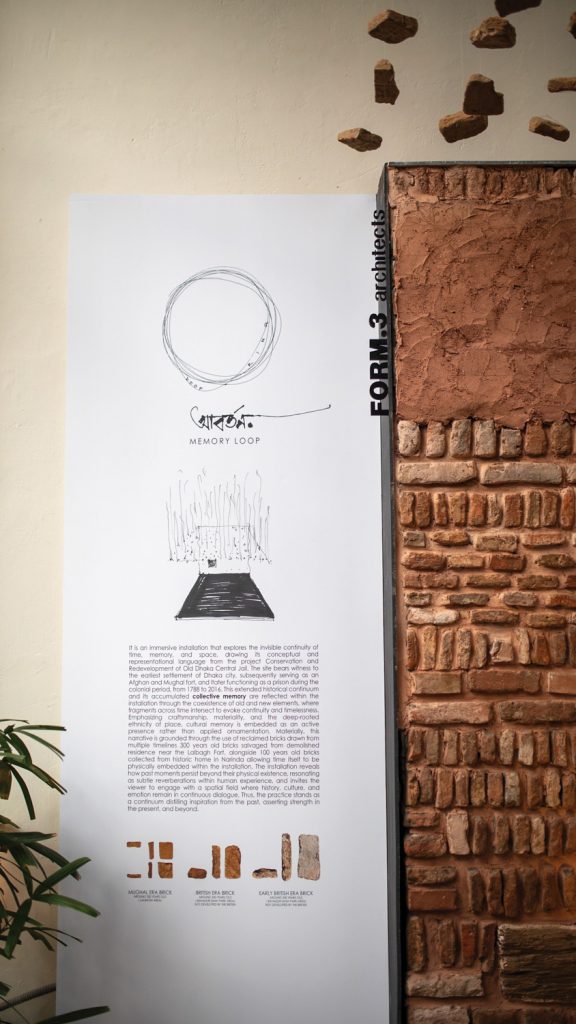
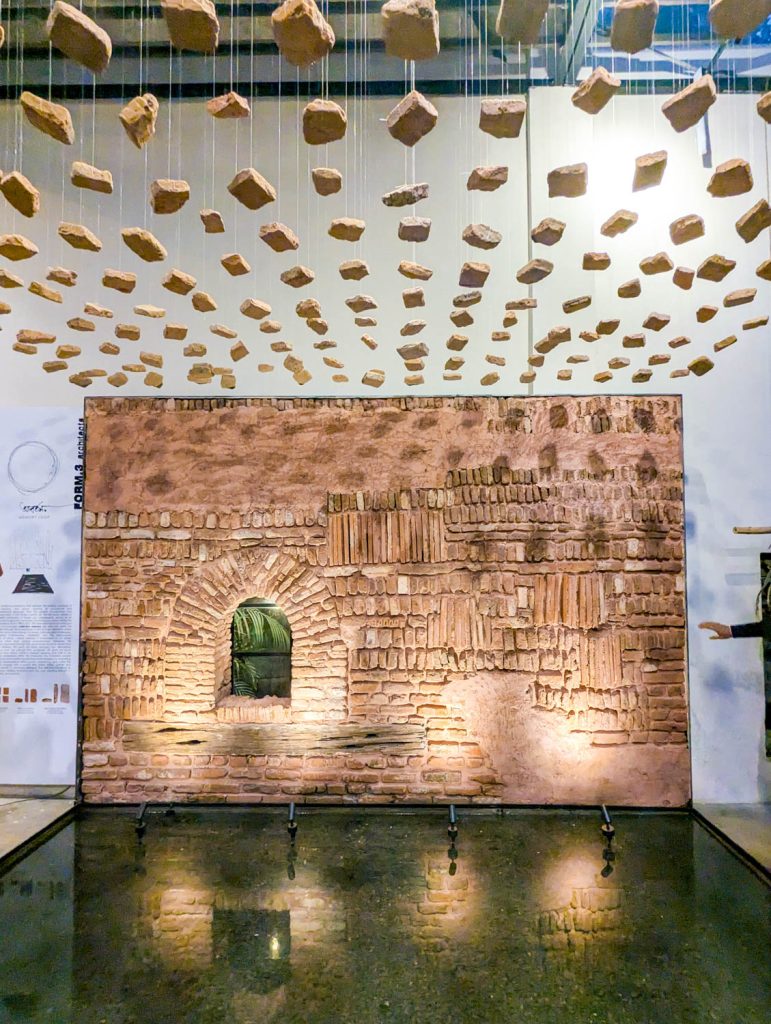
The work emphasizes cultural memory as a living presence rather than applied ornamentation. It invites viewers to sense the passage of time, the persistence of heritage, and the emotional depth embedded in place. Through Memory Loop, Form.3 Architects demonstrates how architecture can act as a bridge across generations, connecting history, culture, and urban life in ways that are both reflective and immersive.
4. Time Seen from a moving Self
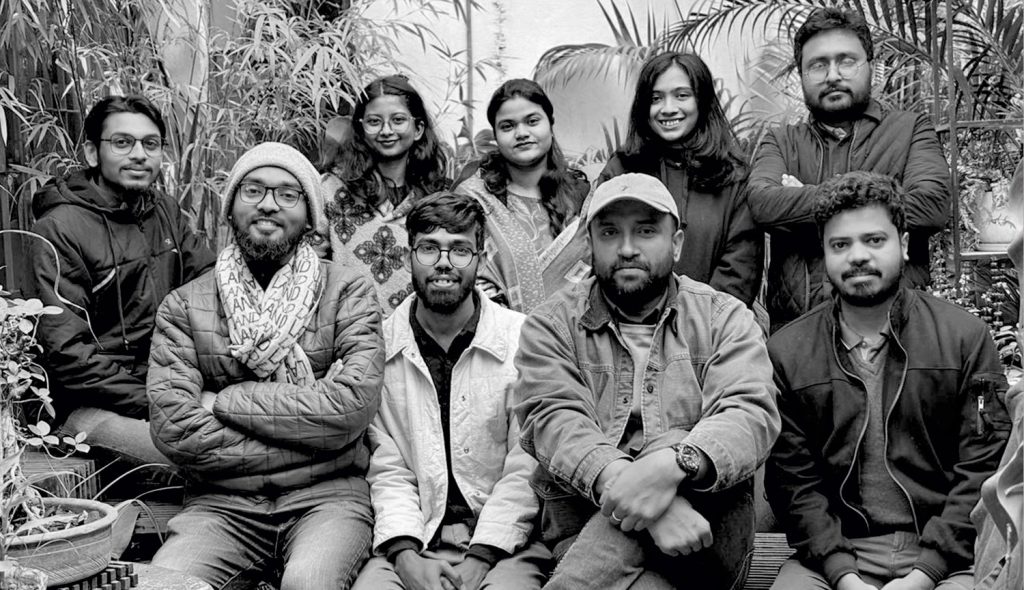
Group of Architects and Thinkers (GOAAT) presents Time Seen from a moving Self, an installation that reconnects architecture with nature, memory, and shared urban life. Led by architect Md. Rabiul Islam, the collective brings together architects, engineers, conservationists, and craftsmen who work toward an inclusive practice where people, flora, and fauna coexist.
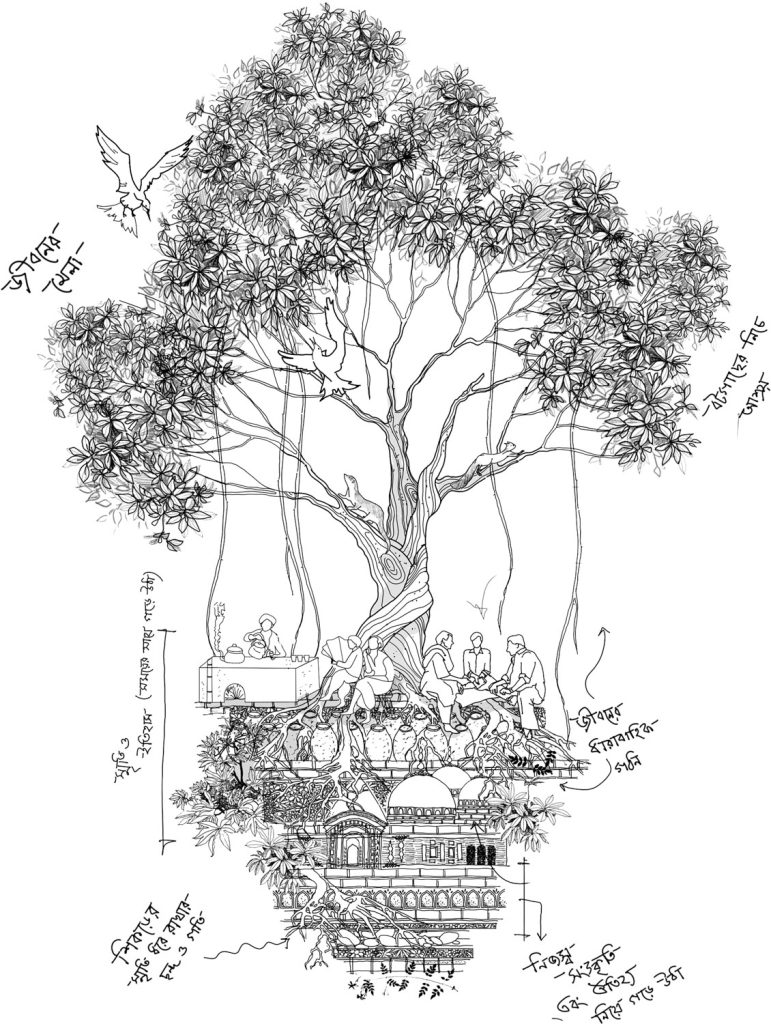
At the centre of the project stands a banyan tree, placed within the gallery as a living symbol of design justice. The installation reflects how a tree shelters birds, insects, and people at once, creating an ecosystem rather than a single object. Visitors move around its roots and shade, sensing how architecture can nurture and protect instead of dominate.
The project highlights the banyan’s environmental role in cooling air, holding soil, guiding water, and storing carbon while also recalling stories, music, and gatherings once shared beneath its canopy. It speaks about belonging and loss, and about rebuilding connections between city life and nature.
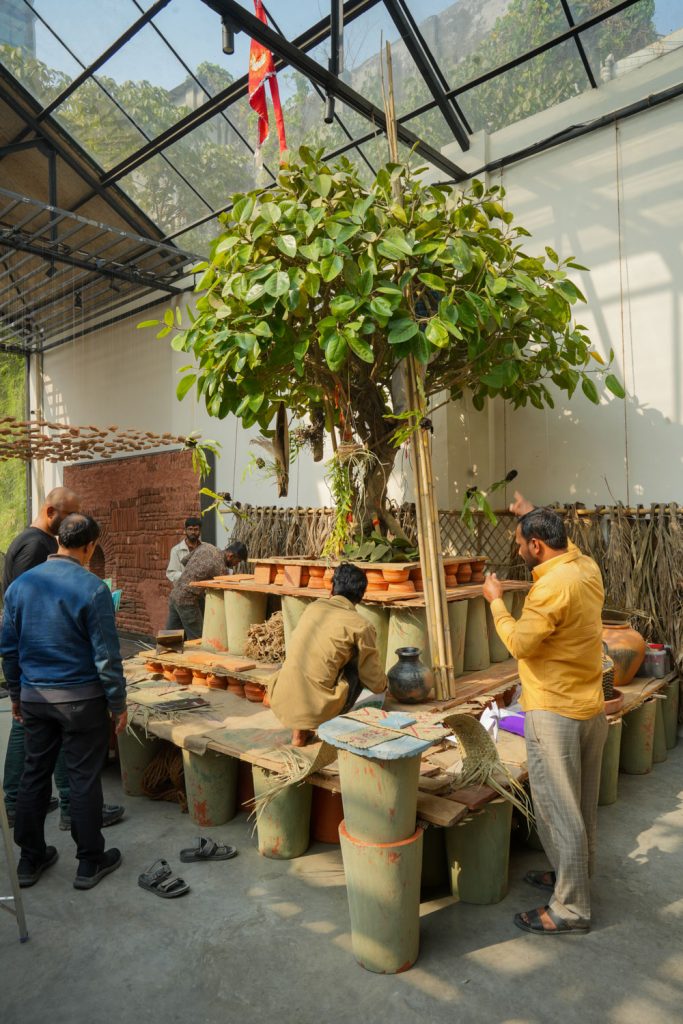
Through layered displays, texts, and spatial interventions, the installation presents architecture as a living system shaped by relationships. It encourages viewers to imagine buildings as environments that grow, adapt, and support multiple forms of life.
Within the exhibition, the work sparks conversation about inclusivity, climate responsibility, and cultural memory. It reminds visitors that architecture is not only about constructing walls, but about building ecosystems where people and nature exist together in balance, care, and continuity.
By bringing a banyan into the gallery, GOAAT reconnects urban audiences with Bengali ecological wisdom and collective memory. The project suggests that future cities must learn from such living systems, where resilience grows through cooperation, diversity, and care, shaping environments that sustain both culture and biodiversity over time.
5. THE UNBEARABLE LIGHTNESS OF BEING
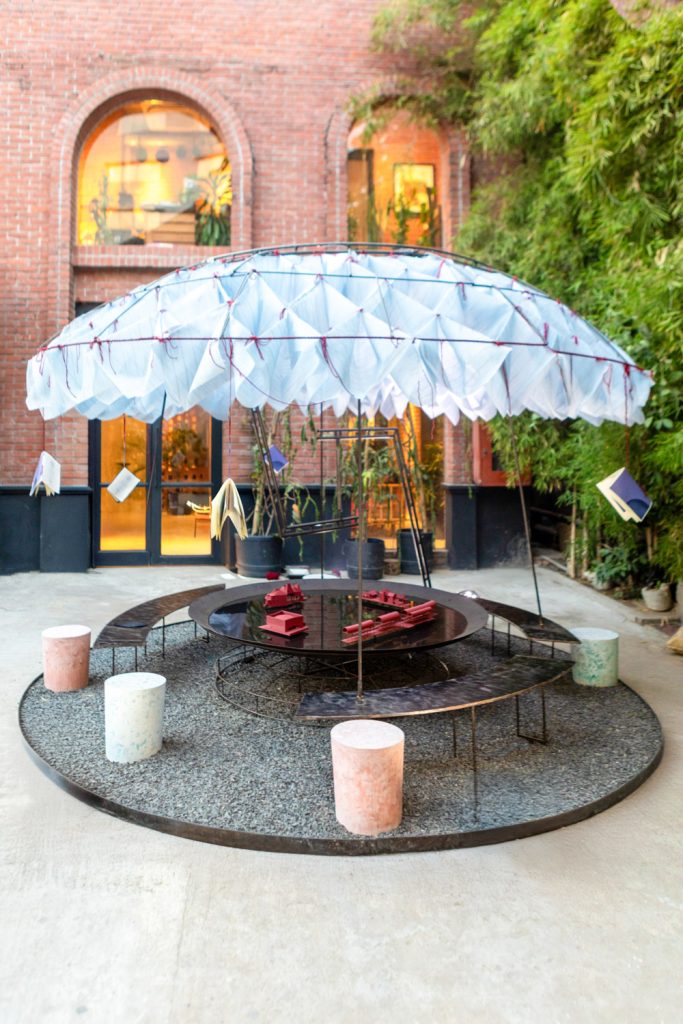
At the Parallels event, architects Saiqa Iqbal Meghna and Suvro Sovon Chowdhury present The Unbearable Lightness of Being, a temporary pavilion that reflects life in the monsoon delta. A light hemispherical dome hovers above a shallow pool, built with slender rods, raw metal joints, and translucent fabric that filters the sun, wind, and rain. The structure does not sit heavily on the ground; it rests in balance, shaped by tension, reflection, and movement.
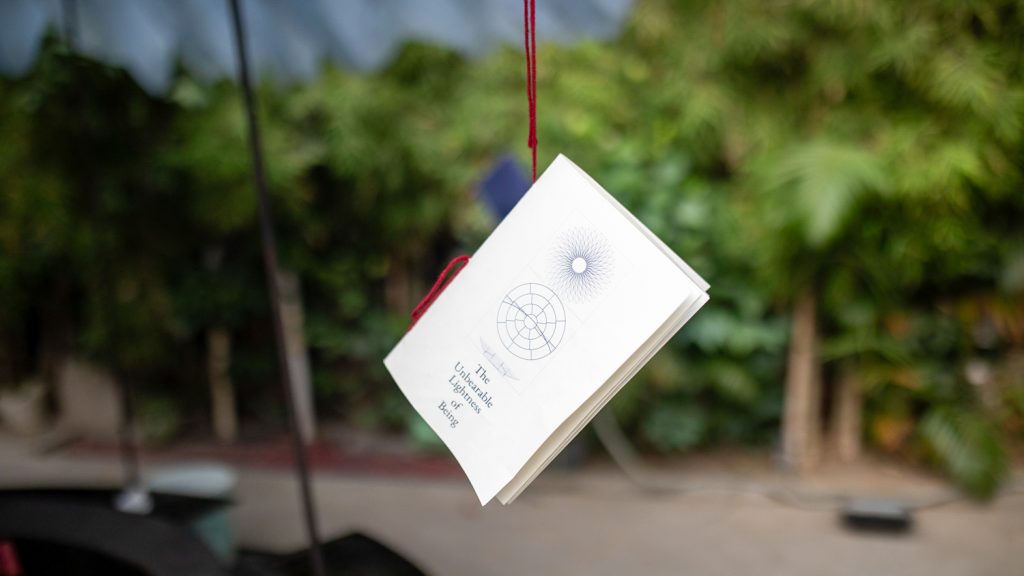
Visitors walk around and below the pavilion, where light shifts on water and the surface responds to changing weather. The project speaks about coexistence between land and water, weight and lightness, permanence and change. After the exhibition, the installation is planned to move to a public site, becoming a small civic space for pause, conversation, and gathering.
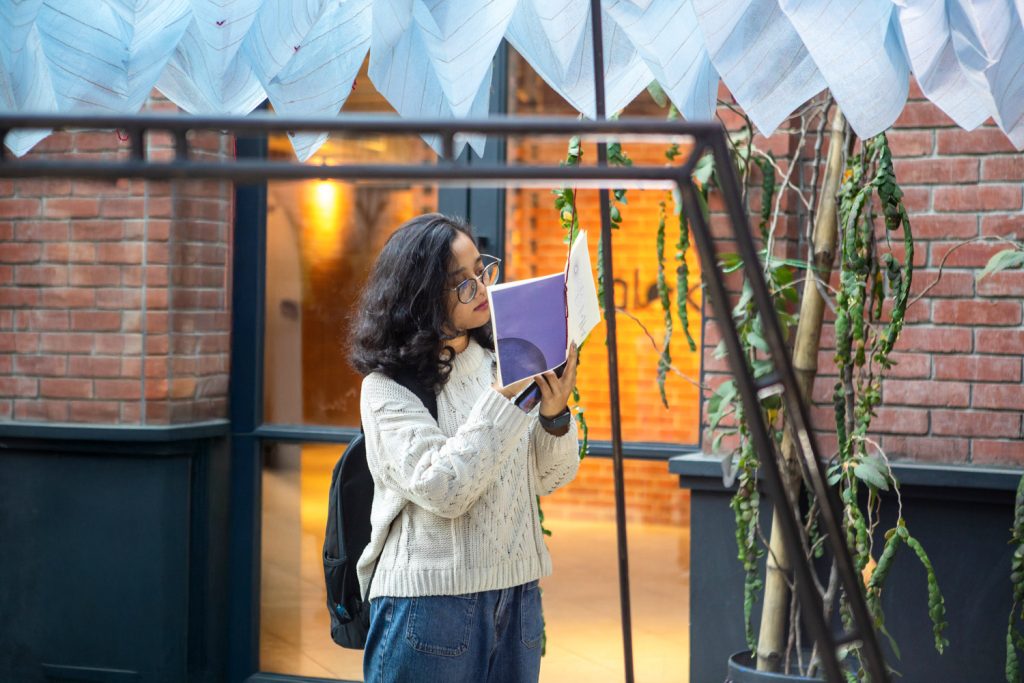
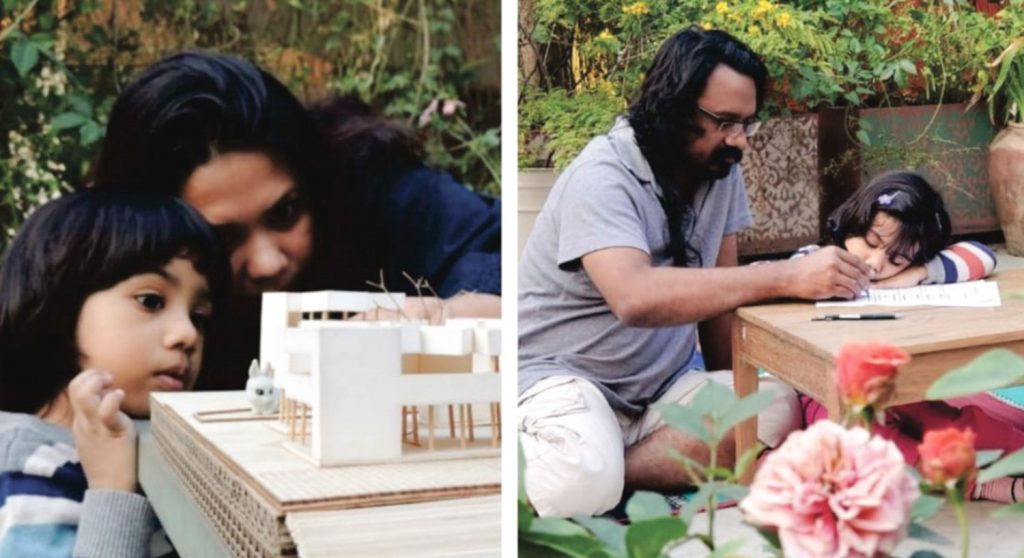
Through their practices, Sthanik and Studio Morphogenesis Ltd., the architects continue to explore climate, material, and community. Their work uses brick, concrete, and craft to shape spaces that feel local and contemporary, showing how architecture can remain gentle, inclusive, and deeply connected to everyday life in Bangladesh. It reminds visitors that architecture can be quiet, responsive, and human, shaped by care, memory, and shared responsibility over time together.
6. The Quiet Presence of Absence
In Dhaka’s Aloki gallery, Cubeinside presents The Quiet Presence of Absence, an installation that celebrates space as much for what is left unbuilt as for what is constructed. Since its founding in 2009, Cubeinside has explored how voids, light, and material create emotional resonance and movement within architecture.
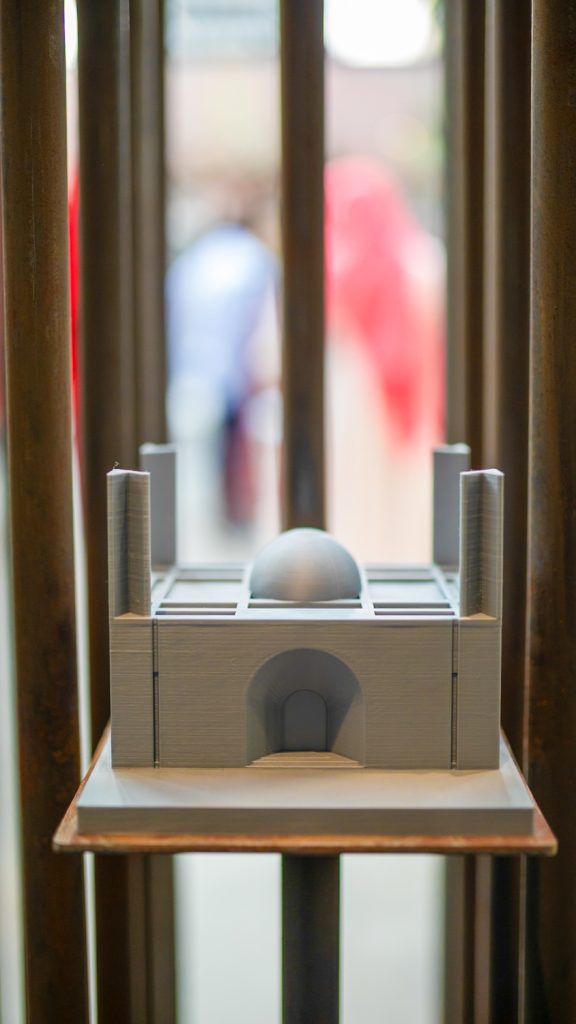
The installation uses vertical lines to represent blurred thoughts behind the design process, gathering around a central void to form a translucent, porous enclosure. Visitors move through this space, experiencing how emptiness defines architecture, shaping perception, memory, and human interaction. The work links abstract ideas from selected Cubeinside projects to a tangible spatial journey, showing that permanence in architecture lies not in mass, but in the spaces that hold experience.
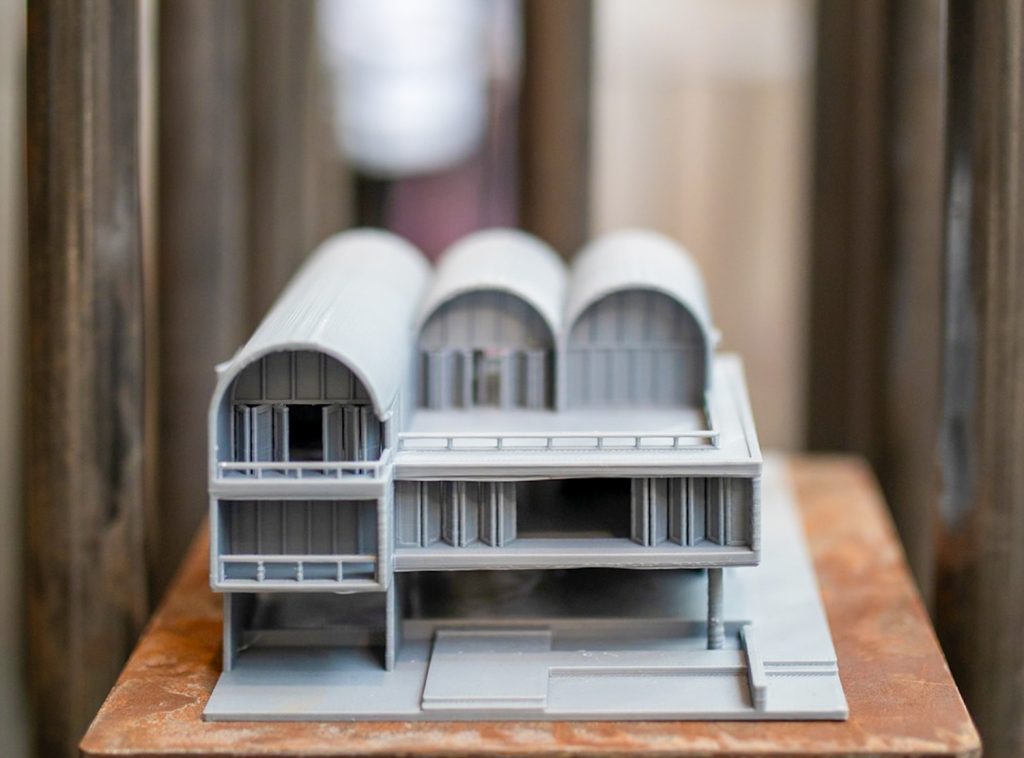
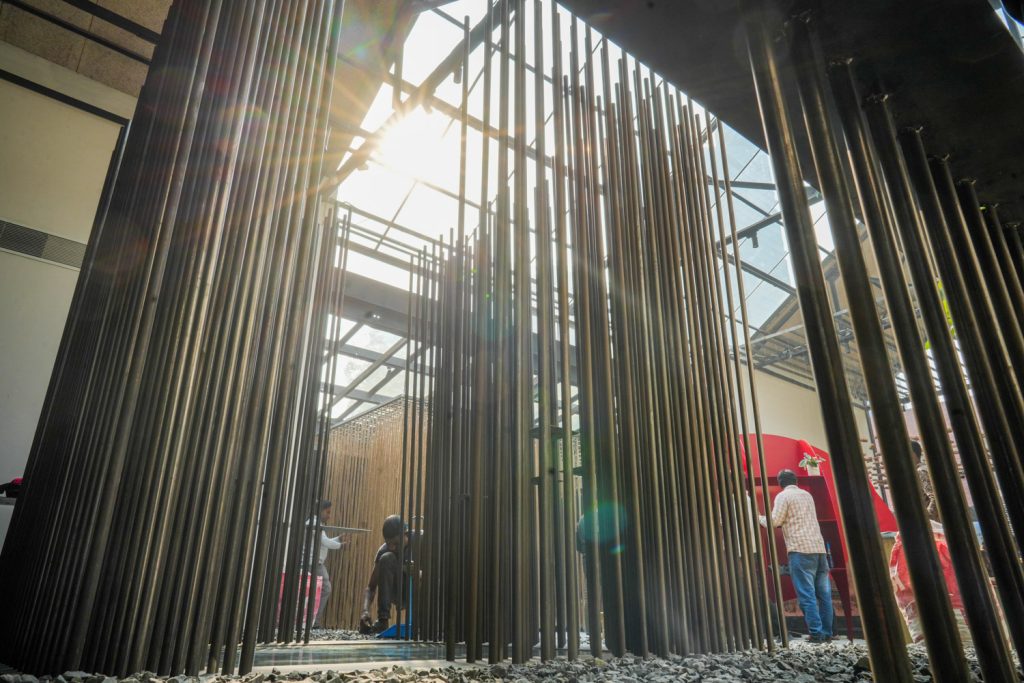
The Quiet Presence of Absence invites reflection on presence and absence, continuity and change, and the subtle ways architecture connects people to land, light, and memory. Cubeinside demonstrates that architecture is a living, breathing experience shaped by context, thought, and human engagement.
7. The Red Elephant
In the heart of Dhaka’s Aloki gallery, Dehsar Works, led by architect Ar. Rashed Hassan Chowdhury invites visitors to step into The Red Elephant, a living metaphor for layered thinking and collaborative design. Since 2015, the studio has blurred the boundaries between architecture, urbanism, and design experimentation, treating each project as an opportunity to rethink space, material, and interaction.
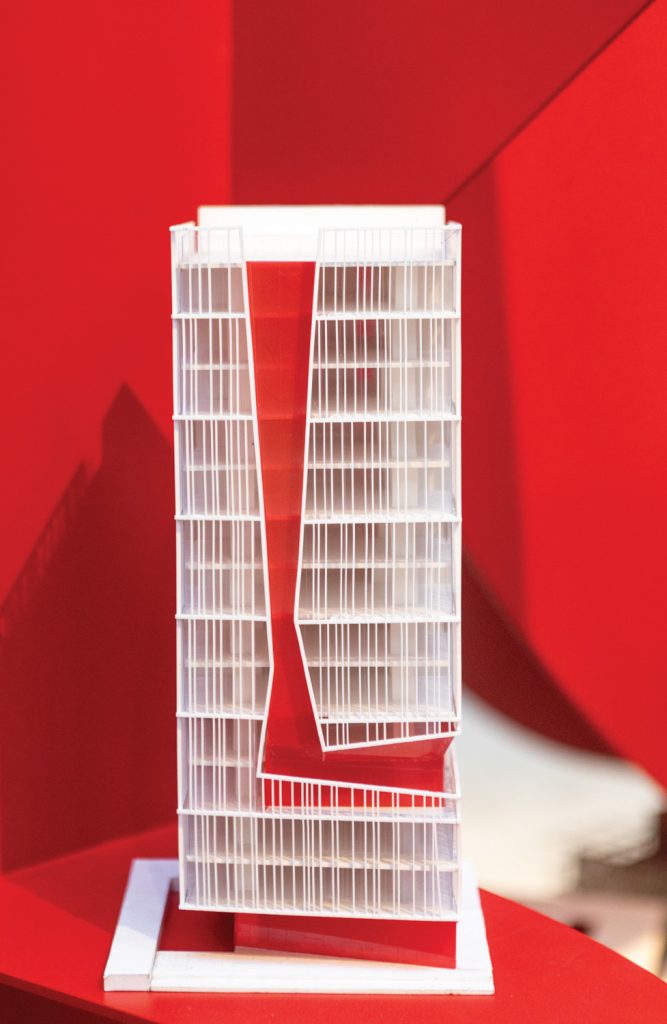
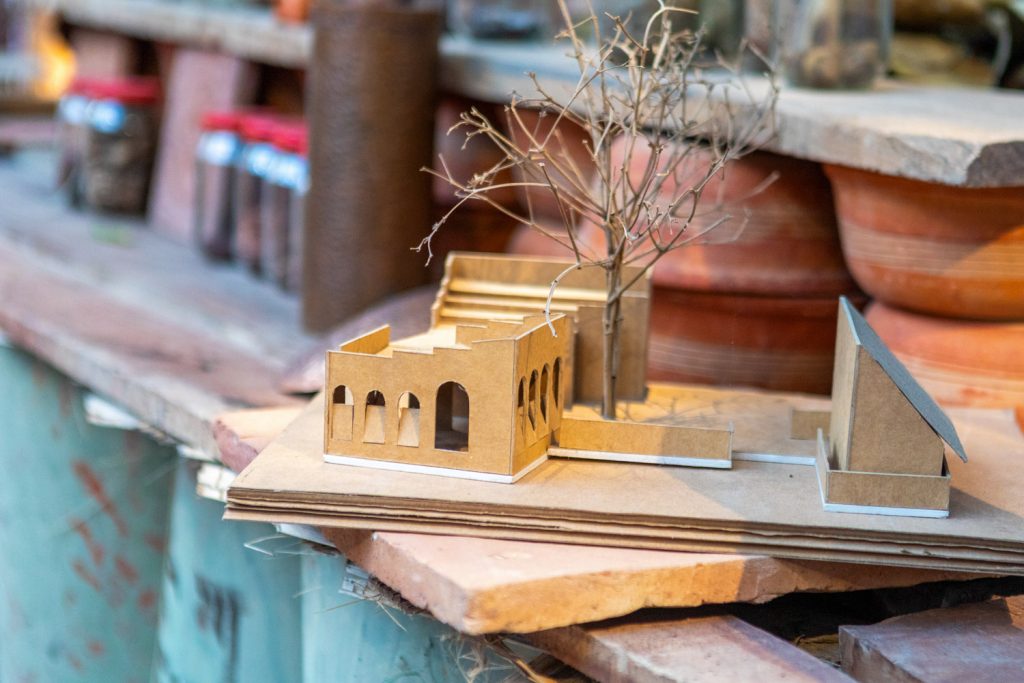
The Red Elephant reimagines the ancient parable of the blind men and the elephant, showing how understanding deepens when seen from multiple perspectives. The sculptural elephant is more than a form; it is a curated world of shelves and niches, each holding artifacts, miniature models, sketches, and materials. As visitors move around it, the fragments reveal how diverse ideas converge to create a coherent narrative, reflecting the studio’s belief that design thrives in intersection, not isolation.
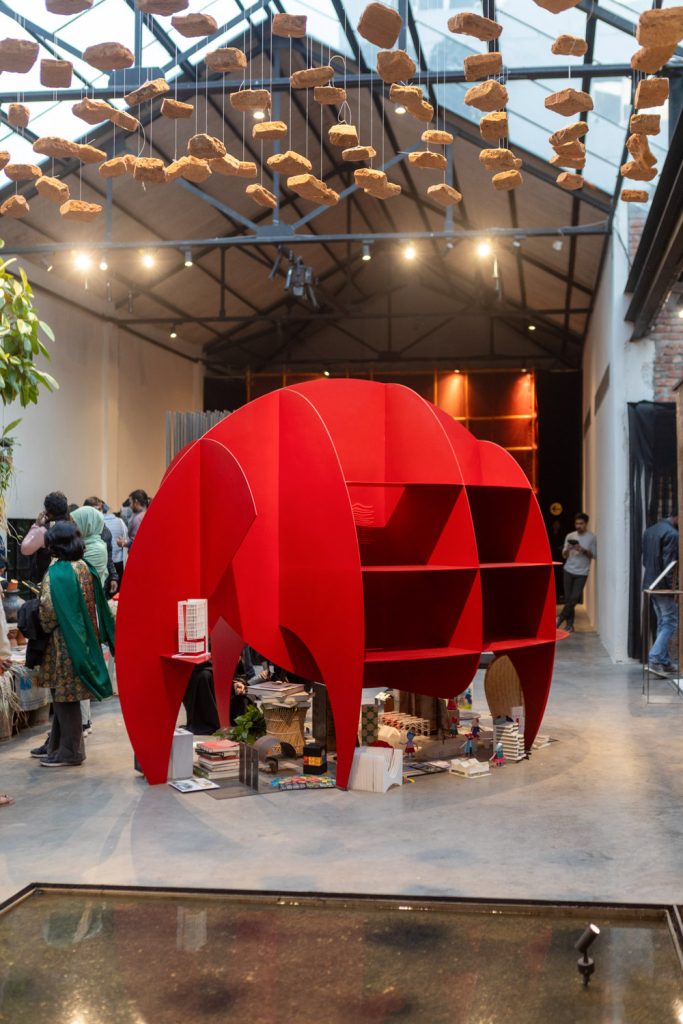
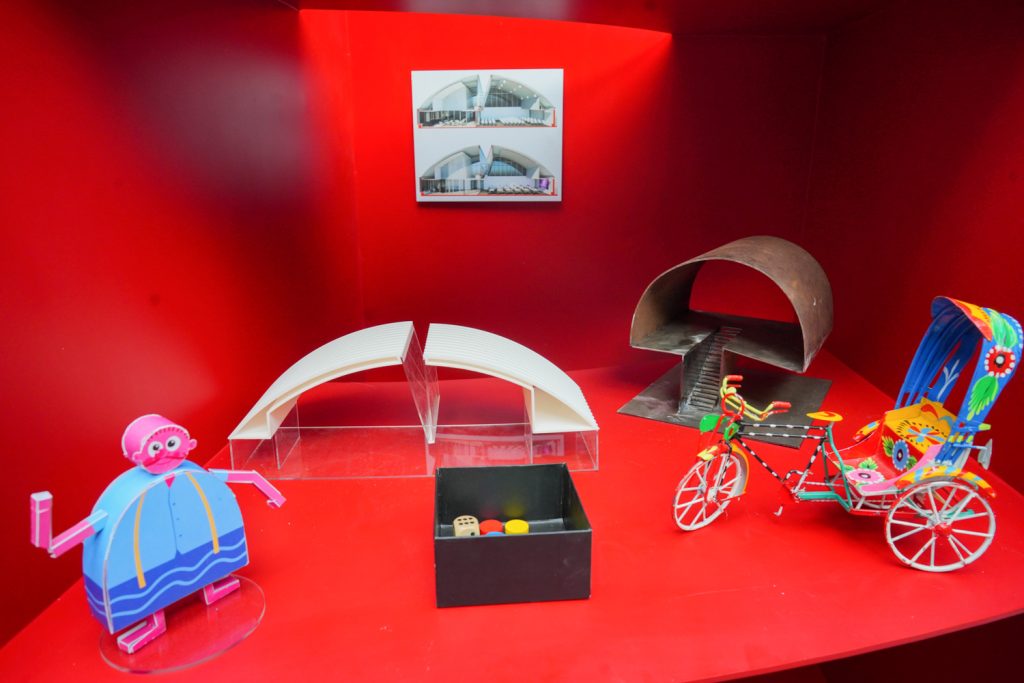
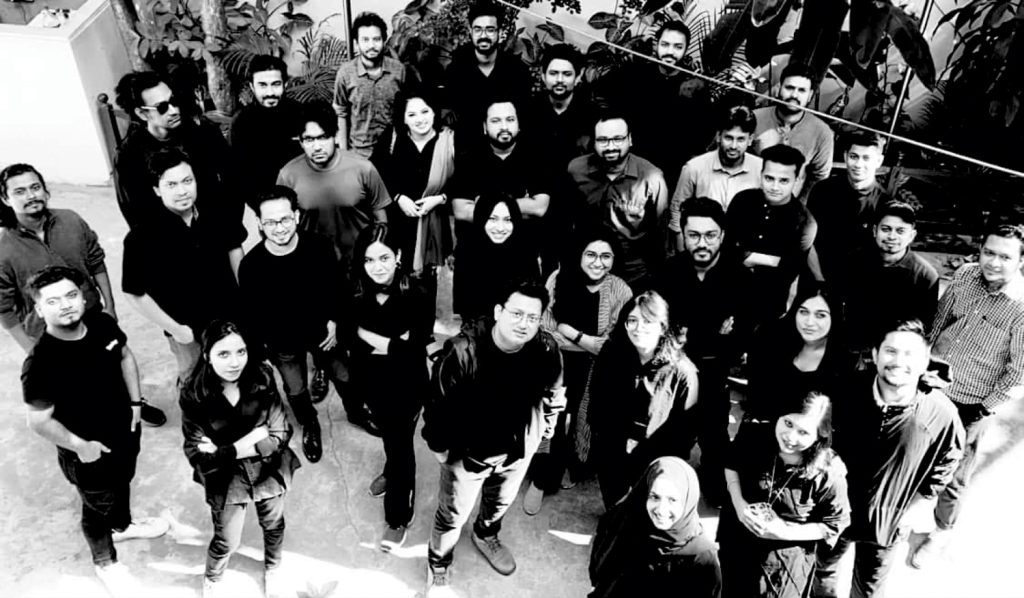
The installation is immersive and playful, yet conceptually profound, inviting reflection, curiosity, and dialogue. It embodies Dehsar Works’ philosophy that architecture gains meaning when it embraces multiple voices, integrates cultural context, and engages its audience actively. Through this piece, visitors experience how individual insights, like scattered pieces of a puzzle, come together to shape space, memory, and thought, a vivid reminder that design is not just what we build, but how we see, question, and connect.
8. Confluence
At Parallels, Roofliners Studio of Architecture presents Confluence, a project that reflects their beliefs in collaboration, context, and shared authorship in architecture. Founded in 2012 by Rajib Ahmed, Sarawat Iqbal Tesha, and partner Monon-bin Yunus, the practice works across rural and urban projects, from small community structures to large institutional buildings, always responding to place, people, and climate.
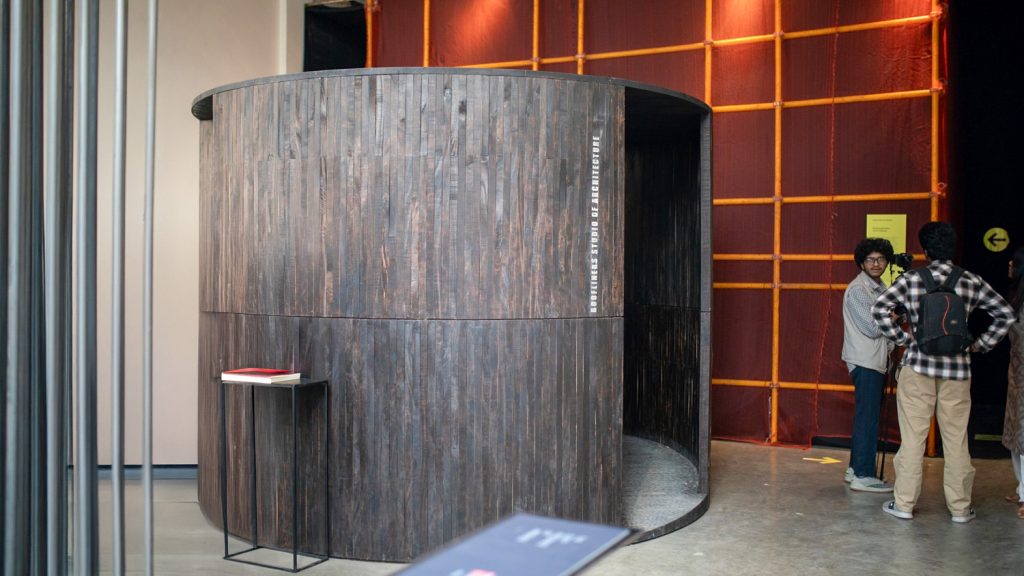
Confluence explores how architecture grows from many voices rather than a single idea. The project imagines design as a process where sketches, stories, and experiences merge, much like colours blending in water to form a new whole. It values dialogue, participation, and learning, allowing every stage of a project to shape the final space. Instead of fixed formulas, the work follows an intuitive path guided by discussion and exchange.
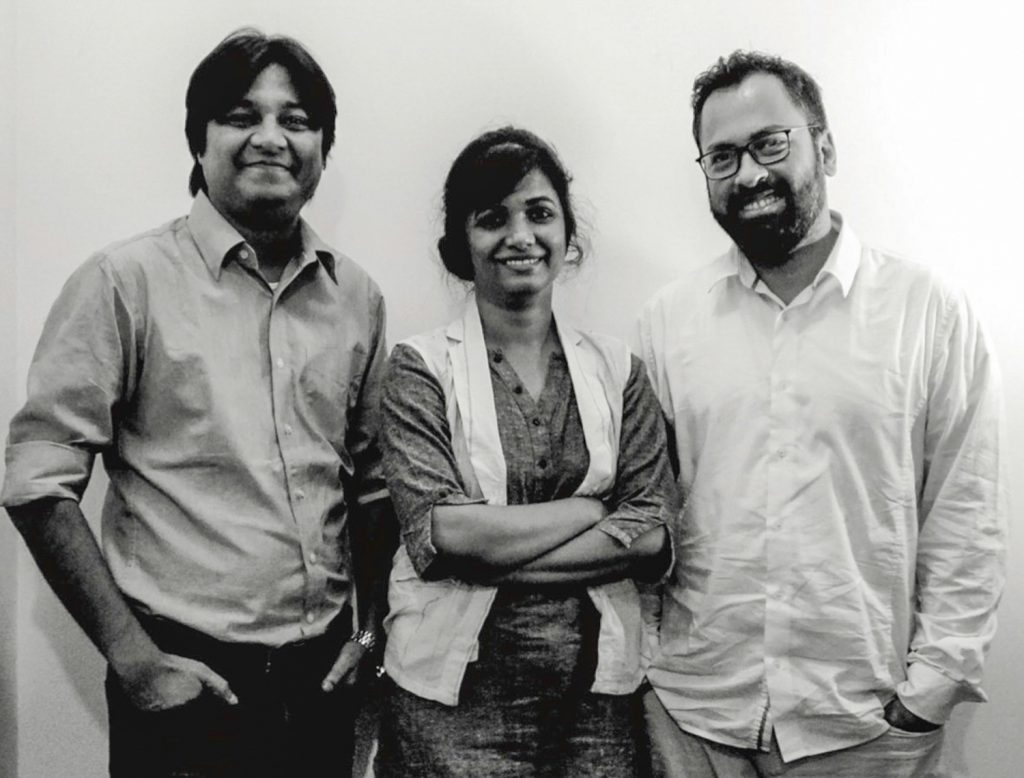
The installation expresses this thinking through an open and layered form that suggests movement, connection, and continuity. It invites visitors to pause, walk around, and reflect on how spaces are created together. The project shows that architecture becomes meaningful when it holds memory, community, and everyday life within it. Through their ongoing work, Roofliners continues to focus on material, craft, and social engagement. Confluence stands as a reminder that architecture is never built alone; it evolves through shared effort, negotiation, and care, forming places that feel rooted, responsive, and alive in time.

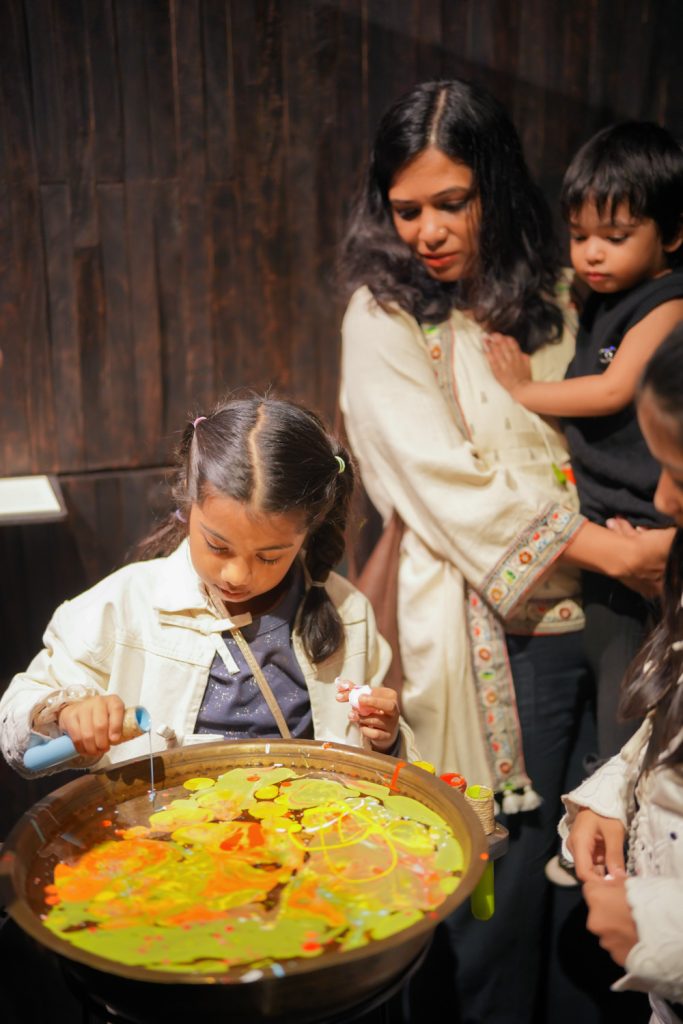
Alongside the exhibition, the opening programme features remarks by Shamsul Wares, Mahmudul Anwar Riyaad, and Emran Hossain, followed by a conversation with Kashef Chowdhury. Over six days, lectures, roundtables, and talks continue to unpack the creative journeys of participating practices and their evolving relationship with contemporary Dhaka.