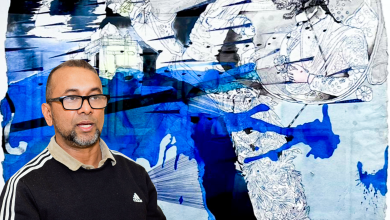
In Mirpur’s Bhola Bosti, stories cluster densely, stitched together by tin roofs, narrow lanes, and the quiet resilience of people who keep Dhaka moving while remaining invisible within it. From this dense and fragile terrain emerges Voices in the Blueprint: Participatory Housing for a Sustainable Slum Future, a thesis by Shizuka Ahmed, a graduate of Rajshahi University of Engineering & Technology (RUET), that chooses to listen before it chooses to draw.

This project unfolds in the present tense of lived life. It does not arrive with a final image or a fixed solution. Instead, it grows from within the settlement, shaped by the rhythms of households, informal work, shared water, and long pauses of waiting. Bhola Bosti is not framed as a failure of the city, but as a living neighbourhood, adaptive, vulnerable, and deeply human. Architecture here becomes a quiet companion, working beside residents rather than speaking over them.
At the heart of the proposal is the idea of incremental change. Low-rise, modular homes built with familiar materials like brick, bamboo, and tin allow families to build gradually, according to their means and needs. Air moves freely through cross-ventilated spaces; light enters without force. A home can also be a shop, a workshop, or a source of income.

Water, long polluted and neglected, returns as both memory and future. The adjacent lake is restored not simply as infrastructure, but as shared ground. What was once a shrinking boundary is slowly becoming a social spine. The lake no longer reflects only structures; it reflects belonging.

The masterplan resists the temptation of height and displacement. Instead of towers, compact clusters shape courtyards and micro-commons where children play, neighbours meet, and trust begins to rebuild. Pedestrian lanes take priority, recognising that movement here happens on foot. Community facilities, healthcare points, training spaces, wet markets, and schools are woven into everyday paths, responding to real needs rather than distant ideals.

What gives this project its strength is its refusal to dramatise poverty. Shizuka Ahmed designs with restraint, clarity, and respect, recognising slum dwellers as active contributors to the city’s future. Sustainability here is not measured only in materials or systems, but in continuity, participation, and care.
Voices in the Blueprint reminds us that a city does not grow stronger by erasing its margins. It grows by nurturing them. In Bhola Bosti, architecture does not shout. It listens and, in doing so, it slowly builds a future where stability grows room by room, life by life.