- Behind the Masks
Mustafa Monwar
Text by: Shrabony Sarker
Mustafa Monwar is an artist who quietly shapes a nation’s cultural memory. For decades, his work has moved between canvas and stage, television and puppetry, always rooted in a deep love for people, stories, and freedom of expression. He is widely known as the “Puppet Man of Bangladesh.”
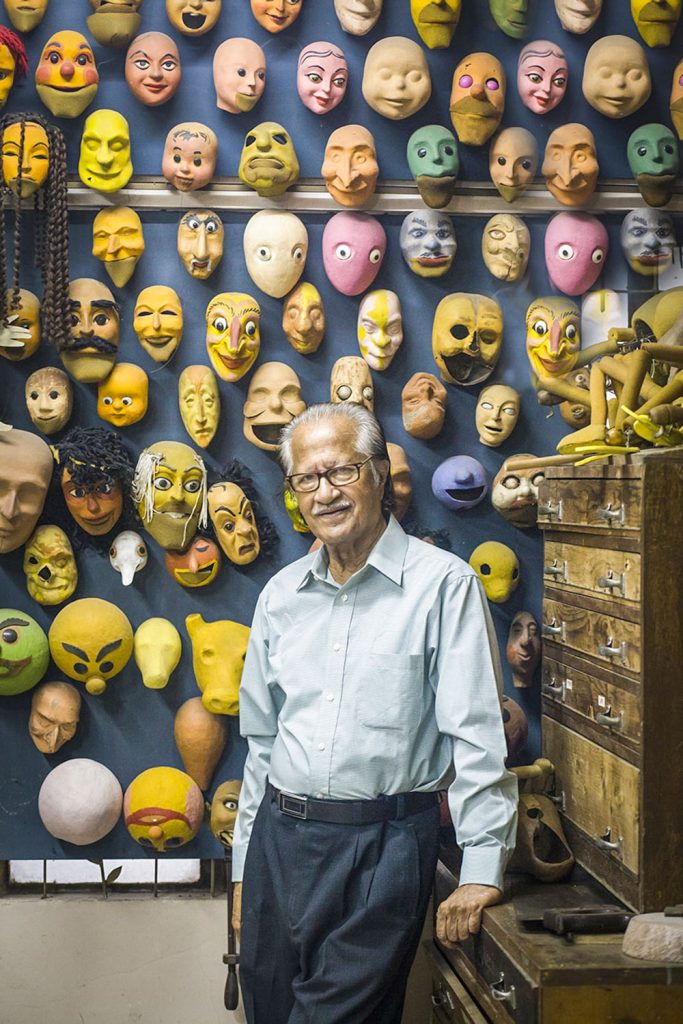
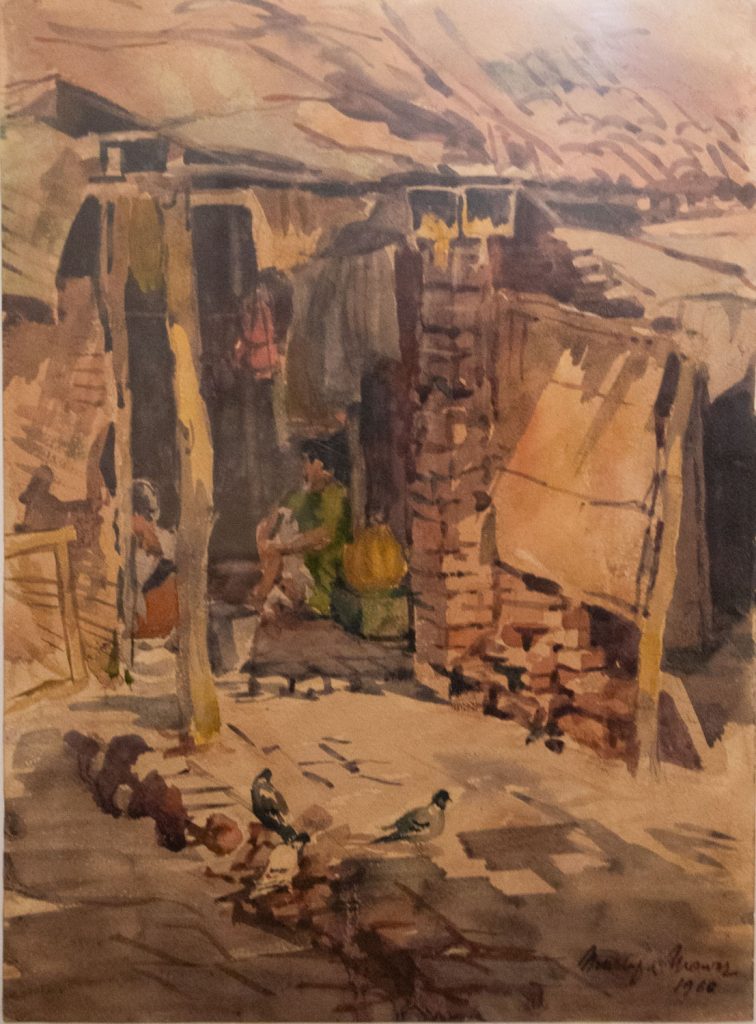
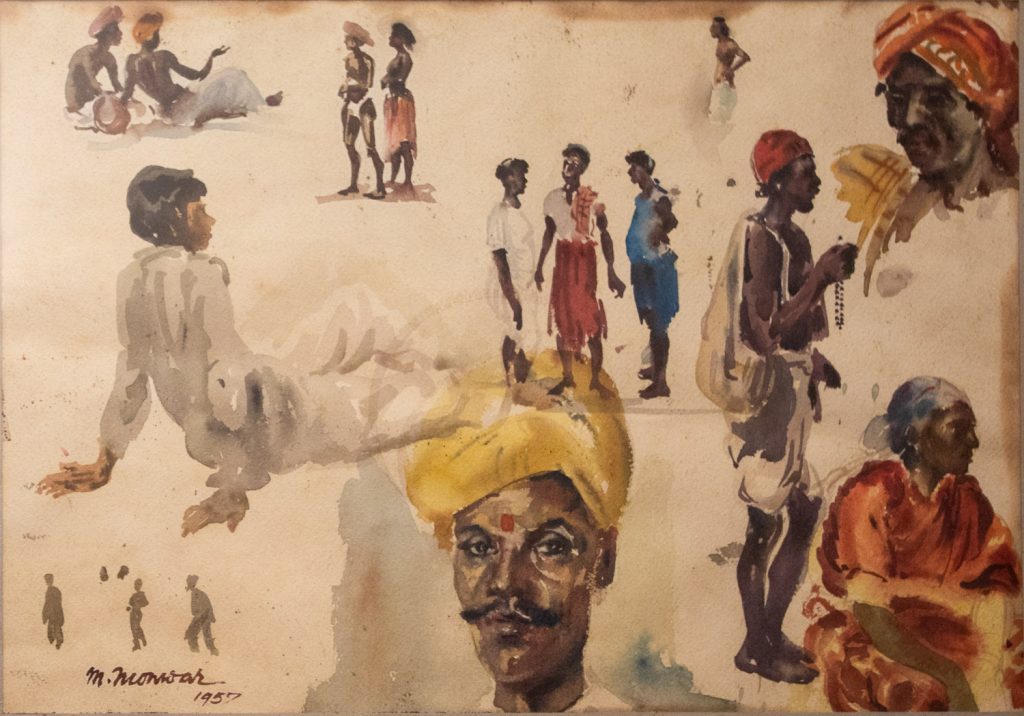
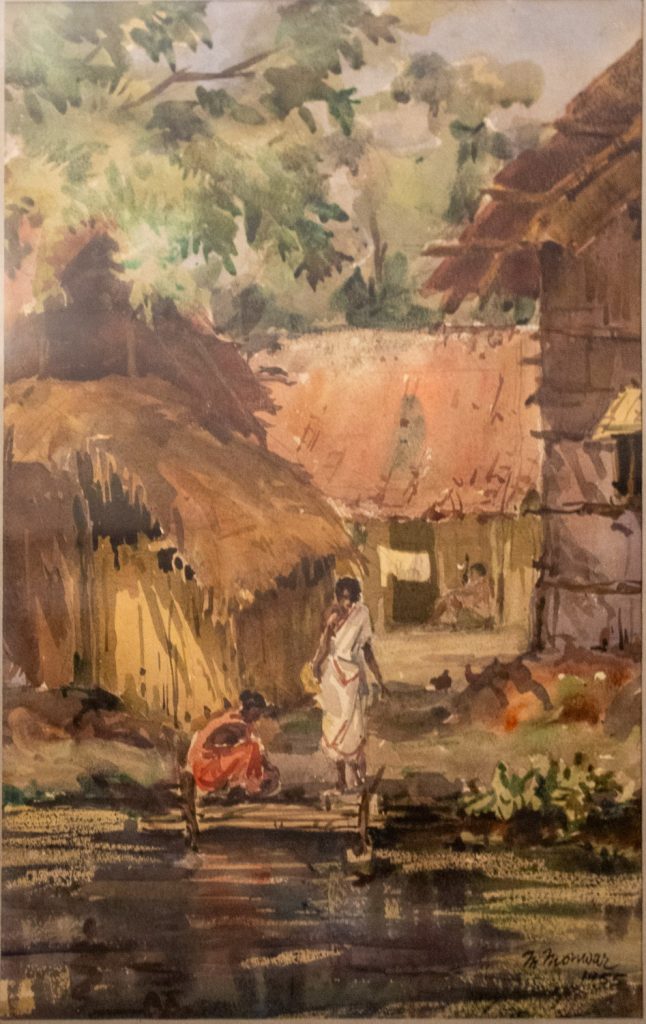
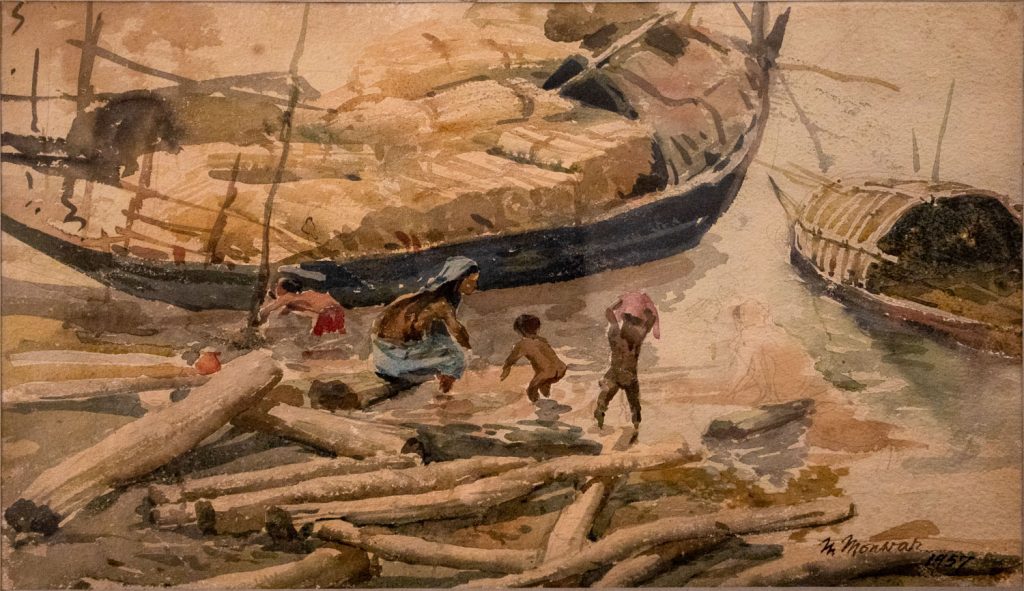
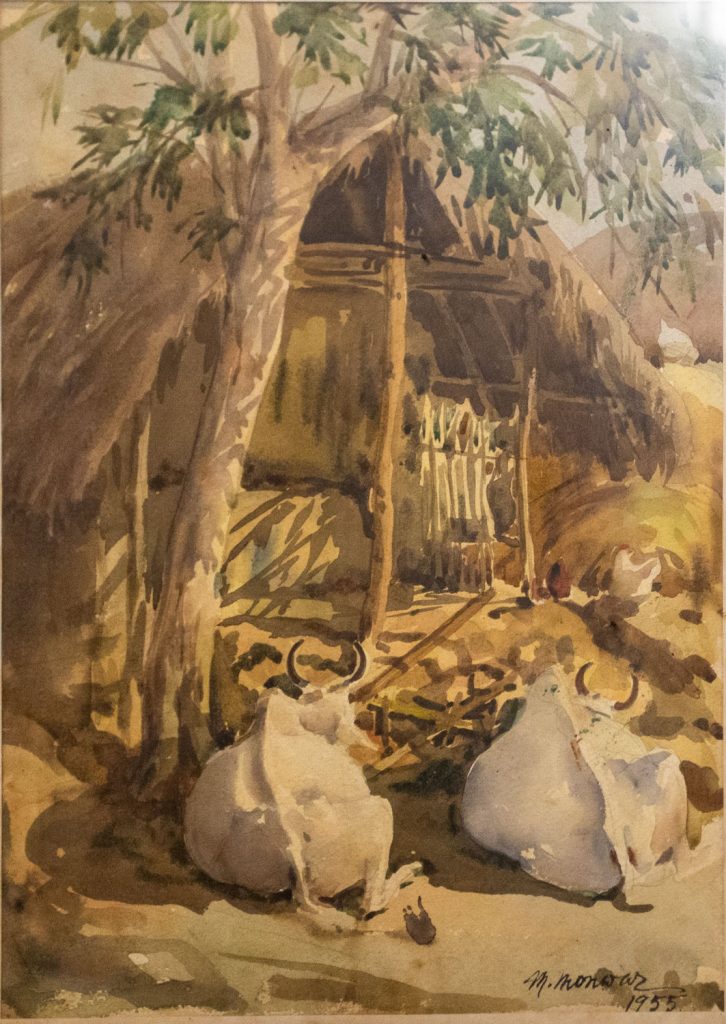
He was born on September 1, 1935. Monwar grew up in a home where creativity was part of everyday life. His father, Golam Mostofa, was a poet and singer, and this early exposure to literature and music left a lasting imprint on him. His education took him across institutions like Dhaka Collegiate School and Narayanganj Government High School, before he moved to Kolkata. Initially studying science at Scottish Church College, he soon realized that his calling lay elsewhere. On the advice of Syed Mujtaba Ali, he shifted to the Government College of Art & Craft, where he graduated with distinction. This turning point shaped his career with the trajectory of modern Bangladeshi visual culture. He has been inspired by the country’s natural beauty ever since his youth. Growing up in Monohorpur inspired his love for rural accents in his work. As a young student during the Bengali Language Movement, Mustafa Monwar understood that art could speak when voices were suppressed. His cartoons, drawn in quiet protest, led to imprisonment. But rather than silencing him, the experience strengthened his belief in the power of expression. “Art is not meant to stay silent on the wall. It must speak when people cannot.” During the Bangladesh Liberation War, Monwar took his art to refugee camps in West Bengal. There, amid uncertainty and displacement,
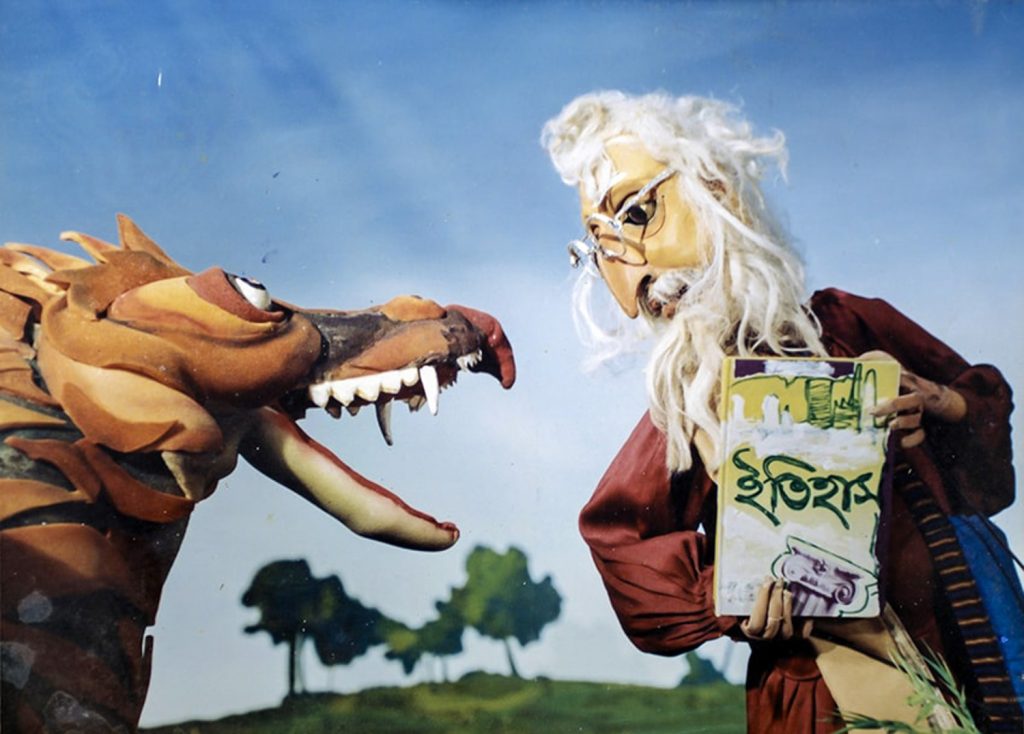
he created puppet shows like Agachha (Weed), Rakkhash (Monster), and A Brave Farmer. These were the messages of courage and survival.
His puppets spoke to people when words failed. They carried hope, humor, and quiet defiance.
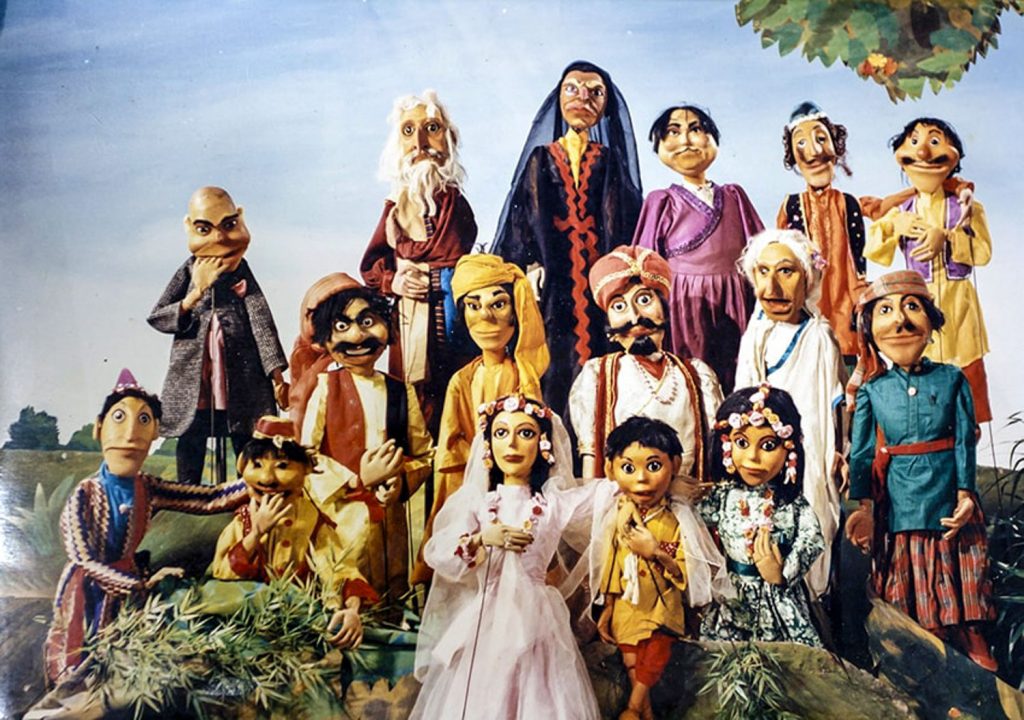
Years later, American filmmaker Lear Levin documented his work, and these moments were later included in Muktir Gaan by Tareque Masud preserving a vital chapter of artistic resistance. Mustafa Monwar has lived to see many historical and monumental events unfold. He can still recall the war-ridden days of the Second World War and how he protested against the Pakistani leaders with his posters, which he made himself. Monwar’s influence expanded with his work in television. His puppet show Moner Kotha, aired on Bangladesh Television, ran for over a decade. It told the story of Parul and her seven brothers, inspired by the folklore Saat Bhai Champa. Through simple storytelling, he connected generations of children to their cultural roots. Characters like Parul, Bagha, and Mini became part of everyday imagination familiar, comforting, and deeply local. His work also included adaptations of global classics. From William Shakespeare’s The Taming of the Shrew to Rabindranath Tagore’s Raktokorobi and stories by Hans Christian Andersen, Monwar brought world literature into Bangladeshi homes, reshaping them with his own artistic voice. Beyond his artistic practice, Mustafa Monwar played a vital role in shaping Bangladesh’s cultural institutions. He served as Director General of the Bangladesh Shilpakala Academy and held leadership positions at Bangladesh Television and the Film Development Corporation. Through the Educational Puppet Development Centre (EPDC), he worked tirelessly to preserve puppetry as both an art form and a means of education.
Art must belong to people; otherwise, it fades into silence.
As a painter, Monwar’s work carries a spontaneous energy. His brushstrokes are often described as free-flowing, capturing emotion rather than rigid form. He also contributed to iconic visual symbols, including the red sun motif associated with Dhaka’s Central Shaheed Minar. His artistic language was never confined to one medium. Whether designing, painting, or directing, he approached each form with the same honesty and clarity. Over the years, Monwar has received numerous awards, including the prestigious Ekushey Padak in 2004. His accolades also include the Zainul Abedin Gold Medal and the Standard Chartered Daily Star Lifetime Achievement Award. Yet, his true recognition lies beyond medals.
It lives in the memories of audiences who grew up watching his shows, in the artists he mentored, and in the cultural spaces he helped build. Today, as we reflect on his journey, Mustafa Monwar stands not just as an artist but as a cultural storyteller who bridged tradition and modernity. His work reminds us that art can be gentle and playful. In a world that often rushes forward, his legacy invites us to pause, listen to stories, remember our roots, and believe in the quiet strength of creativity. Mustafa Monwar did not simply create art. He created connections between people, generations, and between a nation and its own voice.
2. The Quiet Between the Lines
Monirul Islam
Text By: Shrabony Sarker
The life and work of Artist Monirul Islam unfold slowly, almost like a drawing taking shape over time. His journey from the riverine plains of Bengal to the studios of Madrid is a quiet unfolding of memory, discipline, and a lifelong conversation with form. Born on August 17, 1943, in Chandpur during the final years of British India. Monirul grew up surrounded by the quiet beauty of rural Bengal.
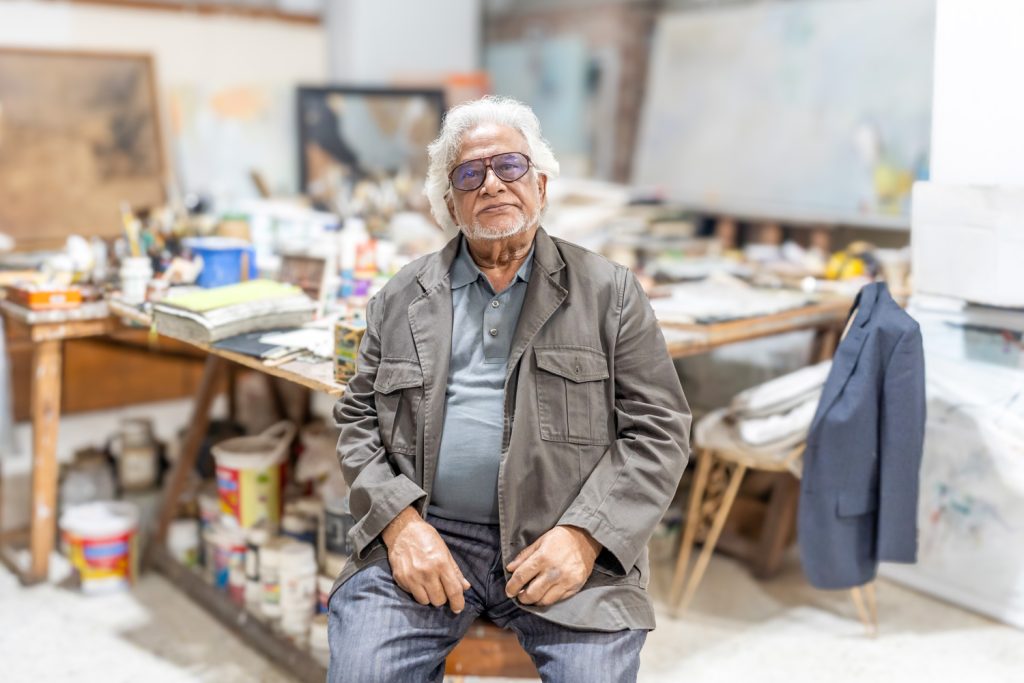
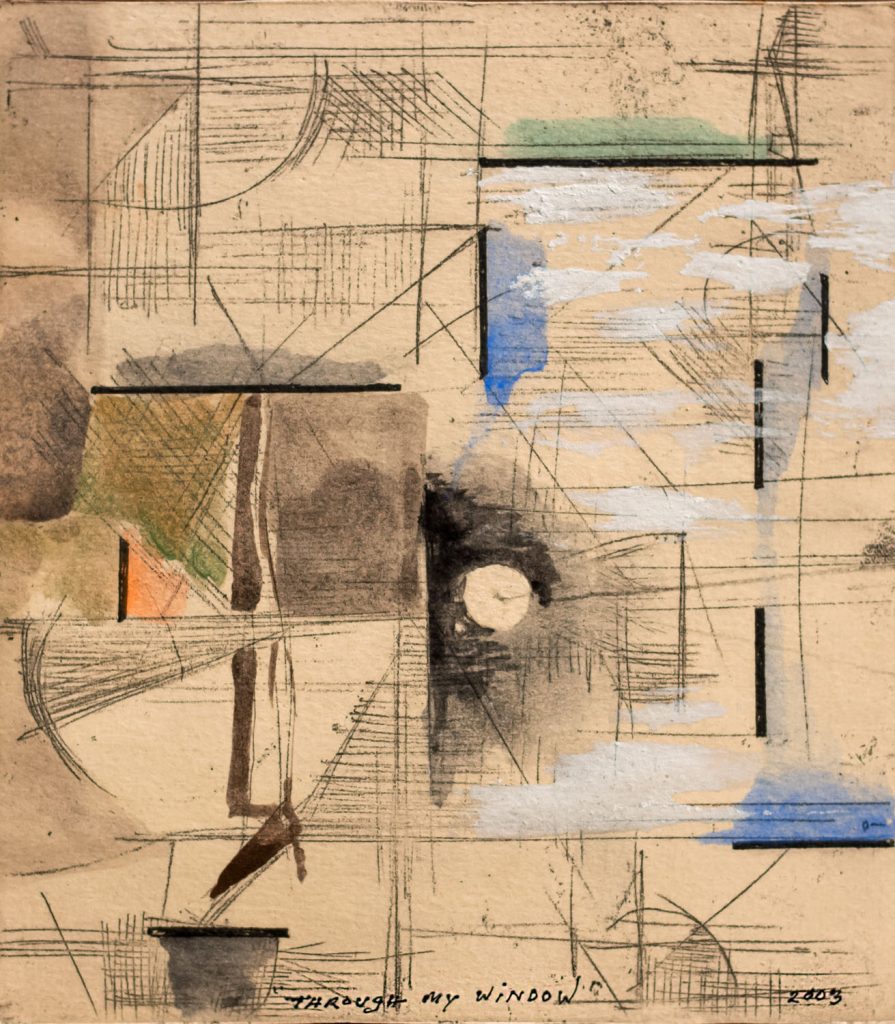
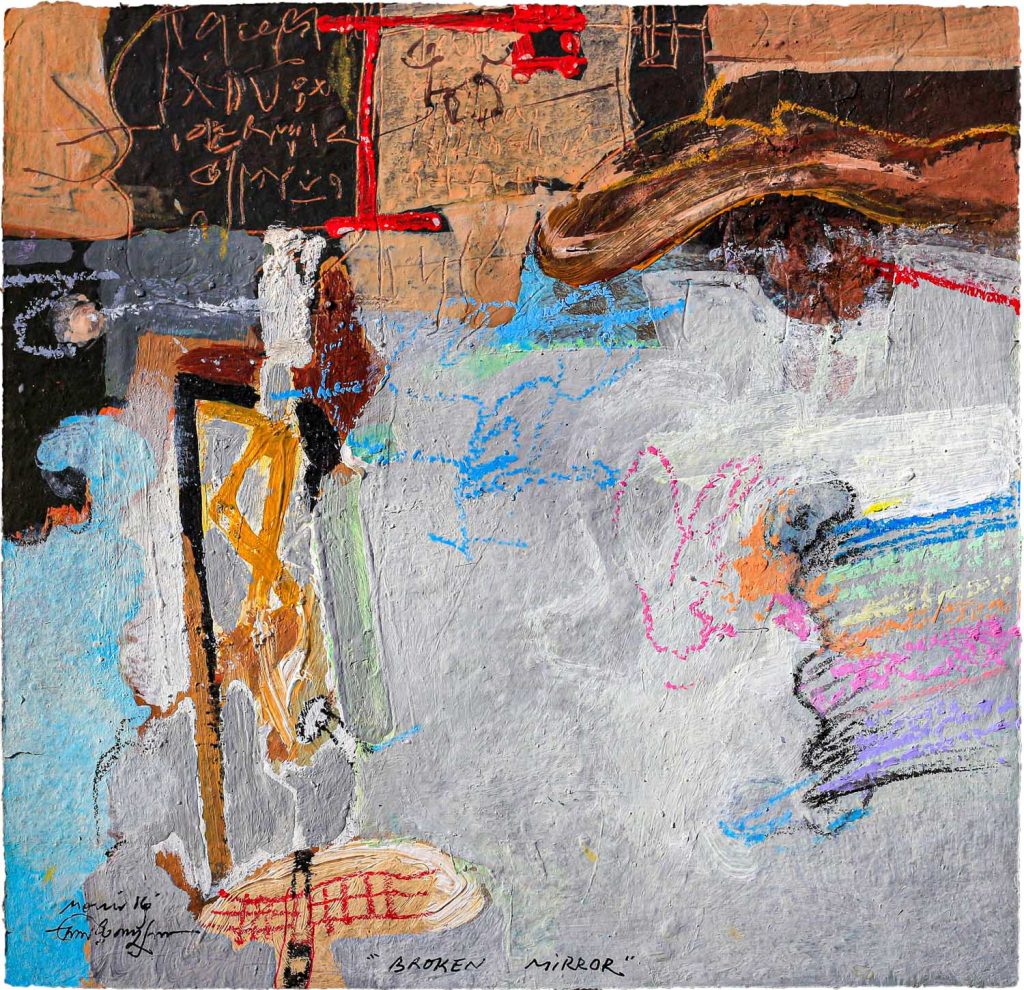
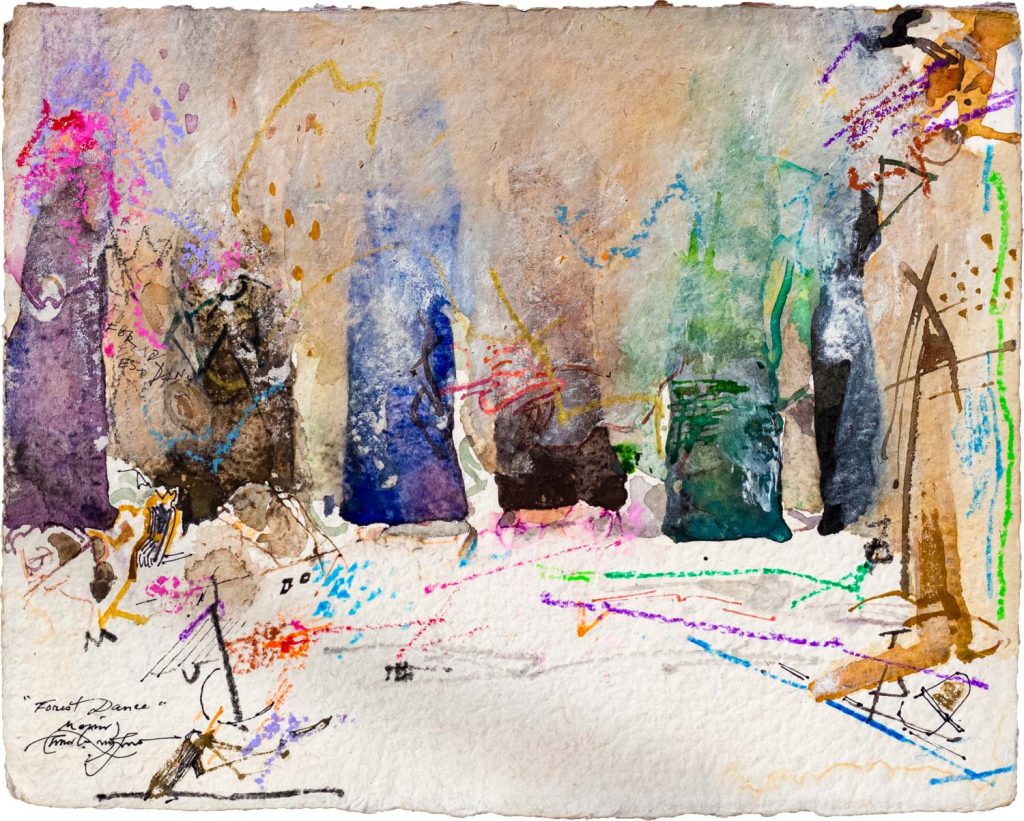
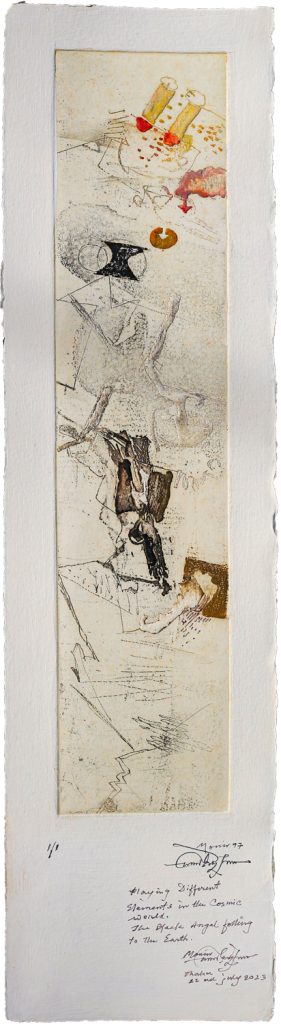
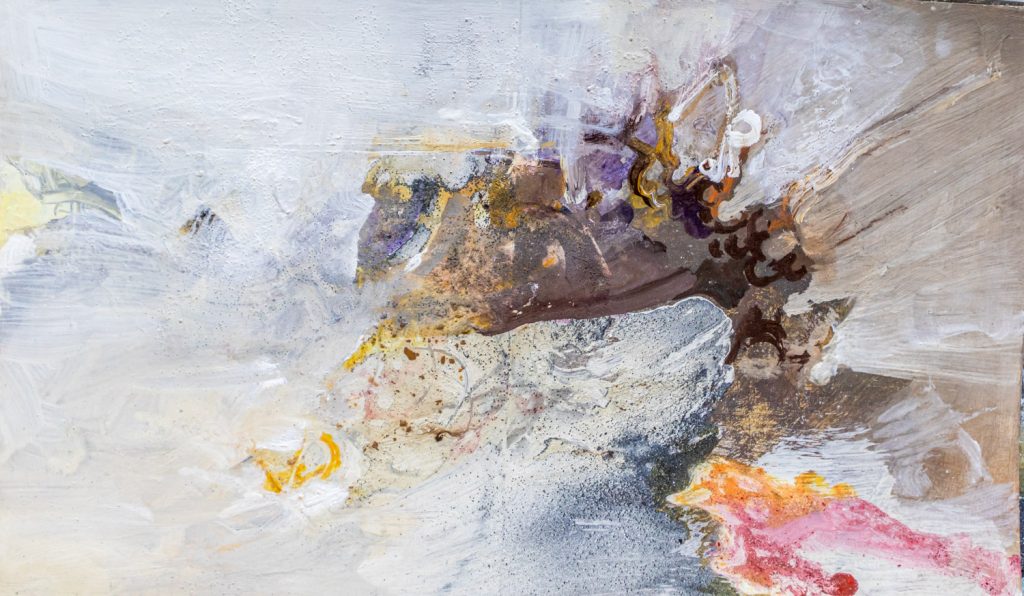
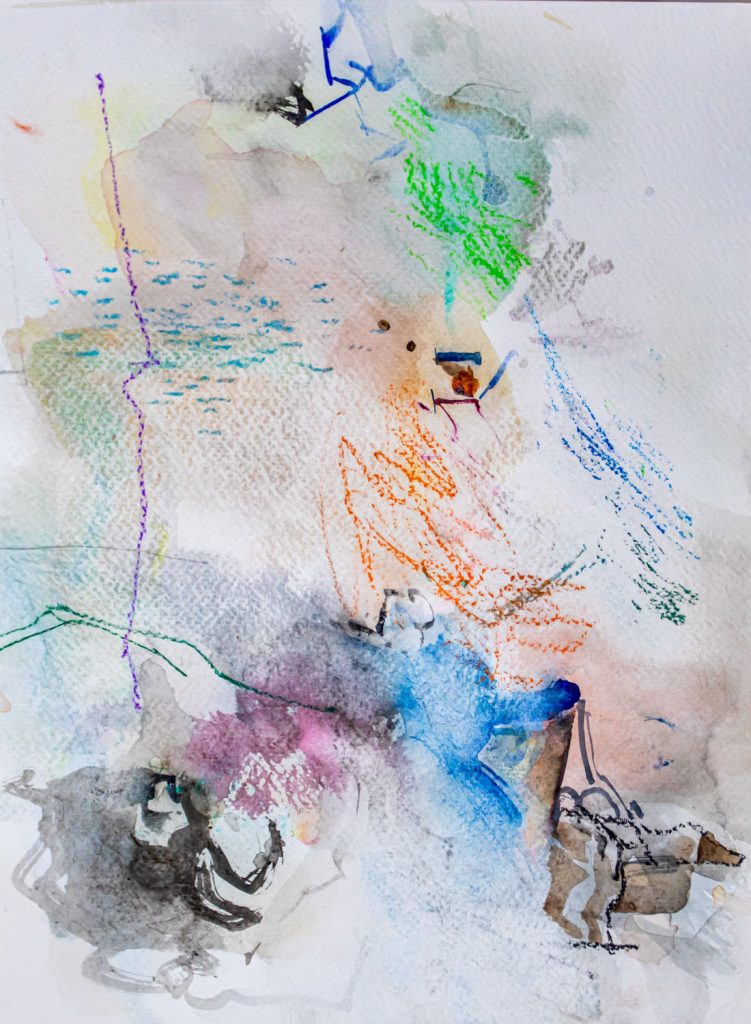
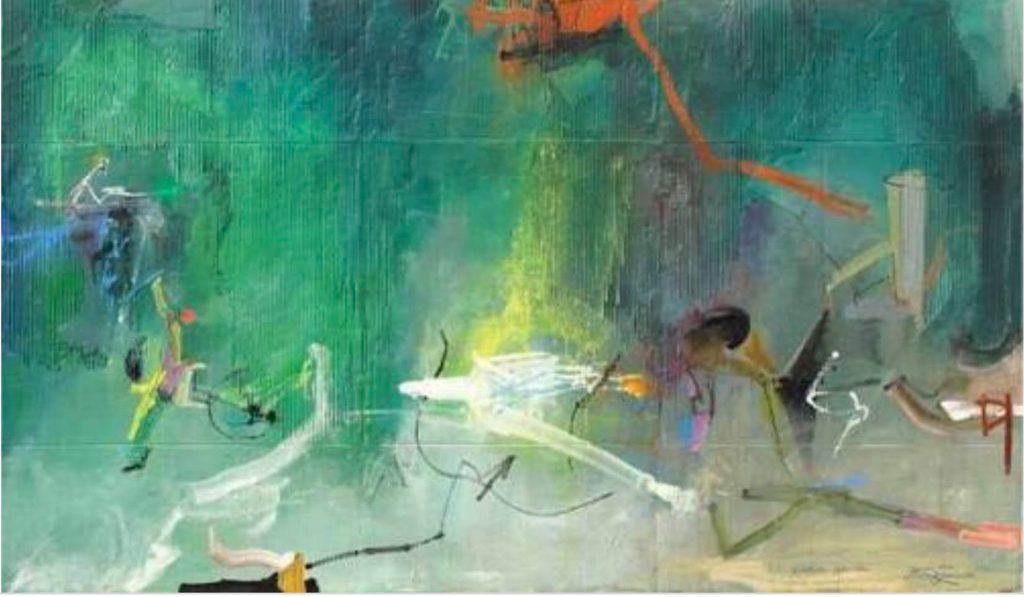
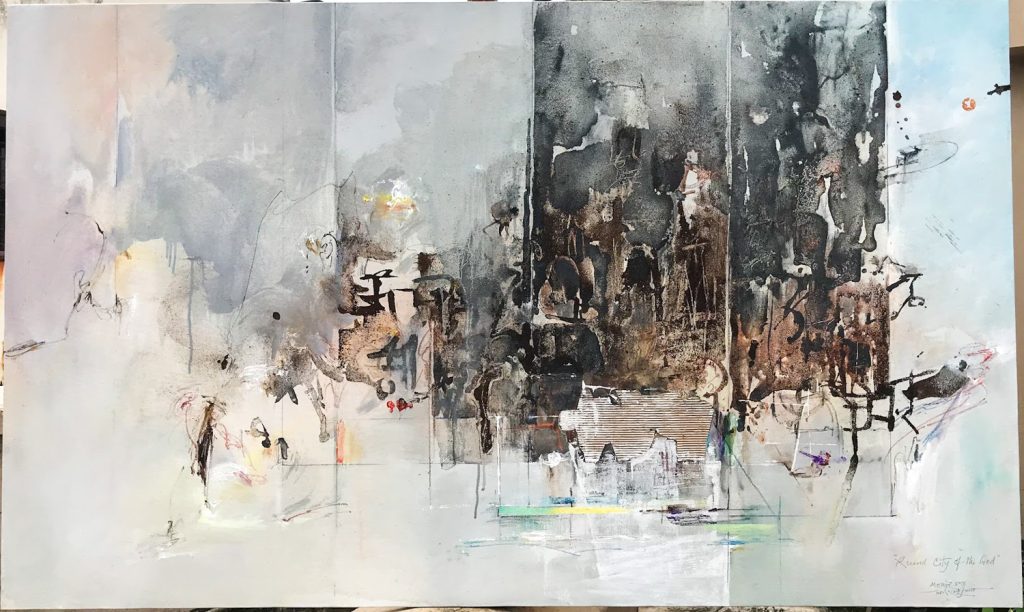
Monirul’s journey into art did not begin with grand declarations. It grew slowly, shaped by the landscapes of his early life in Chandpur, Sherpur, and Kishoreganj. These were places where nature did not impose itself loudly. They matured into a language of their own. When he entered the Faculty of Fine Arts at the University of Dhaka, under the guidance of figures like Zainul Abedin and Mustafa Monwar, he encountered both discipline and freedom. They shaped a generation’s way of thinking about art its responsibility, its place in society, and its connection to people, even as his own journey was still taking shape. A turning point came with a scholarship from the Spanish Ministry of Foreign Affairs, which took him to Madrid to study mural painting at the Escuela de Bellas Artes de San Fernando. What began as an academic pursuit soon became something deeper. Spain gave him the freedom to experiment and explore new ideas. He chose to stay, building his career there while still holding on to his roots in Bangladesh. In the early 1970s, Monirul Islam discovered etching a medium that requires patience and careful control. This became the space where he truly found his voice. He worked alongside important Spanish artists like Antonio Saura, José Guerrero, and Antoni Tàpies through Grupo Quince. Even among such strong influences, his work remained unique. His “free-bite” technique brought him recognition and eventually led to what is known as the Escuela de Monir in Spain. It is rare for an artist to create not just artworks but a whole approach that others follow. His method allowed space for chance and natural development within the process.“I do not try to control the image completely. I allow it to grow, to find its own rhythm.” This openness defines his work. His compositions often balance emptiness with detail, silence with movement. Lines appear delicate, almost hesitant, yet they hold structure with quiet confidence. Texture becomes language, and space becomes meaning. Even after many years in Spain, his connection to Bangladesh remains strong. His artworks carry memories of rivers, open land, and stillness. One of his notable works, Dancing in the Forest (2011), captures this sensibility with remarkable clarity. Instead of clearly defining the forest, he captures its feeling of light moving through leaves, shadows shifting, and a quiet sense of life. It feels less like a scene and more like an experience.
His body of work stretches across decades, forming a continuous arc rather than distinct phases. His works like Black Rain, Agony, Sound of Solitude, and Way to the Pilgrim suggest a deeply introspective practice. His art often explores solitude, memory, and transformation that run quietly beneath the surface. Like many artists of his generation, Monirul lived through times of political unrest and war. During such periods, his work became more than personal expression; it became a response. Without being overtly political, his art carried the weight of experience, reflecting a search for peace, balance, and understanding. “An artist must question himself constantly. Without doubt, there is no growth.” His contributions have been recognized both in Bangladesh and internationally. He became the first non-Spanish artist to receive the Calcografía Nacional Award in 1997, a significant acknowledgement of his contribution to printmaking. Bangladesh honored him with the Ekushey Padak in 1999, recognizing his role in elevating the country’s artistic presence on the global stage. Spain, too, celebrated his achievements with two of its highest civilian honours, the Cross of the Order of Queen Isabella in 2010 and the Commander of the Order of Merit of Spain in 2018. These awards, however, only outline his journey. The essence lies in the work itself, in the countless prints, paintings, and drawings that carry his signature sensitivity.
Monirul Islam’s influence extends beyond his own creations. As a teacher, mentor, and participant in international juries from Cairo to Spain, he has helped shape conversations around contemporary art. His informal “Monir’s School” is not just a method; it is a philosophy of patience, discipline, and openness.
Even today, he continues to move between Dhaka and Madrid, moving between two worlds that have both shaped him. Yet, in his work, these geographies dissolve. What remains is something more universal, a search for meaning through form.
To stand before a work by Monirul Islam is to enter a conversation that has been ongoing for decades. His work demands to be understood immediately. It reminds us that creation is not a moment but a process that unfolds slowly, with care and deep respect for both silence and form.
3. Lines of Truth
Rafiqun Nabi
Text by: Shrabony Sarker
Rafiqun Nabi, widely known as Ranabi, is one of Bangladesh’s most respected artists and cartoonists, born on 28 November 1943 in Chapainawabganj. Ranabi’s journey with art began quietly, almost like a habit formed in childhood. One of the earliest moments that stayed with him was visiting an exhibition at what is now the Bangla Academy with his father. It was a simple experience that opened a window into a world he would spend his life exploring.
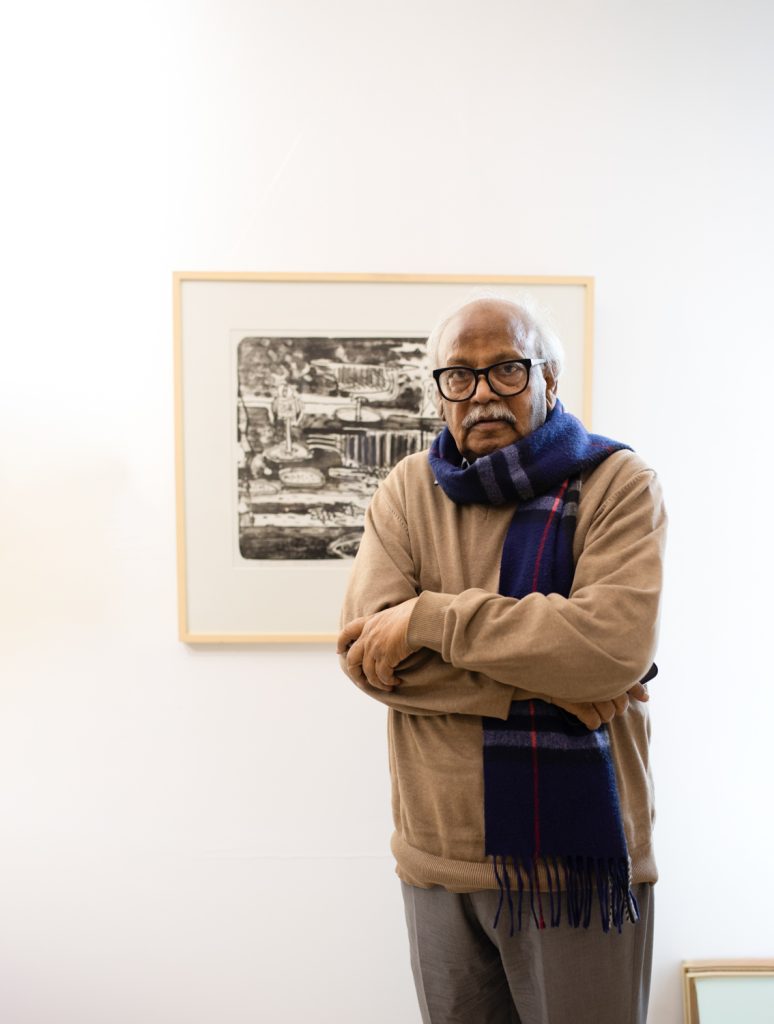
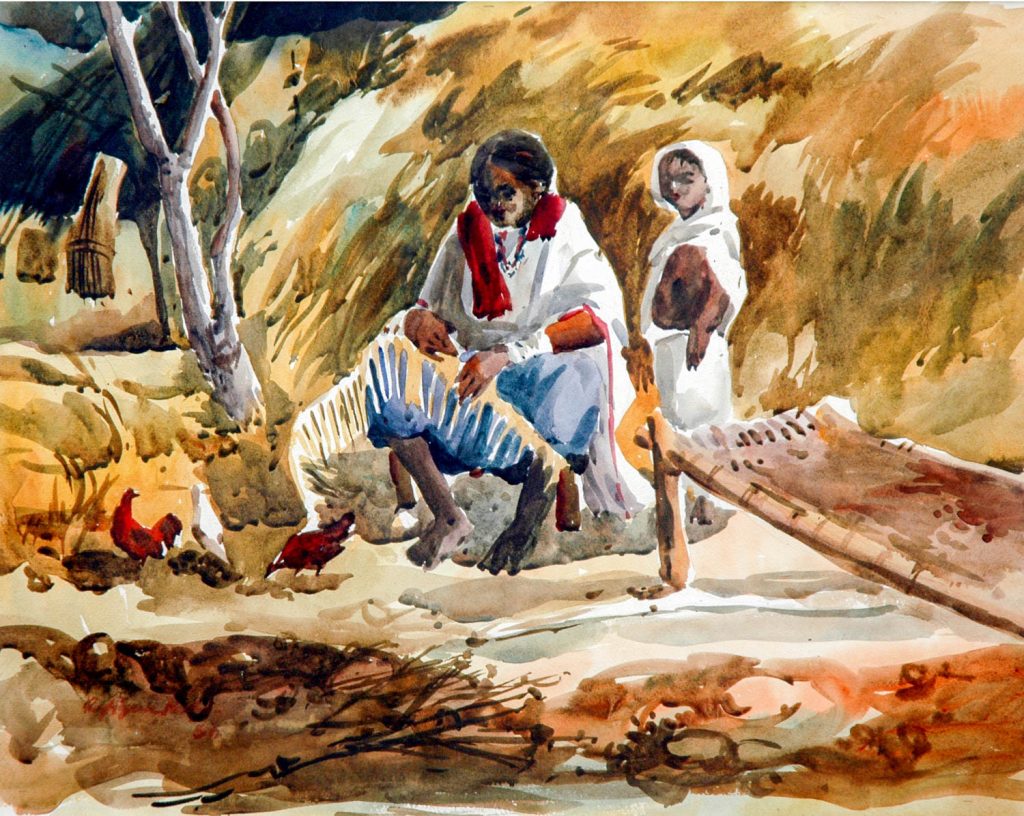
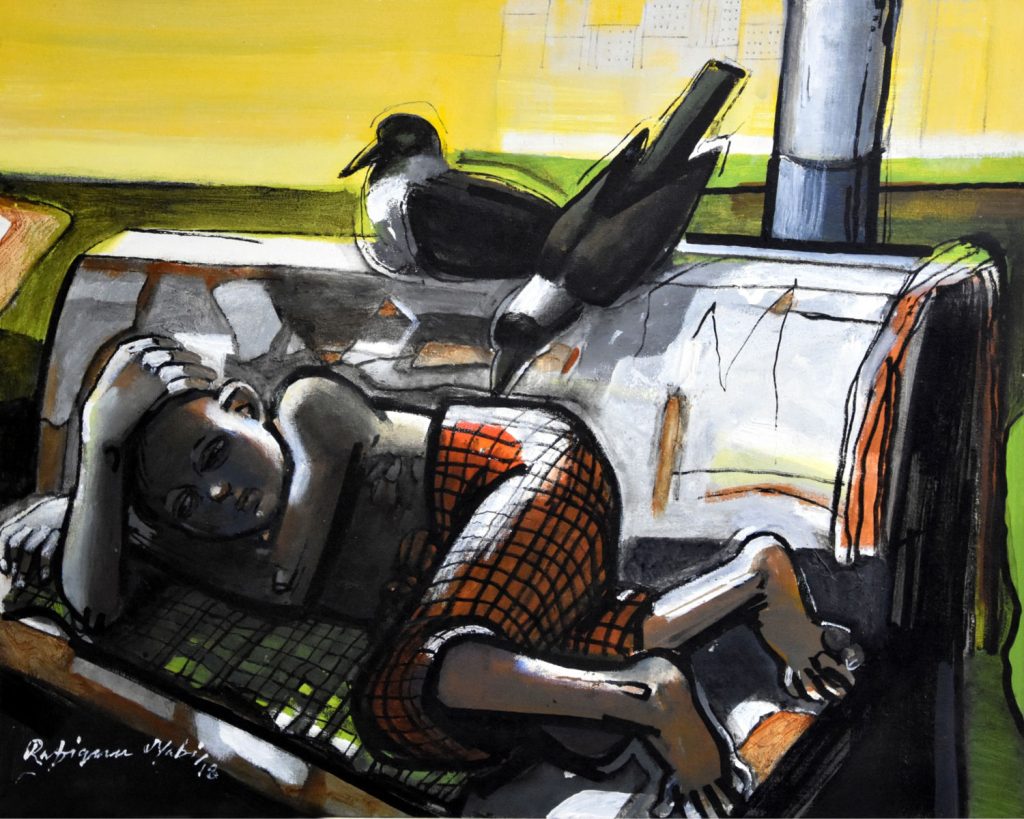
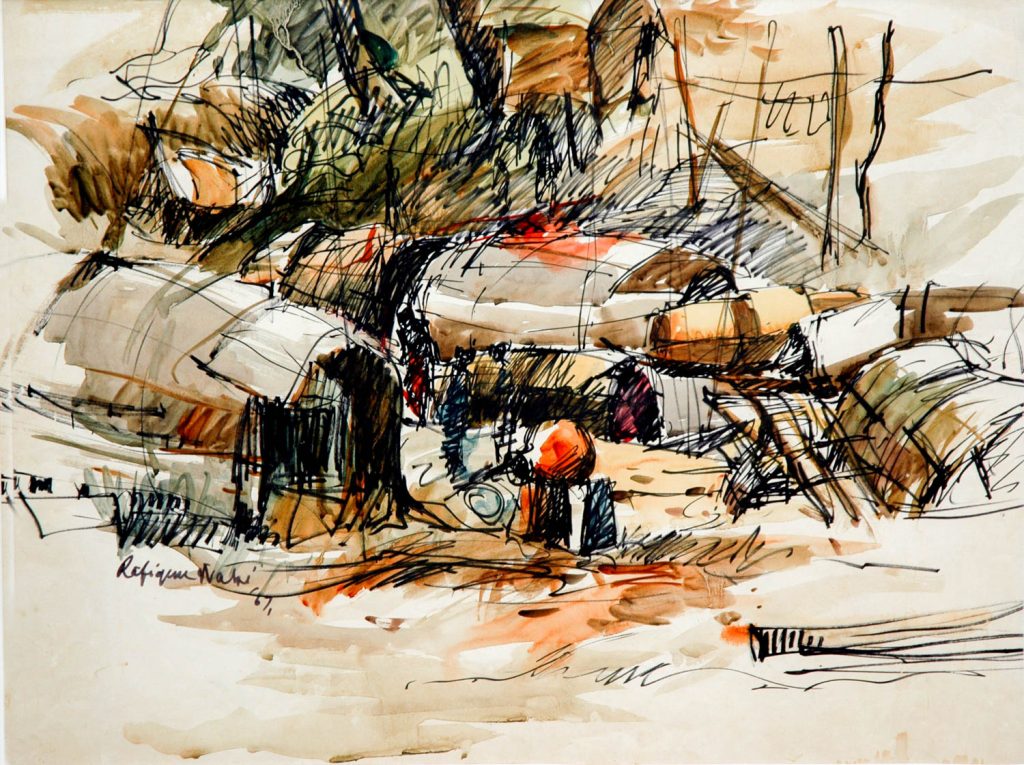
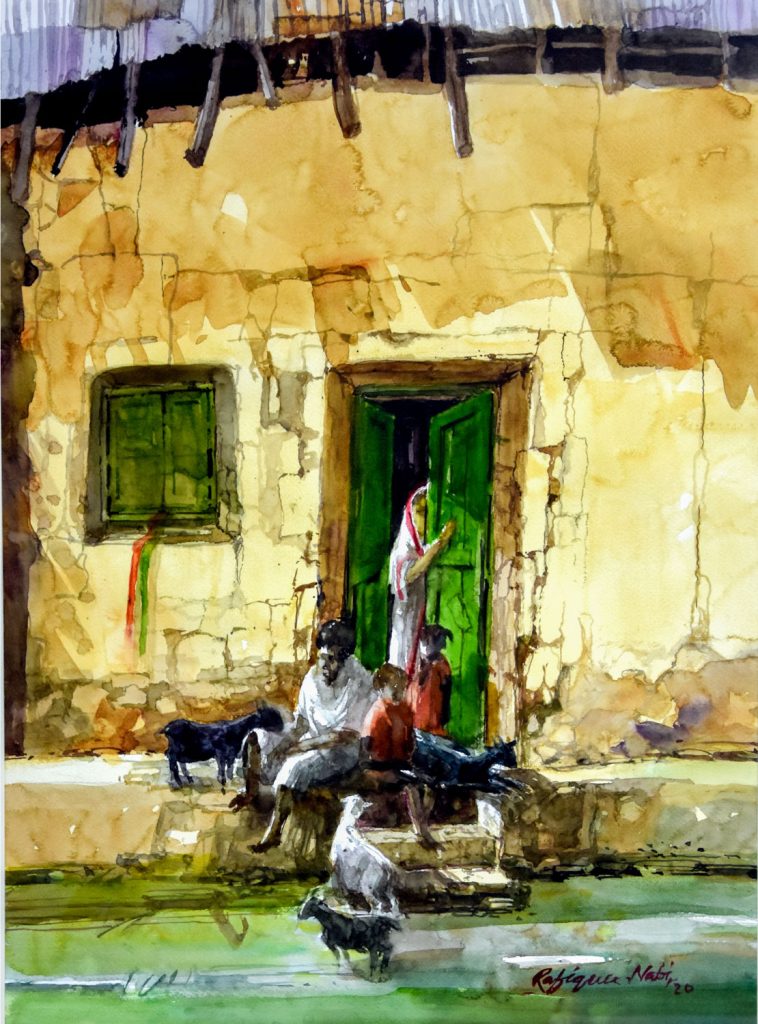
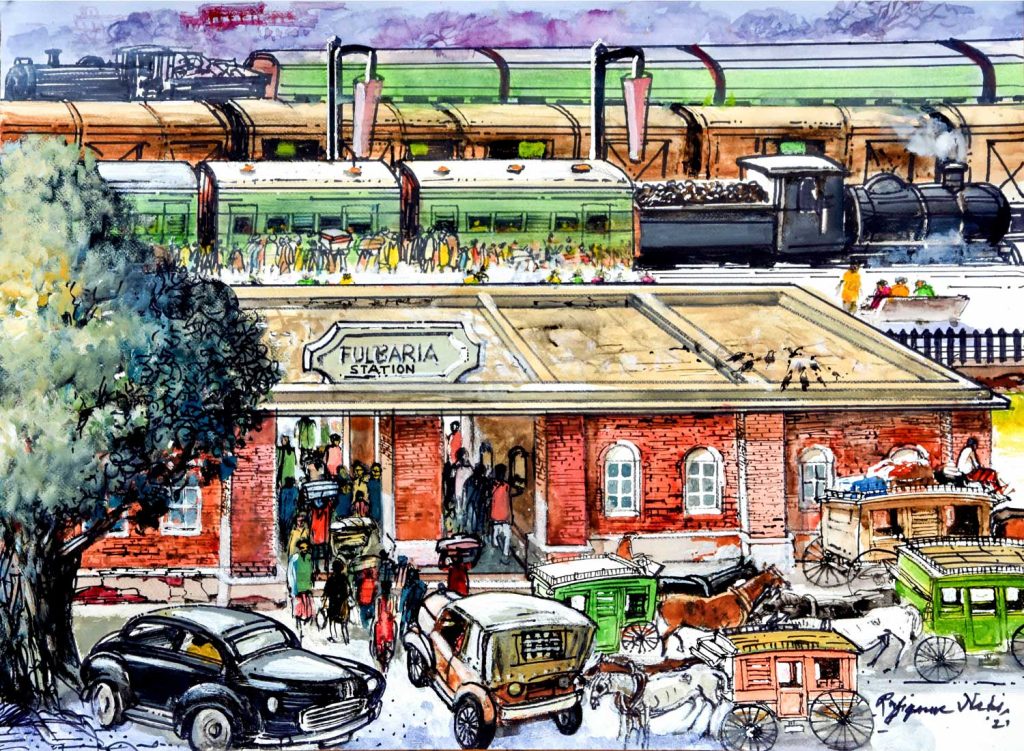
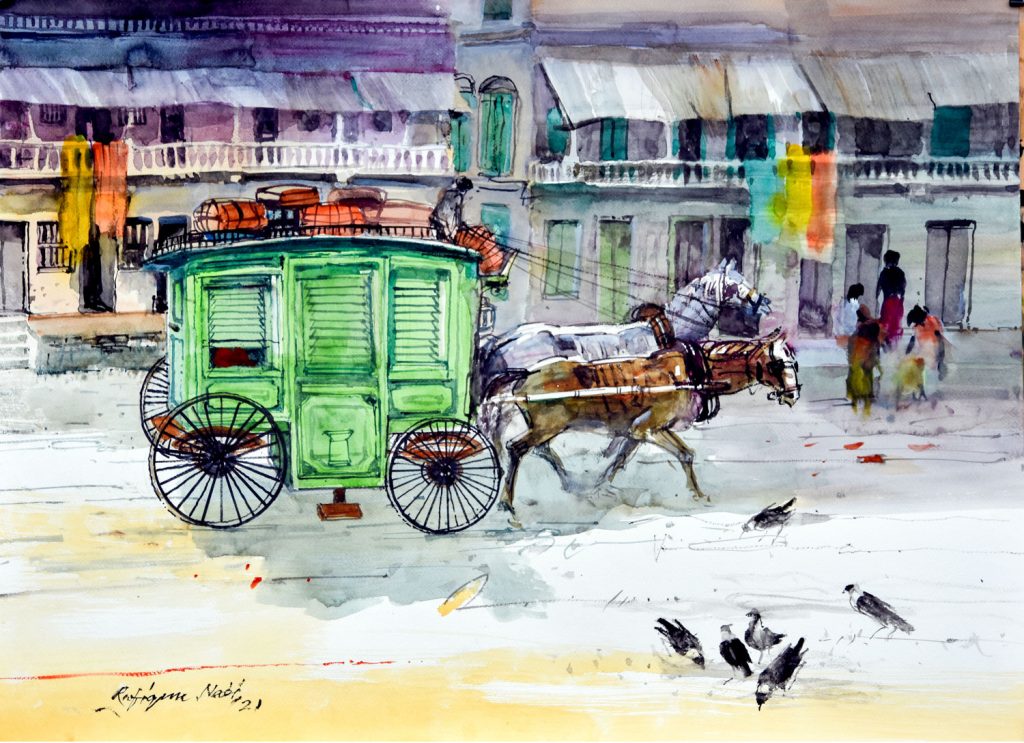
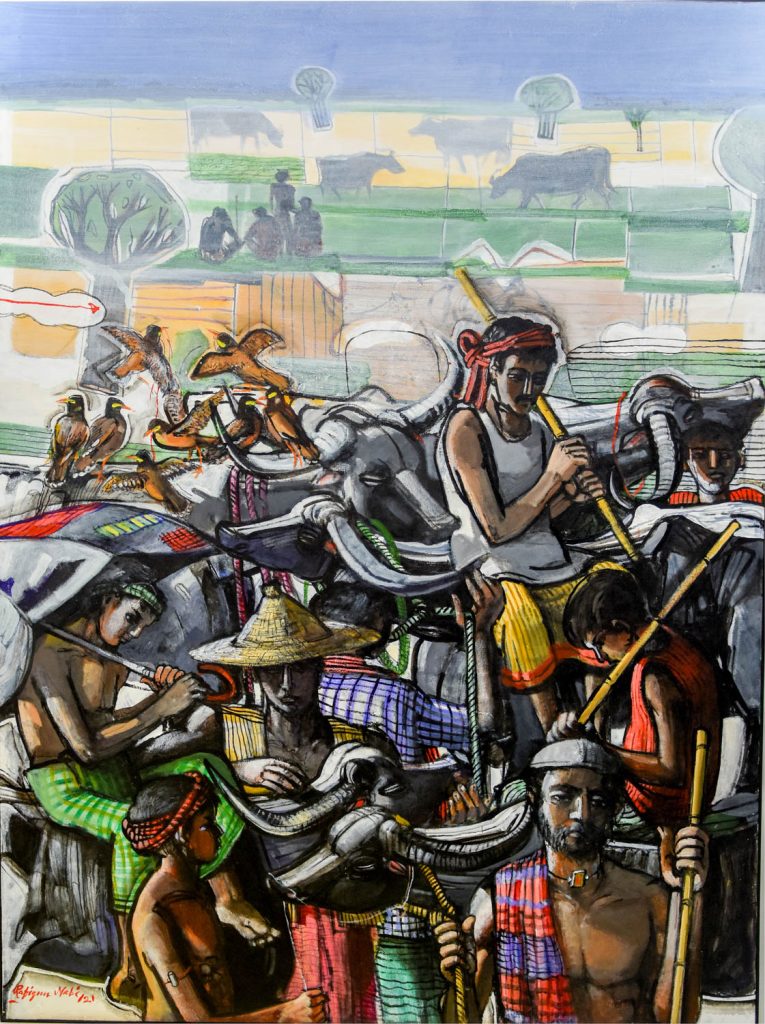
Ranabi studied at the East Pakistan College of Arts and Crafts, today known as the Faculty of Fine Arts at the University of Dhaka. There, under the guidance of masters like Zainul Abedin and Quamrul Hassan. Between 1962 and 1964, a scholarship from the Asia Foundation broadened his exposure, and later, from 1973 to 1976, he studied printmaking at the Athens School of Fine Arts under a Greek government scholarship. For decades, from 1964 to 2010, he taught at the Faculty of Fine Arts, shaping generations of artists. Ranabi began his professional journey as a cartoonist in 1963 with Weekly Purbodesh. Over time, his work appeared in Shochitro Shandhani, where he illustrated Abdul Gani Hazari’s column Kaal Penchar Diary in Weekly Purbodesh. He later worked with Weekly Express and was also associated with Forum, published by Rehman Sobhan and Hamida Hossain. These early years shaped his voice simple, observant, and deeply connected to people’s lives. When he returned from Greece in 1976, Bangladesh was still carrying the weight of its recent birth. It was in this landscape that Ranabi’s most iconic creation emerged. In May 1977, in the anniversary issue of Bichitra, a small figure appeared, barefoot and sharp-eyed, with a grin that seemed to know too much. His name was Tokai.
Tokai is a street child who survived by picking through dustbins, begging, wandering, always watching. Through Tokai, Ranabi gave voice to those who were rarely heard.
The character spoke in simple words, yet those words carried the weight of truth. Political hypocrisy, economic disparity, and social absurdities, Tokai pointed them out with disarming honesty. “The simplest words often carry the deepest truths.” Beyond cartooning, Ranabi’s artistic language extends into painting and printmaking, where memory often takes the form of landscape, figures, and silence. His 2004 work Boddho Bhumi (Killing Field) stands as one of his most haunting pieces. It revisits the brutal days of December 1971, when intellectuals were abducted and executed during the Liberation War. The painting holds a stillness that speaks of loss and remembrance. “Art remembers what history struggles to hold.” In another work, Reclining Women (2006),
Ranabi shifts from collective grief to intimate interiority. It captures a woman in a moment that feels calm on the surface but suggests something more complex underneath. Through this work, Ranabi reflects on inner thoughts, emotions, and the quiet struggles that often go unnoticed.
Ranabi’s artistic style resists confinement. Whether working in watercolor, oil, acrylic, or printmaking techniques such as etching and lithography, his work consistently returns to certain themes: people, animals, and the environments they inhabit. There is a strong presence of rural life in many of his works, where simplicity and labor are portrayed with care.
In 1993, Ranabi was awarded the Ekushey Padak, one of Bangladesh’s highest civilian honors. It was a recognition of his achievements in art, culture, and the way people see. Ranabi’s contributions have been recognized both nationally and internationally. Among his many awards are the Promoters Prize at Inter Graphic-80 in Berlin, the Bangladesh Shilpakala Academy Award, the National Award in Fine Arts from the country’s principal state academy for the arts, the Agrani Bank Award for Children’s Book Design, and the S M Sultan Padak.
Today, Ranabi continues to live and work in Dhaka. His work remains closely tied to the people and places around him. Tokai still walks the streets, still speaks, still questions. And through him, Ranabi continues his conversation with the world, perhaps that is where Ranabi’s greatness lies in grand gestures, with the quiet persistence of his lines.
4. Transmuting the Everyday
Shahid Kabir
Text by: Shobuj Sultan Anmon
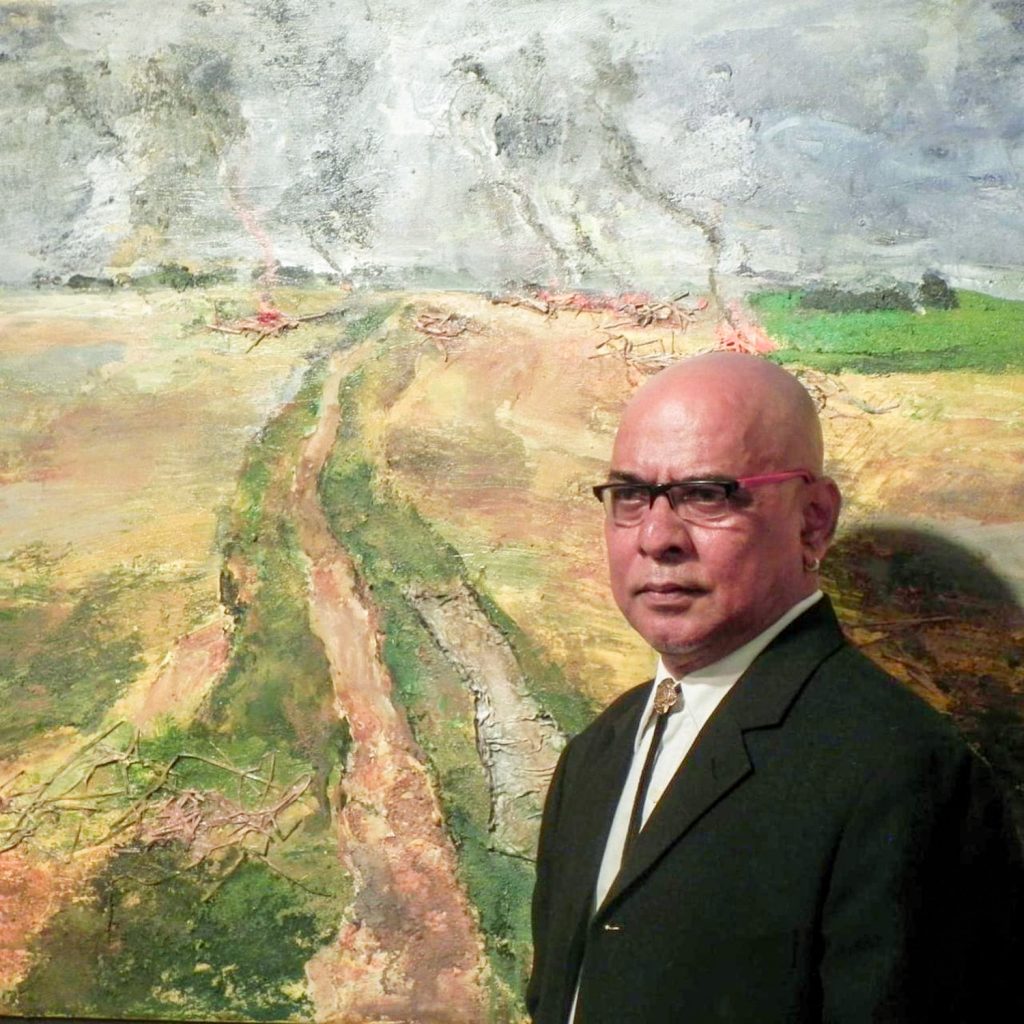
To stand in front of a canvas by Shahid Kabir is to confront the physical weight of time. In the bustling, often hyper-conceptual ecosystem of contemporary Bangladeshi art, Kabir operates as a quiet iconoclast.
Born in 1949 in Barishal, he is less concerned with the spectacle of modernism than he is with the silent, enduring truths of the overlooked. For over five decades, his practice has been an exercise in visual alchemy – elevating the discarded, the decaying, and the disenfranchised to a state of profound reverence.
Shahid Kabir’s artistic compass was set long before he entered the academic studios of the Government College of Arts and Crafts in Dhaka in 1969. Raised in comfortable circumstances, he actively rejected the insulation of his class. Instead, he gravitated toward the laborers and transients who formed the invisible engine of his surroundings.
Even though my parents were relatively well-off, I ended up spending my time largely with daily wage earners,” he recalls.
This early, self-directed immersion was not a phase of fleeting curiosity, but the bedrock of his visual philosophy. He absorbed the cadences of their labor and the quiet dignity of their survival. Consequently, when he paints the marginalized, he does so without the voyeuristic pity that often plagues social realism. His canvases act as intimate testimonies rather than mere observations. If Dhaka provided Shahid Kabir’s emotional anchor, it was his
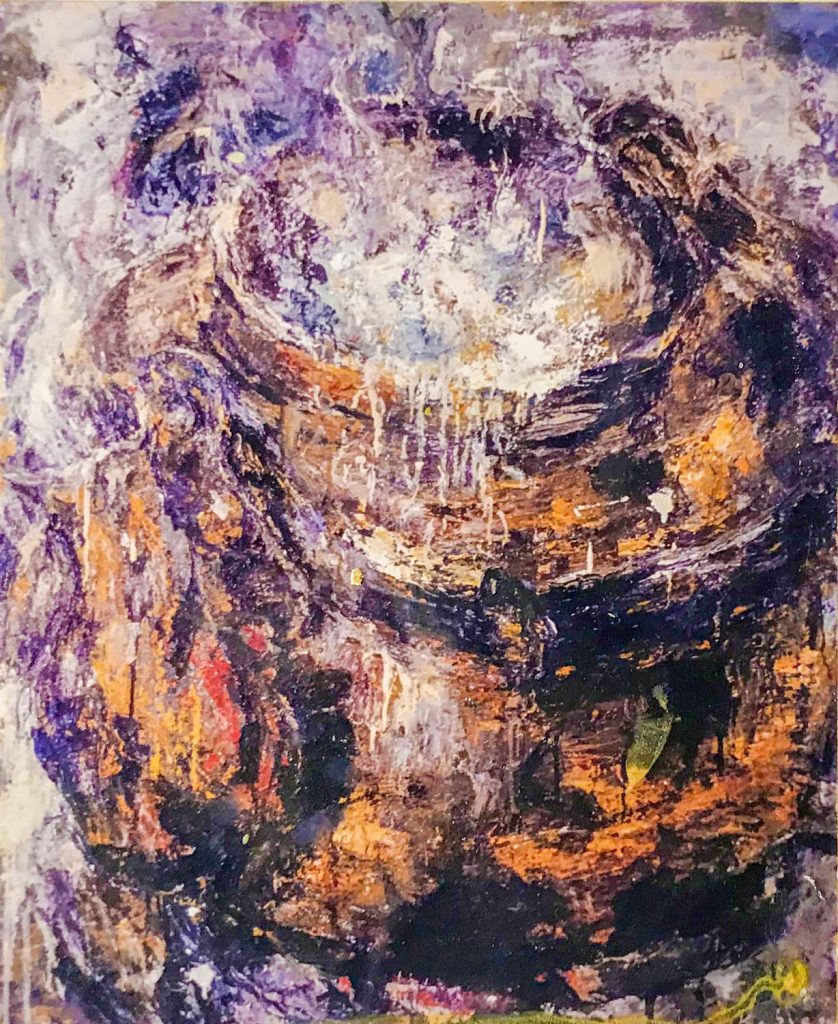
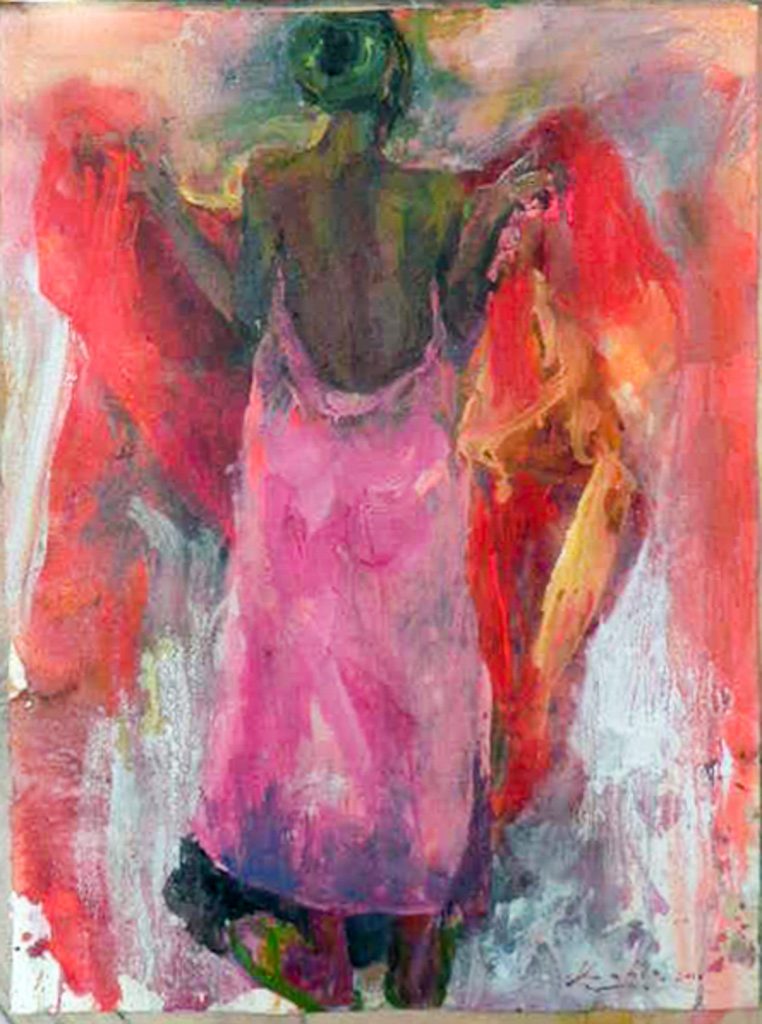
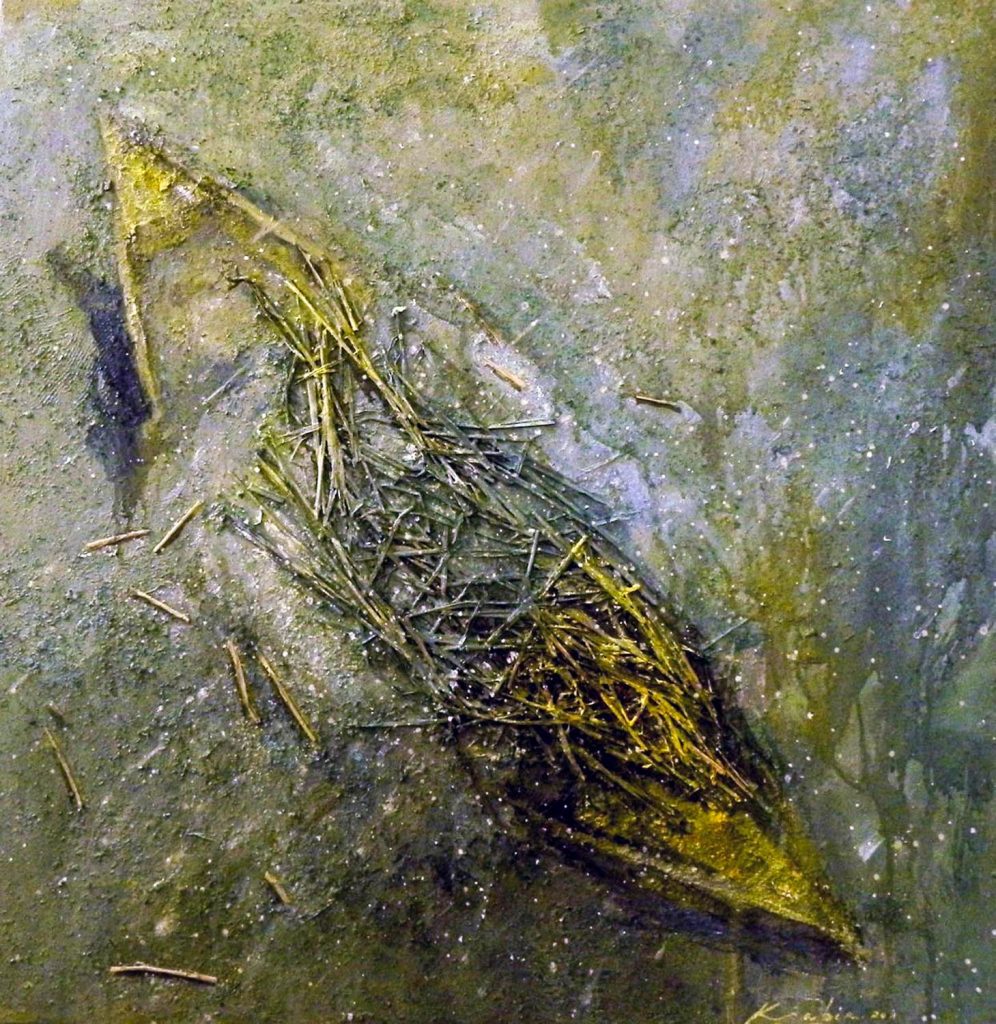
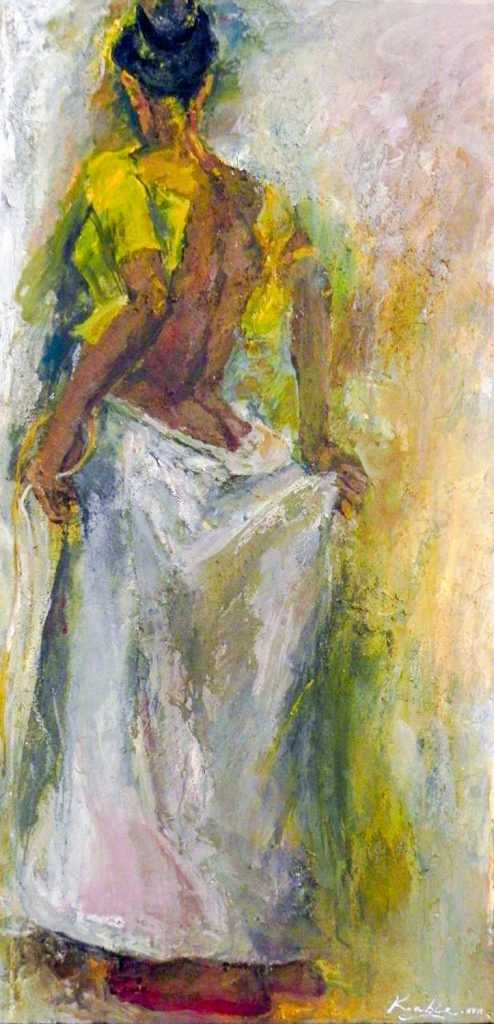
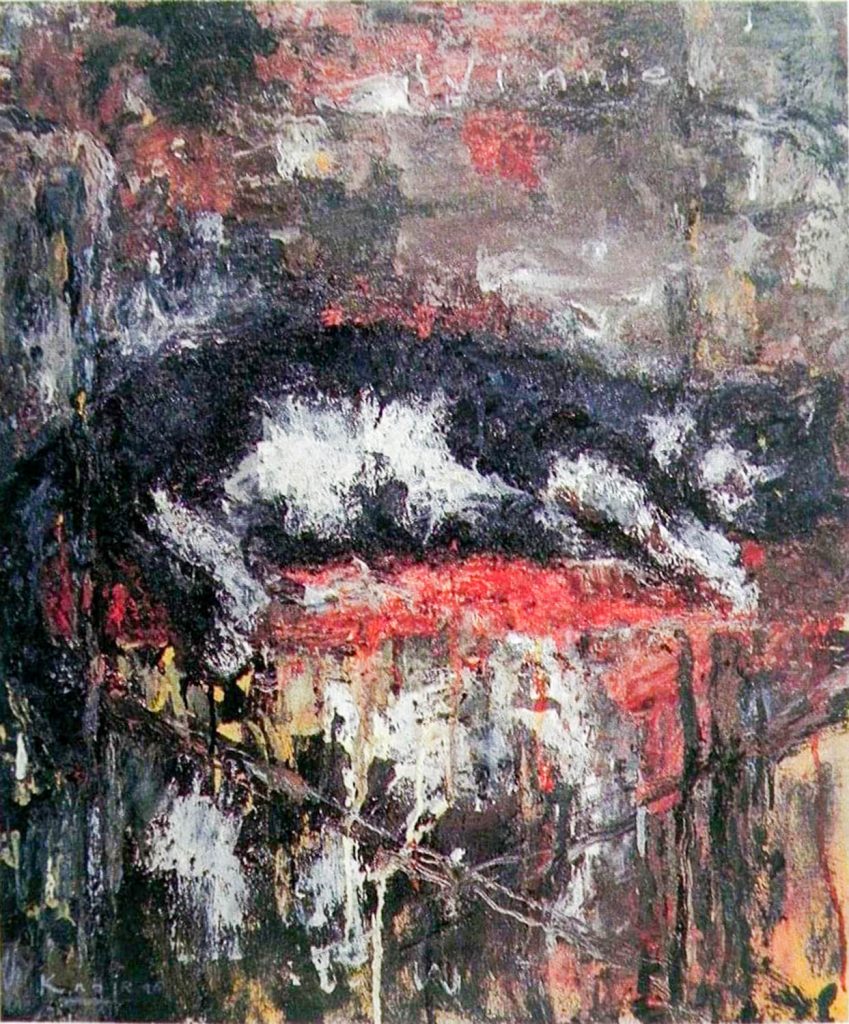
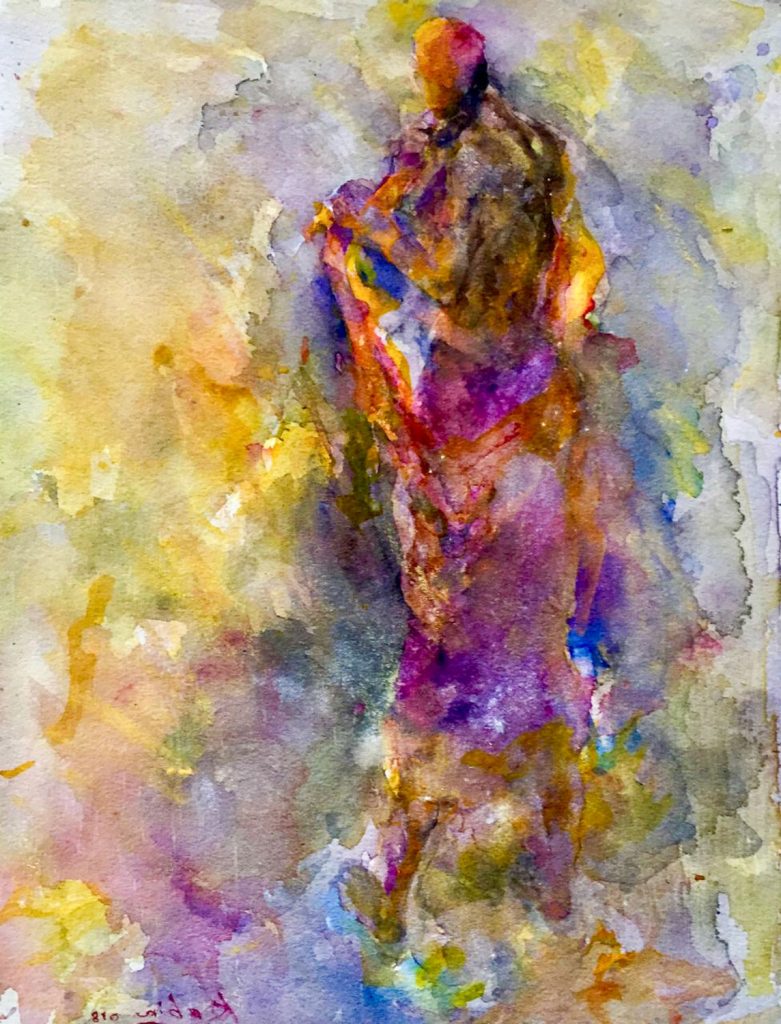
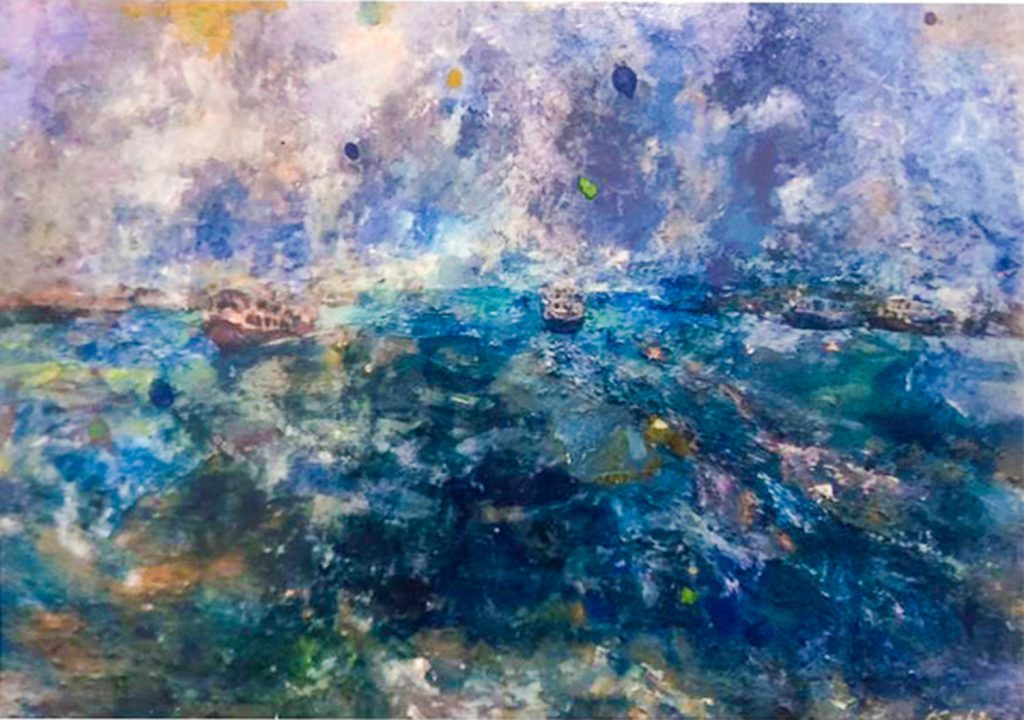
relocation to Spain in the late 1970s that forged his mature aesthetic. Immersed in the European traditions of Madrid, Kabir experienced an artistic renaissance that prompted a radical evolution in his materiality. Moving away from the polished finishes of his academic training, the artist began treating the canvas as a site of physical excavation. He introduced unorthodox mediums into his pigment, including wood dust, sand, and industrial adhesives, rejecting the delicate stroke of a traditional brush for palette knives and his own bare hands. His creative process is completely untethered from rigid planning, driven instead by raw, kinetic energy. “When I paint, I simply submerge into the work. I do not know what it is looking like. After finishing it, I look at it from a distance to speculate.” This fierce intuition results in surfaces that mimic the very subjects he portrays: cracked, sun-baked earth, eroding architecture, and weathered skin – a result of relentless labor. Kabir’s portraiture is a masterclass in atmospheric tension. His subjects, such as the solitary women, destitute children, and weary laborers, are stripped of hyper-specific contexts, suspended instead in a timeless, contemplative void. This technique grants his figures a monumental, almost sculptural presence. They are not victims trapped within a frame; they are resilient monoliths. Crucially, these are not imagined archetypes drafted from memory or photographs; they are born of direct, deeply felt encounters. “These images are expressions of my real-life experiences. I personally encountered most of the figures on the canvases. Later, I painted them with my deep empathy and profound intuition.” By painting them with this experiential intimacy, Shahid Kabir ensures that the viewer must meet the gaze of the marginalized on terms of absolute equality. This profound sensitivity seamlessly transitions into his still-life compositions. Where traditional still lifes celebrate abundance in the forms of ripe fruit, blooming flora, he is drawn to the poetry of decay. Through his heavily textured application, these objects show their deterioration. They become metaphors for survival, echoing the Baul and Sufi philosophies that heavily influence his broader body of work. When Shahid Kabir paints wandering mystics or Lalon Shah, he is visually articulating the search for the man of the heart. For him, it is a pursuit of inner truth that mirrors his own relentless scraping and layering of the canvas. While his paintings remain his most visible triumphs, Shahid Kabir’s tenure in Spain also birthed a formidable mastery of printmaking. Collaborating with Madrid’s Galleria Estampa, he pushed the boundaries of embossed aquatint etching throughout the 1980s and 90s. These prints, celebrated for their complex tonality, proved that his humanistic narratives could thrive across different technical disciplines.
Importantly, Shahid Kabir never hoarded this expertise. His return to Bangladesh marked a vital injection of international technique into the local art scene. As an educator, he made specialized printmaking techniques accessible to all, ensuring his influence would inspire the next generation of Bangladeshi artists. In an era where the global art apparatus is increasingly obsessed with high-gloss spectacle, Shahid Kabir remains resolutely committed to the authenticity of the quietude. His recent decades back in Bangladesh represent not a nostalgic retreat, but a sharpening of his life’s work.
Shahid Kabir takes the invisible detritus of our world – the shattered pot, the exhausted face, the silent courtyard and demands that we truly look at them. His art is a mirror reflecting our shared, fragile humanity. It does not offer a glamorous escape, but rather something infinitely more valuable: absolute, unvarnished recognition.
5. Movement Shaped by Memory
Shahabuddin Ahmed
Text By Shrabony Sarker
The paintings of Artist Shahabuddin Ahmed are easy to recognise. His figures are full of movement; they run, turn, and move forward with a natural flow. There is a strong sense of energy in his work, shaped by experience, memory, and the life he has lived. He was born on 11 September 1950 in Dhaka and grew up during a time when choosing art as a career required courage and passion. From a young age, he was deeply drawn to drawing.
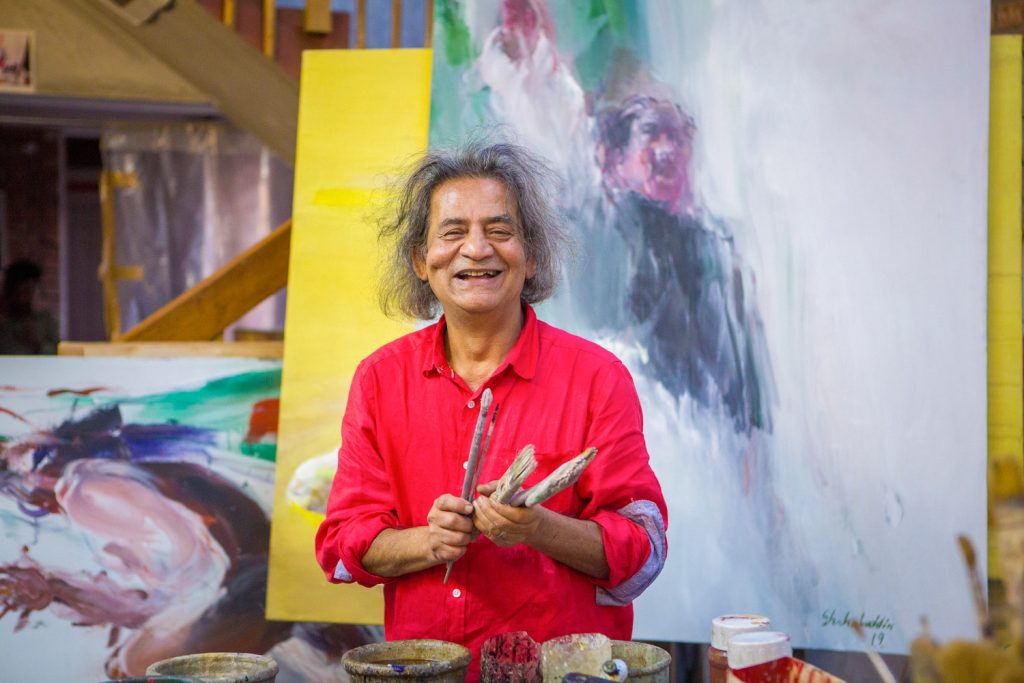
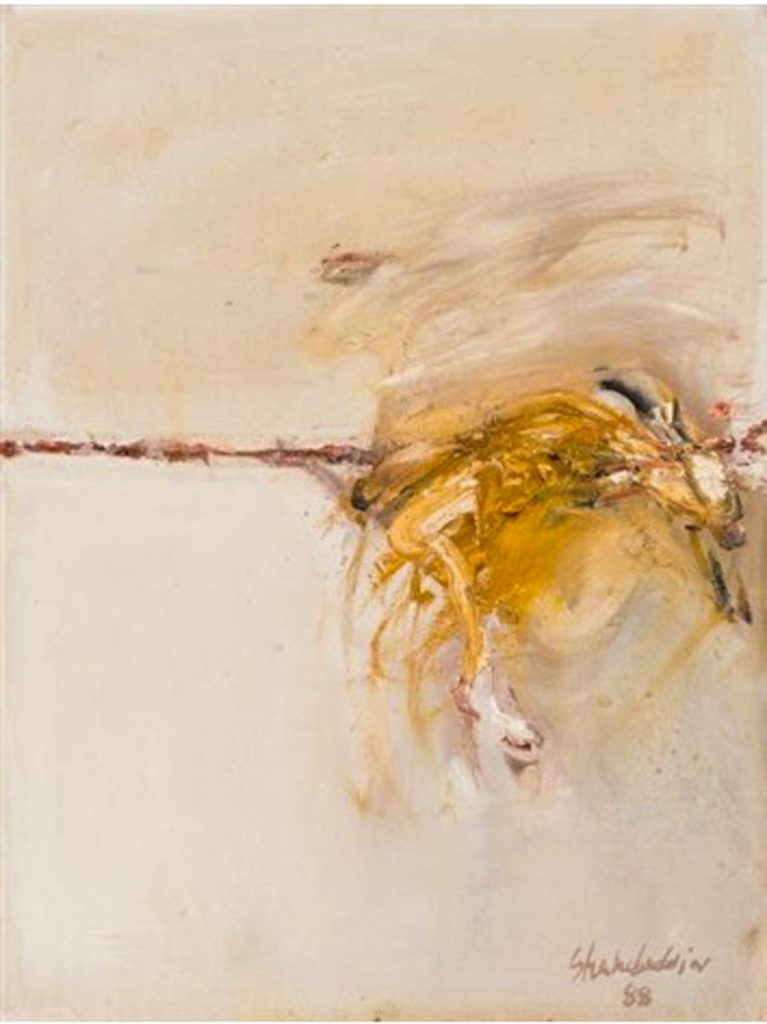
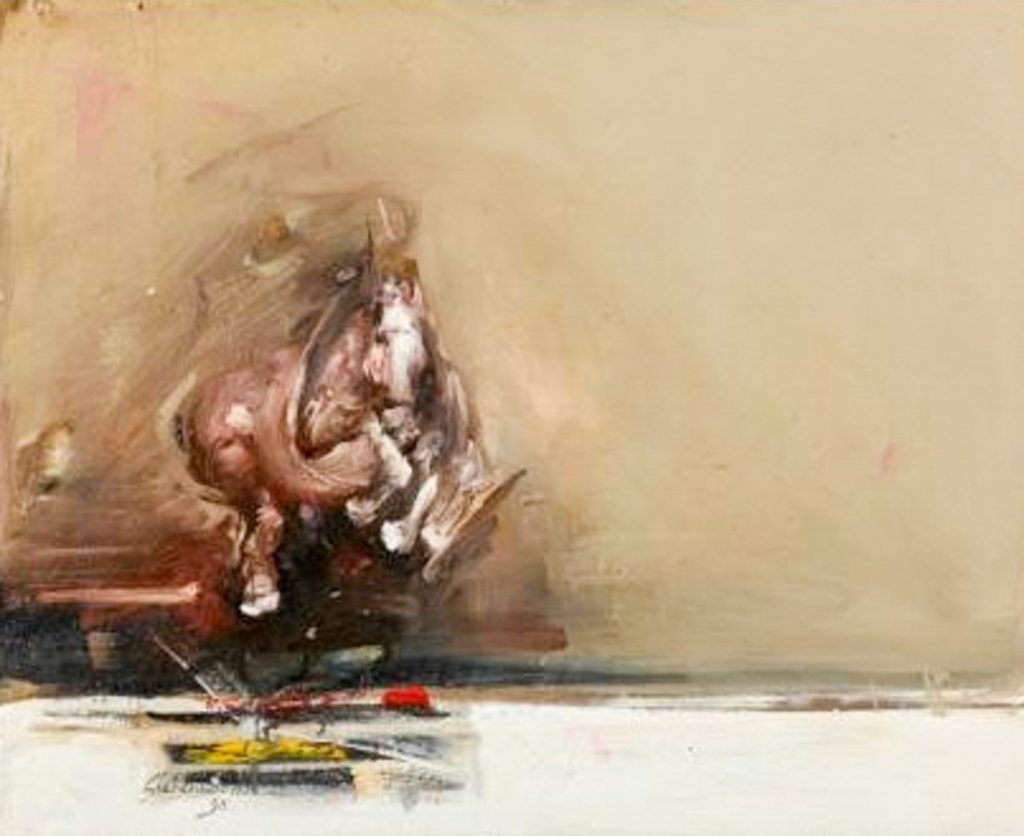
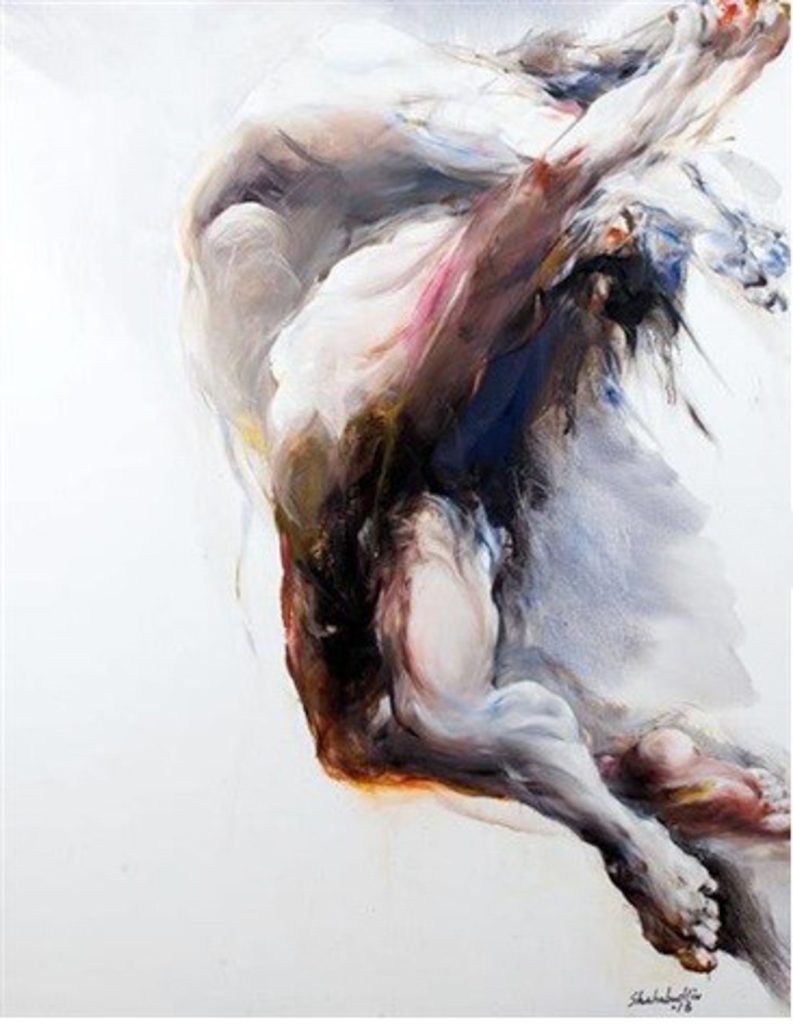
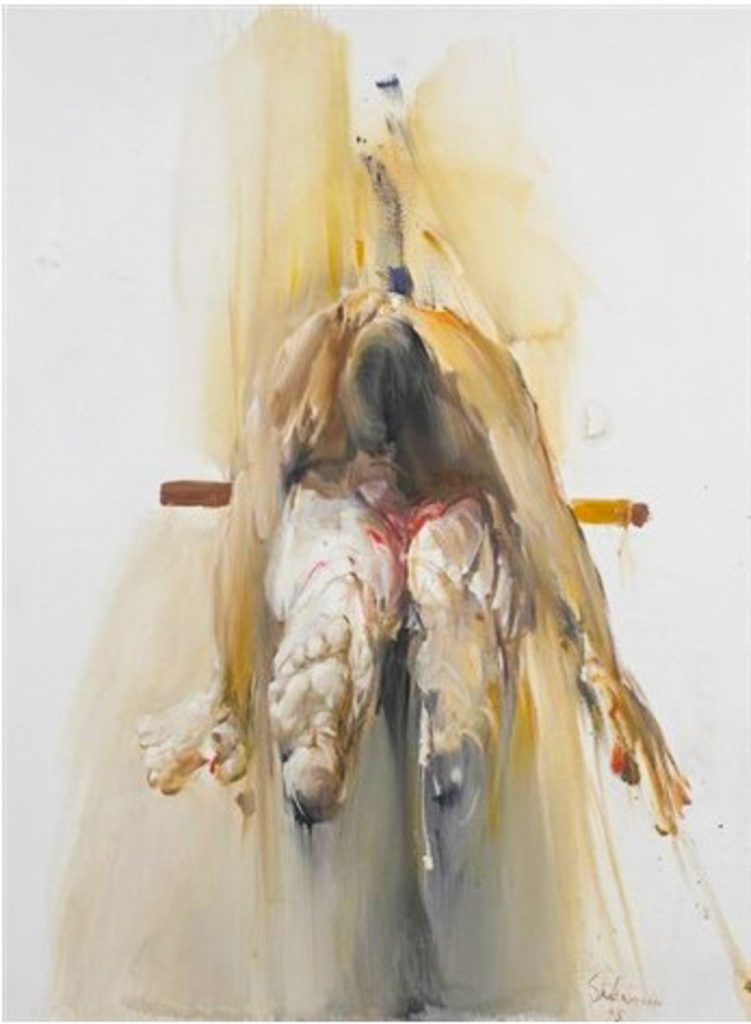
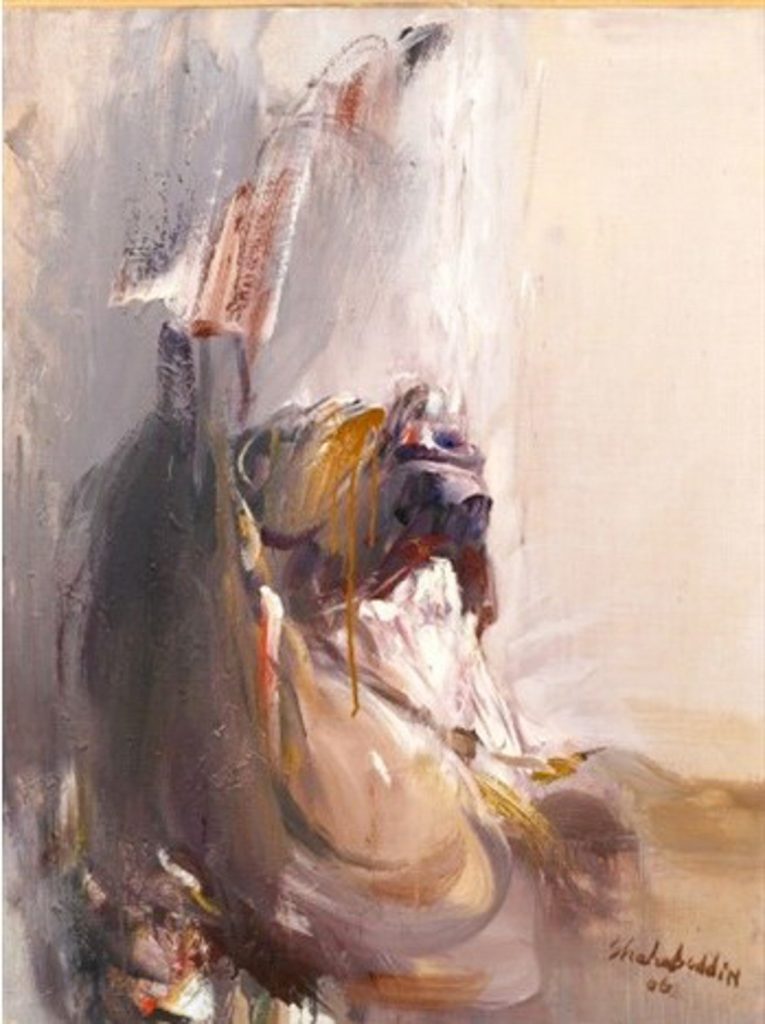
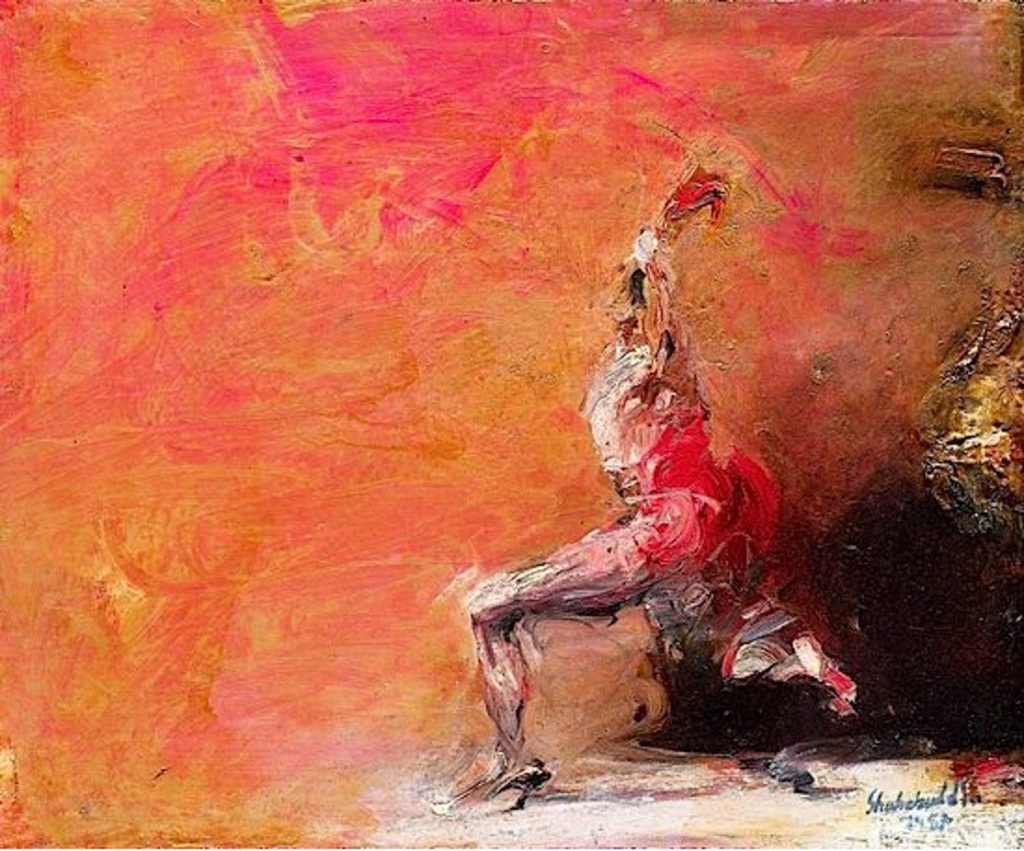
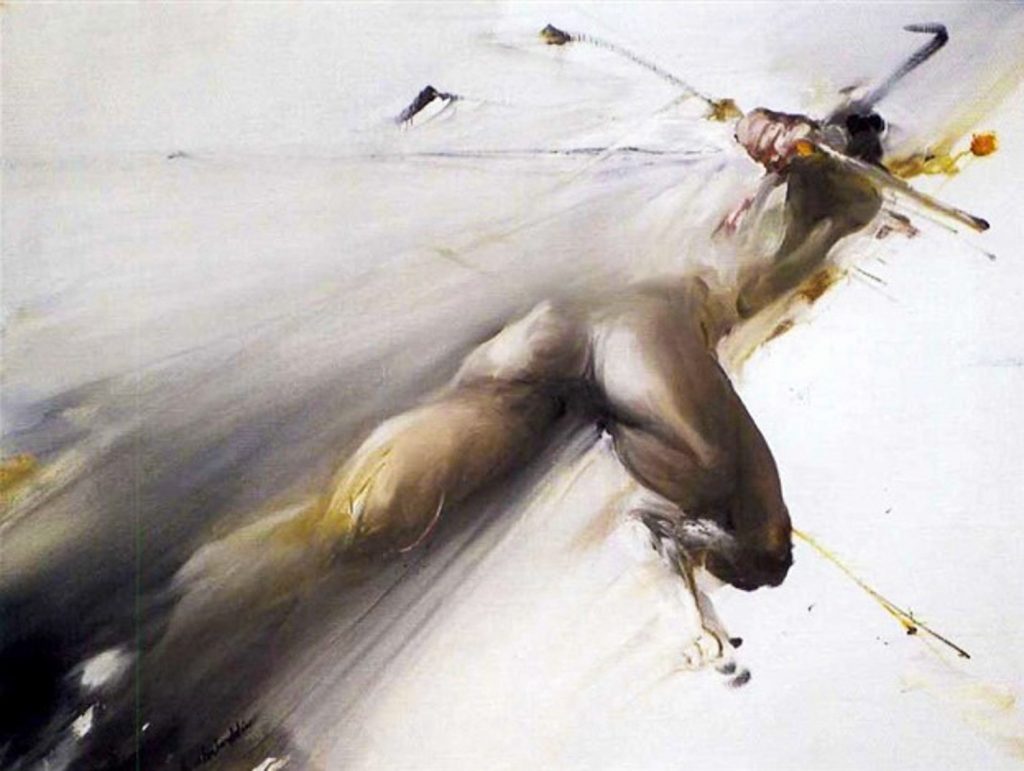
He spent hours sketching from schoolbooks, copying portraits, and noticing the smallest details around him. As he once shared, “I was always more interested in drawing than studying. Even during lessons, my hand would keep moving on paper.” A defining chapter of his life came during the Bangladesh Liberation War in 1971. Serving as a platoon commander and a member of the Crack Platoon, he witnessed powerful moments that stayed with him. These experiences later found their way into his art, giving his work a deep emotional strength. He reflected,
War changes how you see everything. Even after it ends, it continues to shape your thoughts.
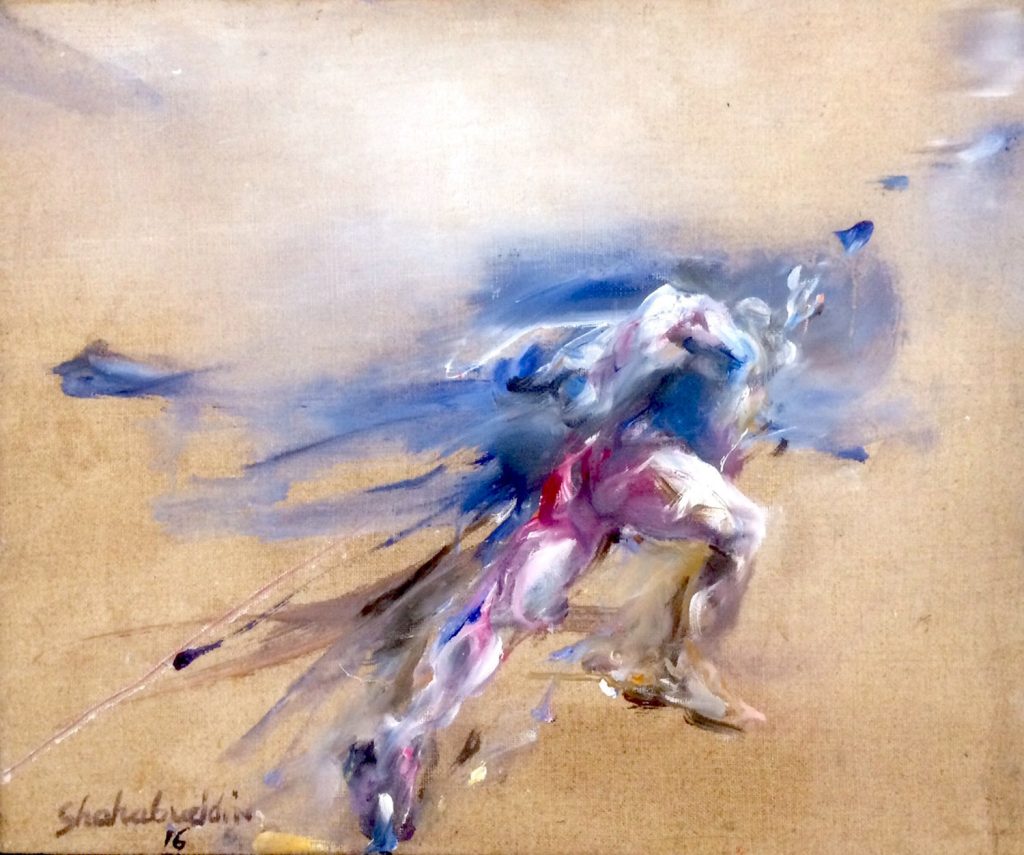
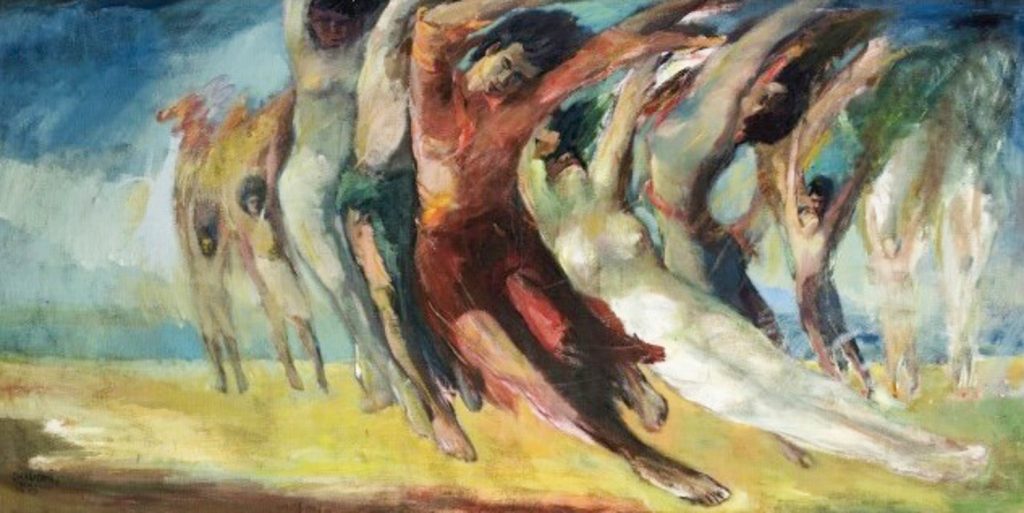
After independence, Shahabuddin studied at the Faculty of Fine Arts at the University of Dhaka. He later received a scholarship to study at the École nationale supérieure des Beaux-Arts in Paris from 1974 to 1981. This period opened up new artistic directions for him, introducing him to European techniques and ideas while strengthening his own artistic voice. His style carries a unique balance of strength and simplicity. His paintings often feature powerful human figures placed within open, quiet spaces. The use of earthy tones, along with occasional accents of colour, brings focus to the form and movement of the body. Critics sometimes draw parallels with Francis Bacon, yet Shahabuddin’s work remains deeply personal and rooted in his own journey. “Movement is life,” he once said. “It is through movement that we continue to grow and exist.” This idea shapes much of his work. In paintings like Freedom Fighter, the human body becomes a symbol of energy and resilience. Muscles are carefully defined, while parts of the figure blend softly into the background, creating a sense of motion that feels alive. His artworks such as Victory, Escape, and Movement reflect different layers of human experience. Victory presents achievement as something meaningful and evolving. Escape explores inner thoughts and emotional depth. Movement captures the continuous rhythm of life, where every moment leads into the next.
Shahabuddin’s work continues to reach audiences around the world. His paintings are part of collections at institutions such as the Olympic Museum and the Bangladesh National Museum, as well as in galleries across Europe, Asia, and beyond. He lives and works in Paris, carrying his cultural roots with him in every piece he creates.
His contributions have been honoured with major recognitions, including the Independence Day Award in 2000 and the Ordre des Arts et des Lettres in 2014. These achievements reflect his lasting impact on both national and international art. Beyond these awards and exhibitions, what truly defines artist Shahabuddin Ahmed is his consistency of vision. His work has its core in the human figure as a symbol of endurance.
At the heart of his work lies a clear and consistent vision. The human figure remains central, expressing strength, movement, and emotion. His compositions carry a rhythm that feels almost musical, guiding the viewer through each form and gesture.
Artist Shahabuddin Ahmed’s journey from a young boy sketching in Dhaka to a freedom fighter to an internationally acclaimed artist in Paris is reflected in every canvas he creates.
It is a journey of resilience, shaped by history and driven by an inner need to express.
6. The Chromatic Diary
Rokeya Sultana
Text by: Puja Basak
To step into the world of Rokeya Sultana is to enter a space where color begins to think for itself. It does not remain confined to form or surface. It expands, interrupts, softens, and sometimes resists. Her work does not present a single moment. It feels more like a continuous unfolding, where each layer holds a trace of what came before and a suggestion of what might follow.
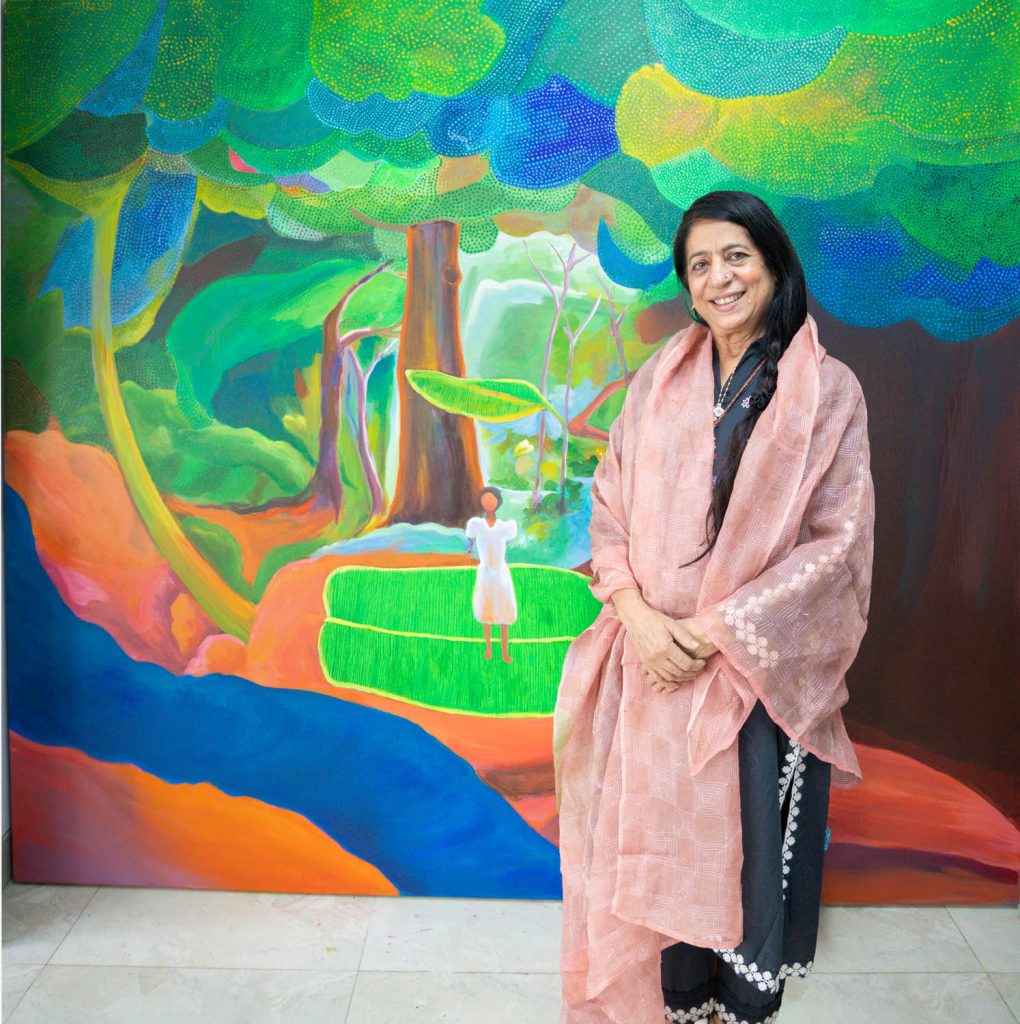
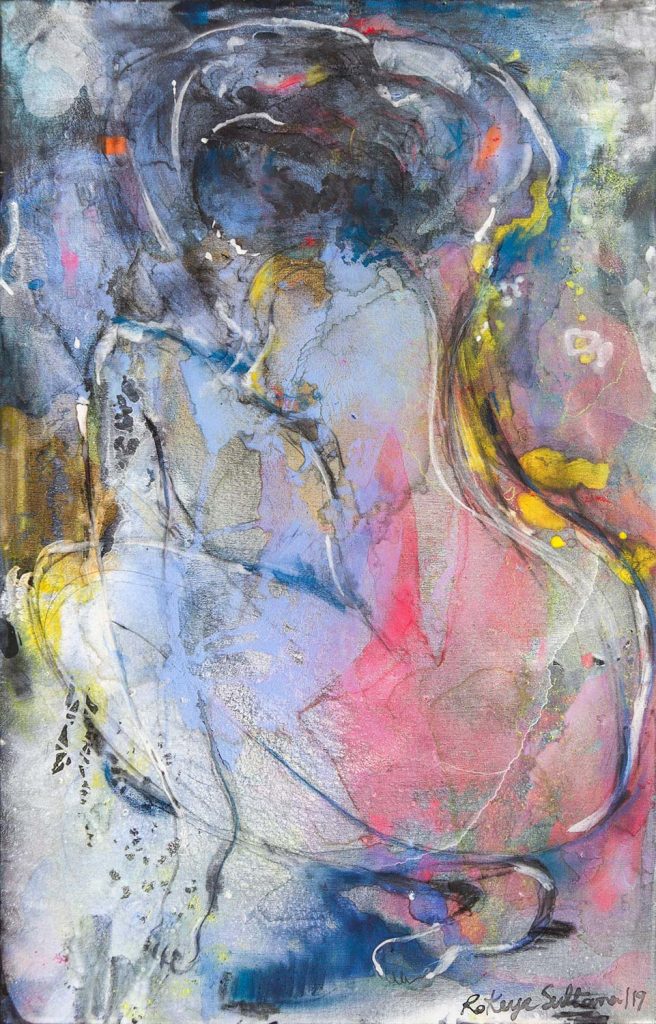
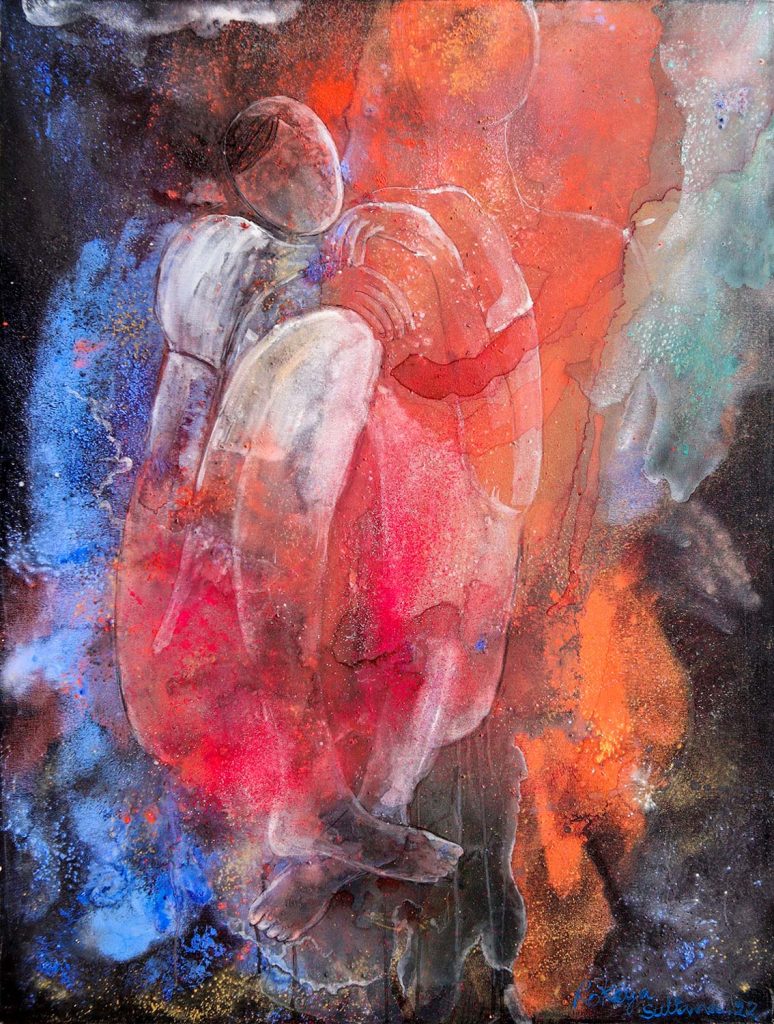
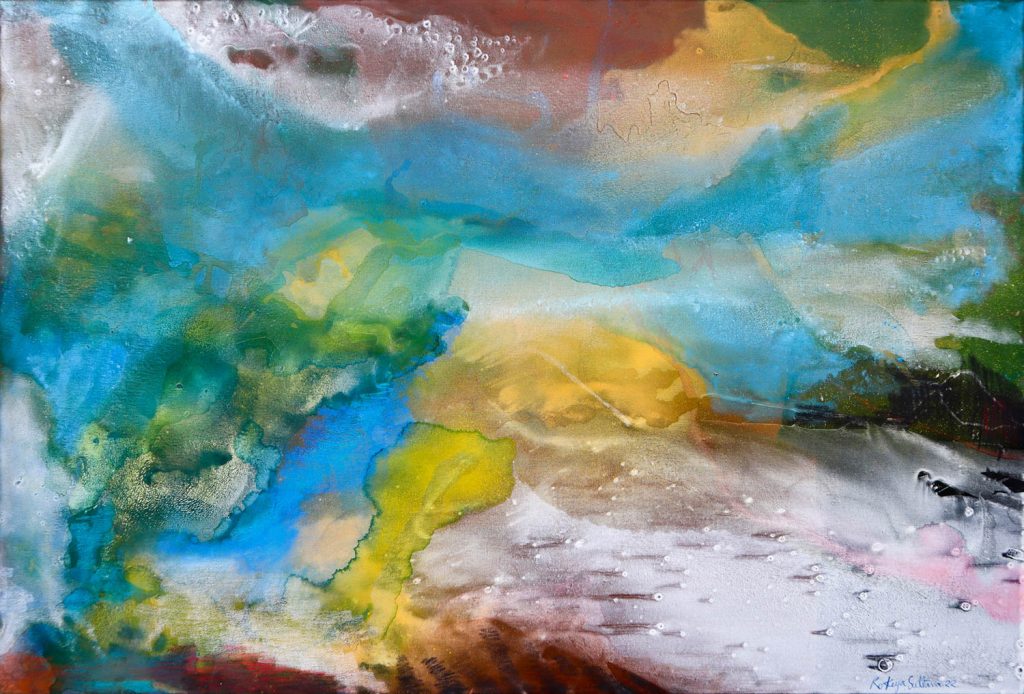
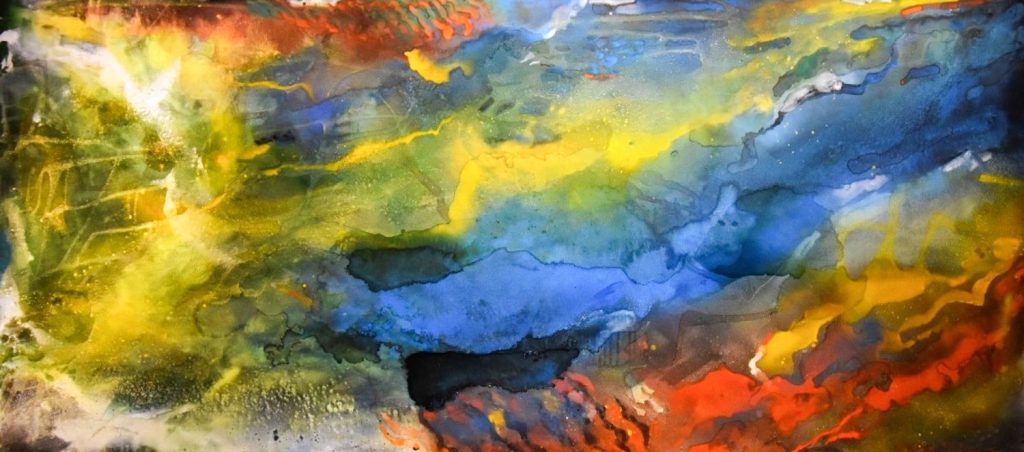
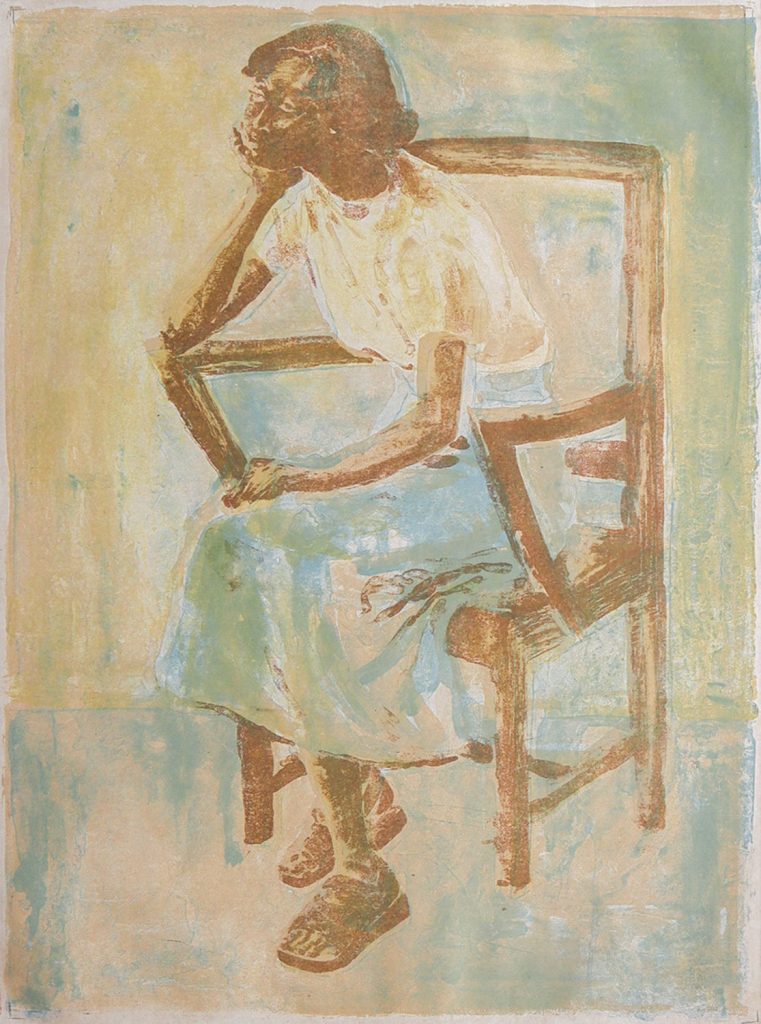
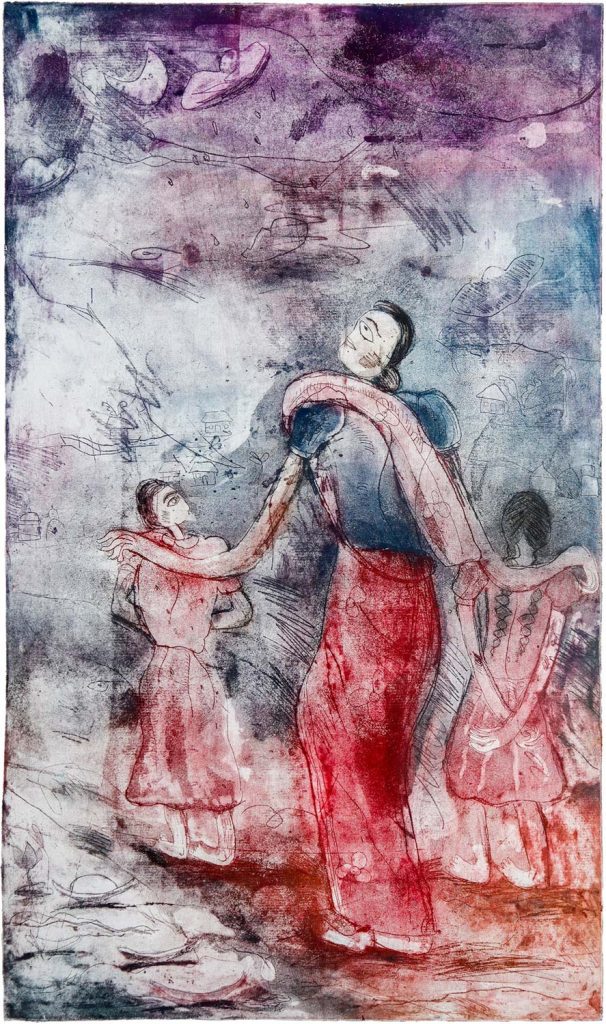
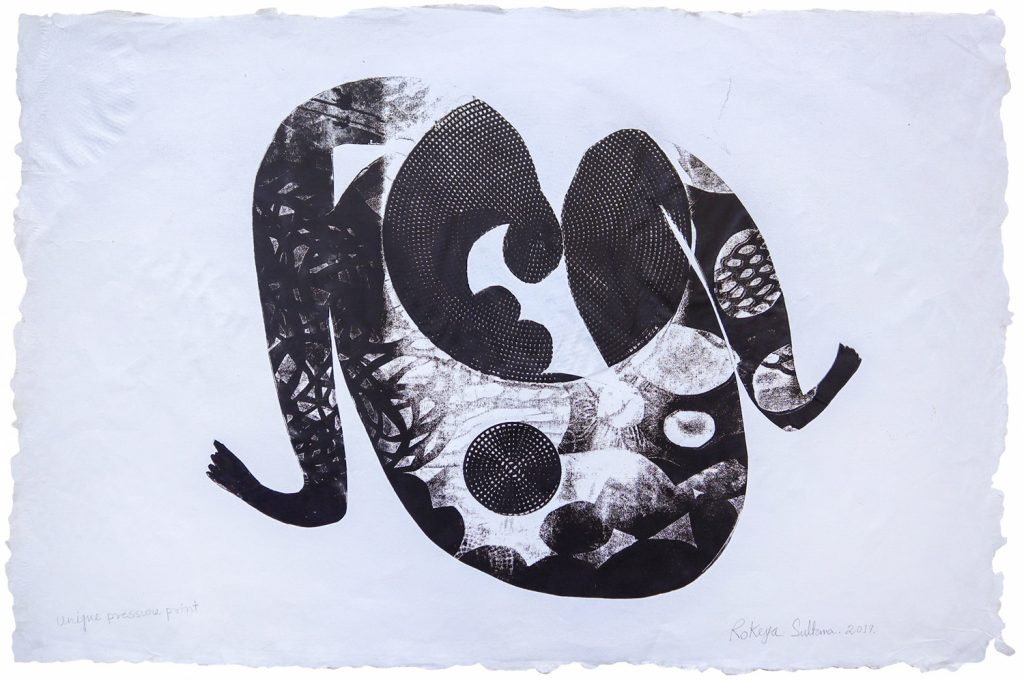
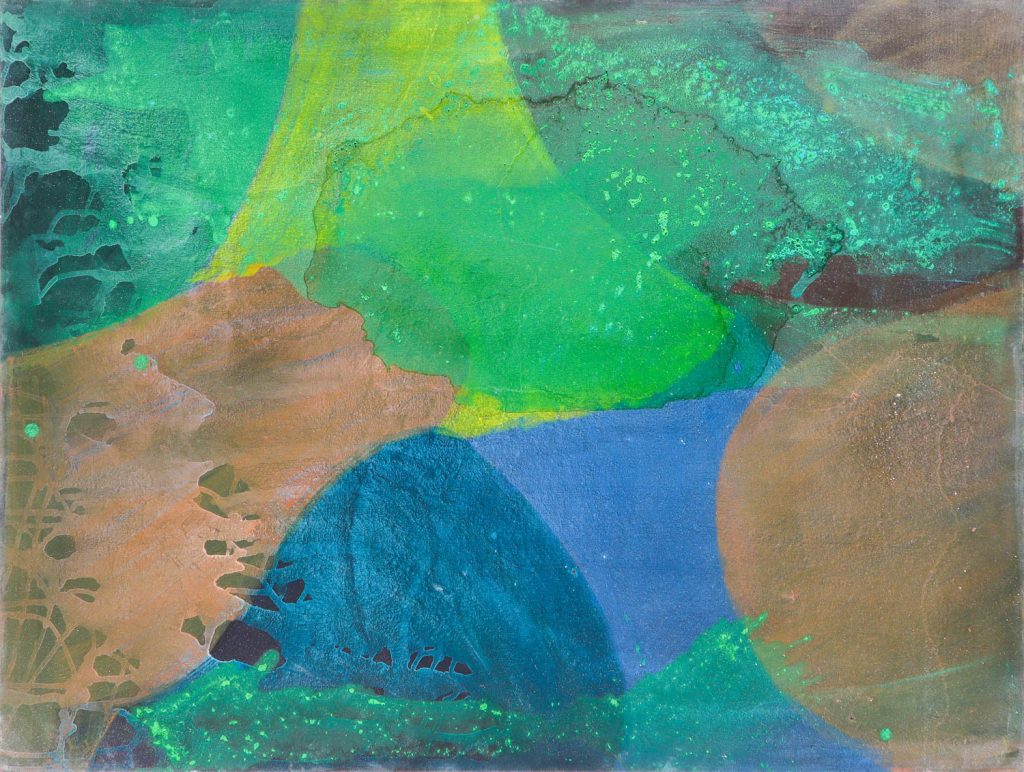
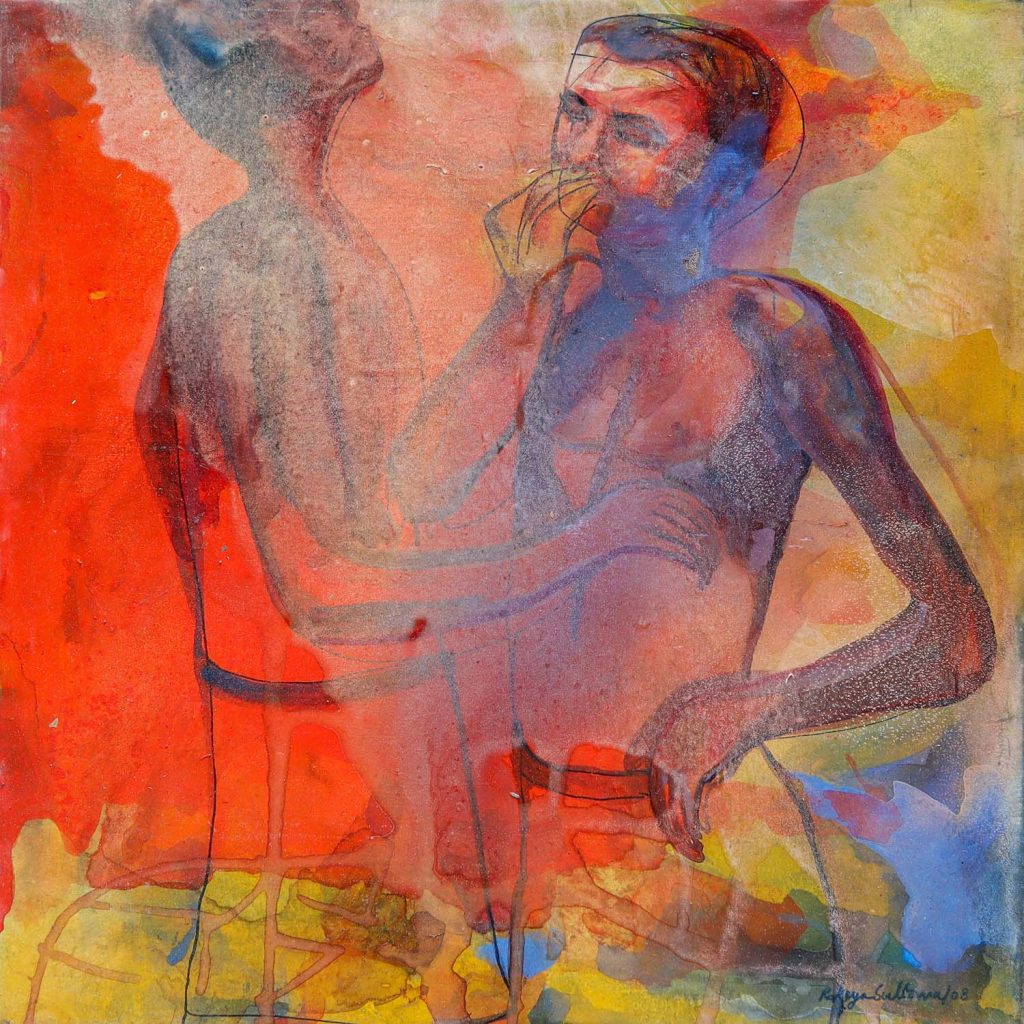
Born in 1958 in Chittagong, Rokeya Sultana’s journey through art carries both discipline and quiet transformation. Her early training at the University of Dhaka grounded her in structure, while her time in Santiniketan under Somnath Hore opened a different kind of awareness. There, the idea of art moved beyond representation and into something more reflective, more inward. Over time, she began to shape a language that does not separate technique from emotion, or material from memory.
Perhaps one of the most recognisable presences in her work is her Madonna series. Yet this Madonna does not belong to distance or stillness. She exists within movement, within pressure, within the everyday. Draped often in a striking magenta, the figure carries both care and defiance at once. She is not idealised, nor removed from reality. Instead, she stands within it, navigating its weight while holding onto her own sense of presence. In these works, magenta becomes more than a colour choice. It acts almost like a response, transforming tension into something that remains resilient without losing its softness.
There is something deeply human in the way these figures are held. They do not demand attention, yet they remain difficult to ignore. They seem to carry a quiet insistence, as if they are asking not to be explained, but to be acknowledged.
As her practice continues, the figure sometimes begins to dissolve, giving way to a more fluid and expansive visual language. In works connected to earth, water, and air, form becomes less fixed, and presence becomes more atmospheric. These paintings do not describe nature directly. Instead, they seem to move with it. Shades of blue, green, and yellow shift across the surface, creating spaces that feel both open and uncertain. Light appears not as illumination, but as a presence that moves and changes.
These works hold a subtle tension. There is calm, but it is never entirely still. There is beauty, but it carries an awareness of fragility. It feels as though the paintings are not only observing the natural world, but also responding to its vulnerability.
At the heart of Rokeya Sultana’s practice lies printmaking. It is here that her technical depth becomes most visible, though it never feels separate from her intuition. She has played a significant role in shaping contemporary printmaking in Bangladesh, particularly through her exploration of viscosity techniques and layered processes. Each print carries a sense of time, pressure, and repetition. The surface becomes a record of decisions, of movements that are both controlled and instinctive.
Her approach to printmaking feels almost like writing. Not in words, but in marks, in textures, in shifts of tone. The press becomes a place where thought and material meet, where something internal is translated into something that can be held.
Her works have travelled across borders, finding place in collections such as the British Museum, the Victoria and Albert Museum, and the National Museum of Jordan. Yet alongside this global recognition, she remains closely connected to teaching. As a professor, her role extends beyond instruction. She becomes a guide,
encouraging younger artists to remain open, to continue searching rather than settling too quickly.
In her more recent works, such as Relationship and Fragrance of Soul, there is a noticeable shift toward quieter abstraction. Forms become less defined, sometimes barely visible, yet they carry a sense of connection that is difficult to ignore. These works seem to exist between the visible and the unseen, suggesting that not everything needs to be clearly formed to be present.
There is a sense that her work continues to move, not toward a fixed destination, but through a process of becoming. Even after decades of practice, there is no sense of closure. Instead, there is curiosity, a willingness to remain within uncertainty.
Her recognition with the Ekushey Padak in 2024 reflects not just her individual achievement but her lasting influence on the artistic landscape of Bangladesh. Yet, like her work, this moment feels less like an end point and more like part of an ongoing journey.
Rokeya Sultana often speaks of colour as something deeply personal,
almost like a companion that shifts with her state of mind. As she once said,
Colours are my companions. When I feel a void, magenta fills it. When I seek peace, the blues and greens of our rivers come to me.
She also reflects on her process with a sense of humility that continues to shape her practice:
“An artist must never be satisfied. The moment you think you have mastered a technique; you have stopped growing. I am still a student of the light.”
And perhaps the clearest way to understand her work comes from her own words:
“My art is my diary. It reflects my moods, my seasons, and the awareness that we are alive in a way the rest of the physical universe is not.”
Within that quiet confession lies the essence of her practice. Each work becomes a fragment of lived time, held in colour, in texture, in presence. It does not seek to conclude. It simply continues, carrying with it a sense of life that remains open, layered, and deeply felt.
7. Sketching Society
Shishir Bhattacharjee
Text by Shrabony Sarker
To the regular readers of Prothom Alo, the name Shishir Bhattacharjee feels familiar, almost like a daily companion. His cartoons bring a different kind of energy to the newspaper page. With a few confident strokes, he transforms satire into a language of resistance, making caricature a powerful medium for social reflection.
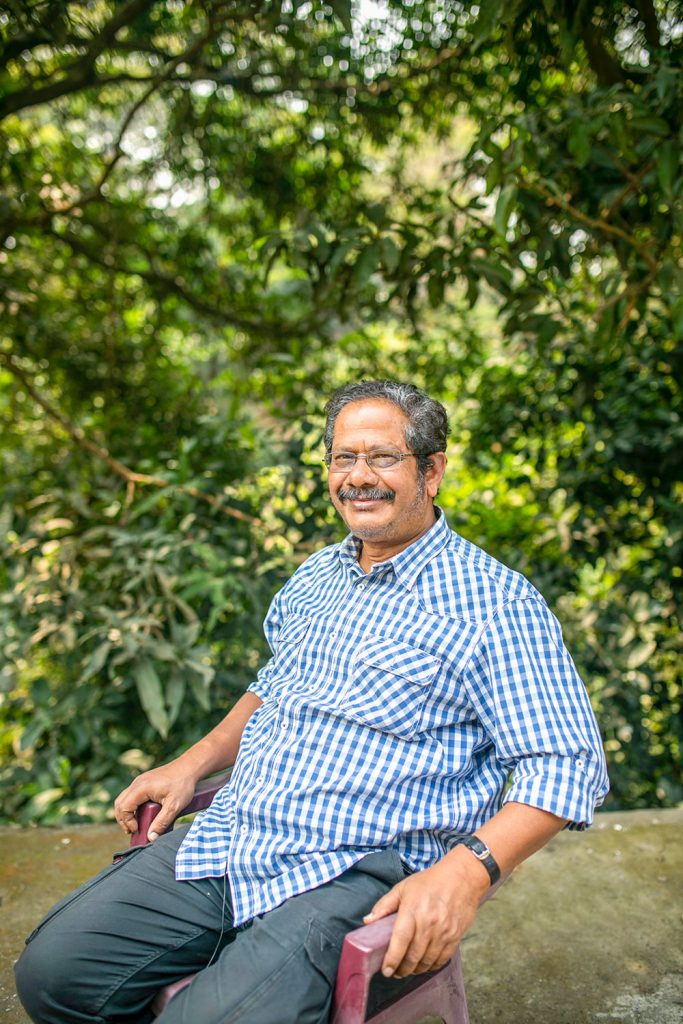
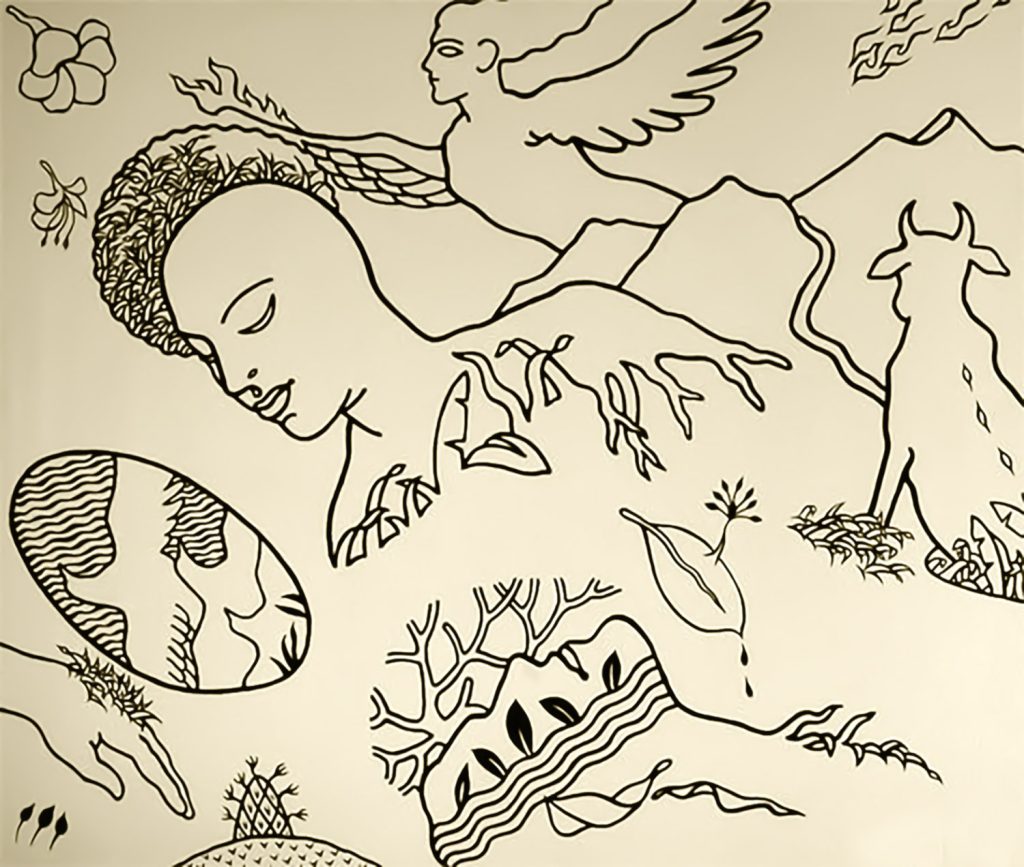
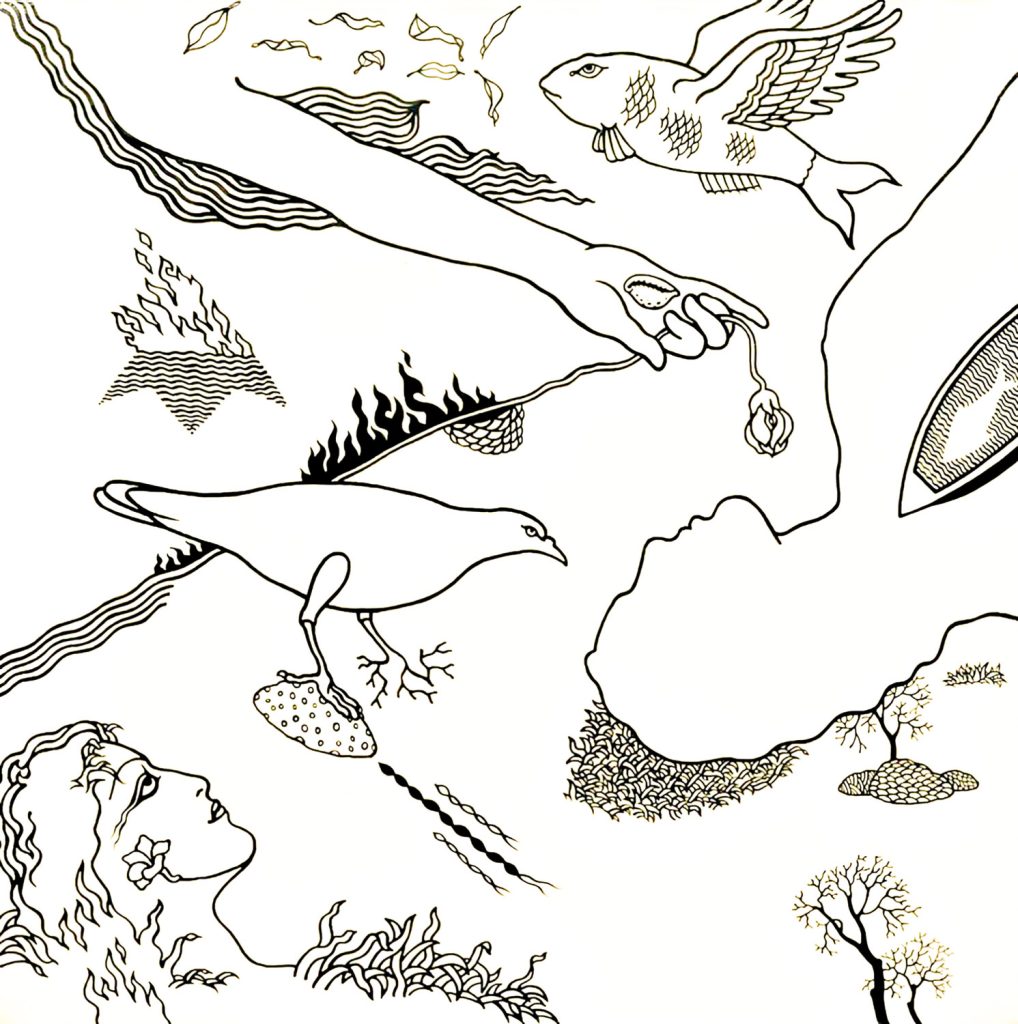
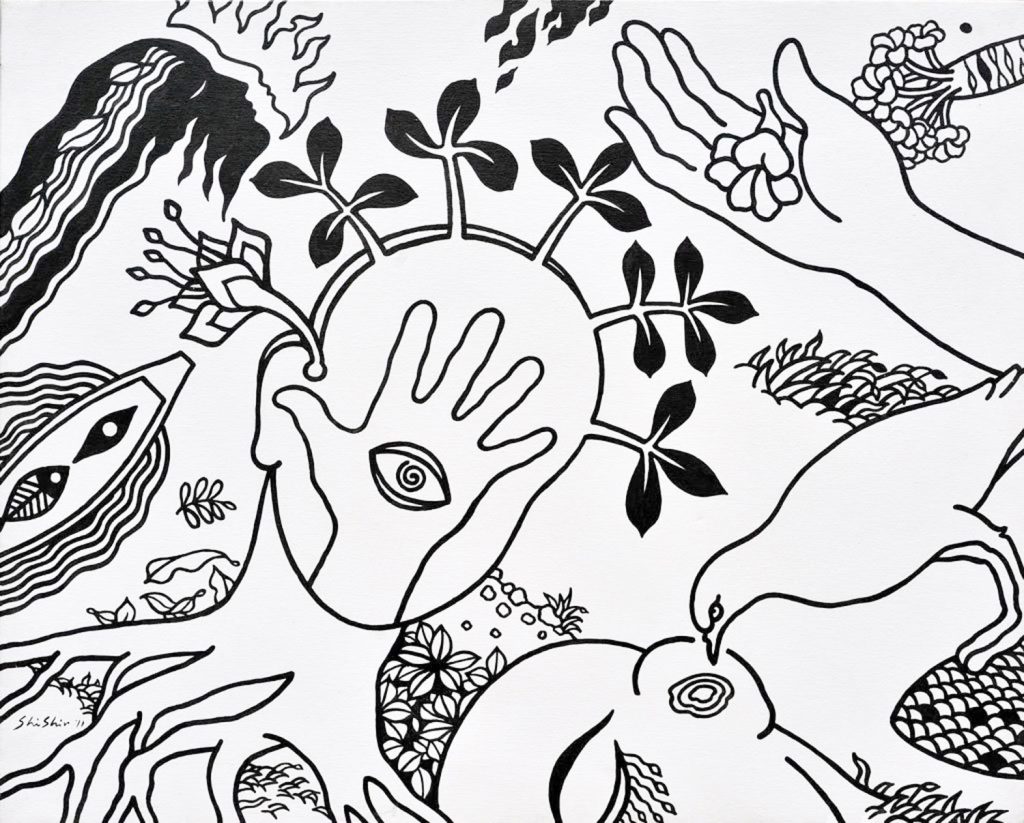
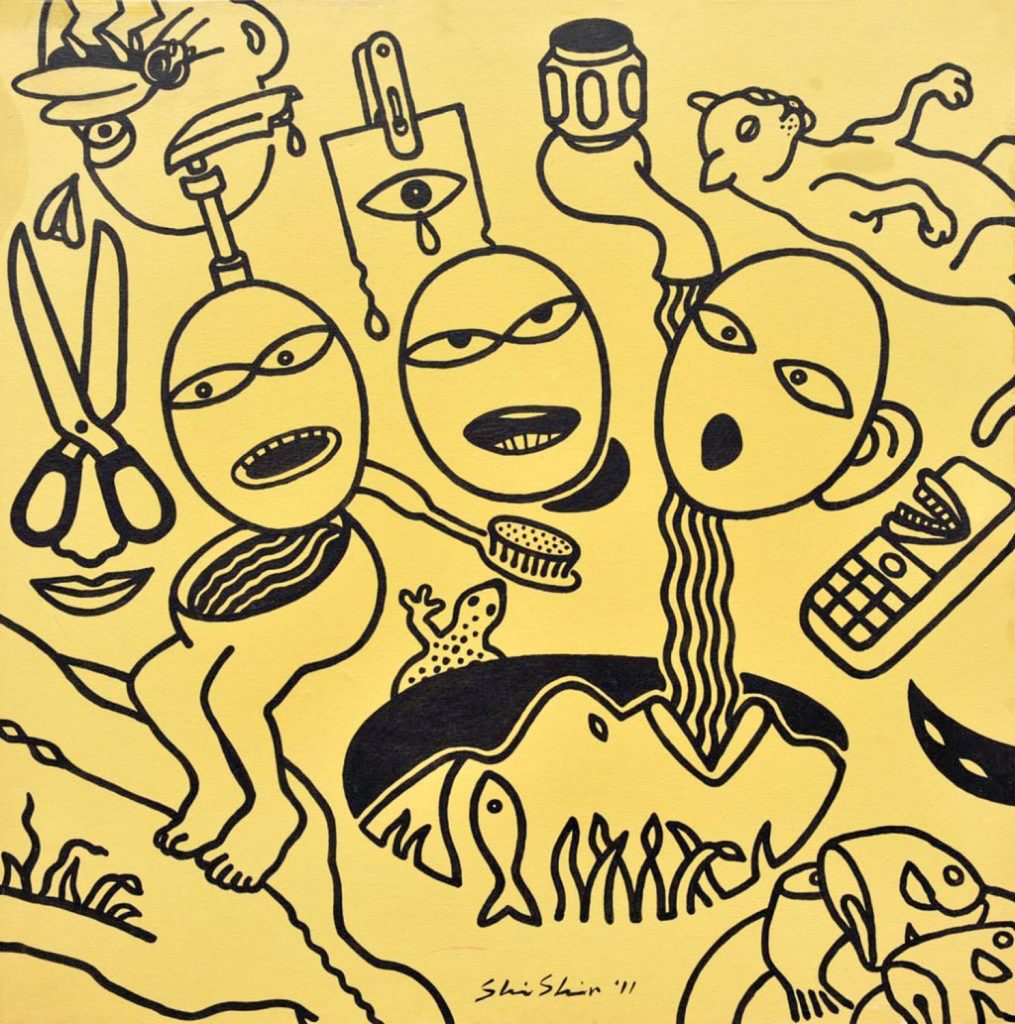
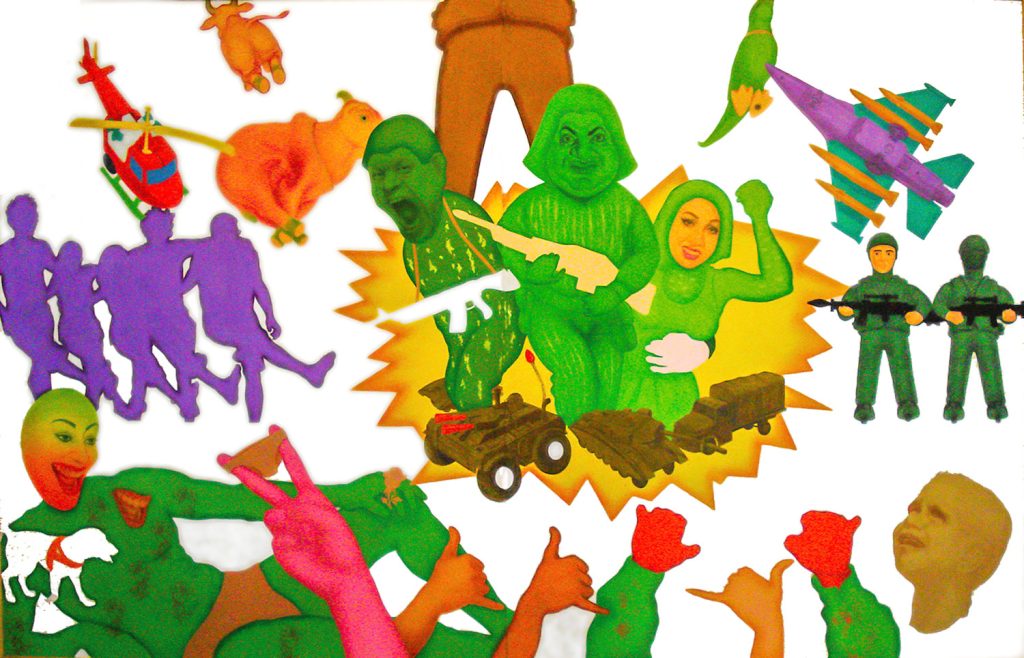
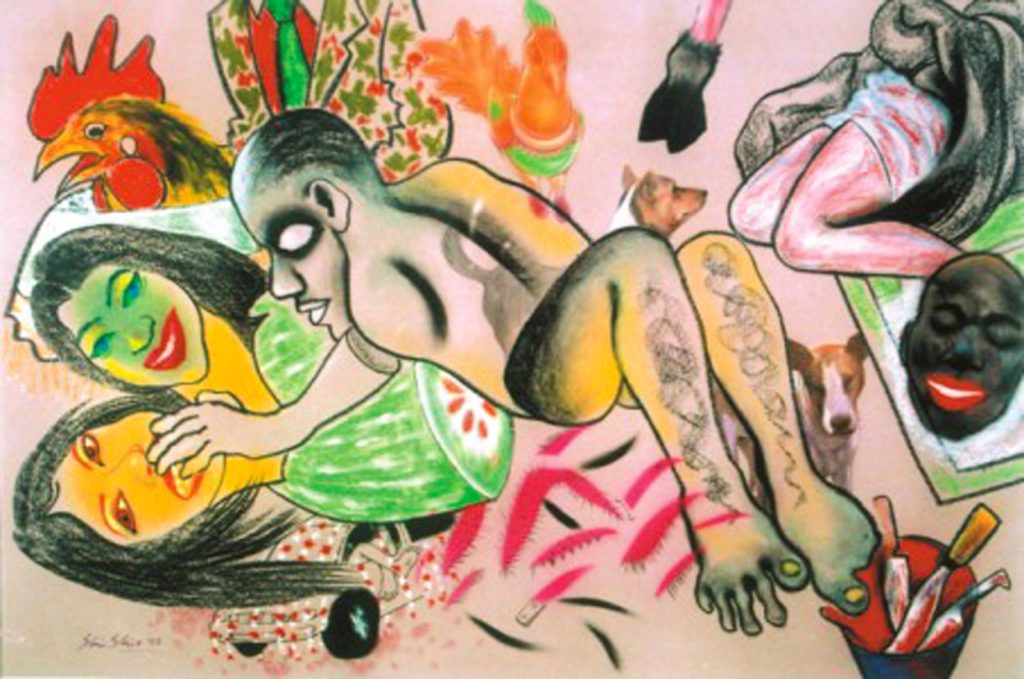
Shishir Bhattacharjee was born in 1960 in Thakurgaon. He is one of Bangladesh’s most recognised political cartoonists and a teacher at the Faculty of Fine Arts, University of Dhaka. Since the 1980s, his satirical drawings have reflected the social and political realities of the country with clarity and wit. He studied at the University of Dhaka, where he completed his Bachelor of Fine Arts in 1983. Later, he earned his master’s degree in painting from the Maharaja Sayajirao University of Baroda in 1987. In conversation, Bhattacharjee speaks with clarity about his artistic choices. His preferred tools are simple: black liners, gel pens, and fine brushes paired with ink or acrylic on a white surface. Over time, his palette has become more restrained. He says,
I want my work to speak directly. Black and white allow the message to come through without distraction.
While he once embraced vibrant colours, he now uses them sparingly often in the background to evoke mood, whether warmth, tension, or quiet unease. The lines, however, remain firmly black, anchoring his visual language. His inspirations trace back to some of the most influential figures in South Asian art. He speaks with deep respect for Zainul Abedin and Quamrul
Hassan, acknowledging their foundational role in shaping artistic thought in Bangladesh. “Without them, we would be nothing,” he reflects. Internationally, artists like K. G. Subramanyan and Jogen Chowdhury have influenced his approach to form and narrative. He also draws from the works of Otto Dix and George Grosz, whose bold critiques of power and conflict resonate with his own practice.
Artist Shishir Bhattacharjee emerged as a distinctive voice during the 1980s. His work often engaged with political realities, using humour and exaggeration to reveal deeper truths. During the period of the Ershad regime, his cartoons became a subtle and sharp form of protest. He later became part of the artist group “Shomoy,” which played an important role in shaping a new direction in Bangladeshi art.
One of his significant works, Dagg-Tamasha (2013), reflects his ongoing engagement with society. The series captures a world marked by contradiction and complexity, using satire to mirror lived realities. Through exaggerated forms and deliberate lines, he explores themes of power, social tension, and collective behaviour. The imagery feels both surreal and familiar, inviting viewers to confront what lies beneath the surface.
Beyond his studio, he has shaped the generations of young artists as a teacher at the Faculty of Fine Arts. His influence extends to many who now carry forward his visual language.
Artist Shishir Bhattacharjee remains deeply curious about the world around him. Nature, in particular, continues to inspire him. He says, “There is so much to learn from nature. Its variations are endless.” This sense of curiosity keeps his work fresh and evolving.
Over the decades, Shishir Bhattacharjee has redefined the role of the cartoonist in Bangladesh. His work stands at the intersection of art and commentary, where humour meets truth. With each line, he continues to engage, challenge, and inspire to prove that even the simplest marks can carry profound meaning.
8. Echoes of Innocence
Mohammad Iqbal
Text by Shrabony Sarker
Mohammad Iqbal is a visual artist whose work quietly carries the weight of memory, history, and human emotion. Born in 1967 in Chuadanga, Bangladesh, his early life was shaped by the harsh realities of the Liberation War. As a child, he witnessed fear, uncertainty, and loss experiences that would later find their way onto his canvas. Today, living and working in Dhaka, he continues to explore those memories through deeply personal and thought-provoking paintings.
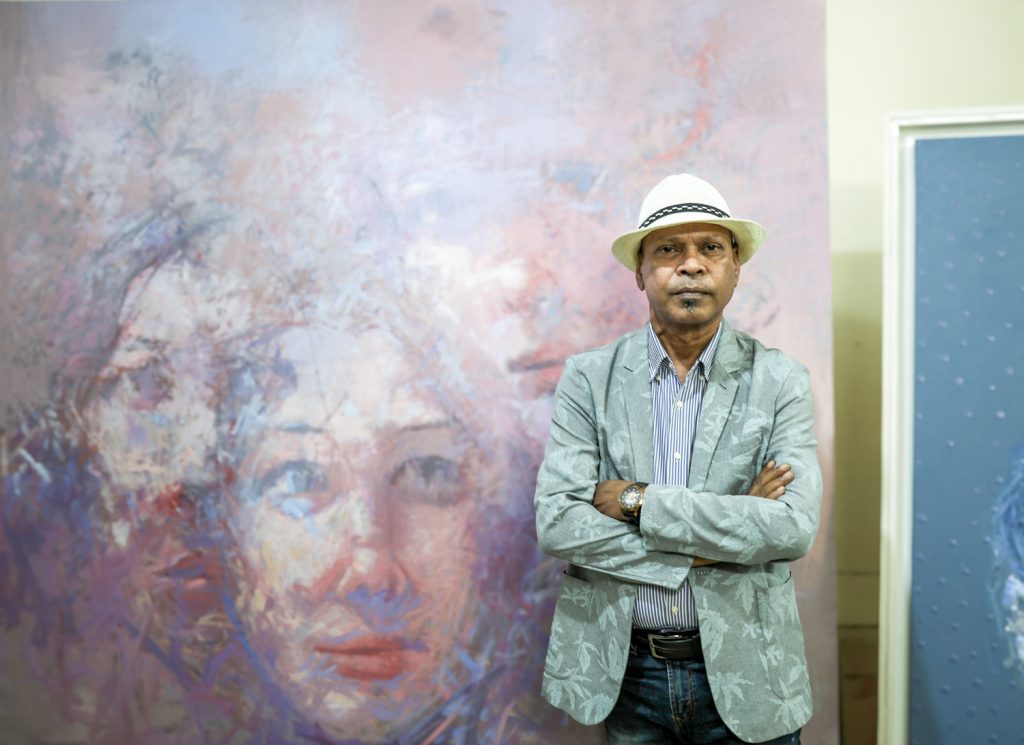
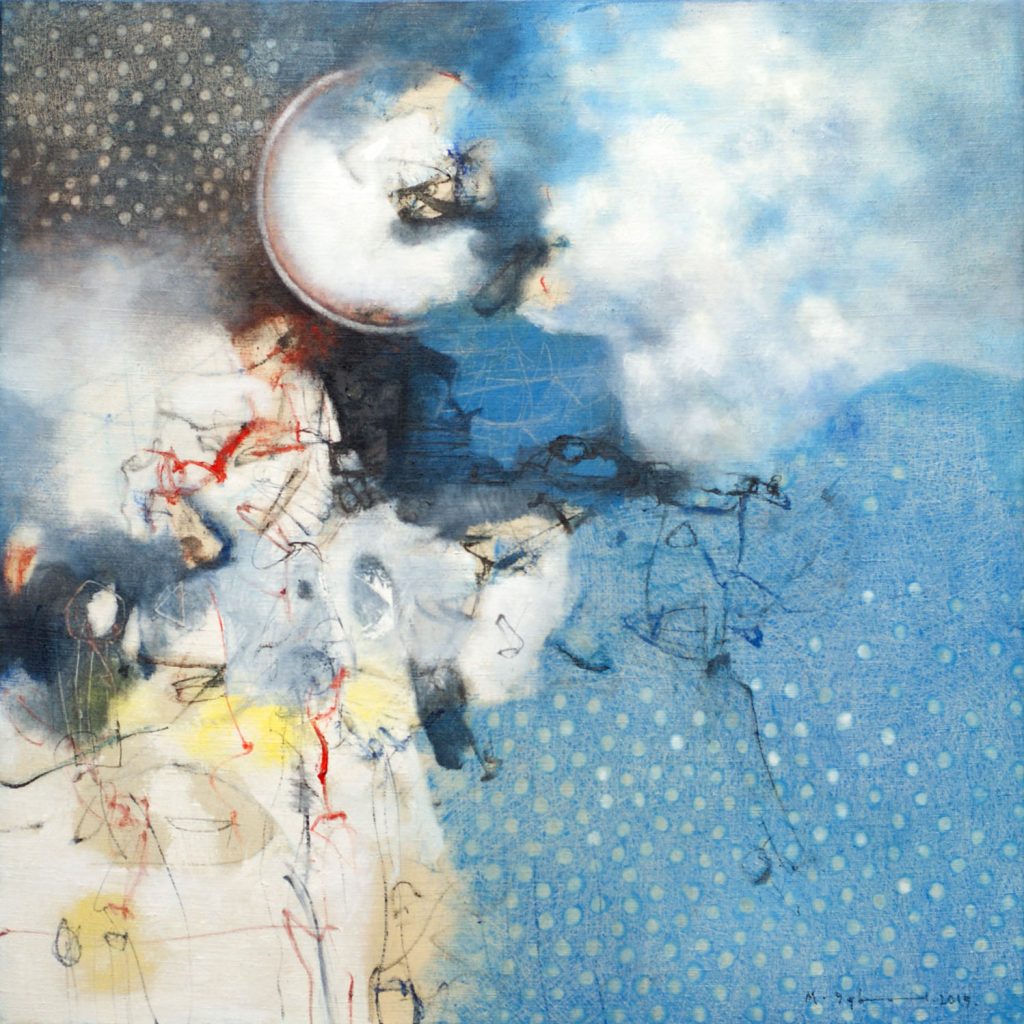
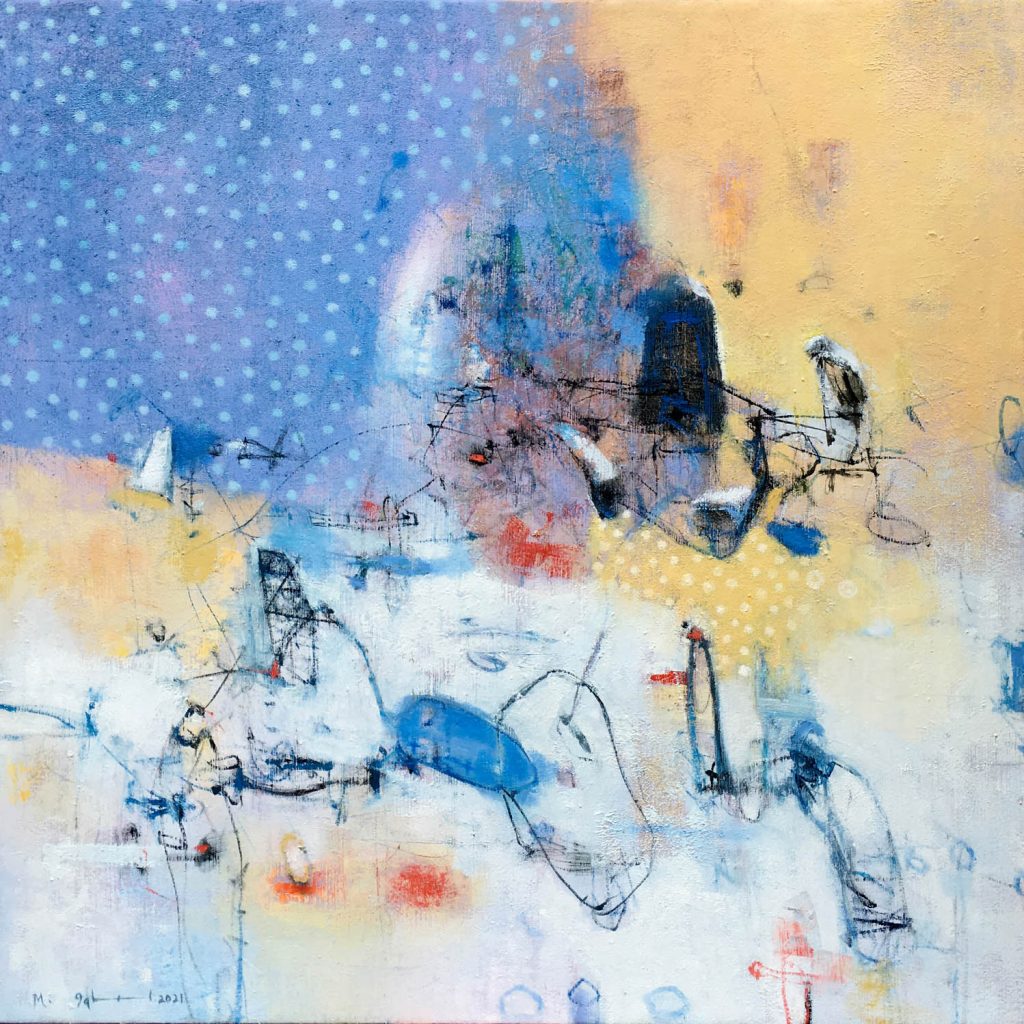
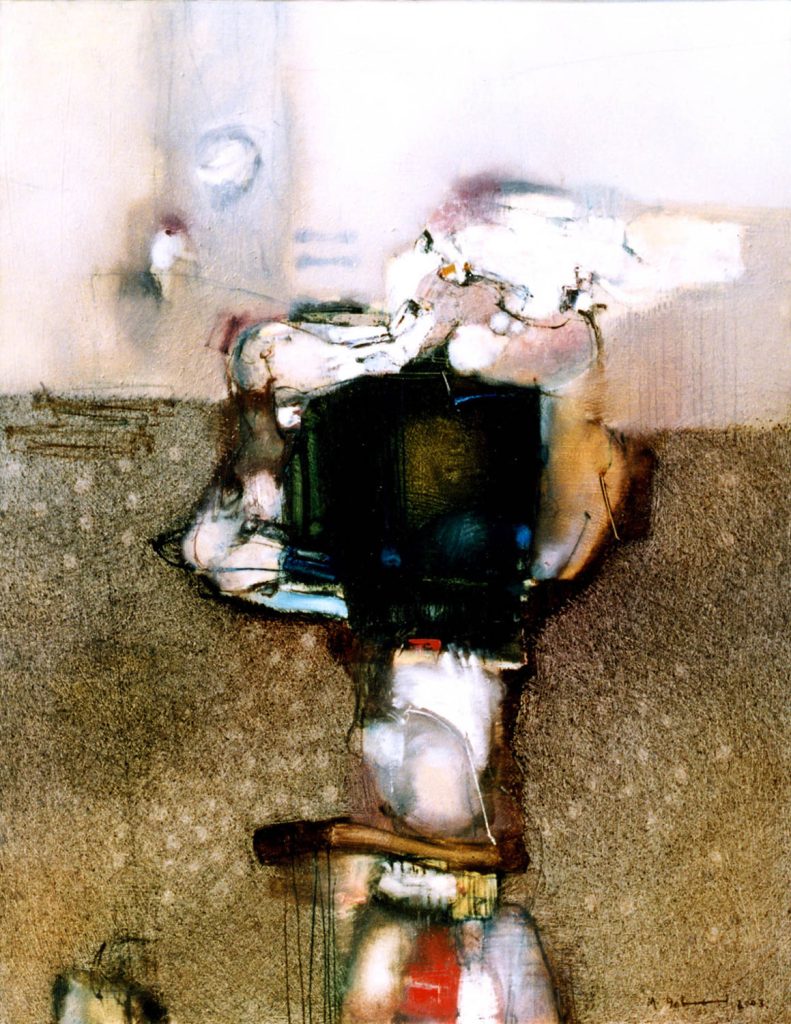
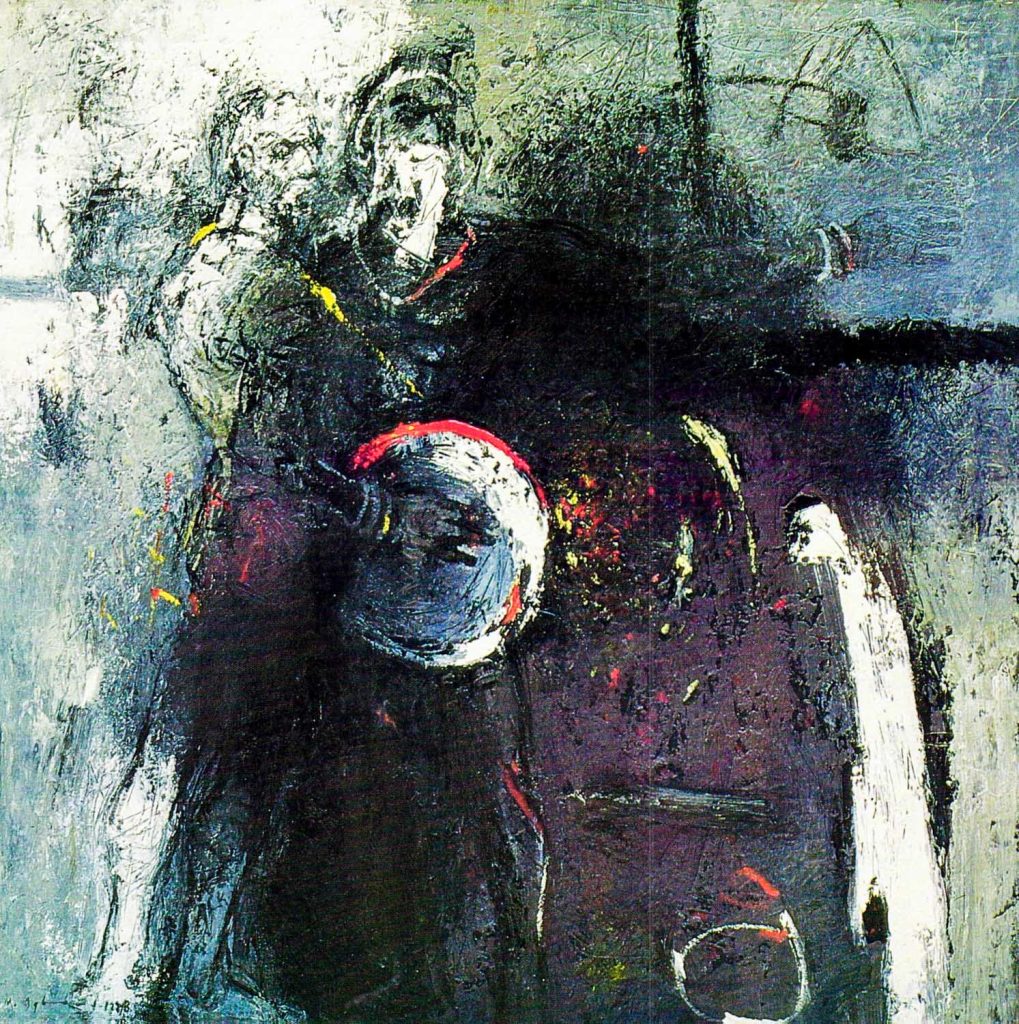
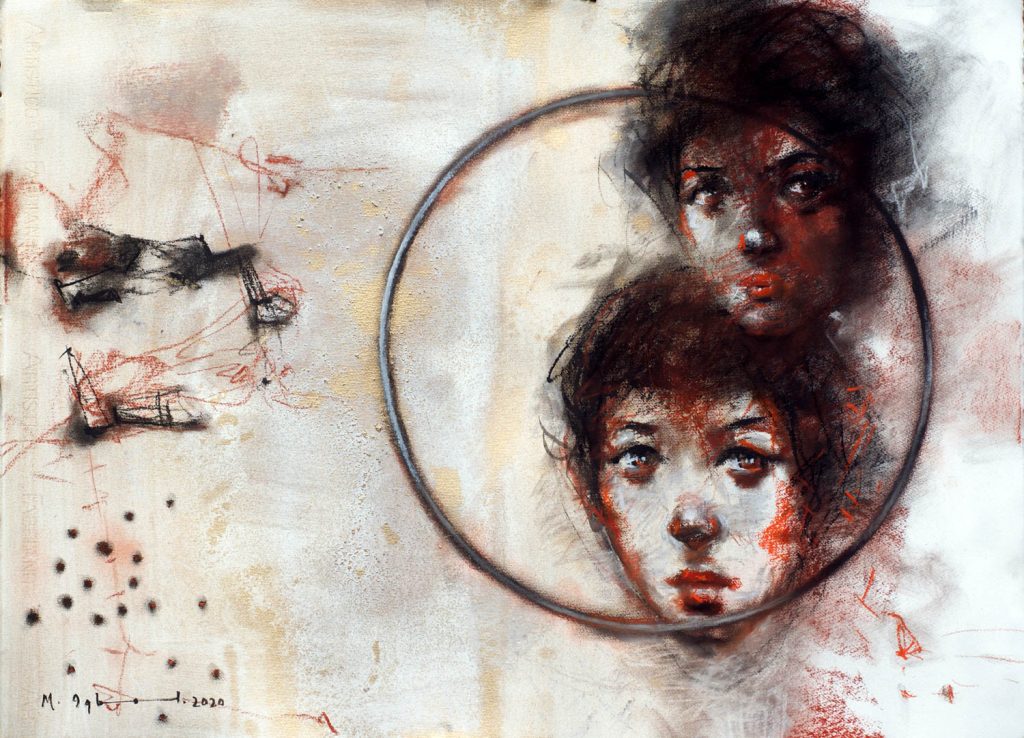
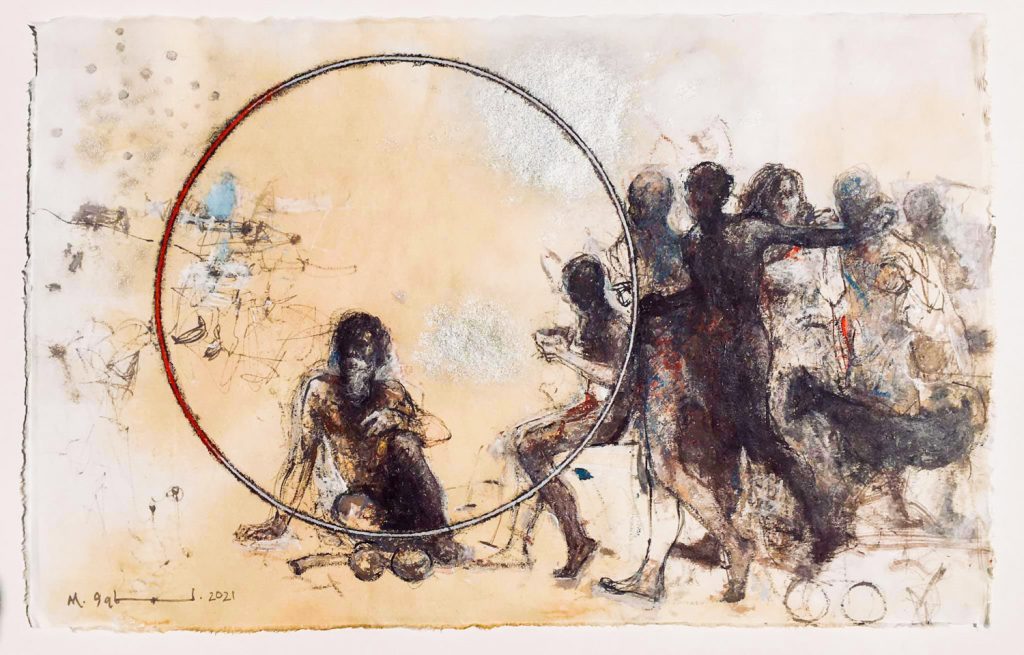
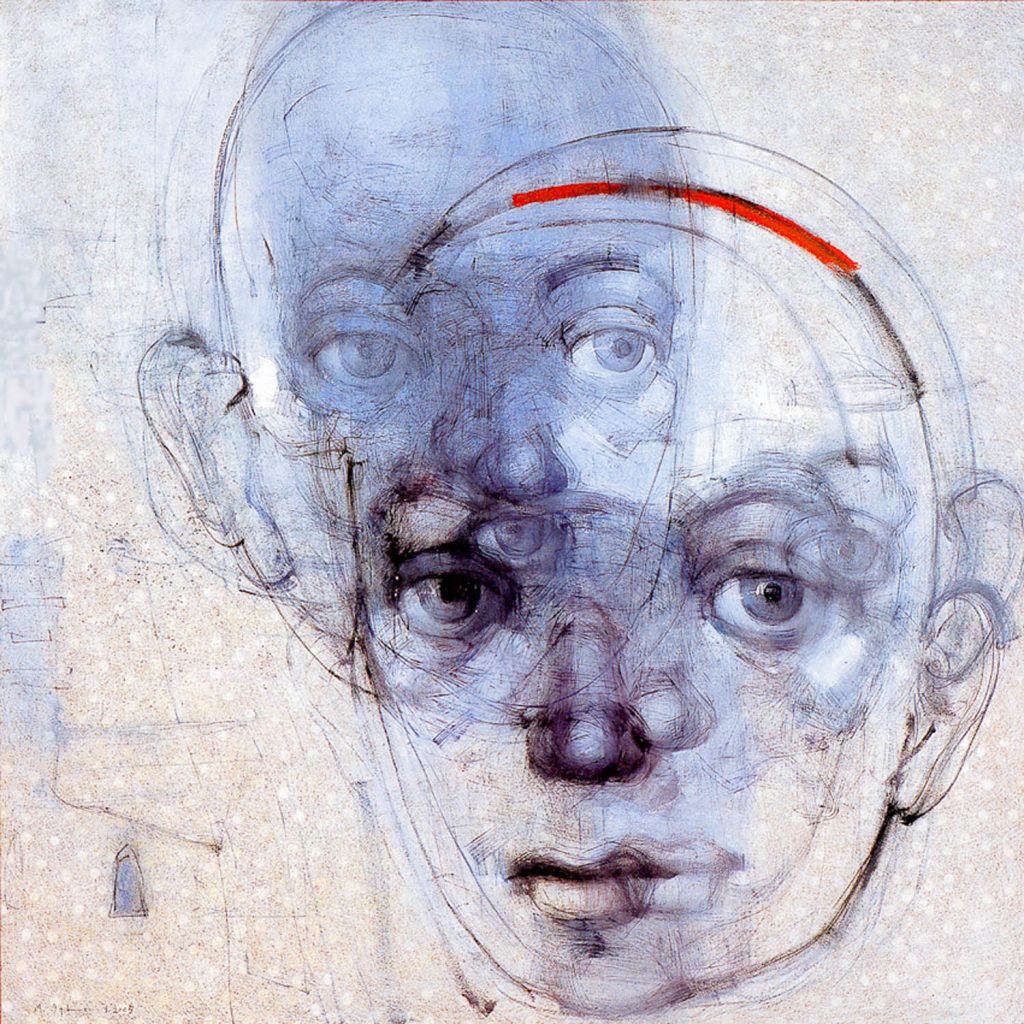
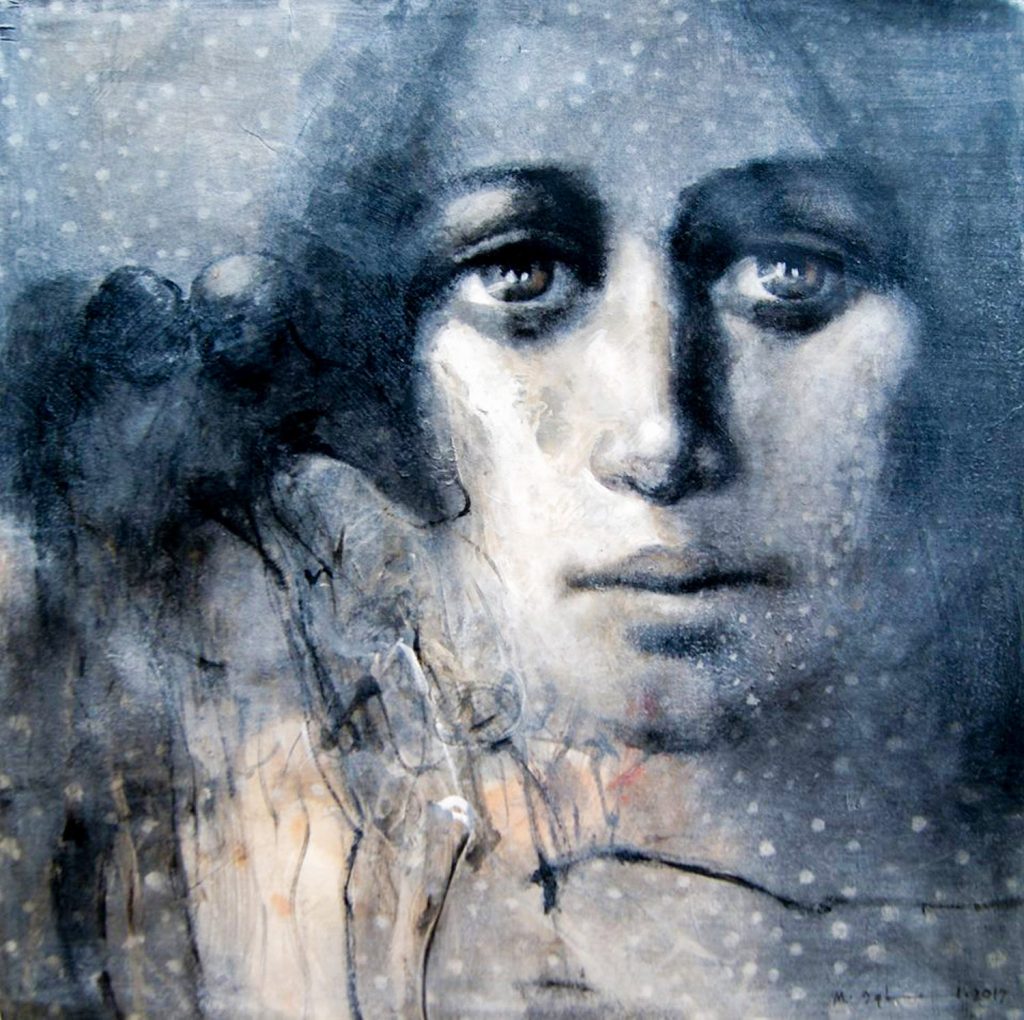
His journey into art began with a dream familiar to many young artists in Bangladesh to study at Charukala, the Faculty of Fine Arts at the University of Dhaka. He enrolled in the Government Art College in 1982 and went on to complete his Bachelor’s degree in 1987 and Master’s in 1989 from the same institution. These formative years shaped his technical skills and artistic thinking, allowing him to develop a strong foundation in drawing and painting.
Mohammad Iqbal’s thirst for knowledge took him beyond Bangladesh. He later travelled to Japan, where he studied at the Tokyo University of the Arts. There, he completed his PhD in Fine Arts, focusing on oil painting. His time in Japan was a period of experimentation and growth. Despite language barriers, he immersed himself in a new culture, learned new techniques, and expanded his artistic vision. He also studied at Aichi University of Education, further strengthening his practice. His rise in the art world began in the 1990s, when he became known in the Dhaka art scene for his bold themes and expressive style. His paintings often feature human figures, especially children, placed within abstract and sometimes unsettling backgrounds. He prefers working on large canvases, where he can fully explore space, movement, and emotion through sweeping brushstrokes.
A recurring theme in Iqbal’s work is the suffering of children affected by war and conflict. This focus is deeply personal. Having experienced the trauma of war himself, he uses his art to reflect on how such events shape a child’s life forever. His paintings are emotional, raw, and often uncomfortable. One of his significant works, Language 1, is an oil on canvas piece that captures the emotional scars left by war. Through muted earthy tones and fading imagery, he expresses sorrow, fear, and vulnerability. The blurred face in the painting speaks of lost innocence and forgotten hopes. It feels like a silent cry that asks viewers to stop and think about the consequences of human actions. As Iqbal himself reflects through his work,
The memories we carry as children never really leave us; they shape who we become.” His paintings remind us of this truth again and again.
Another important work, Language of Pain 5, comes from his PhD research titled “Lost Children of the World: The Impact of the Distress of Life in My Work.” In this series, he uses softer colours that deliver a powerful message. The background is filled with dots and shadows, symbolising war, violence, environmental destruction, and social conflict. The children in the painting look directly at the viewer in a calm and deeply affected manner. Their eyes seem to question everything. This artist’s art is not limited to one place or one conflict. His inspiration extends to global issues, including the struggles of children in Palestine and Afghanistan. His paintings speak in a universal language of pain, empathy, and reflection.
Throughout his career, he has received numerous awards both nationally and internationally. These include the Osaka International Triennale Special Prize (1993), Grand Awards in National Young Artists Exhibitions, and the Nomura Grand Prize from Tokyo University of Fine Arts in 2010.
Today, Mohammad Iqbal is a respected professor and chairman of the Drawing and Painting Department at the Faculty of Fine Arts, University of Dhaka. As a teacher, he believes learning is a shared process. He often says that teachers grow just as much as their students. He believes Art is not only about expression, but it is also about understanding others.
Beyond the classroom, he continues to advocate for better opportunities for young artists in Bangladesh. He dreams of a future where art spaces grow, museums thrive, and creativity is encouraged at every level.
Mohammad Iqbal’s work remains deeply connected to his roots. The landscapes of Chuadanga, the memories of childhood, and the history of Bangladesh continue to influence his art. His paintings are stories, emotions, and reminders. Through every brushstroke, Mohammad Iqbal invites us to look closer, feel deeper, and think more carefully about the world we are creating.
9. Beauty in Resistance
Tayeba Begum Lipi
Text by: Shobuj Sultan Anmon
Born in 1969 in Gaibandha, Tayeba Begum Lipi emerges as a bold and unflinching voice in the evolving narrative of contemporary Bangladeshi art. She is an artist who confronts the body not as an object of beauty alone, but as a site of memory, trauma, desire, and resistance. Her work inhabits a space where intimacy meets discomfort, where the familiar is rendered strange, and where the personal becomes profoundly political. Tayeba Begum Lipi’s artistic journey is marked by an early awareness of limitation that would later become a source of radical transformation.
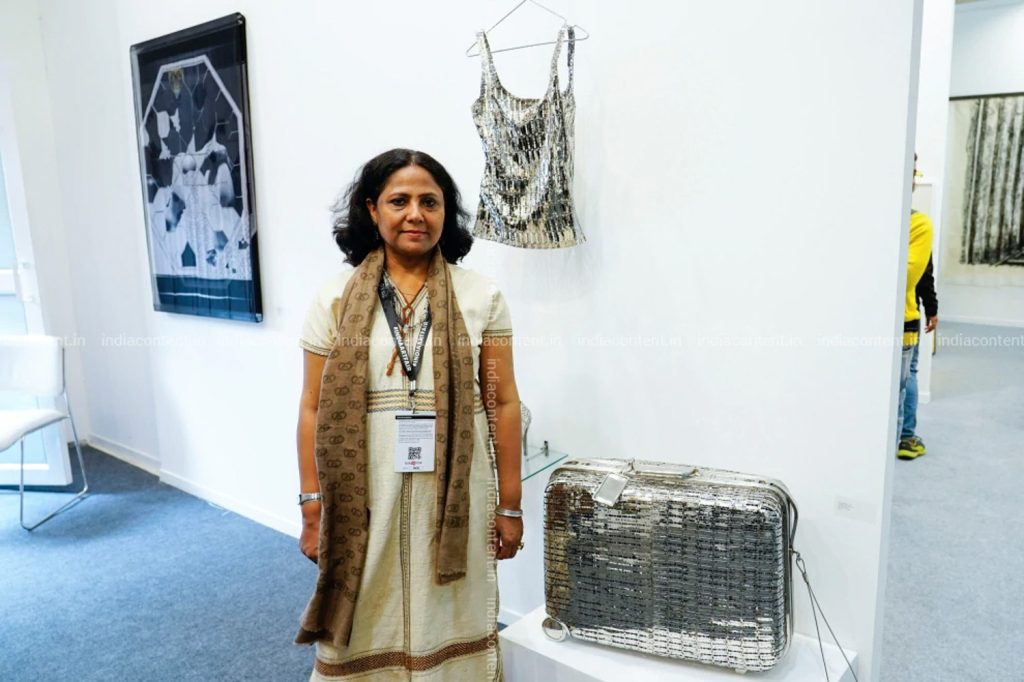
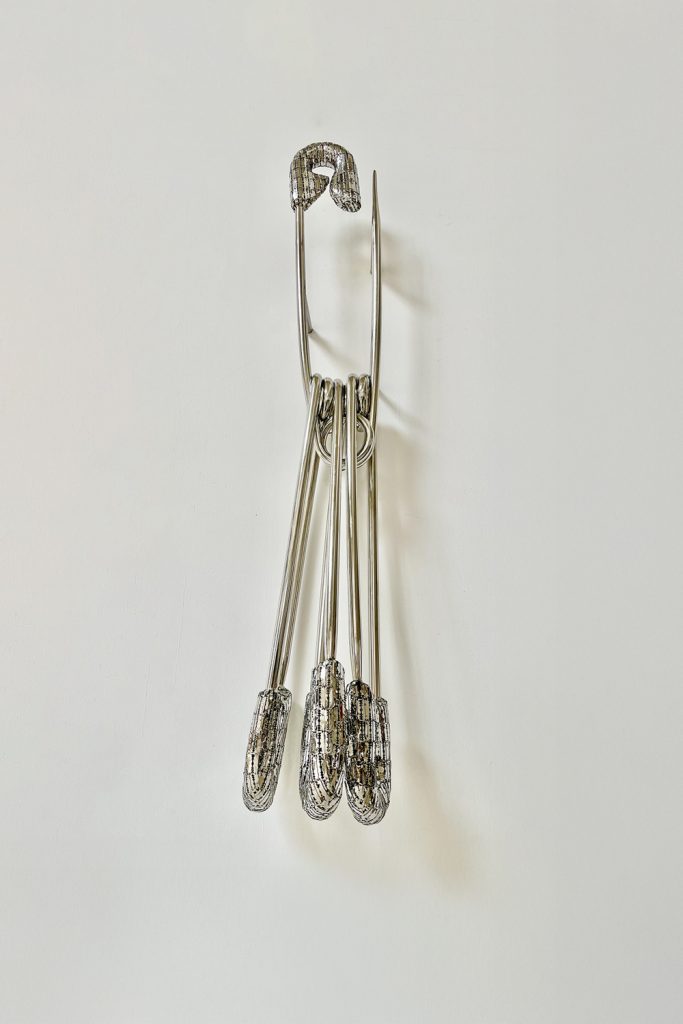
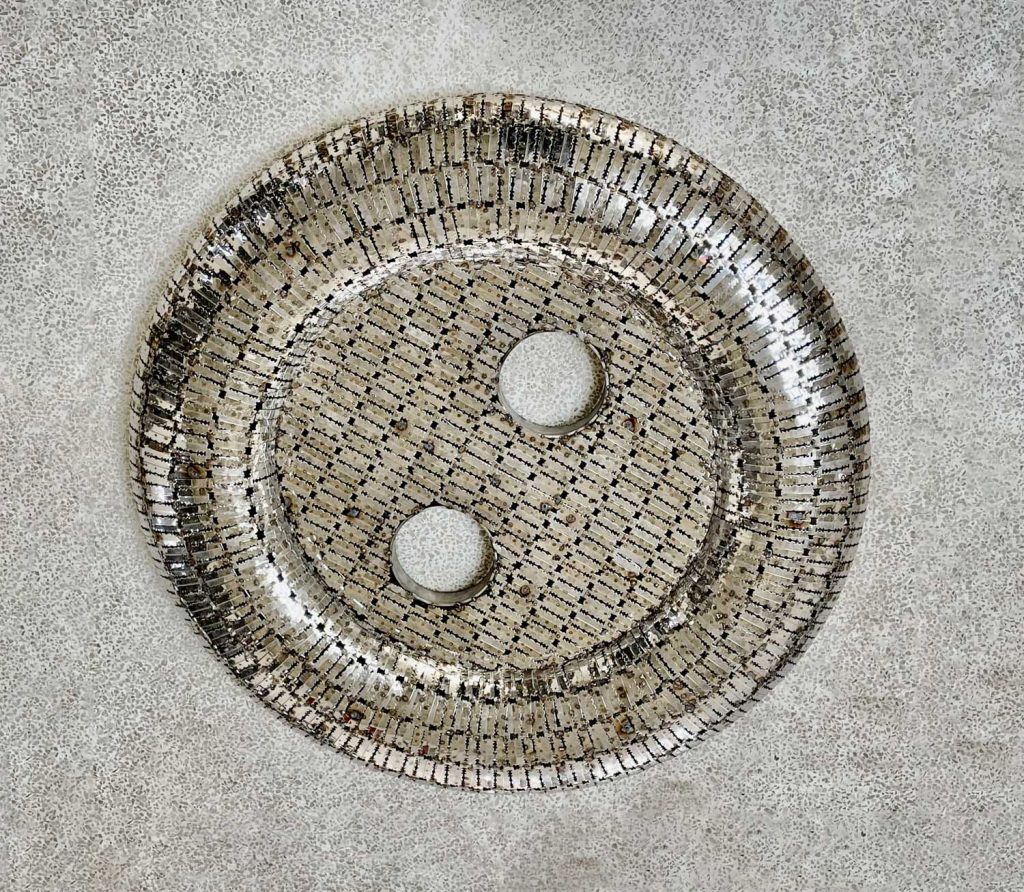
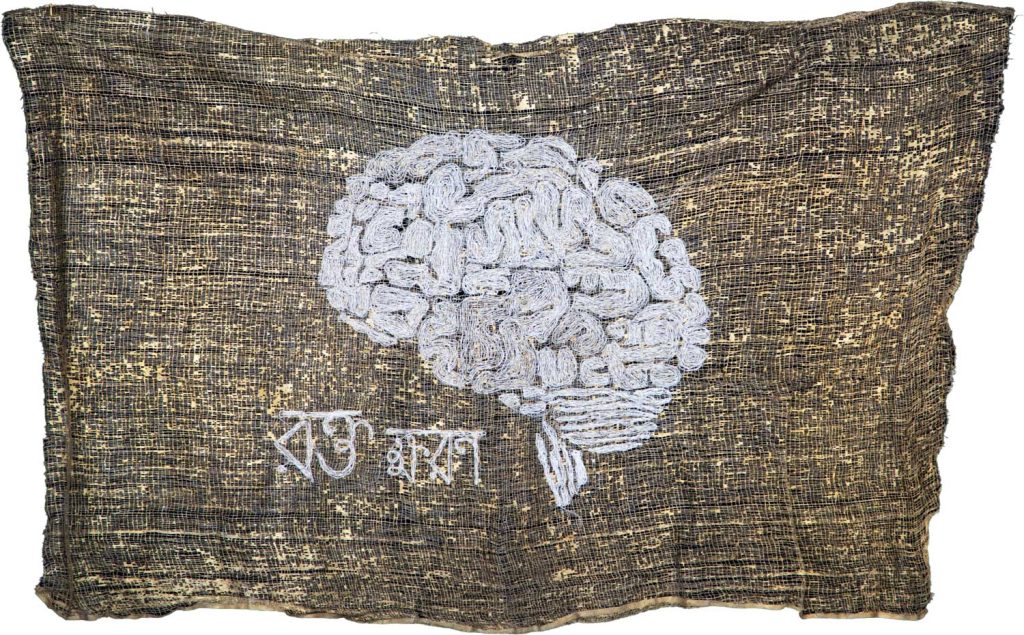
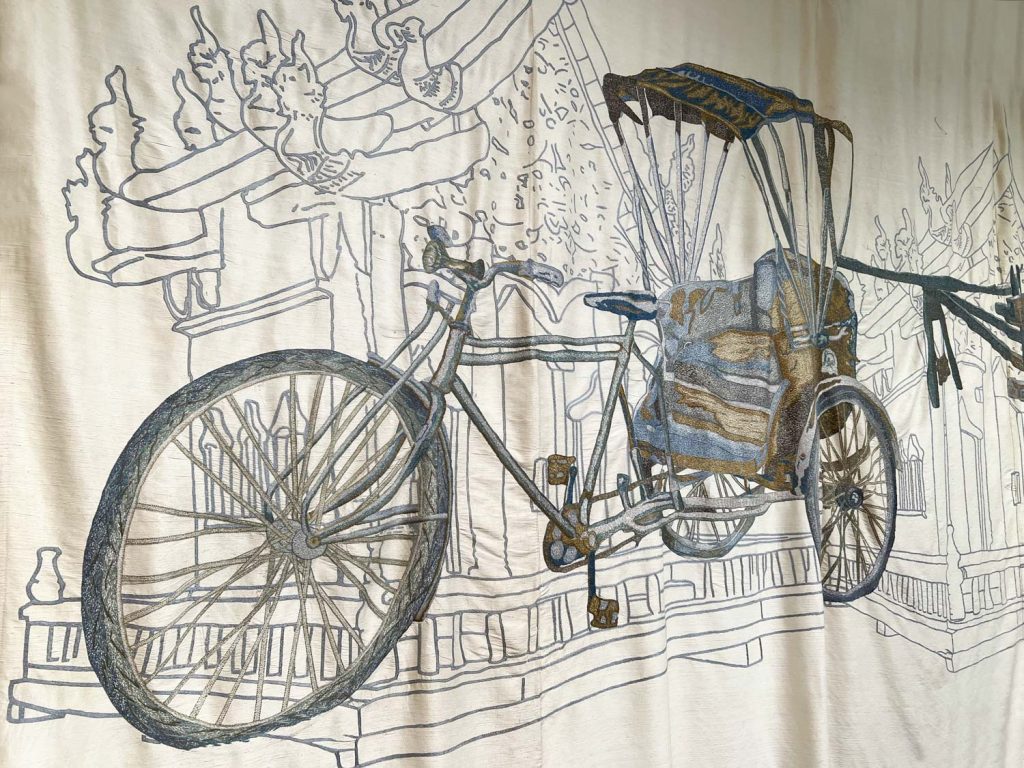
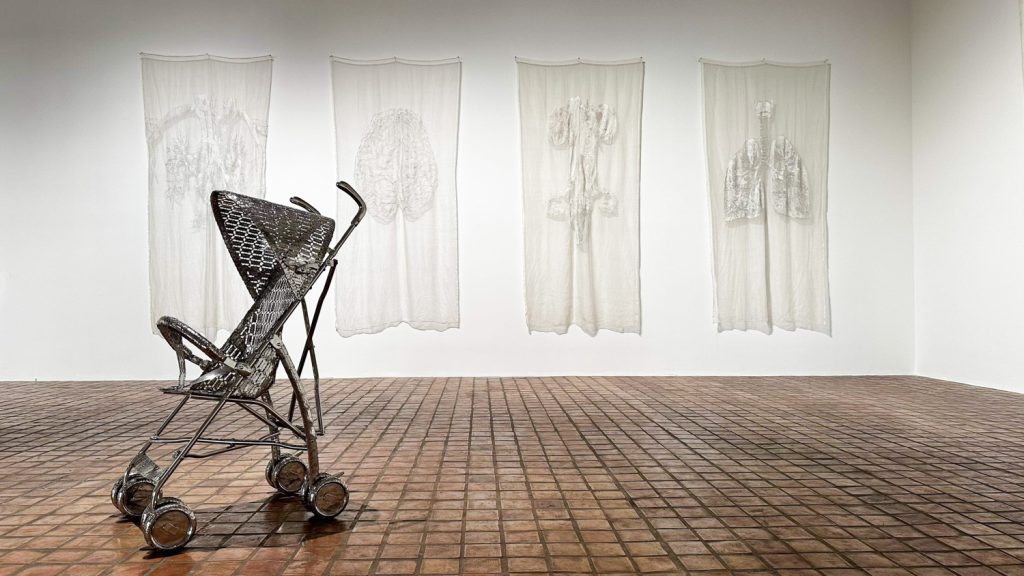
Reflecting on her formative years, she notes
I developed an early vision deficiency, for which the colors on my canvas were not the same for me up close, as they were at a distance. I knew painting was something I probably could do less.
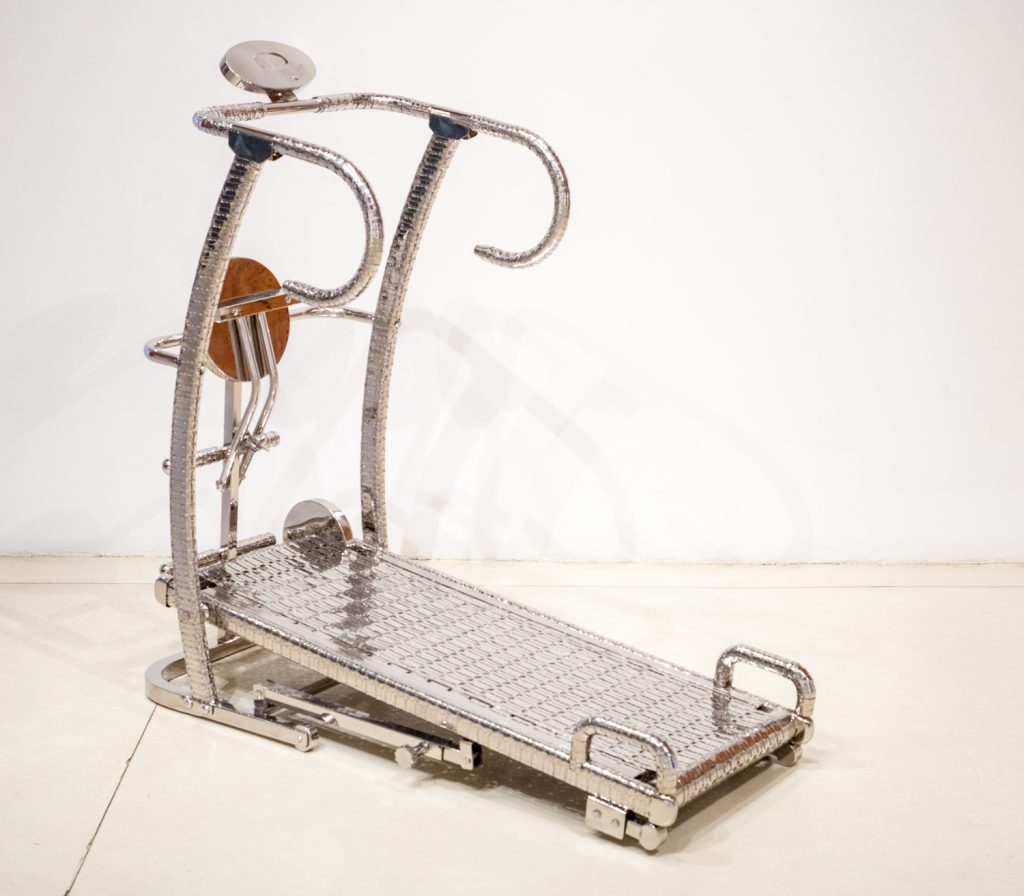
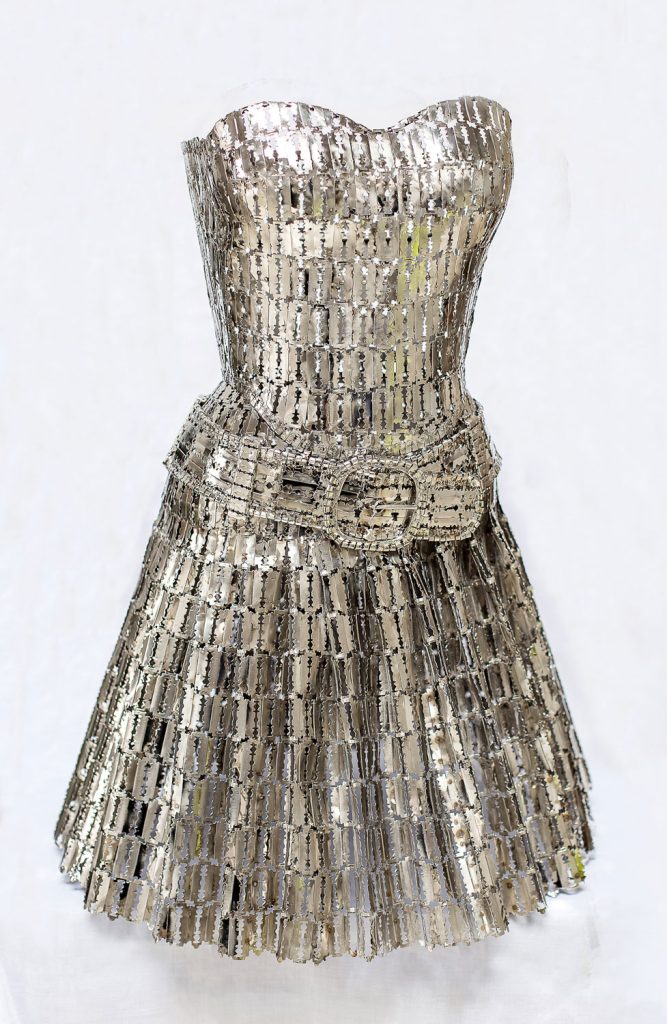
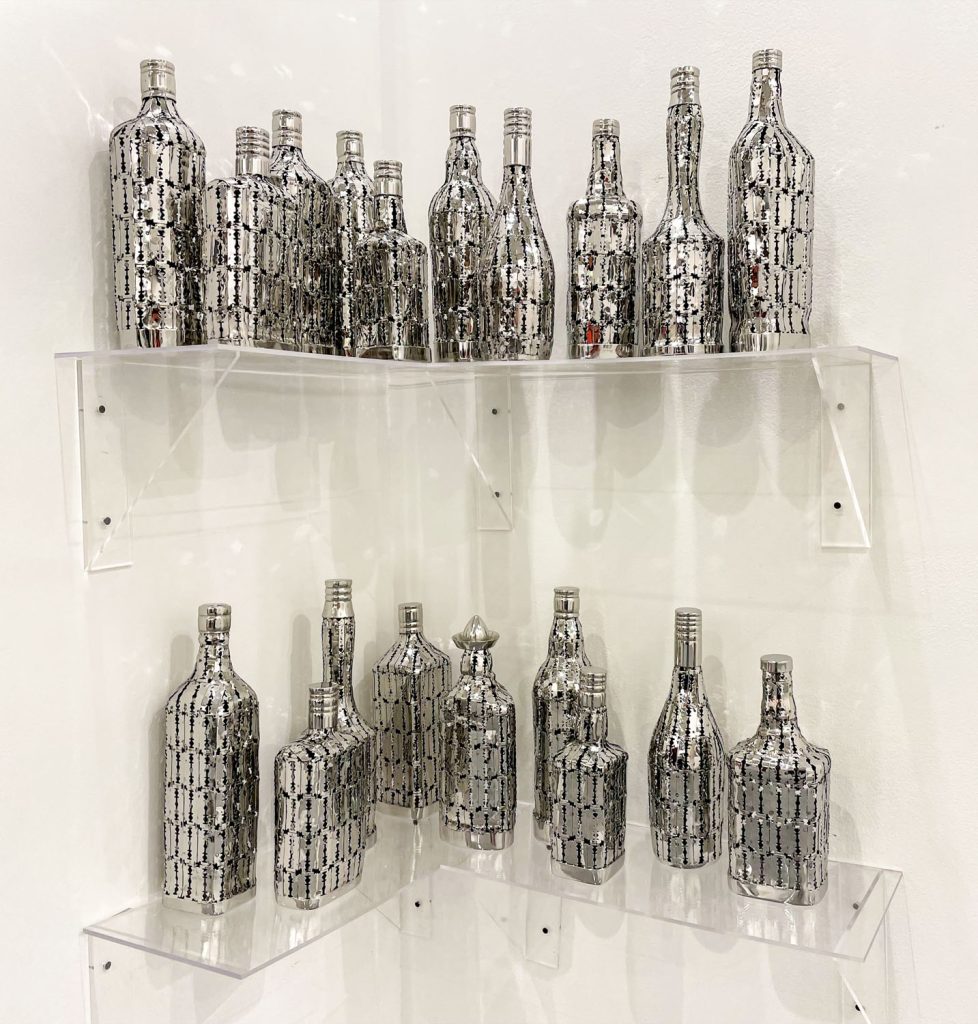
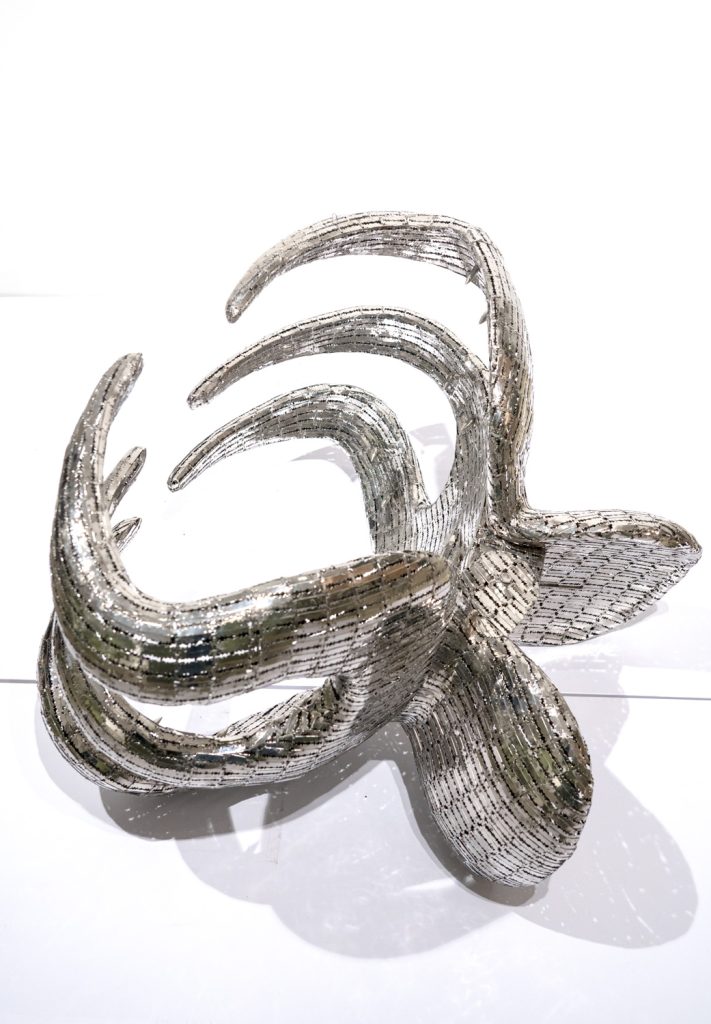
Rather than retreating from art, this realization propelled her toward alternative mediums – materials that could be felt as much as seen. This shift would become central to her practice. Moving beyond traditional painting, Lipi began working with unconventional materials such as razor blades, safety pins, hospital beds, and textiles – ready made objects charged with both domestic familiarity and latent violence. In her hands, these materials are transformed into intricate compositions that blur the line between attraction and unease. The sharp gleam of a razor blade, repeated in delicate patterns, seduces the eye before revealing its inherent threat.
Her seminal work “Love Bed” exemplifies this duality. Constructed from hundreds of razor blades arranged into the form of a bed, the piece evokes intimacy while simultaneously suggesting pain and vulnerability. The bed, often a symbol of rest, love, and security – challenges viewers to reconsider the boundaries between comfort and danger. This tension continues in her photographic work “This is What I Look(ed) Like”, where an assortment of self-portraits from her younger days
and present were juxtaposed against each other, stitching her past and present self together. The work offers a commentary on the universal experience of growing older and the attitude towards the fading beauty of the feminine. Her works do not dictate meaning; they invite reality and reflection. Perhaps one of her most widely recognized pieces, “I Wed Myself,” encapsulates her exploration of autonomy and identity. The work challenges traditional notions of marriage and societal expectation, asserting a form of self-union that is both defiant and deeply introspective. In Lipi’s universe, the body is not merely acted upon – it asserts, reclaims, and defines itself. Underlying much of her practice is a nuanced engagement with gender and the lived realities of women in South Asia. Yet, her work resists being confined to a singular narrative. It operates in a space of multiplicity, where personal experience intersects with broader cultural frameworks.
During the global upheaval of the COVID-19 pandemic, Lipi’s practice underwent another significant transformation. Isolated yet introspective, she turned to a medium rooted in her own past – stitching. “From a very young age, my siblings and I have stitched our own clothes,” she recalls. “For some odd reason, I never implemented it in my artwork before.” This rediscovery of a domestic craft became a powerful new language through which she could process the anxieties of the time. Her pandemic-era works, created through meticulous stitching, reflect a deep engagement with the fragility of the human body. These works, often resembling anatomical studies, are imbued with a quiet intensity. Threads trace the contours of lungs, veins, and wounds – delicate yet insistent reminders of vulnerability and resilience. In these stitched compositions, the act of sewing becomes both metaphor and method. It is an act of holding together what is at risk of falling apart.
At the same time, it evokes histories of care work – often feminized and undervalued. Tayeba Begum Lipi’s ability to move fluidly between mediums while maintaining a coherent conceptual core is a testament to her artistic rigor. Whether working with metal, fabric, or found objects, she remains committed to exploring the intersections of body, memory, and material. Her works are not static; they evolve, responding to both personal experience and global contexts. Lipi’s practice consistently navigates the delicate balance between allure and critique. Despite the often-provocative nature of her work, there is an underlying sensitivity that anchors her practice. Her experience with cancer brought new perspectives into act. “Life felt meaningless. Everyone is running this rat race where everybody is trying to win. But being the winner doesn’t guarantee happiness”, she recalled while explaining how hard it was to focus and remember amid the chemo and radiotherapies she had to go through. The pain and lived experience as a cancer patient has only solidified her resilience as an artist, offering a momentum in her multidisciplinary practice.
Currently gearing for her next show in 2027 with her new experience and cognizance of pain and dispersed memory, Tayeba Begum Lipi has established herself as a significant figure not only within Bangladesh but also in the international art scene. Her works have been exhibited widely, resonating with diverse audiences who find in her practice a reflection of shared human concerns.
In the age of rapid change and uncertainty, her work offers a poignant reminder: that even in fragility, there is strength; even in discomfort, there is truth. Through razor blades and thread, through beds and bodies, Tayeba Begum Lipi continues to stitch together a narrative that is as unsettling as it is profoundly human.
10. The Alchemist of Iron
Tejosh Halder Josh
Text by: Puja Basak
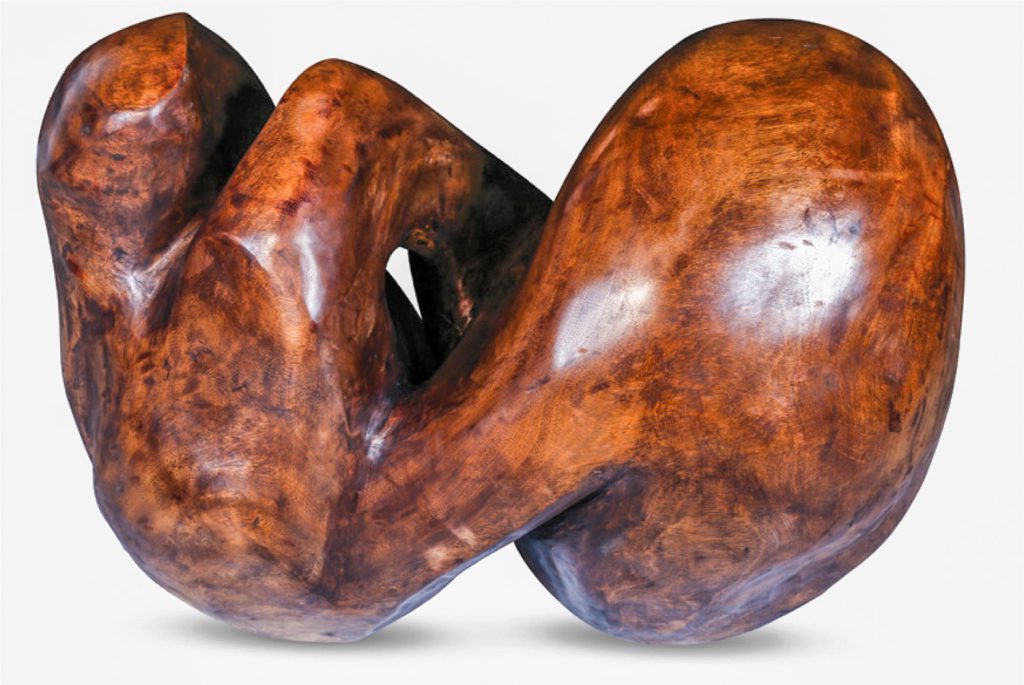
To spend time with the work of Tejosh Halder Josh is to realise that his sculptures are not meant to be understood all at once. They hold back. They unfold slowly. At first glance, you see iron, structure, and form. But if you stay a little longer, something else begins to emerge, something quieter, more human. Inside his studio, surrounded by sheets of metal, tools, and the marks of continuous labour, the process feels almost meditative. Iron, which is usually seen as rigid and unyielding, begins to shift under his attention. It bends, stains, carries heat, and gradually takes on a different kind of presence. It does not lose its weight, but it starts to hold something softer within it.
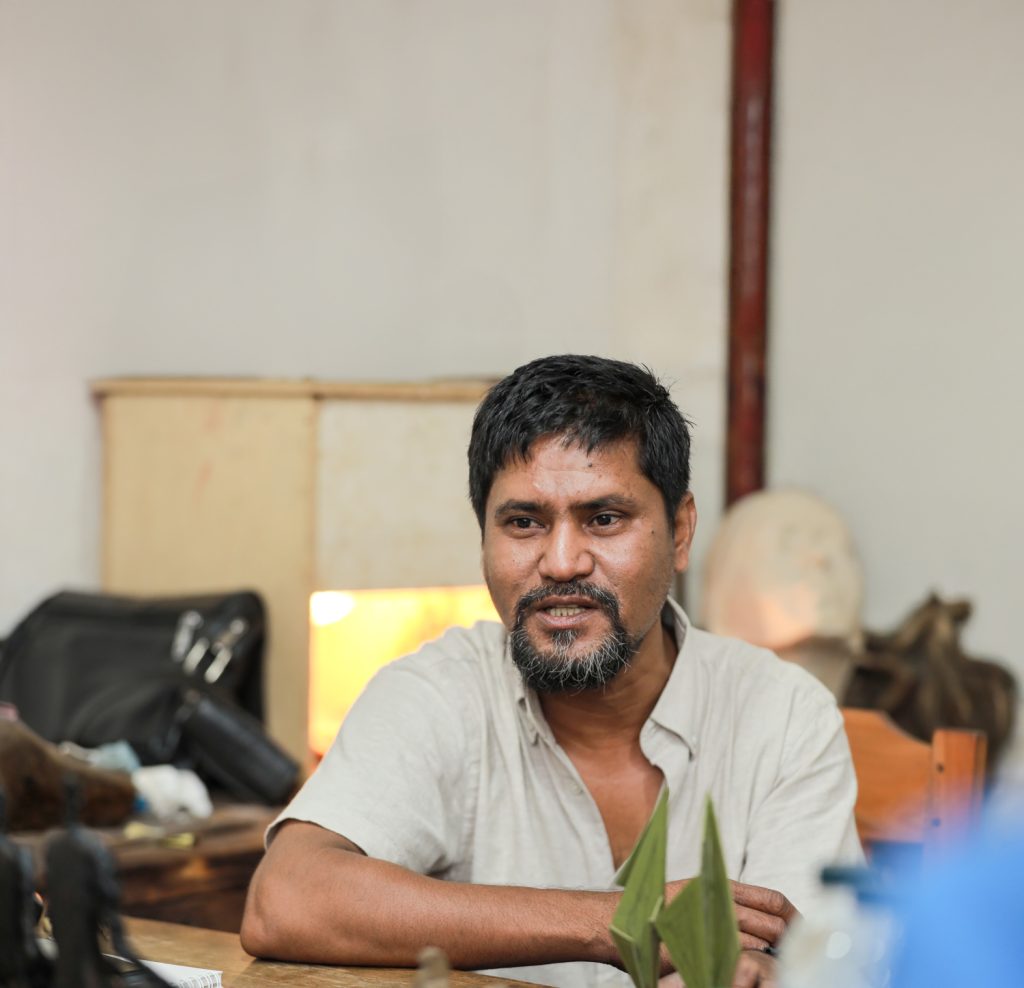
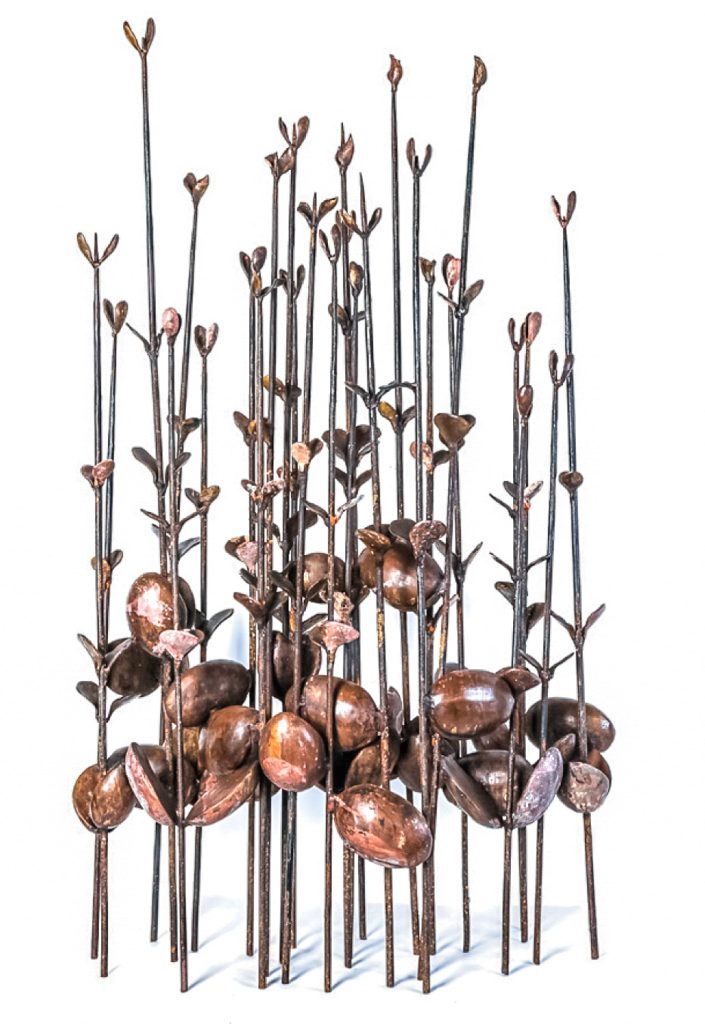
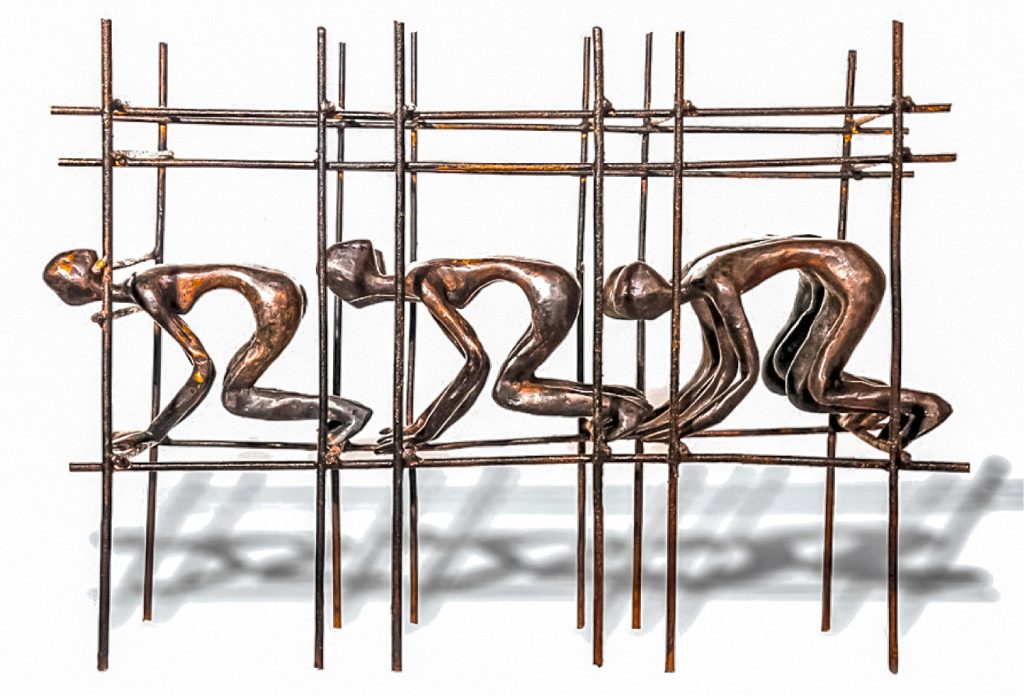
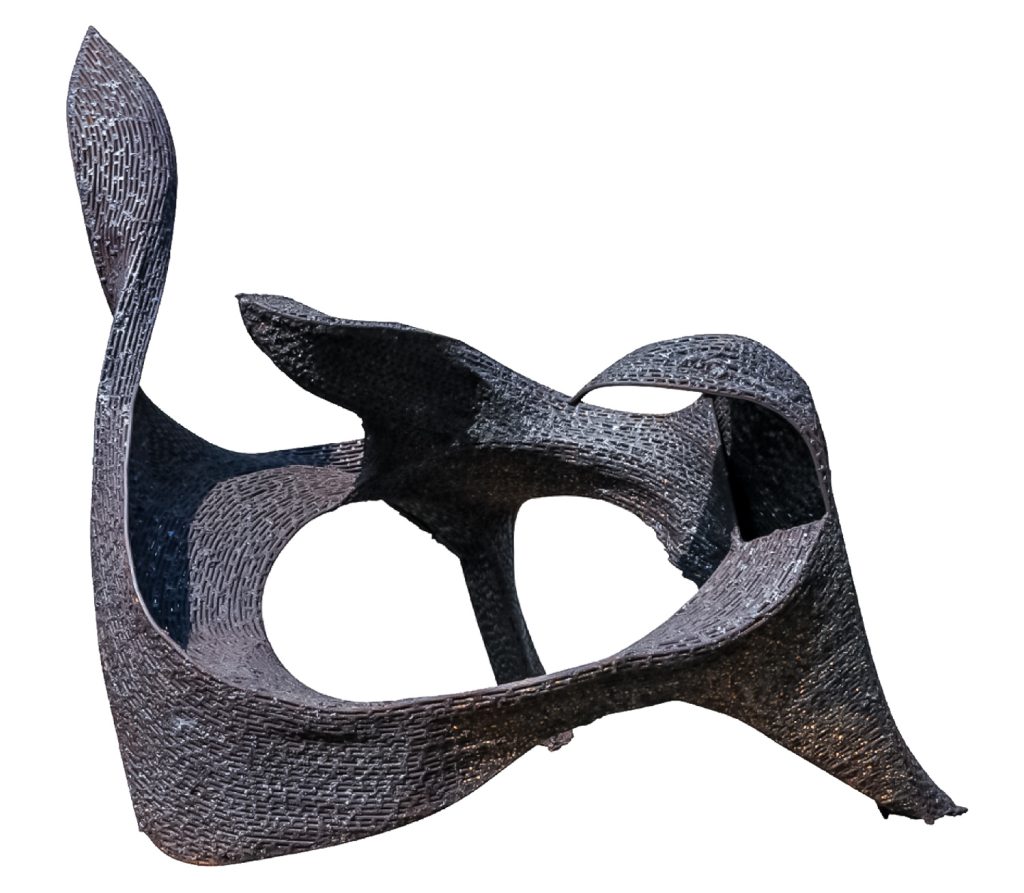
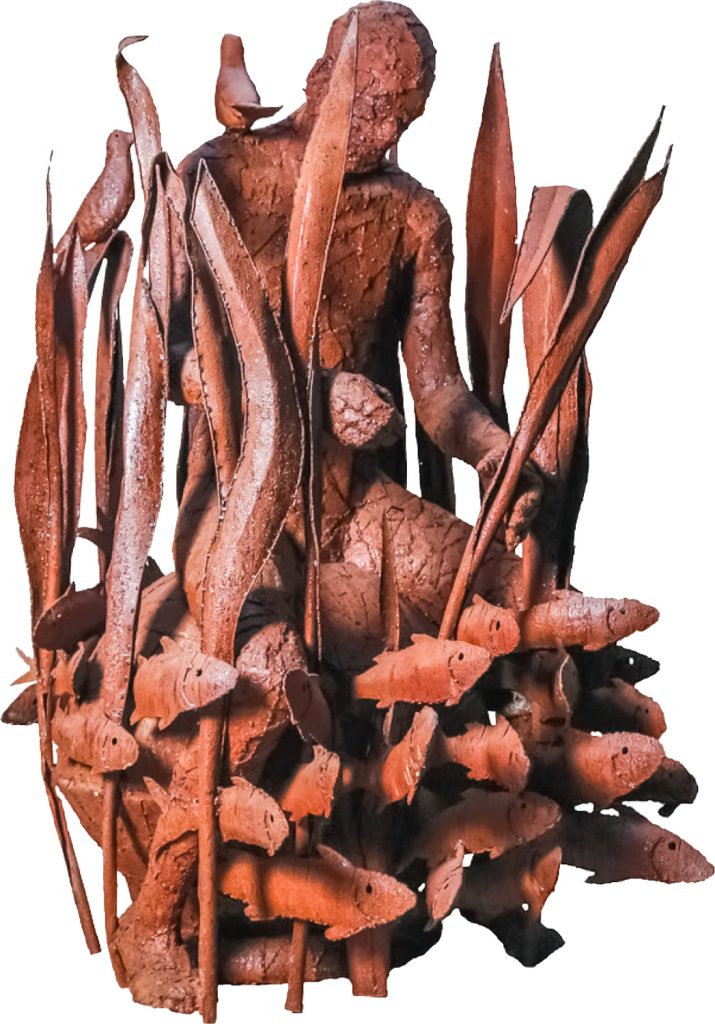
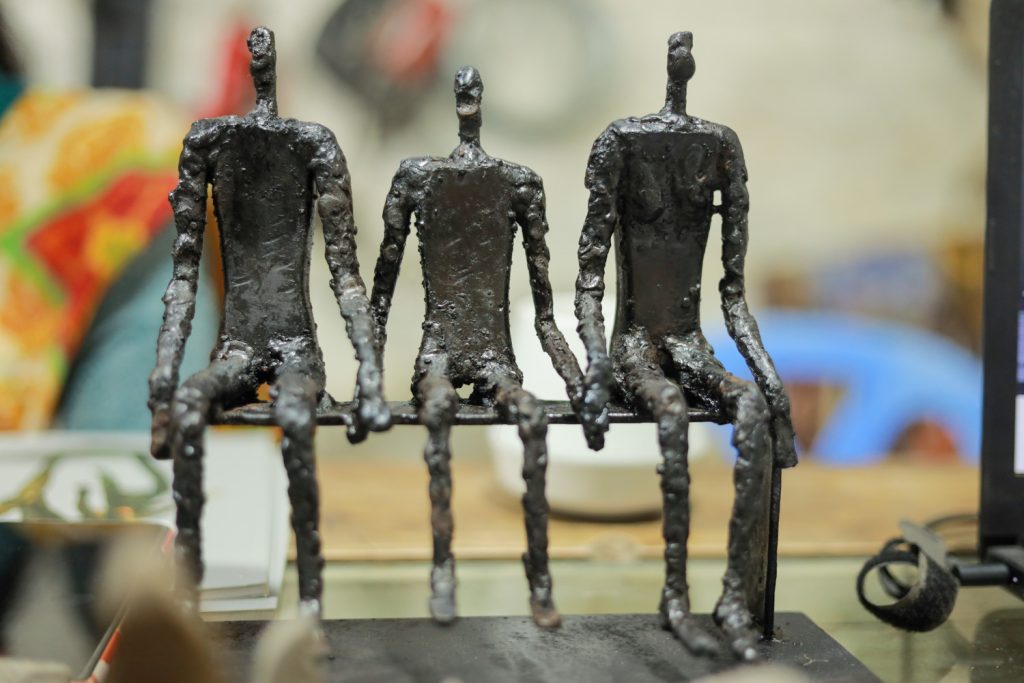
Born in 1982 in Gopalganj, his early life was shaped by a landscape that moved with its own rhythm. Rivers, open skies, and the pace of everyday life left an impression that still lingers in his work. These memories do not appear directly, but they remain somewhere beneath the surface, influencing the way his forms come together, the way they hold space.
His journey through art, including his time in Santiniketan, was not about sudden transformation. It was gradual. A process of learning how to stay with a material long enough to understand its limits and possibilities. Even now, his work carries that sense of searching. It does not feel fixed or final. It feels ongoing.
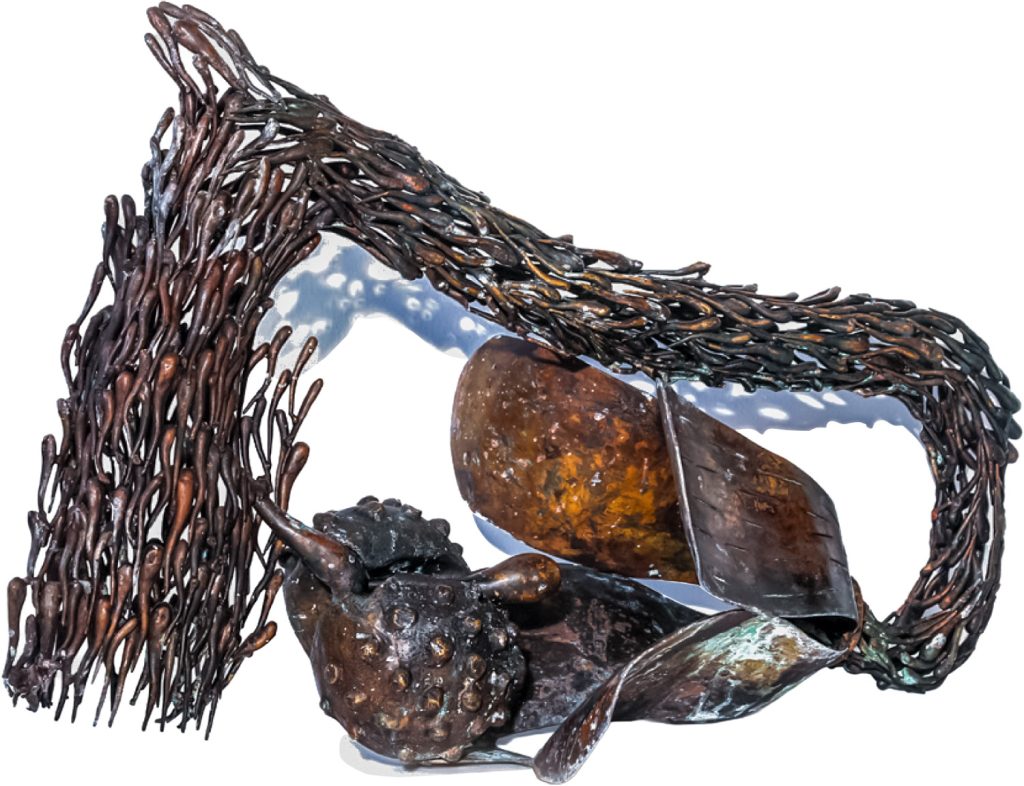
What stands out most is the way he works with resistance. Iron does not easily submit. It pushes back. And instead of forcing it into shape, he allows that resistance to remain part of the process. Through heat, welding, and the use of acid, the surface begins to change. Unexpected tones appear. Textures develop slowly. The material records what it has been through. Nothing is overly refined. Marks are left visible. Edges remain uneven. The sculptures carry evidence of their making. That honesty becomes part of their strength. They do not try to hide effort. They hold it.
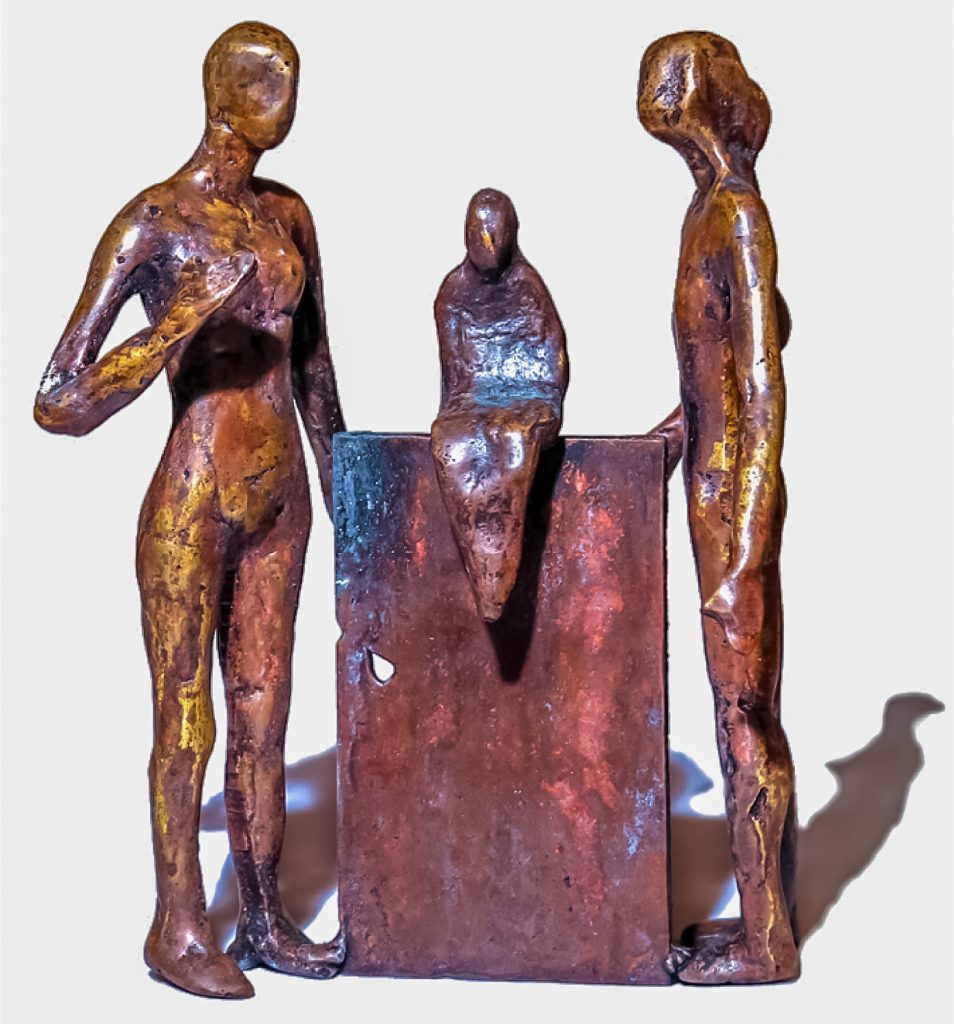
His sculpture Serious Discussion, installed at the University of Dhaka, reflects this approach clearly. A group of figures stands together, yet the moment feels open. There is no clear beginning or end to what is happening between them. The stillness carries weight. The space between the figures feels just as important as the forms themselves.
Across many of his works, the human figure appears elongated, almost fragile. At first, they seem delicate, but they do not collapse. They endure. There is a quiet strength in the way they hold themselves. They are not perfect bodies. They carry tension, imbalance, and irregularity. In that way, they feel closer to lived experience than to any idealised form.
His current studio in Hazaribagh has also shaped the scale and direction of his work. The large, open, industrial space allows his sculptures to grow. It gives them room to expand, both physically and conceptually. Yet even in larger works, there is no loss of sensitivity. Each piece still carries careful attention.
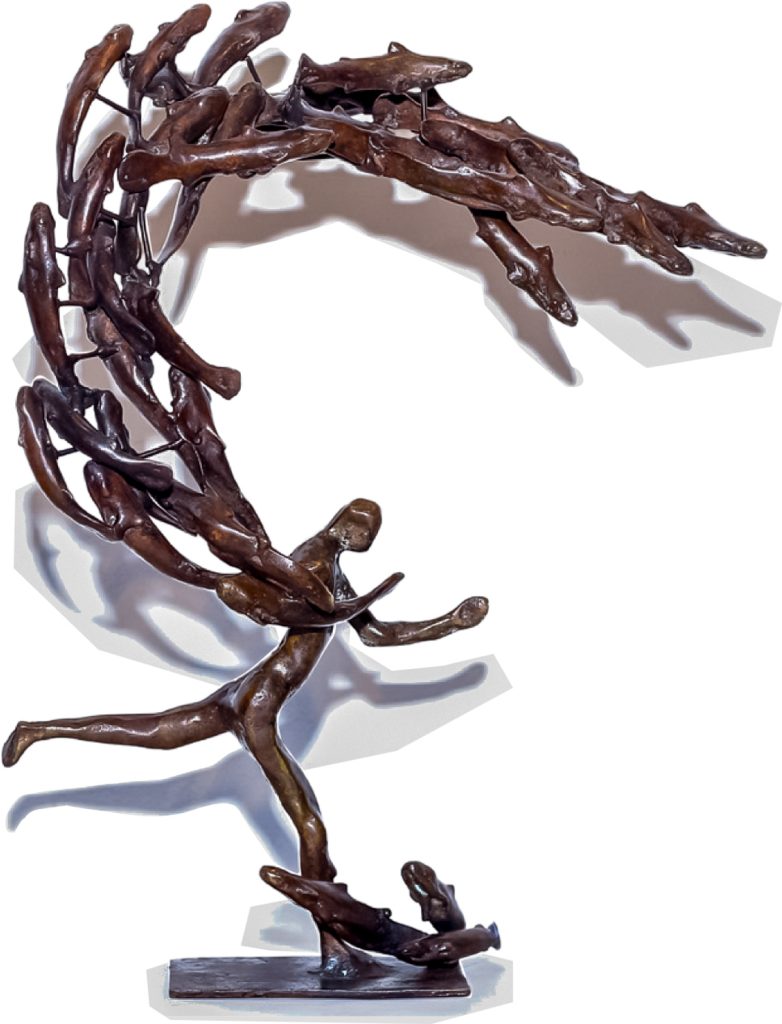
In series like Run, Wind, and Love,
Shelter, Complexity and Hope, small figures often appear within geometric structures. They seem to move, to push, to search for an opening. There is no clear resolution offered. They are not shown as escaping or failing. They simply exist within that tension. That uncertainty feels intentional. It reflects something familiar about human experience, the feeling of moving forward without always knowing the outcome.
There is a strong sense that his work is not only about form, but about process. About staying with difficulty. About allowing material to speak, even when it resists.
This becomes clearer when he speaks about his journey. There is no attempt to make it sound easy. He acknowledges the challenges directly:
“The journey is arduous. As an artist, you often have to invest from other sources and stay very patient. There is a lack of connection between artists and the public, but we are trying to bridge that gap through our work and our studios.”
There is a similar clarity in the way he speaks about material:
“I am drawn to the unique properties of materials. Metal, for me, is a favorite because I can give a cold, rigid piece meaning and life. It is weather friendly and sustainable,
just like the truths I try to tell.”
And perhaps the simplest way to understand his intention comes from his own words:
My work is a bridge between what we see and what we remember. I do not want to show you the metal; I want to show you the spirit that lives inside it.
His recognition with the Ekushey Padak marks an important moment, but it does not feel like a conclusion. His work continues to evolve, to remain open, to resist easy definition.
What stays with you, in the end, is not just the form of the sculpture, but the feeling it carries. Something heavy made to hold something light. Something solid that still leaves space for thought, memory, and quiet reflection.