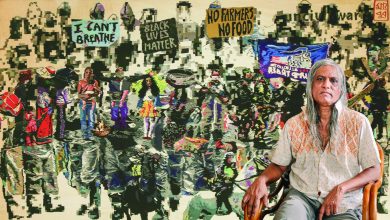
Certain creators do not merely paint their homeland because they allow the homeland to speak through them. Quamrul Hassan possessed this rare symbiotic bond with Bengal. Affectionately called Patuya which is a title honoring the traditional scroll painters of rural villages, he successfully blurred the artificial boundaries between sophisticated academic art and the raw unrefined expressions of folk heritage.
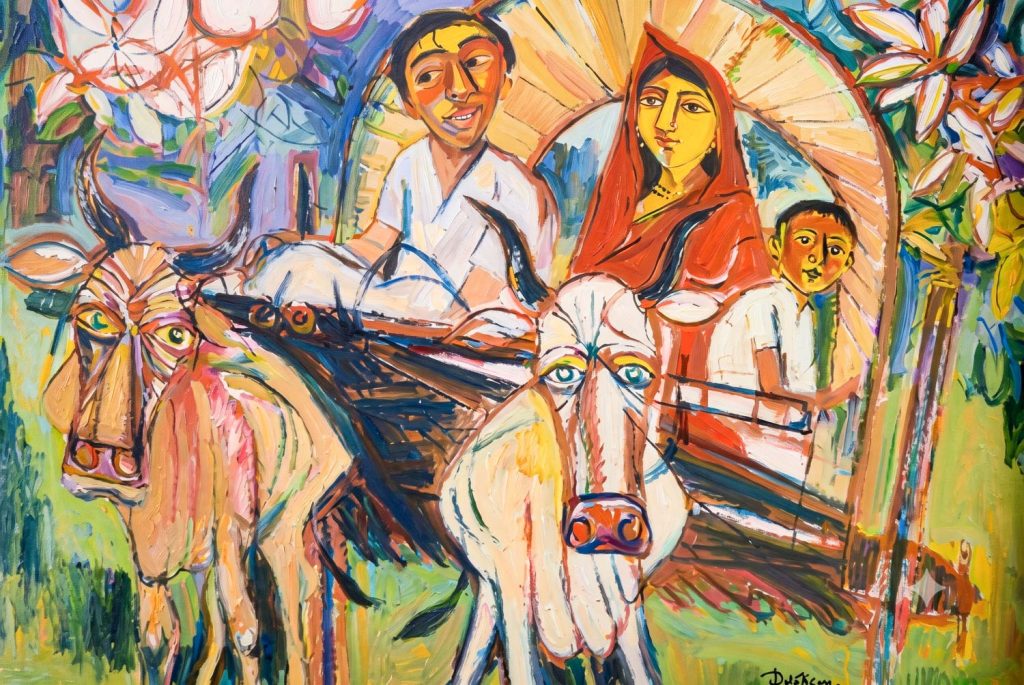
His life’s work stands as a sprawling visual chronicle of a nation searching for and eventually claiming its true identity. To look at his work is to encounter a deep rhythmic pulse. His frames do not offer static observations instead they invite the viewer into a world in perpetual motion.
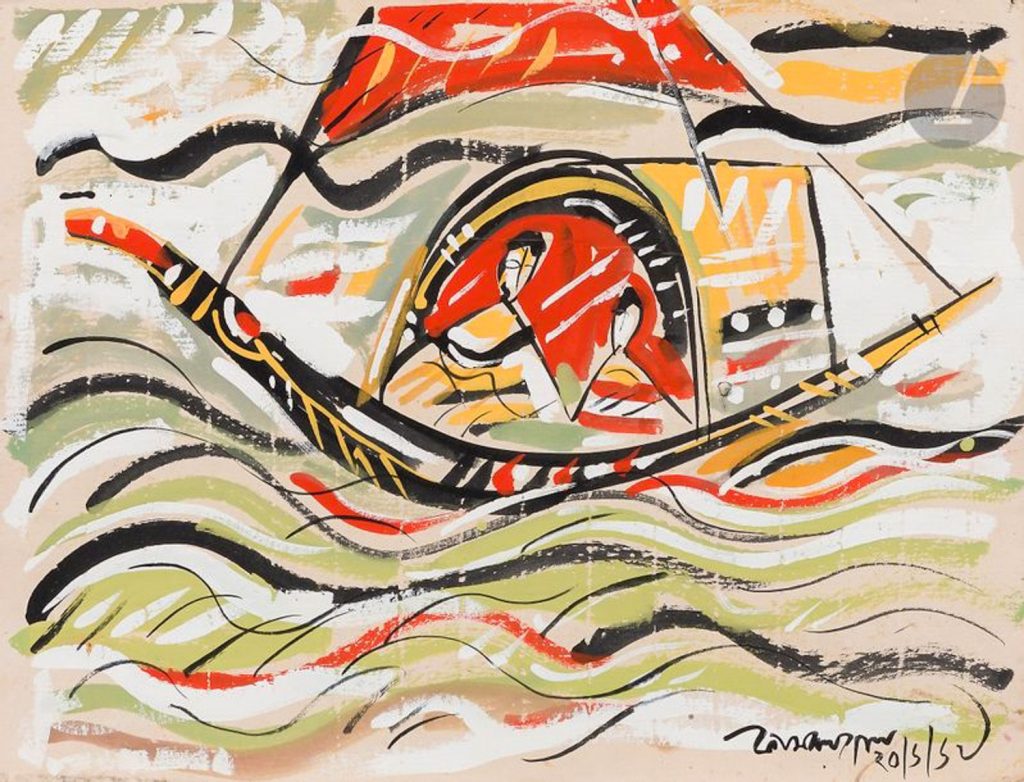
In his drawings, the everyday life of the delta comes alive including the heavy sway of a paddy field, the muscular tension of a boatman navigating a river, and the quiet dignity of rural courtyards. Quamrul Hassan possessed a rare ability to elevate ordinary human moments into grand timeless narratives.
To understand the beauty of our land, one must first look at the hands that till it and the clay that shapes it. My art is merely an echo of their silent strength.
— Quamrul Hassan
His formal training exposed him to Western academic techniques yet his heart remained anchored to the clay and rivers of his birth. His true genius lay in his ability to take the structural lessons of Western modernism and translate them into a purely local dialect. One can observe hints of cubist form in his work, but these sharp angles are always softened and guided by the sweeping lyrical lines reminiscent of Kalighat scroll paintings and Jamini Roy’s traditional aesthetics.
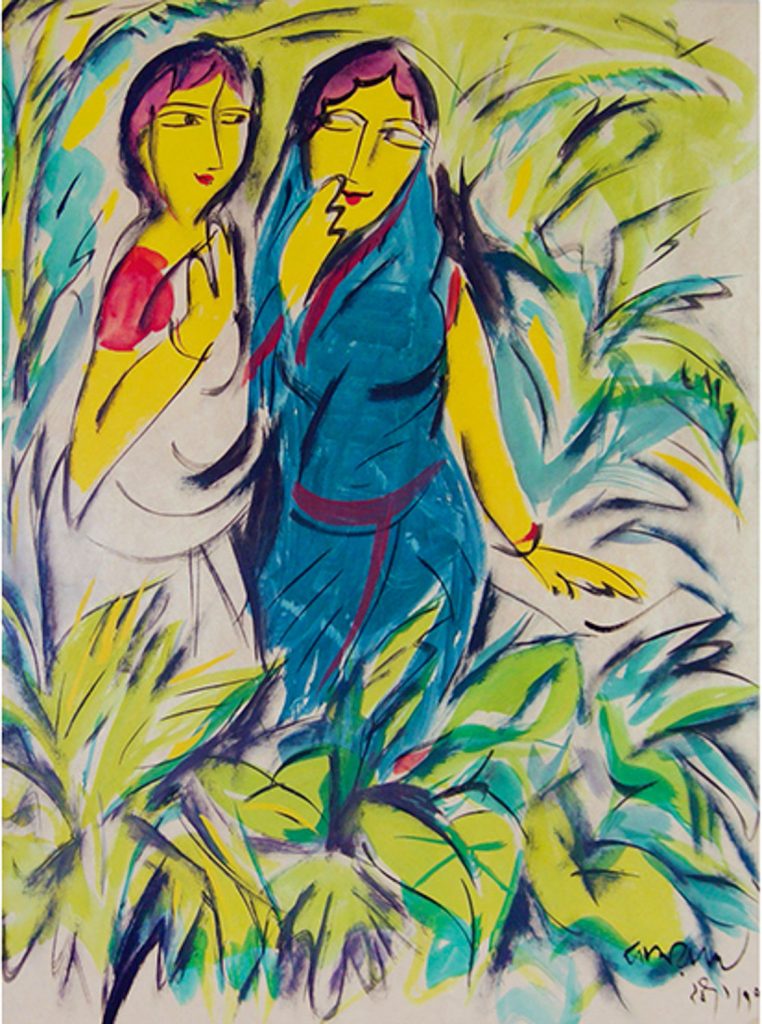
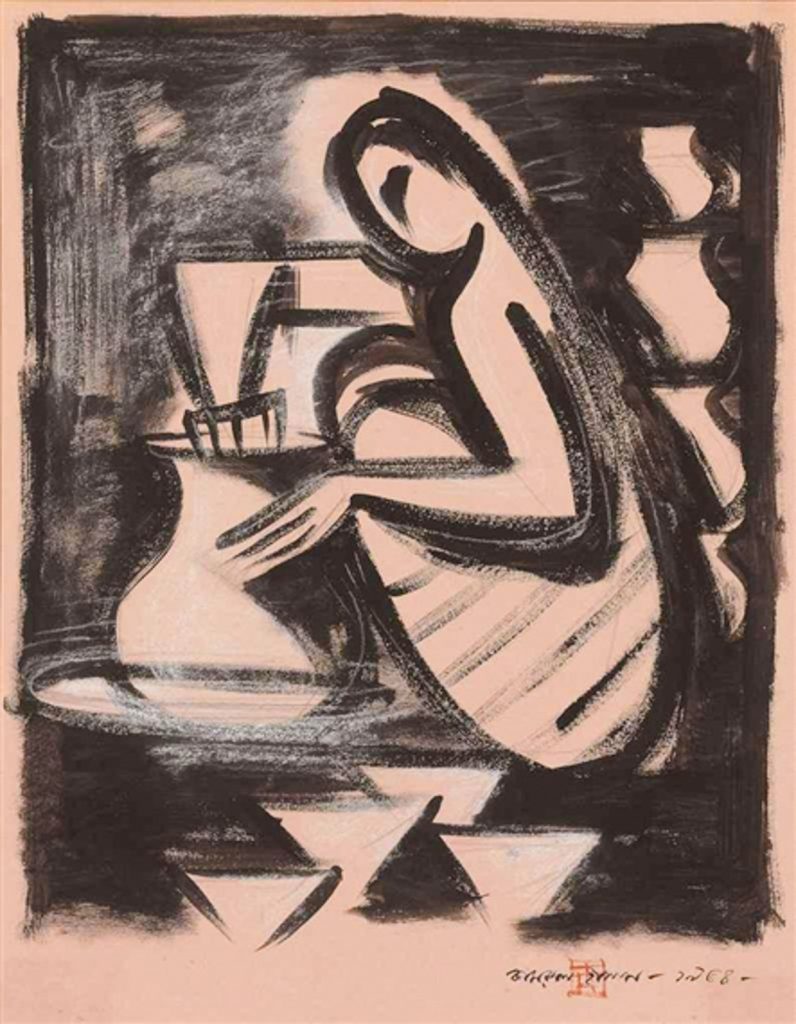
His rendering of the Bengali woman remains a cornerstone of his artistic legacy. He broke away from the romanticized fragile portrayals common in earlier colonial art. Instead, his women are monumental, sturdy, and deeply connected to the earth.
Painted with thick unapologetic black outlines and filled with rich tones of terracotta, deep indigo, and warm mustard, these figures exude an undeniable physical and spiritual presence. Whether they are balancing water pitchers, braiding hair, or sharing quiet whispers, his subjects carry the weight and grace of their ancestral landscape.
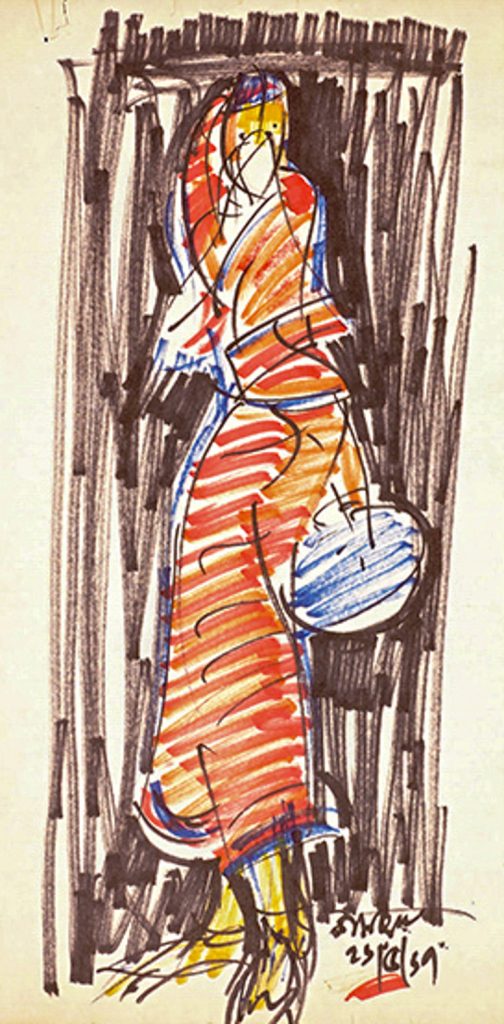
“My roots belong to the villages, to the artisans who have kept our cultural memory alive for centuries. If my art turns its back on them, it loses its meaning.”
— Quamrul Hassan
His relationship with Bengal was not limited to pastoral poetry since he was a creator driven by a fierce political conscience. As political
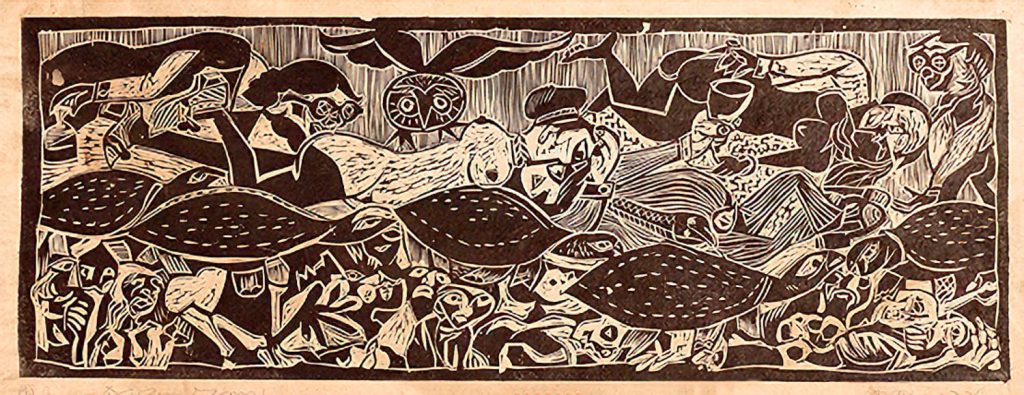
oppression deepened in the region during the mid-twentieth century, his brushes became instruments of defiance. He understood that a well-crafted line could stir the collective soul of a people far more deeply than words alone.
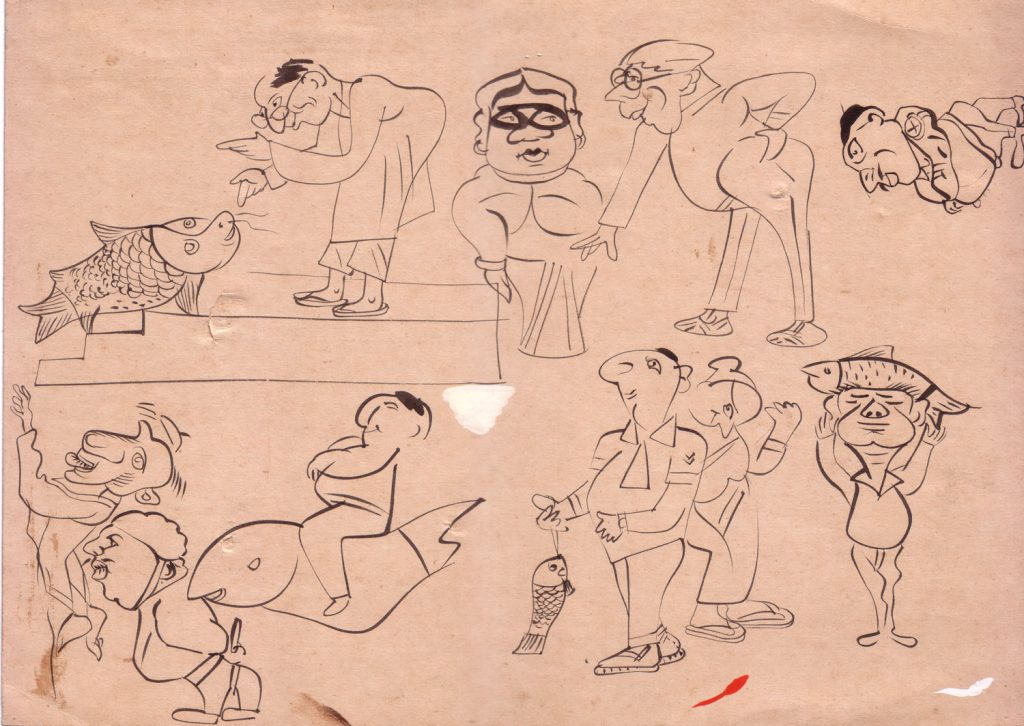
This political urgency culminated in his historic 1971 poster during the Liberation War. His grotesque fanged caricature of the military dictator Yahya Khan titled Annihilate These Demons became an instant symbol of national resistance. Pasted on the walls of makeshift camps and bullet-ridden streets, the image bypassed literacy barriers, speaking directly to the hearts of millions fighting for freedom.
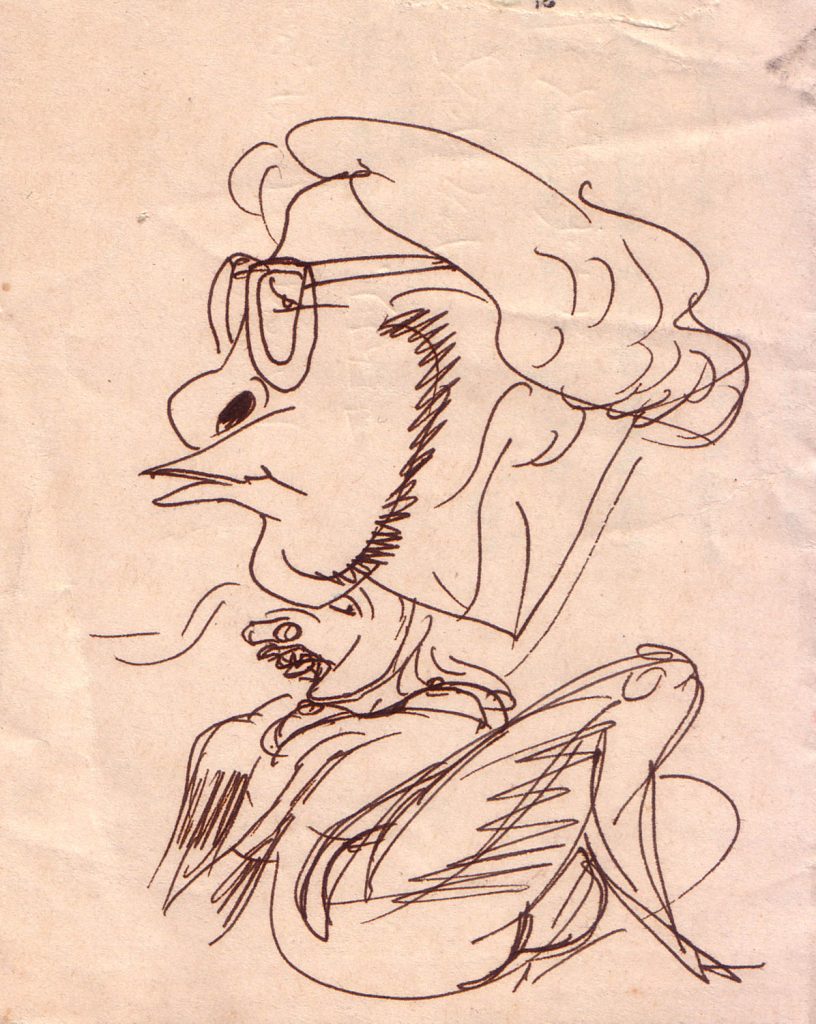
Quamrul Hassan proved that a true artist cannot remain a silent spectator to tyranny as his work oscillated effortlessly between the peaceful serenity of the countryside and the thunderous rage of political protest.
“When tyranny silences the voice of a nation, the canvas must speak in thunderous roars. Art can never afford to remain neutral in times of crisis.”
— Quamrul Hassan
Following the birth of Bangladesh, he turned his focus toward building the structural foundation of the new nation’s visual culture. He played a central role in designing the National Flag and shaping the official National Emblem.
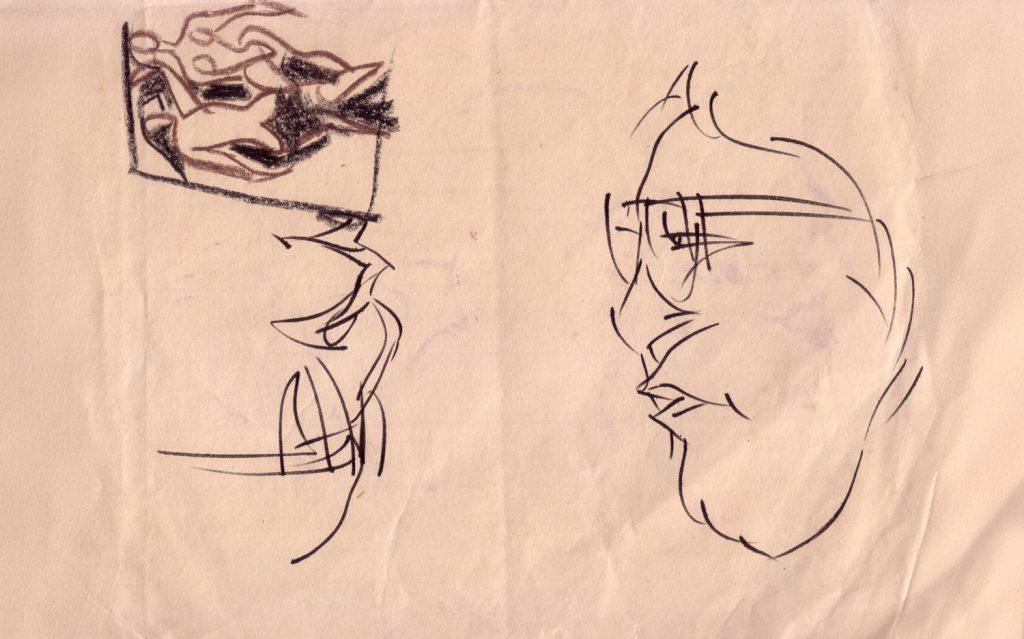
His commitment to the soil extended into his long tenure at the Design Centre of the Small and Cottage Industries Corporation, where he worked tirelessly to protect traditional crafts from being erased by industrialization. He viewed folk art not as a dead relic to be locked inside glass museum cases, but as a living breathing economy.
He spent decades sitting with weavers, potters, and woodcarvers, treating them as intellectual equals and ensuring their techniques were respected and preserved for future generations.
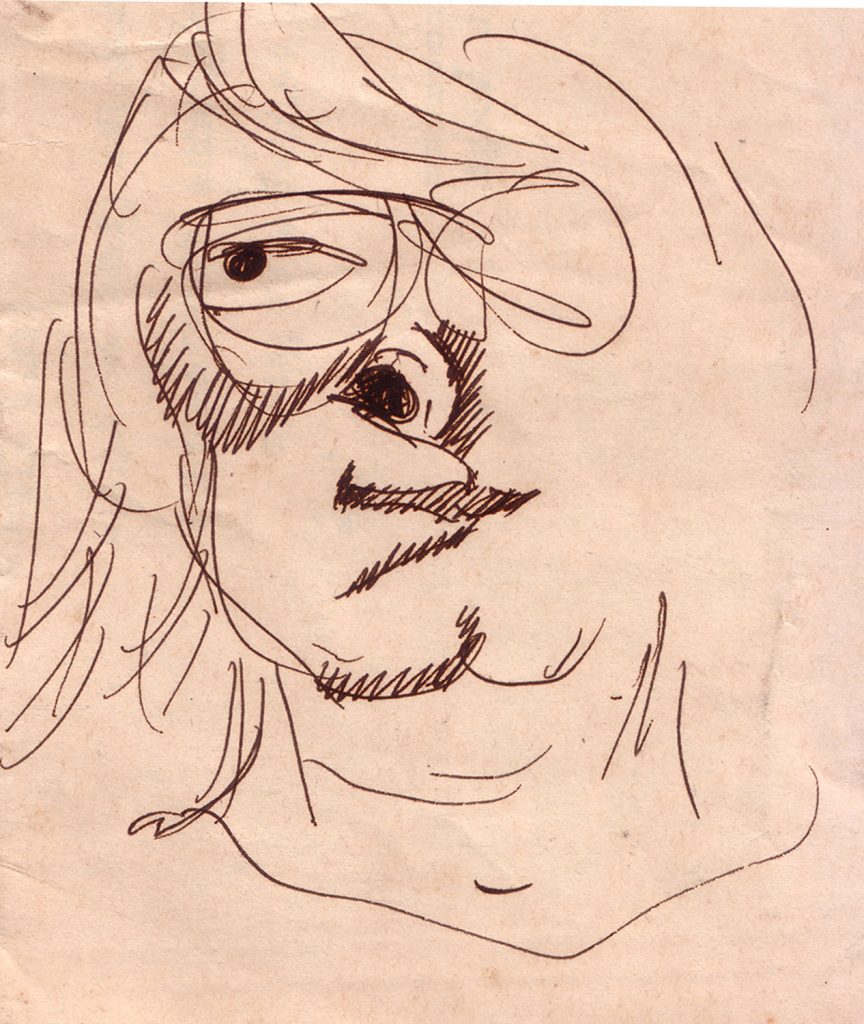
Quamrul Hassan did not look at folk art through a lens of pity or academic curiosity. He lived it, breathed it, and defended it like a custodian of our collective memory.
— Professor Borhanuddin Khan Jahangir
The closing chapter of his life unfolded with the same dramatic intensity that defined his career. On February 2, 1988, while attending the National Poetry Festival at Dhaka University, he watched the unfolding political unrest of the era. His hand pulled out a marker to draw a sharp satirical sketch of the contemporary military ruler, labeling it The Country of Scoundrels.
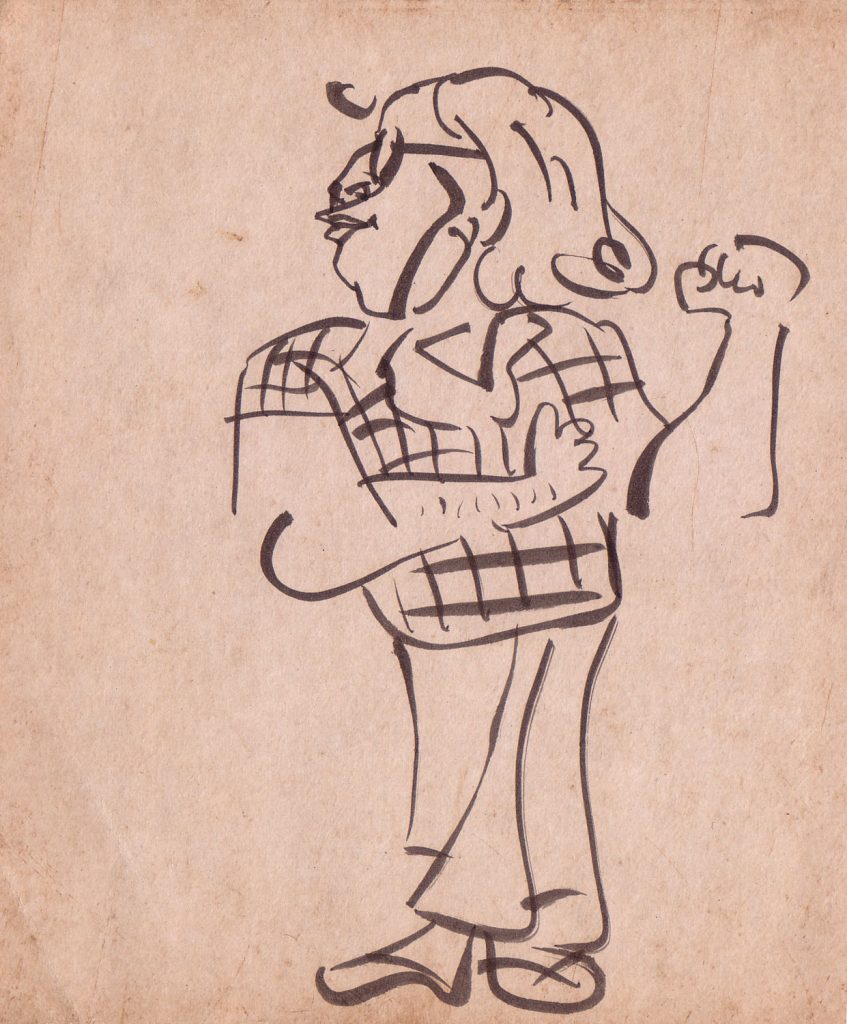
Moments later, he suffered a fatal heart attack. He left the world exactly as he had lived in it by protesting with a pen in his hand until his final breath.
Decades after his passing, his drawings serve as a vital anchor for a society navigating the complexities of a fast-paced world. Quamrul Hassan remains a poignant reminder that true artistic growth does not come from copying global trends, but from digging deep into the soil beneath our feet. In the confident sweep of his lines, the spirit of Bengal remains unbroken, vibrant, and eternally alive.