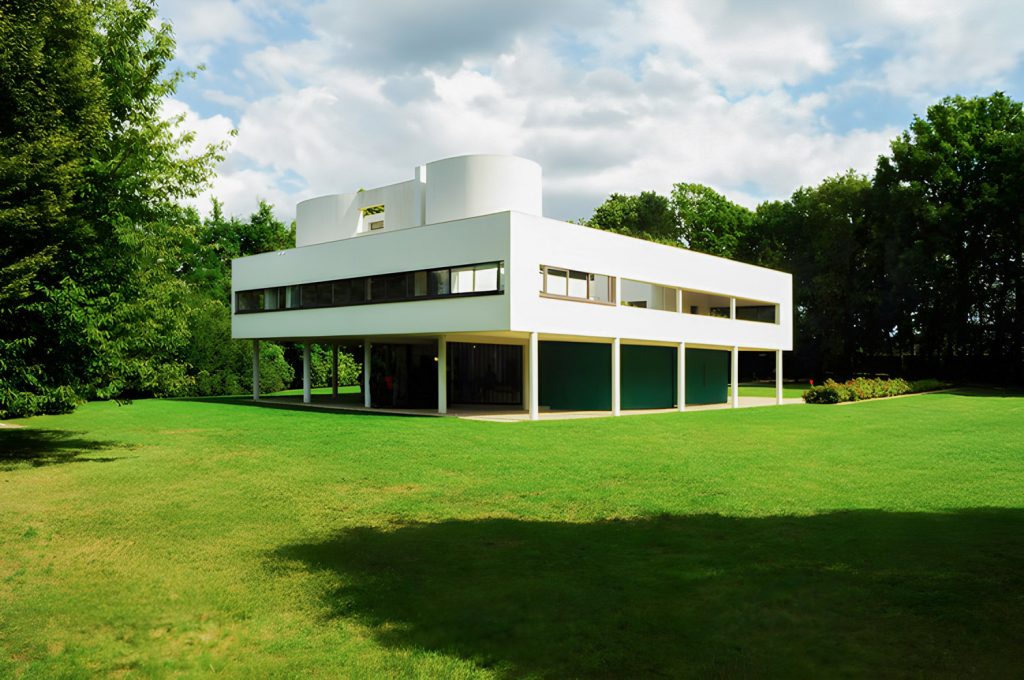
Morning light touches the white surfaces before anything else. The house stands quietly in the open field, lifted slightly from the earth, as if it is pausing. In the calm outskirts of Poissy, just outside Paris, Villa Savoye stands as a gentle statement of modern architecture. Designed by Swiss-French architect Le Corbusier, in collaboration with his cousin Pierre Jeanneret between 1928 and 1931, it began as a country retreat for the Savoye family but gradually became a symbol of how modern life could shape architecture.
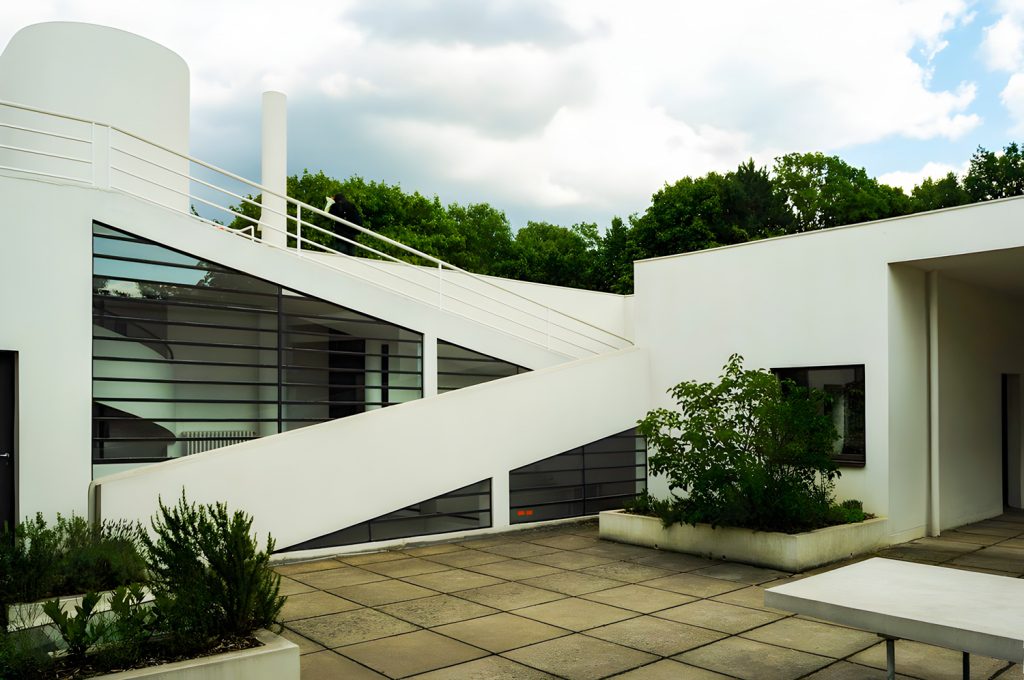
At a time when architecture was redefining itself, the villa introduced a radical simplicity. Elevated on slender pilotis, the house appears to float above the landscape, leaving the ground open and uninterrupted. This gesture alone challenged traditional construction, separating structure from enclosure and giving the building a sense of weightlessness. The white surfaces, long horizontal windows, and simple geometry further reinforced the idea that architecture could be both rational and poetic. Inside, the experience unfolds gently. Instead of traditional rooms stacked and separated, the spaces flow into one another. A soft ramp leads from the entrance upward through the house, guiding movement naturally toward the living areas and finally to the open rooftop terrace. The journey through the villa feels deliberate and thoughtful, as if the architecture is quietly asking you to slow down and notice light, shadow, and air.
Architecture is not only about building walls; it is about shaping the way we live, move, and feel.
The design followed what Le Corbusier described as his “Five Points of Architecture”: pilotis, a free plan, a free façade, horizontal windows, and a roof terrace. These ideas were not theoretical exercises; they were carefully tested within the house itself. The living spaces unfold around light and movement, connected by a gently rising ramp that guides the visitor from the entrance to the rooftop solarium. The journey through the house becomes as important as the spaces themselves.
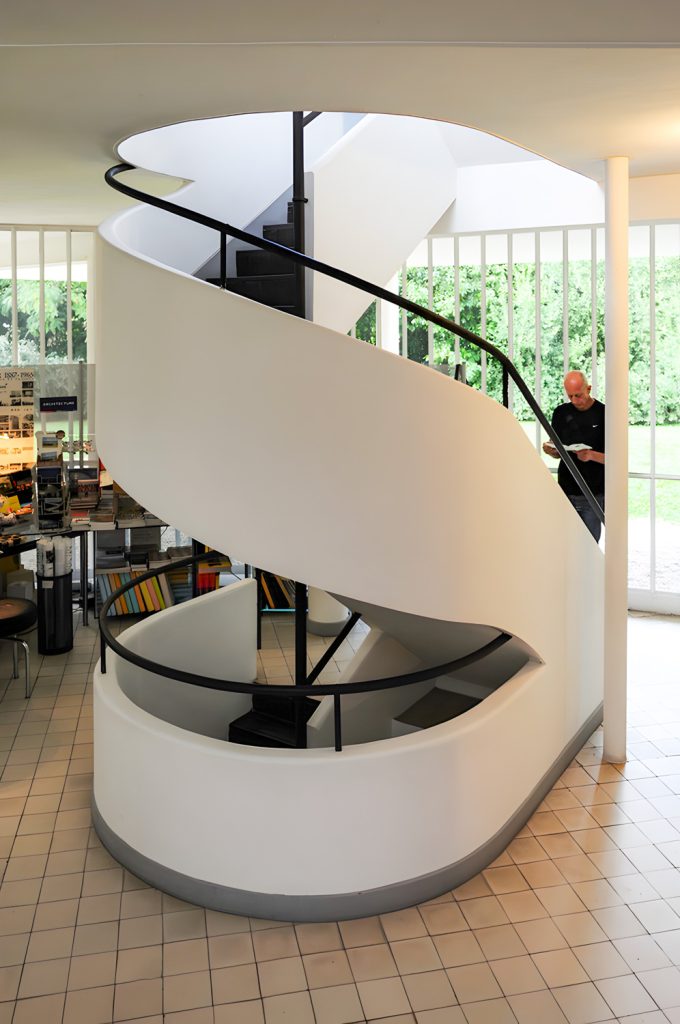
The spirit of the machine age also shaped the design. The curved glass at the ground level follows the turning movement of a car, revealing the architect’s fascination with motion, efficiency, and modern life. The house becomes almost like a living mechanism, functional, responsive, and deeply attuned to daily rituals.
Its journey, however, was not without difficulty. Despite its visionary design, Villa Savoye faced many practical challenges. Structural issues, water leakage, and the impact of war left the building damaged and nearly abandoned. At one point, it even faced demolition. Yet its architectural significance inspired protests and preservation efforts. Restoration followed, and eventually it was declared a historic monument and included in the UNESCO World Heritage listing.
Today, Villa Savoye remains quietly influential. It is a manifesto built in concrete, a quiet experiment that reshaped modern architecture. Its influence continues to resonate, reminding us that architecture is not only about shelter, but about reimagining how we inhabit the world.