While most country homes are built as an escape from the world, very few are designed for something far rarer: a return to one another. Khan Farms is the contemporary farmhouse that serves as a conventional retreat while embracing a breadth of functions that reach well beyond the boundaries of leisure.
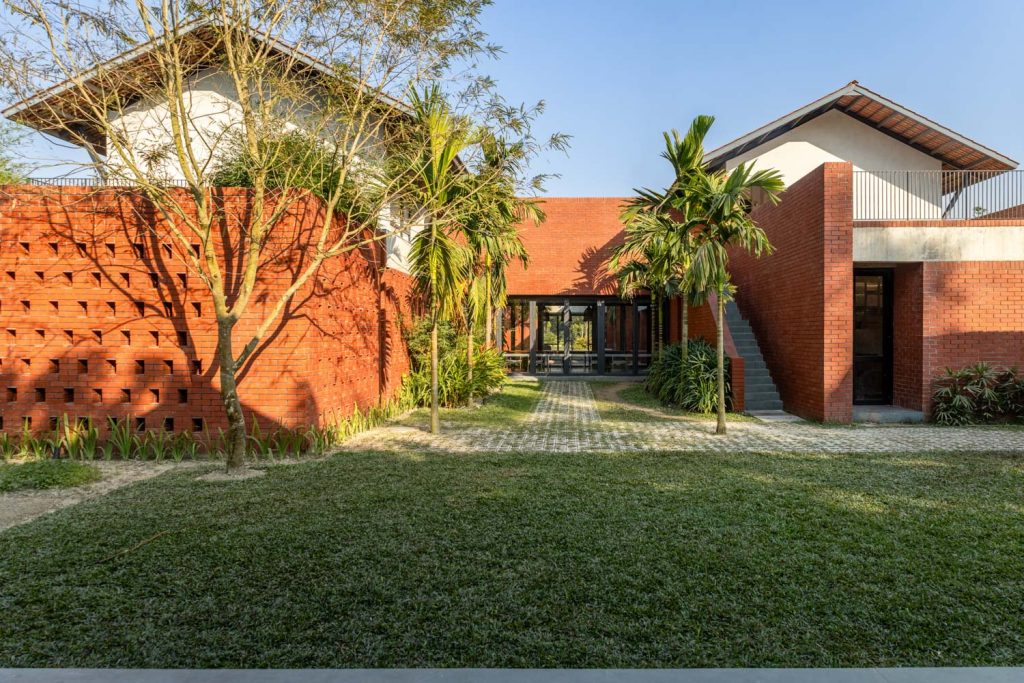
Set within the semi-rural landscape of Garpara in Manikganj, just beyond the outermost breath of Dhaka, Khan Farms stands as the emotional anchor of six brothers and the family life they have always chosen to keep each other’s company. Though owned and initiated by one of the brothers, the project was envisioned as a shared place of gathering, connection, and continuity for the entire family.
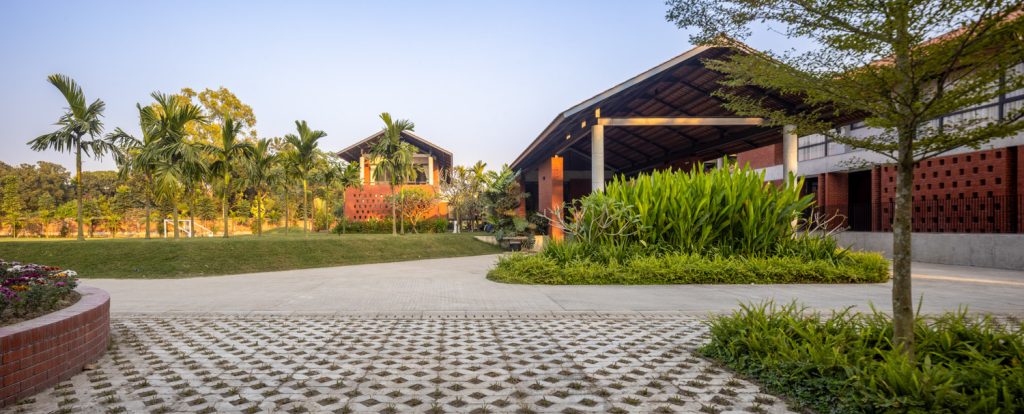
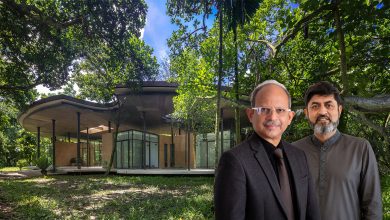
Spanning a site area of 36,000 square metres of gently unfolding land, it was born from a single, deeply felt instinct: to create a lifelong, breathing home for a family that refuses to drift apart. To give this vision the architectural life it deserved, the owner turned to Ar. Mahmudul Anwar Riyaad, Partner and principal architect at DWm4 Architects, whose deeply considered design has shaped every corner and space e that speaks equally of purpose, belonging & humbleness. Alongside him, Ar. Khalid Ahmed of Next Spaces Ltd., also a member of the Khan family, remained actively involved throughout every phase of the design process, bringing an intimate familial understanding to the project alongside the DWm4 team.
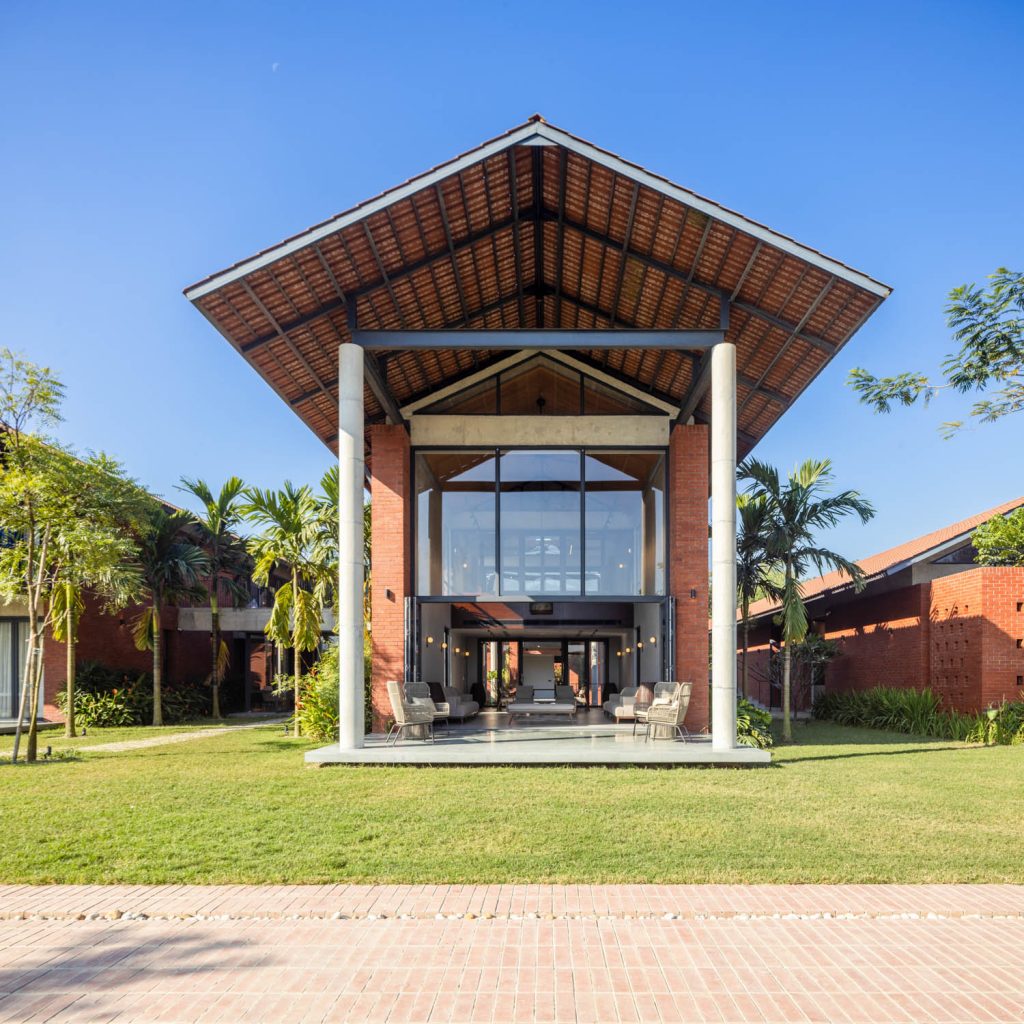
Khan Farms is an extended farmhouse, one whose functions are as elaborate as the life lived within it.
Far from a simple sanctuary, Khan Farms reflects the entrepreneurial spirit of the larger Khan family, whose members are engaged in both shared and individual ventures. A dedicated business wing, with its lounges, meeting rooms, training spaces, and a compact dormitory, makes the estate capable of hosting a focused work retreat as a festive family gathering. Thereupon, under CRS and charitable initiatives, Khan Farms regularly opens itself to schoolchildren, residents, and community groups; a place where training sessions, workshops, and motivational programmes quietly remind those who visit that this estate was always meant to give back.
The site itself presented both opportunity and challenge. Through a dug and mound process, the earth drawn out to form the pond found new purpose as the raised plinth of the house, finding new meaning in a new form. In contrast, the topsoil, rich with nutrients, was set aside during construction and later returned to the land, laid generously across the lawns and gardens. The ground that was taken from became, in time, the ground that gave back.
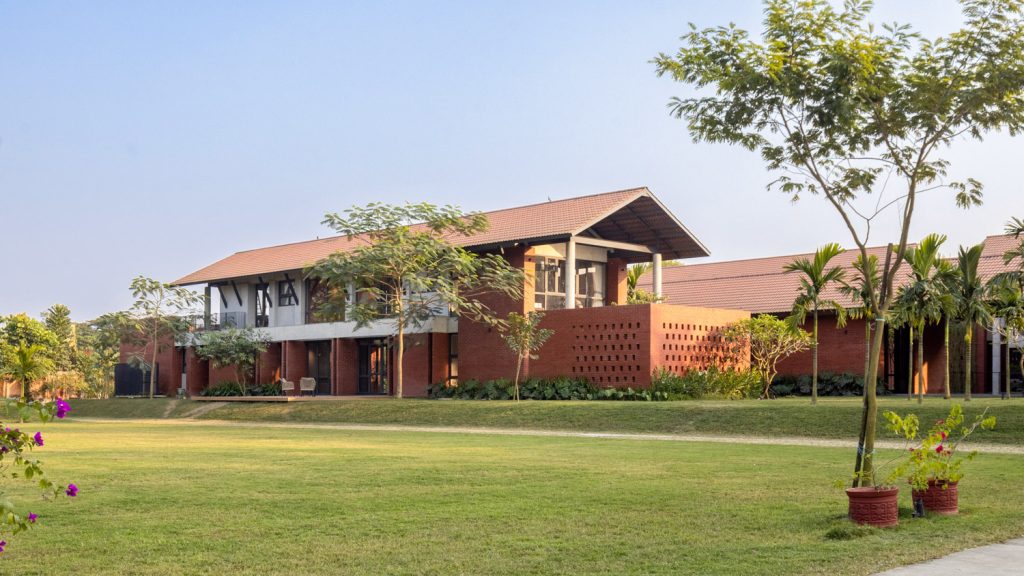
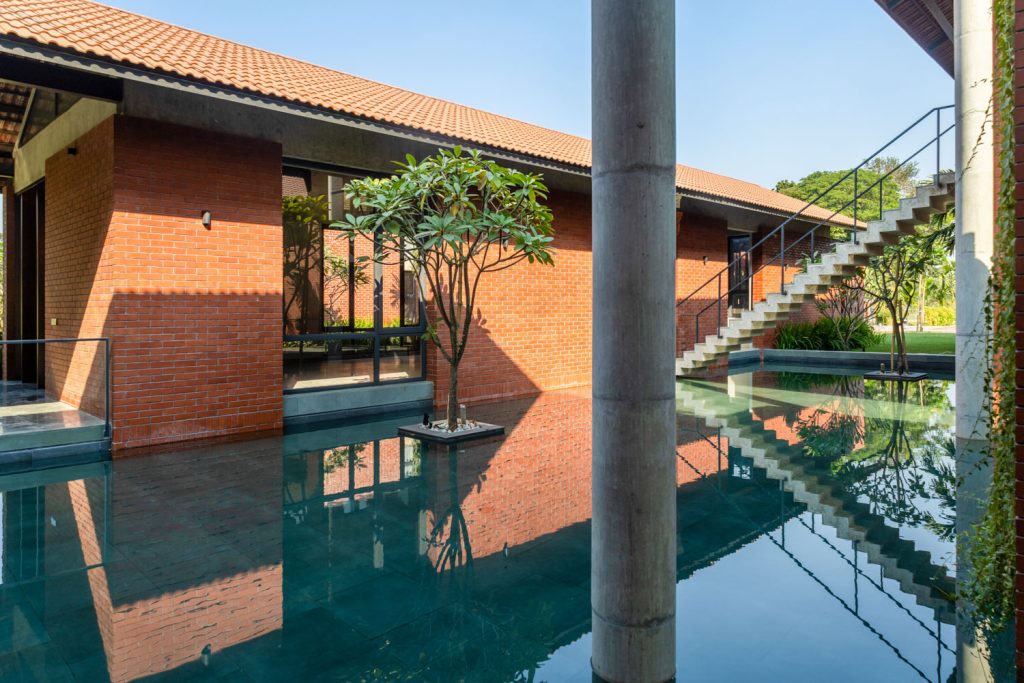
The architectural response to this richly layered programme is, at its core, an act of careful distribution. Rather than surrendering to the temptation of a single deep, monolithic building, which would have been the easier path on this irregularly shaped site, the programme was distributed into four parallel linear blocks running east to west. The northern blocks, double and single-storied respectively, house the public and business functions and open generously toward a well-kept lawn and playfield that stretches out in front of the house like a welcome. The southern blocks contain the residential areas, positioned more privately beside the pond and agricultural landscape. A quiet reflecting pool acts as a threshold between the farm’s public energy and its private heart. The small bridge crossing it is intentionally unhurried, giving the space a brief moment to catch one’s breath and shift mindset. Nearby, an open staircase lifts over the still water toward the owner’s library and office. With each step upward, the architecture offers a sense of gentle elevation, not just for the body, but for the mind. What holds these four blocks together and what gives Khan Farms its most distinctive spatial quality is the system of courtyards, gardens, and water bodies that breathes between them.
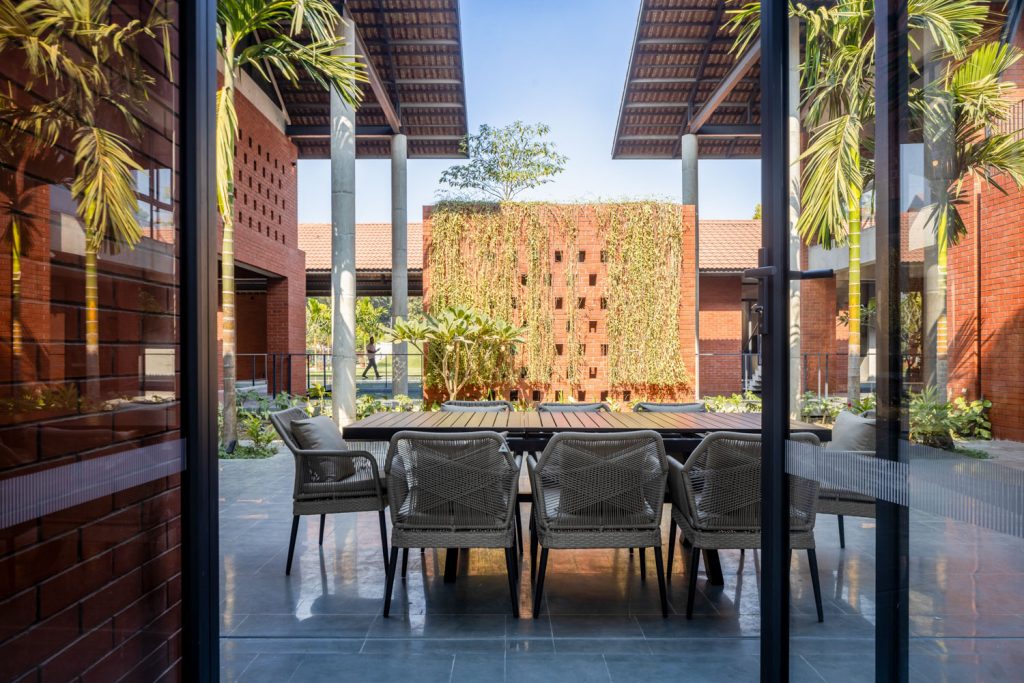
Each court tells its own story. One arrives with the formality of a landscaped prayer garden, wrapped in brick lattice that filters light and ensures privacy without severing connection to the outside. Another opens with the ease of a kitchen courtyard, sheltered by a pavilion, spilling into the casual life of the residential wing. These are not decorative gestures; they are the connective components of the entire composition, where it helps to break down the scale of what might otherwise have felt overwhelming, drawing in light and cross ventilation, and creating a layered journey through the estate that is never the same twice. To circulate through Khan Farms is to move through a series of discoveries to illustrate indoors to outdoors, intimate to expansive, shaded to open.
Indoor and outdoor in quiet repetition; an alternative experience knitted into every step of the crisscross circulation.
Beyond its primary structures, the complex is further supported by a range of subsidiary facilities. A gatehouse anchors the entrance, while separate staff dormitories sit quietly within the grounds. A tower rises with an observation deck above it all. Beneath the surface, a water tank and treatment plant keep the estate quietly, reliably alive entirely self-sufficient, entirely considered.
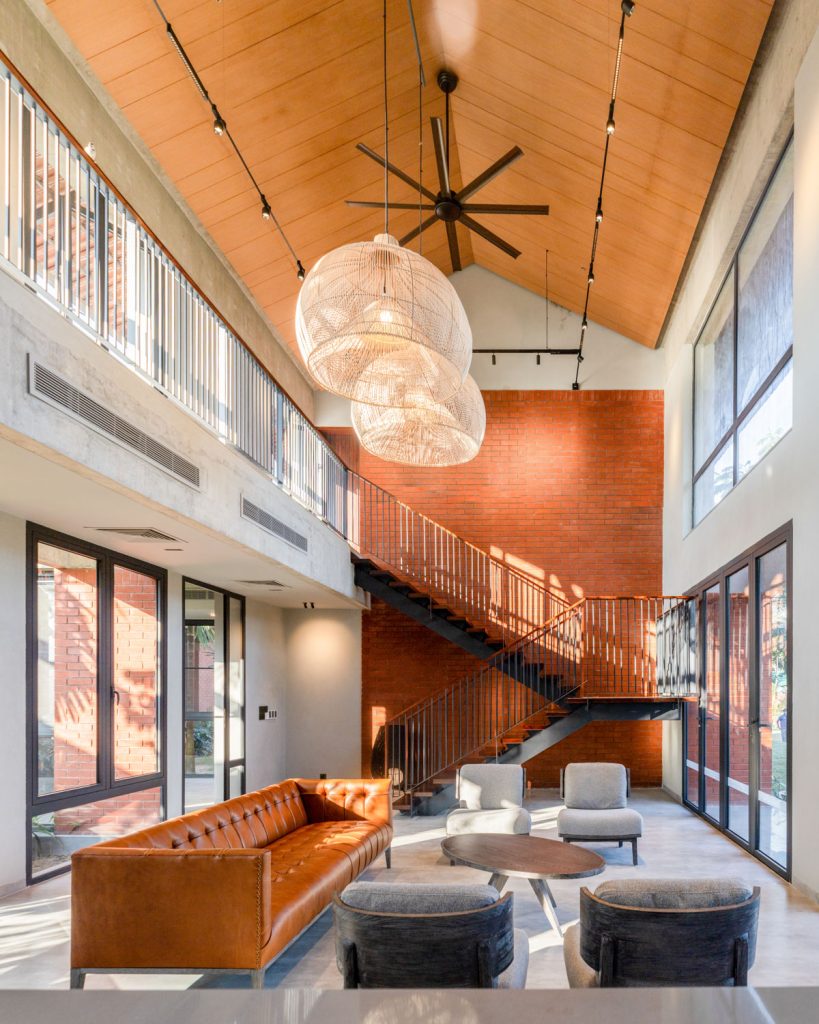
The material palette of Khan Farms is an architecture lesson in restraint and integrity. There are no imported finishes here, no gestures toward luxury for its own sake. The structural frame is rectilinear reinforced concrete with brick infill walls where some were plastered and finished in cementitious paint, others left bare in warm, textured exposed brickwork.
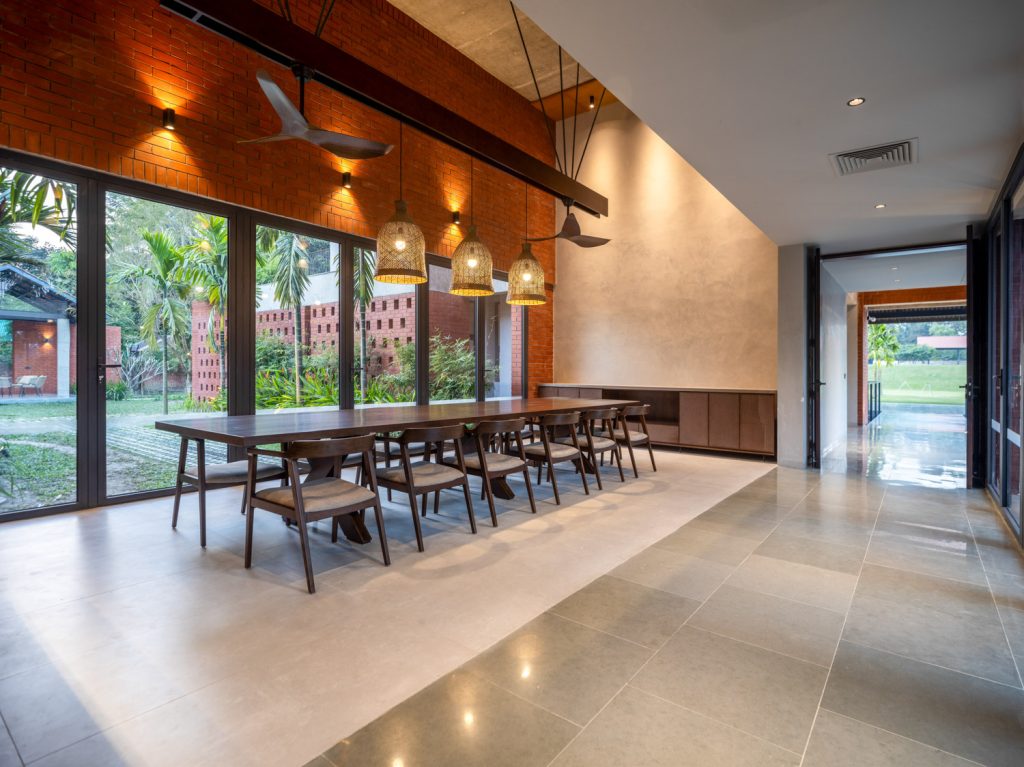
In contrast, terracotta roof tiles crown the pitched roofs with an earthen simplicity. Floors throughout are laid in Kota stone, matte and cool, unpretentious beneath the foot.
“Exposed brick, concrete, and tile, three simple materials that repeated with intention became the quiet, consistent soul of Khan Farms.”
The architect articulates the philosophy plainly in Khan Farms, a consistent visual language is created through exposed brick, concrete, and tile, the three essential materials, repeated with discipline and simplicity, generating through their accumulation something far richer than the sum of their parts. It is in this repetition that the character of the farm resides. Simple elements, returned to again and again, building toward a complex and deeply felt experience.
It follows that the interiors here feel lived in before you even sit down. Locally crafted wood fills every room with a warmth and familiarity; its grain and texture speak softly of the land outside, making every space feel rooted, nearness & genuinely alive.
The landscape is too meshed with the same contextual intelligence. Fruit trees gather to the south, a mango orchard anchors the east, and flowering trees line the paths with shifting colour and fragrance. But certain patches were left deliberately bare, open invitations for the family to plant, over the years, whatever they choose. A landscape that grows, tenderly, with the life lived within it.
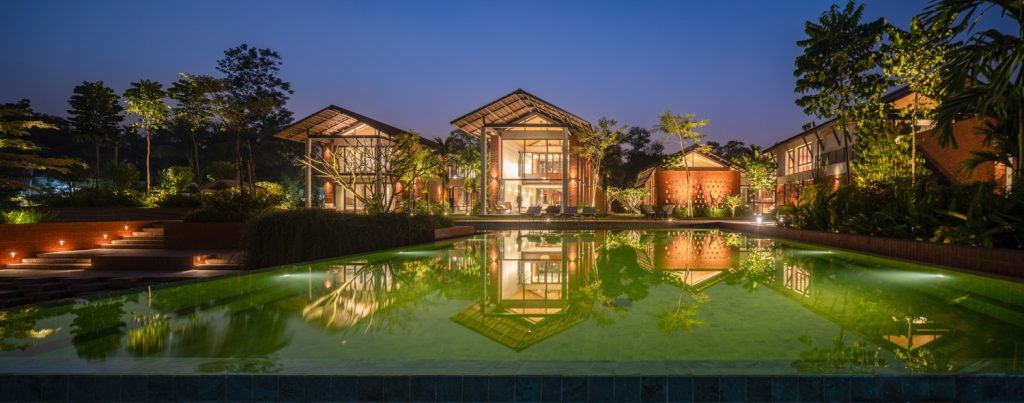
Khan Farms represents honest, shared, refined and alive that achieves something that far grander projects rarely do. It is a place where a family finds its way back, a community finds belonging, and architecture finds its truest purpose and grace. In a world increasingly seduced by the spectacular, Khan Farms reminds us that the most enduring spaces are those built not for the eye alone, but for the long, unhurried rhythm of a life well lived.