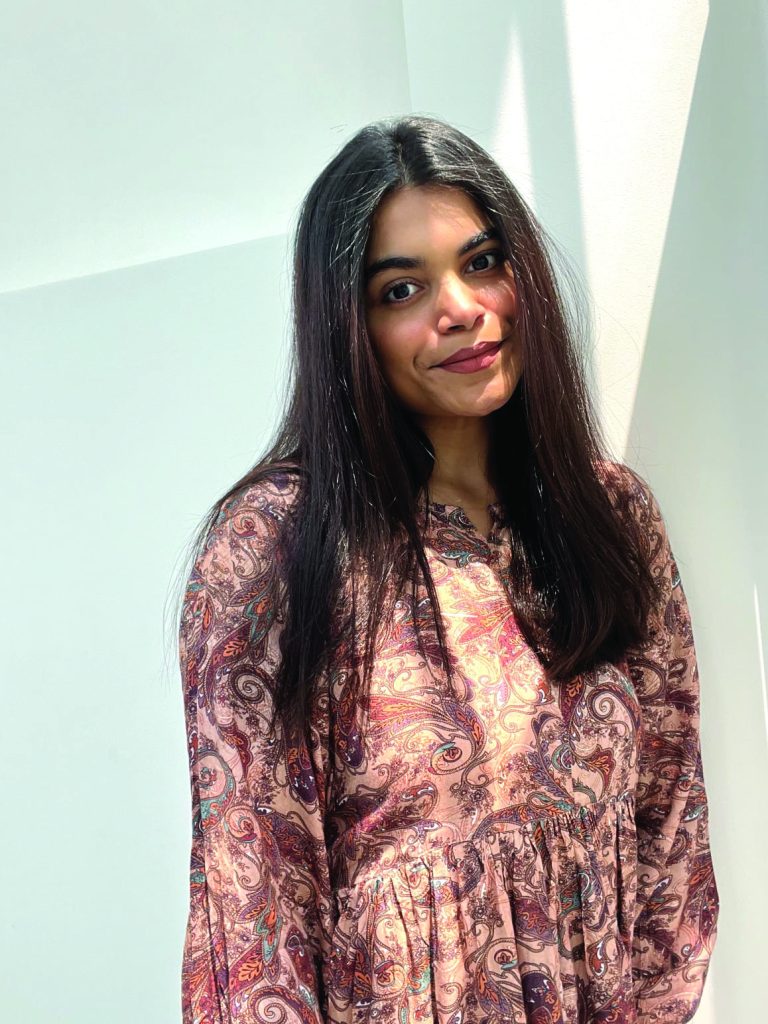
Fabliha Al Tawaffin, an undergraduate student from the Department of Architecture at North South University, presents a thoughtful thesis that explores the future of the riverfront between Kumarbhog and Louhajang in Munshiganj after the construction of the Padma Bridge. Supervised by Dr Md. Maruf Hossain and Ar. Sujaul Islam Khan, the project, Post-Padma Bridge Vision: An Eco-Economic Framework from Kumarbhog to Louhajang, proposes a flexible master plan that brings together ecology, local livelihoods, and community life.

The site is shaped by the changing nature of the Padma River. Fertile farmland, fishing communities, rural settlements, local bazaars, and seasonal flooding all play an important role in the area’s identity. Instead of treating floods and river erosion as problems to eliminate, the proposal accepts them as natural conditions that should guide the design.
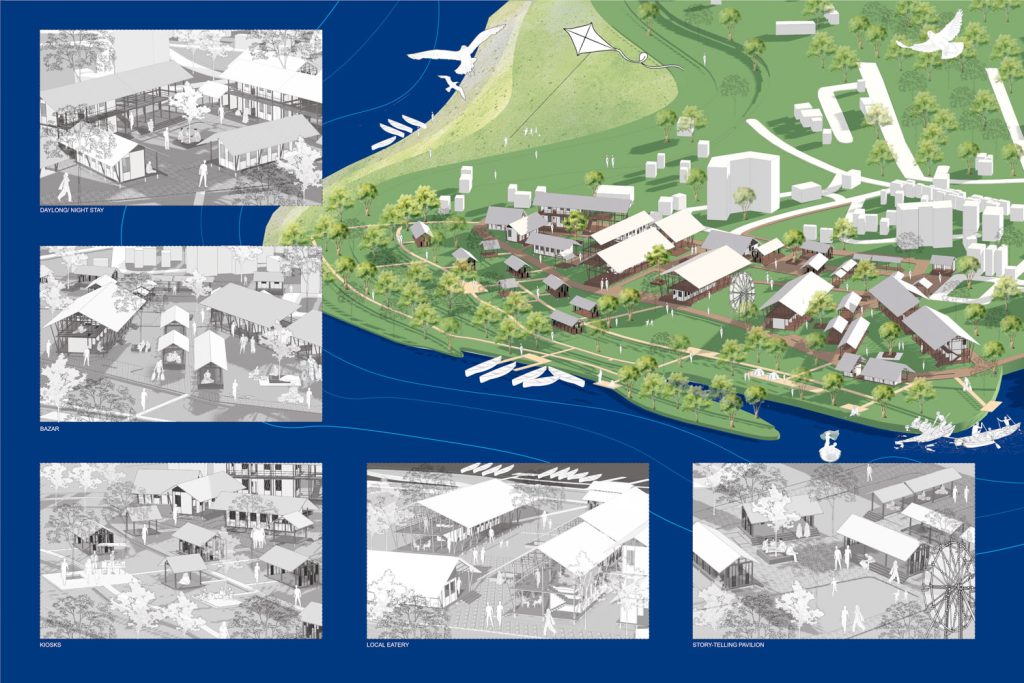
Half of the site is preserved as an ecological zone that functions as a floodplain during the monsoon and transforms into public open space in the dry season. A flood park with riprap revetment helps reduce erosion while protecting the riverbank. The remaining areas support local livelihoods through a fish market, farmers’ market, ice plant, composting facilities, small vendor spaces, food stalls, and resting areas for visitors. Spaces for Boishakhi Mela, Pitha Utshob, Ghorer Haat, Bhatiyali performances, storytelling, net weaving, and dry fish processing celebrate the region’s cultural traditions alongside its economy.
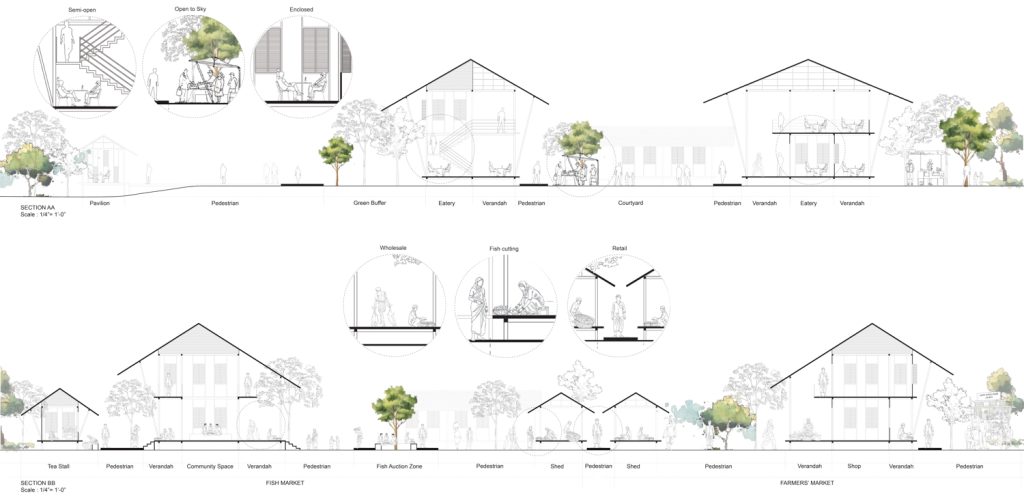
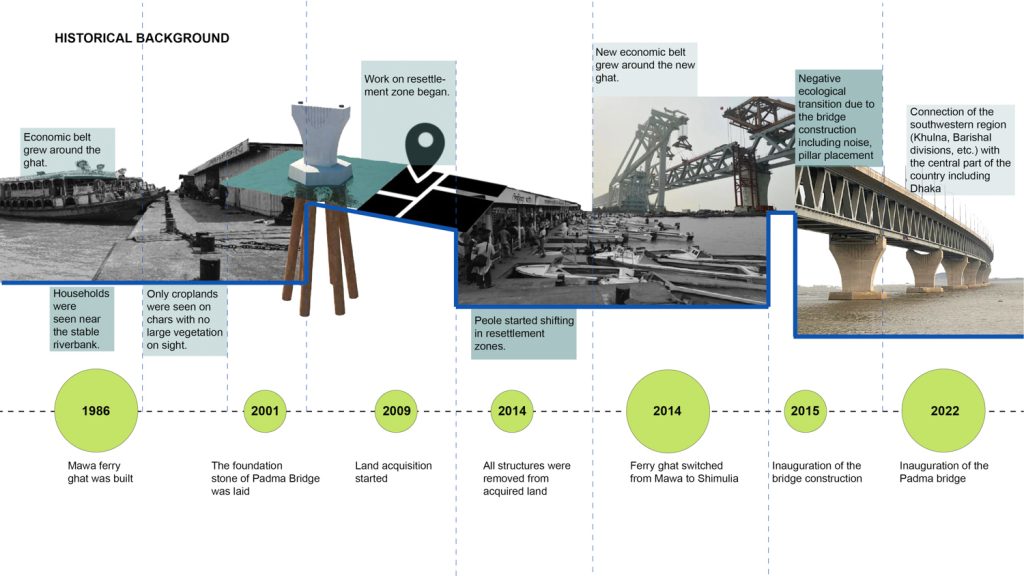
The architecture draws inspiration from the traditional Kather Bari, using treated timber, jute composite tin sheets, mortise-and-tenon joinery, and a Wagoya roof truss system. Adjustable louvered windows, deep roof overhangs, shaded verandas, courtyards, and tree-covered open spaces create comfortable environments while improving natural ventilation.
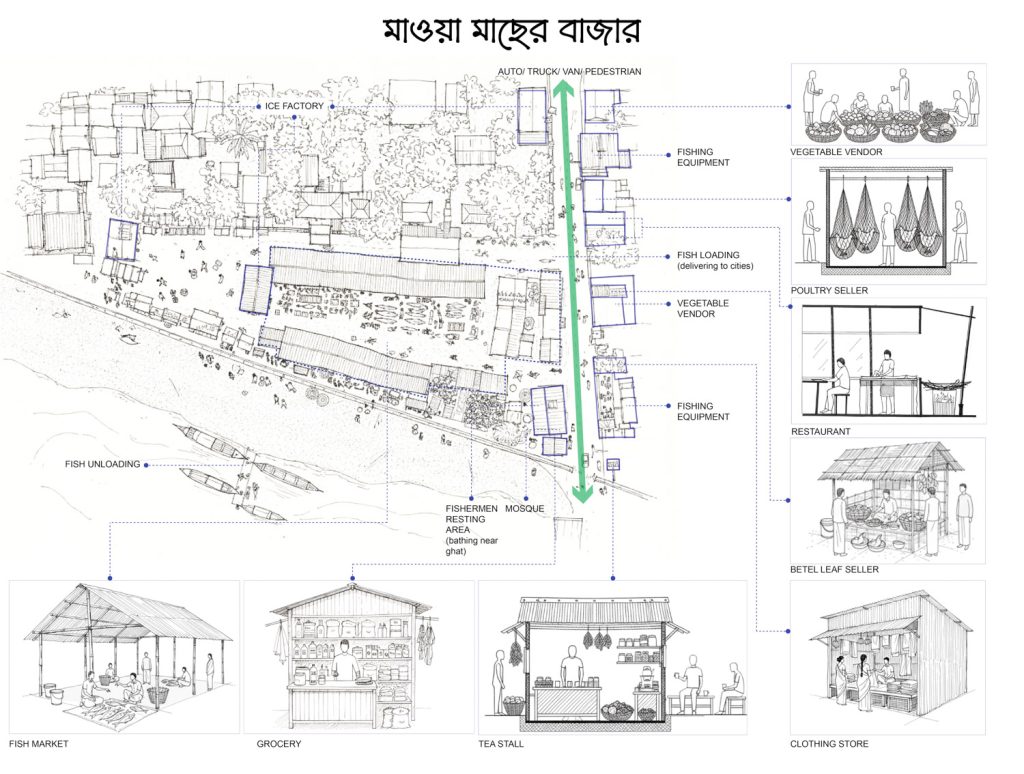
Guided by David Kelley’s design thinking process, the project begins by understanding the needs of local fishermen, farmers, vendors, and travellers before developing practical, community-focused solutions. It offers an adaptive framework that can grow with the river and the people who depend on it, creating a resilient and sustainable future for this living landscape.