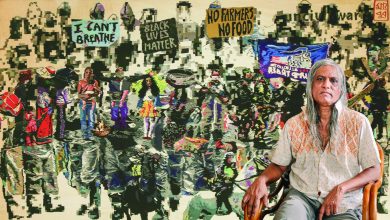
Saida Sultana
The canvas exists as a sacred sanctuary where indigenous tradition gracefully merges with contemporary fine art sensibilities. In a creative scene often saturated with rapid digital styles and temporary trends, Saida Sultana treats the visual surface as a living record of rural legacy and ancestral craftsmanship. Emerging as a dedicated voice in the landscape of contemporary Bangladeshi art, she constructs elegant compositions that celebrate the timeless beauty of native flora, fauna, and ordinary human life.
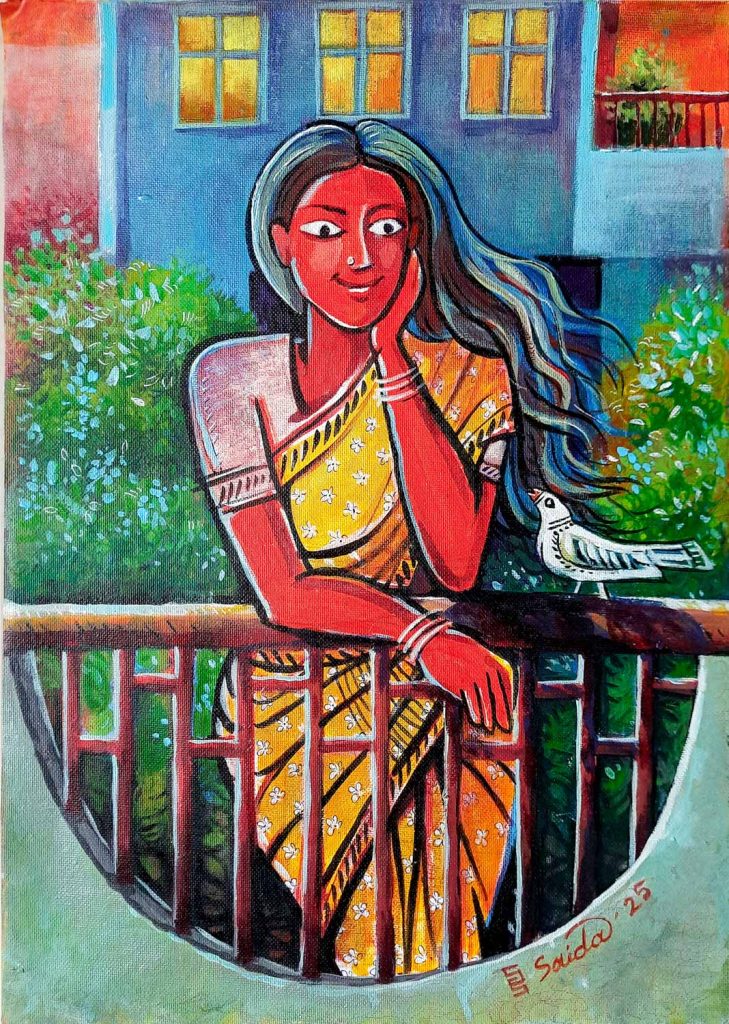
Through a masterful orchestration of fluid watercolor washes, rich acrylic pigments, and traditional craft techniques, she builds an evocative visual reality that vibrates with the warm, rhythmic heartbeat of folk heritage.
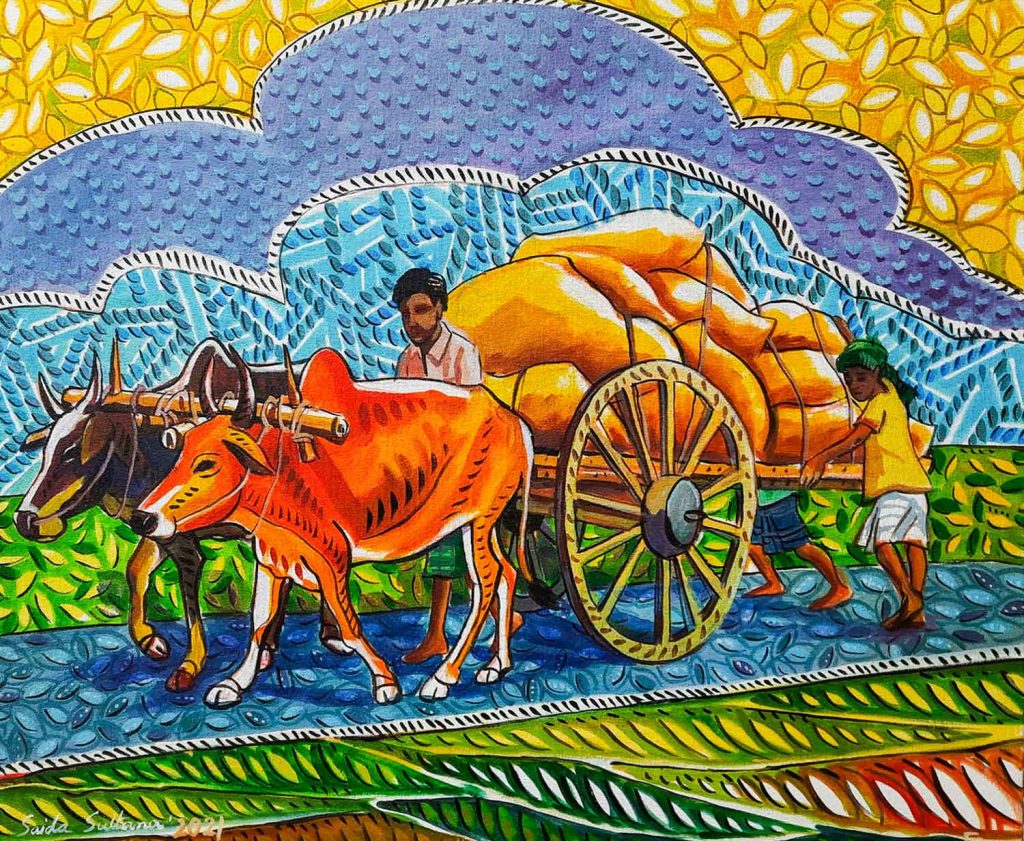
A close exploration of her foundational years reveals the absolute structural discipline behind this creative philosophy. Born in 1980 in Dhaka, her artistic journey was built upon an early passion for material forms and regional aesthetics. Pursuing formal education at the Faculty of Fine Art, University of Dhaka, she achieved excellence by graduating First Class First in both her Bachelor of Fine Arts in 2004 and Master of Fine Arts in 2006 within the Department of Crafts. This unique institutional training granted her an extraordinary control over diverse craft mediums, from intricate wood carving to delicate serigraph screen prints. Rather than treating craft as a secondary discipline, she successfully integrated its structural integrity into the realm of fine arts, establishing an independent identity rooted in cultural exploration.
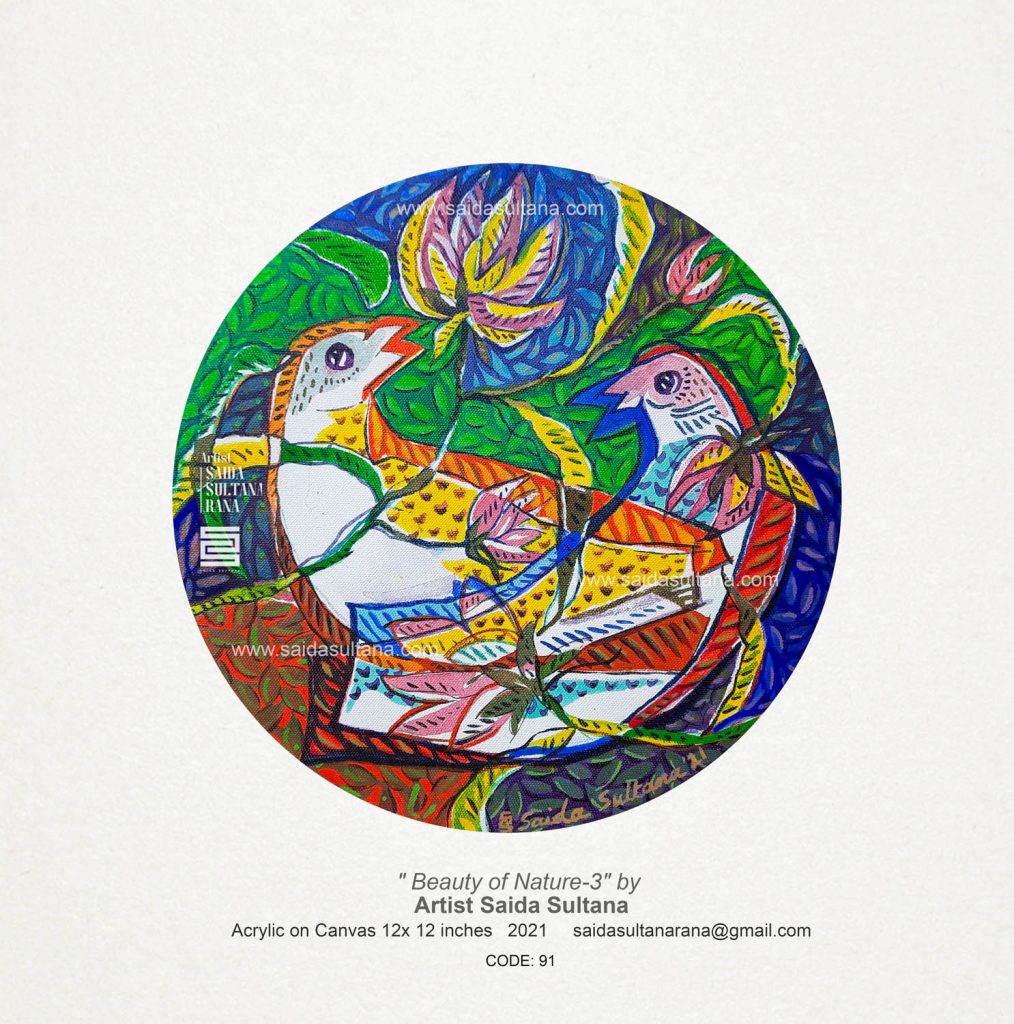
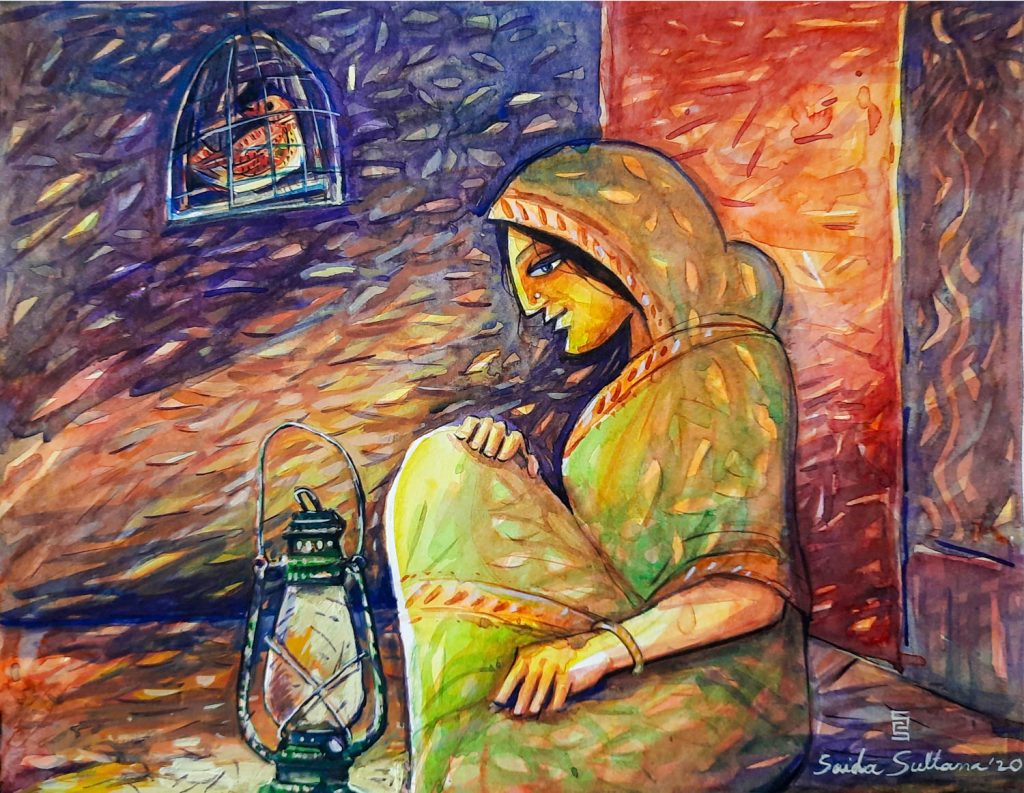
The narrative structure of her creative practice relies on an intimate, poetic relationship with the motifs of traditional folk art. In celebrated visual series featuring pieces such as Asmani, Awaiting, and Lady with the Bird, the subjects are enveloped in a warm atmosphere of serene domesticity. Her canvases are filled with beautifully stylized sparrows, majestic lotuses, and tranquil village women, capturing the quiet dignity of rural lifestyles. Reflecting on her material philosophy, the artist notes:
“To me, the traditional motifs of our folk heritage are not static relics of the past; they are living repositories of emotional memory and cultural identity. When I carve into wood or layer watercolor on paper, I am engaging in a profound dialogue with the soil and the generational craftsmanship of Bangladesh.”
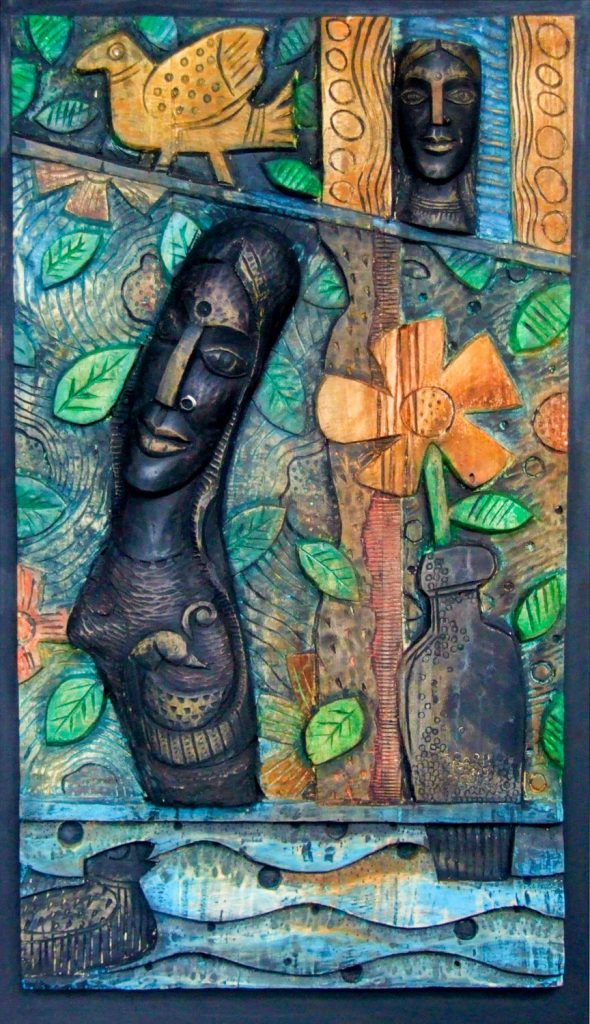
These elements function as sacred allegorical symbols of childhood memories and environmental innocence. The aesthetic strategy governing these surfaces relies on a delicate dialogue with material fluidity and graphic precision. Commenting on the technical orchestration of color and form, the artist further explains:
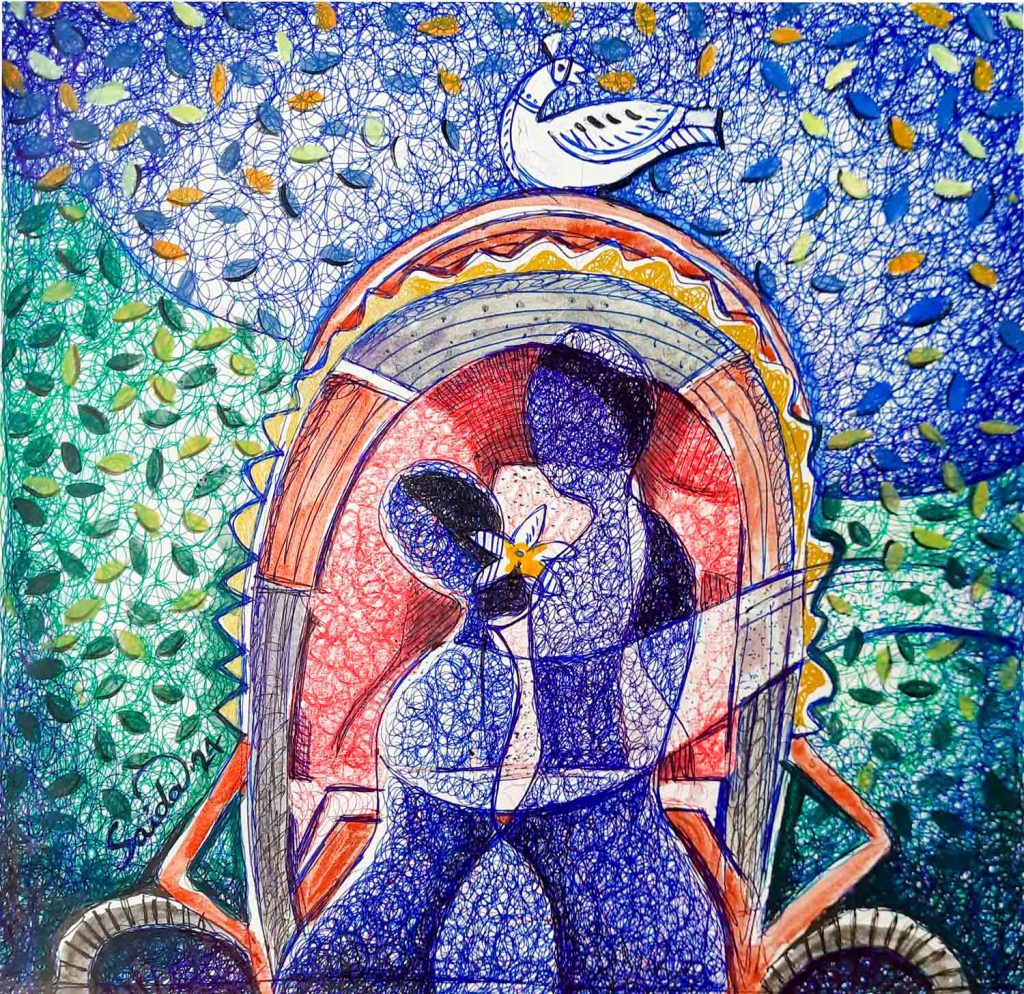
Art has a fundamental responsibility to protect our ancestral narratives, offering a quiet, organic sanctuary of beauty against the mechanical noise of the urban environment.
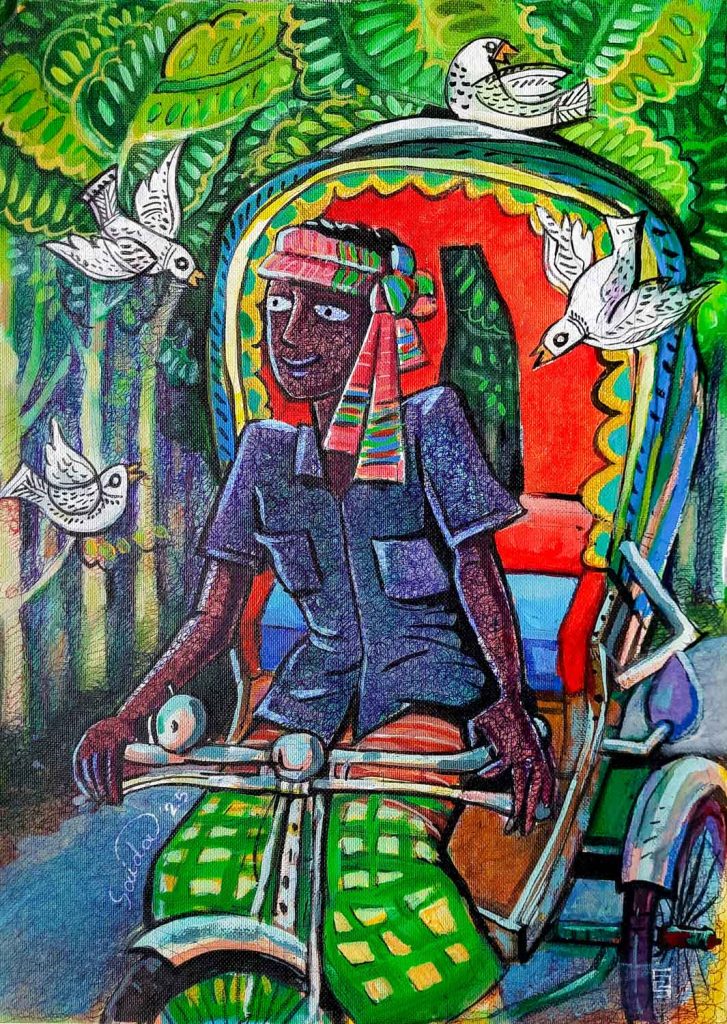
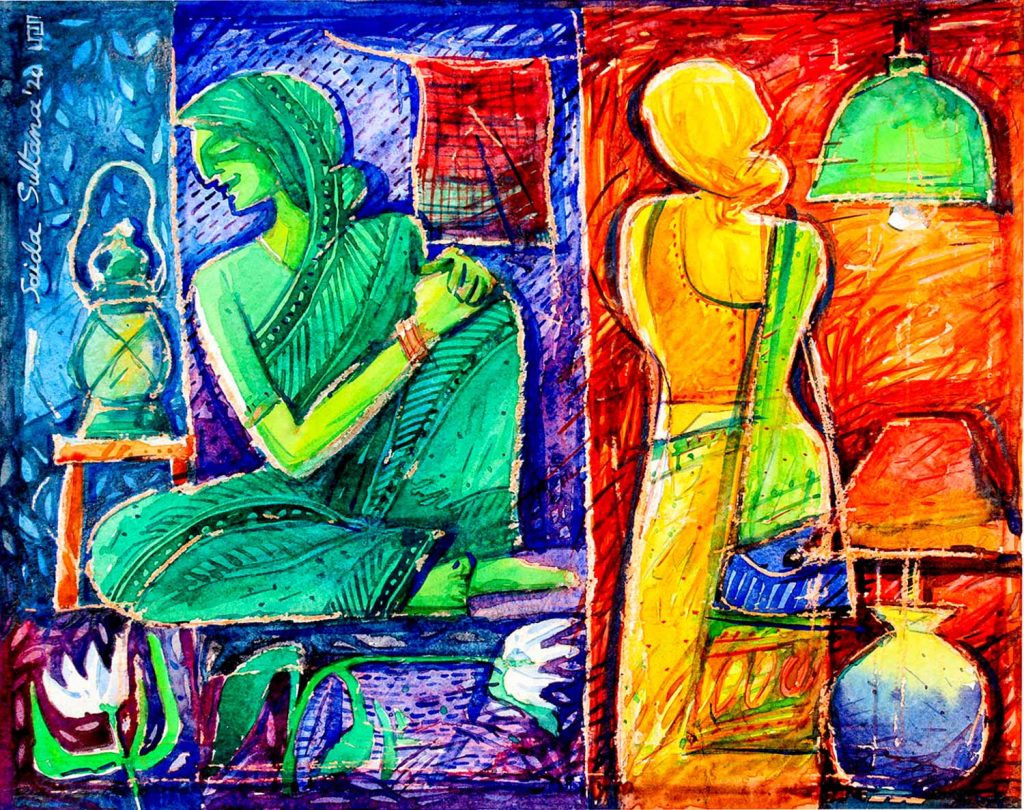
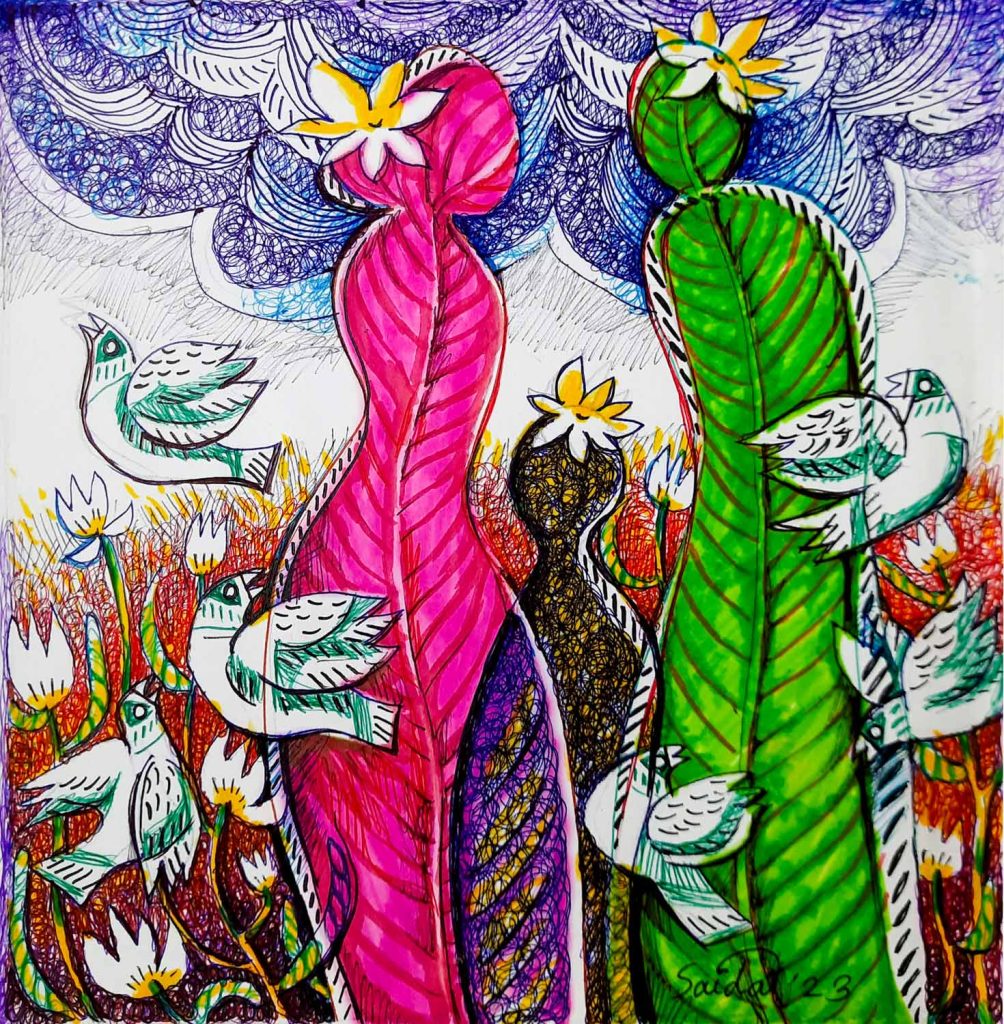
The interaction of fluid color and structural patterns allows me to capture the subtle vibrations of nature.
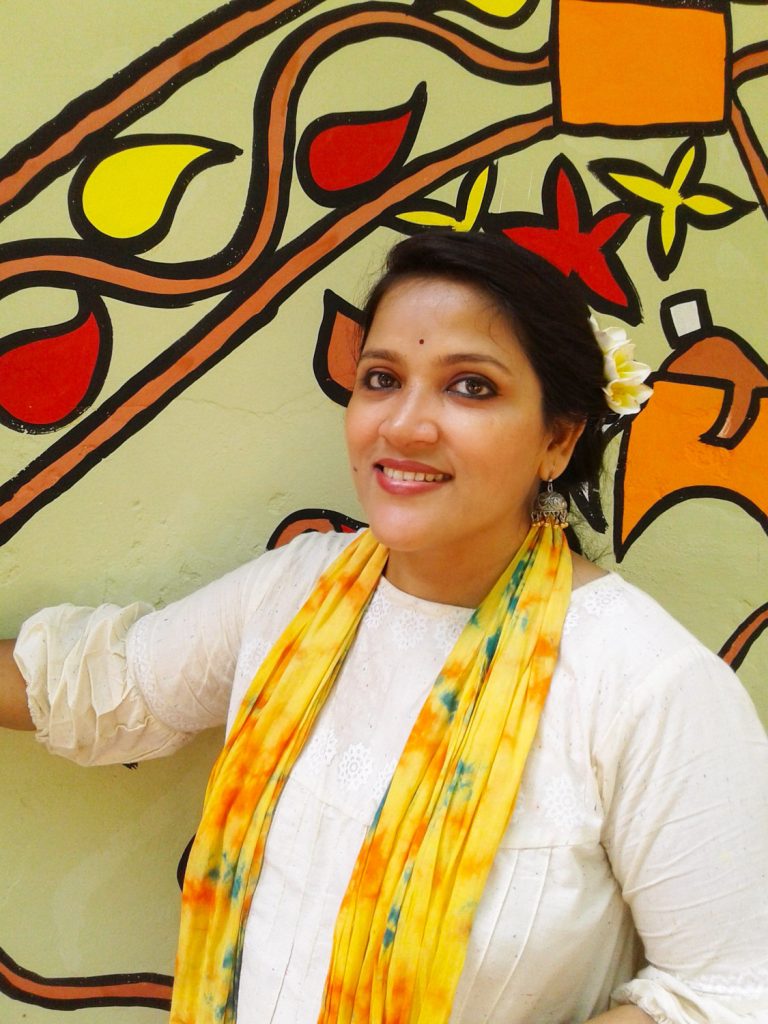
Ultimately, she operates as an essential guardian of cultural memory. Her paintings call for a complete sensory presence and a slow, unhurried appreciation of our shared organic roots. Through her singular vision, the canvas ceases to be a simple decorative surface and transforms into an enduring monument of regional resilience and timeless artistic expression.