On the 13th level of Rupayan Shopping Complex in Bashundhara Residential Area, something magical happens when the elevator doors open. A gentle wave of green freshness greets you with leafy scents, warm lights, the faint echo of falling water, and the comforting aroma of a live kitchen. This is The Green Lounge, a place that does not merely sit above the city, but gently withdraws from it. Designed by Principal Architect Al Mamun Ur Rashid of AMUR Architecture. Here, the idea feels fully realised, matured into something quietly confident and deeply humane. The project begins with memory. For its founder architect, Mubashir Hussain, the impulse is rooted in nostalgic childhood landscapes where rivers breathe, air moves and time unfolds. As Dhaka becomes increasingly sealed in glass and concrete, The Green Lounge offers a quiet counter-argument, not through spectacle, but through restraint.
Its ambition is simple yet radical: to give Dhaka back a place to breathe.
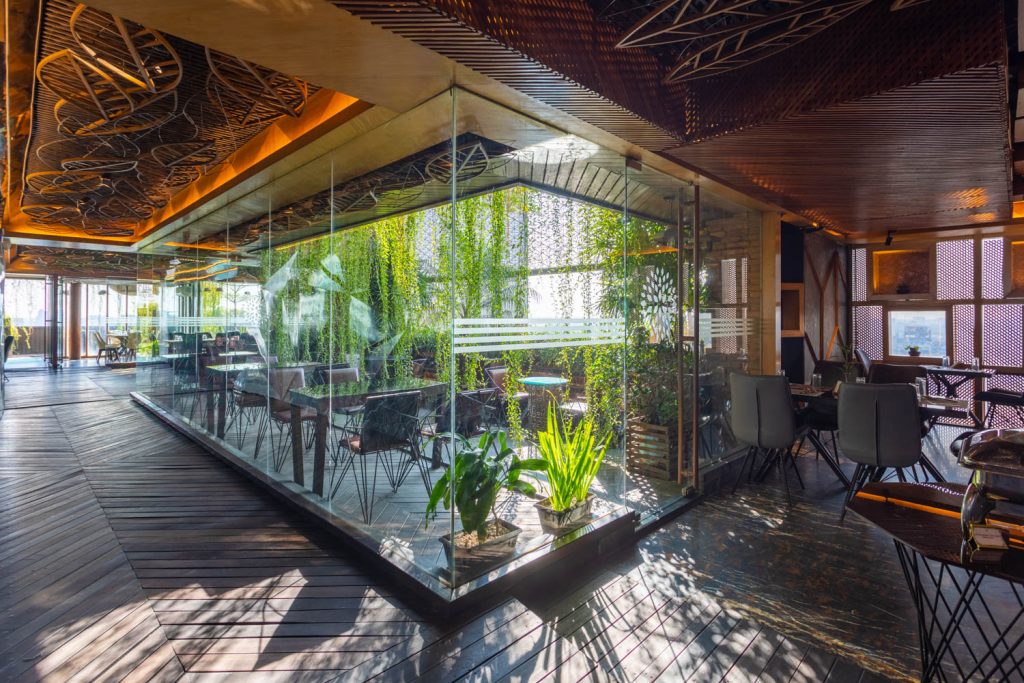
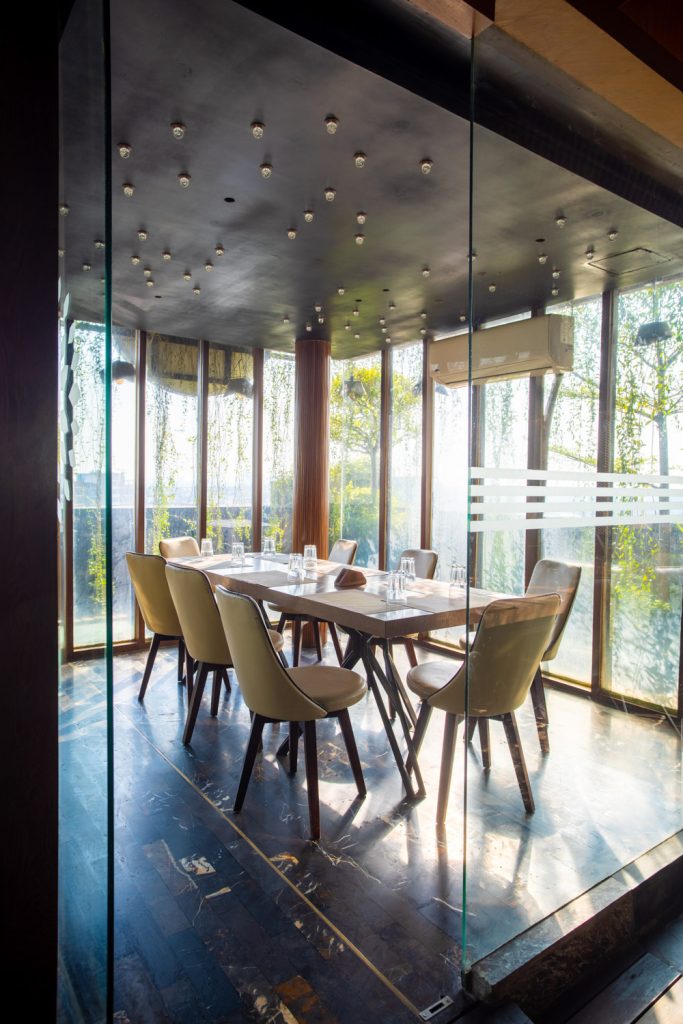
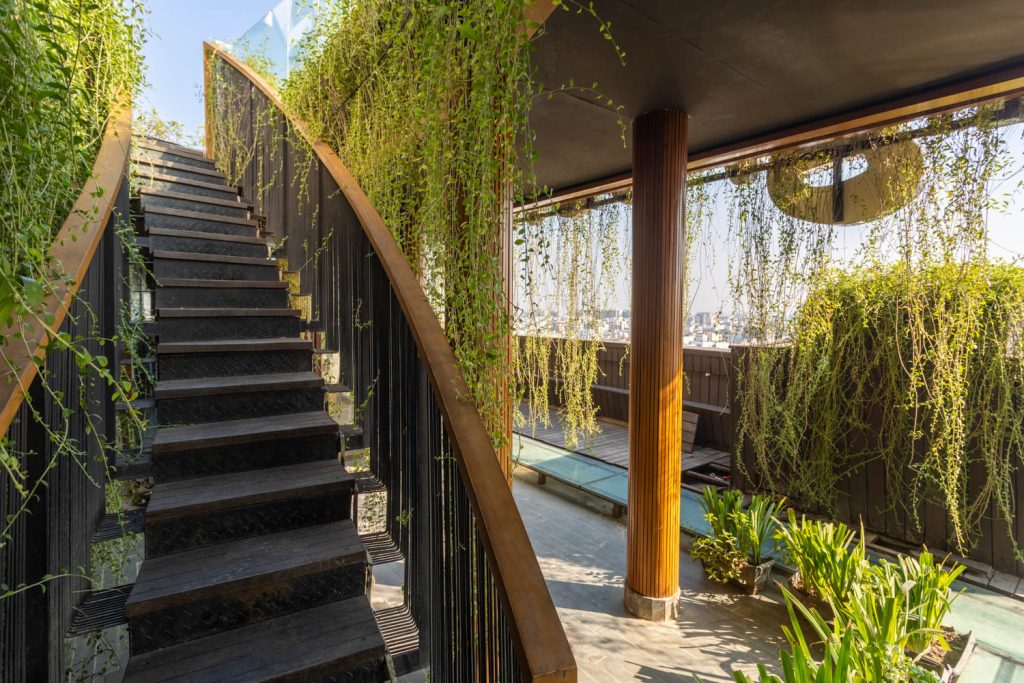
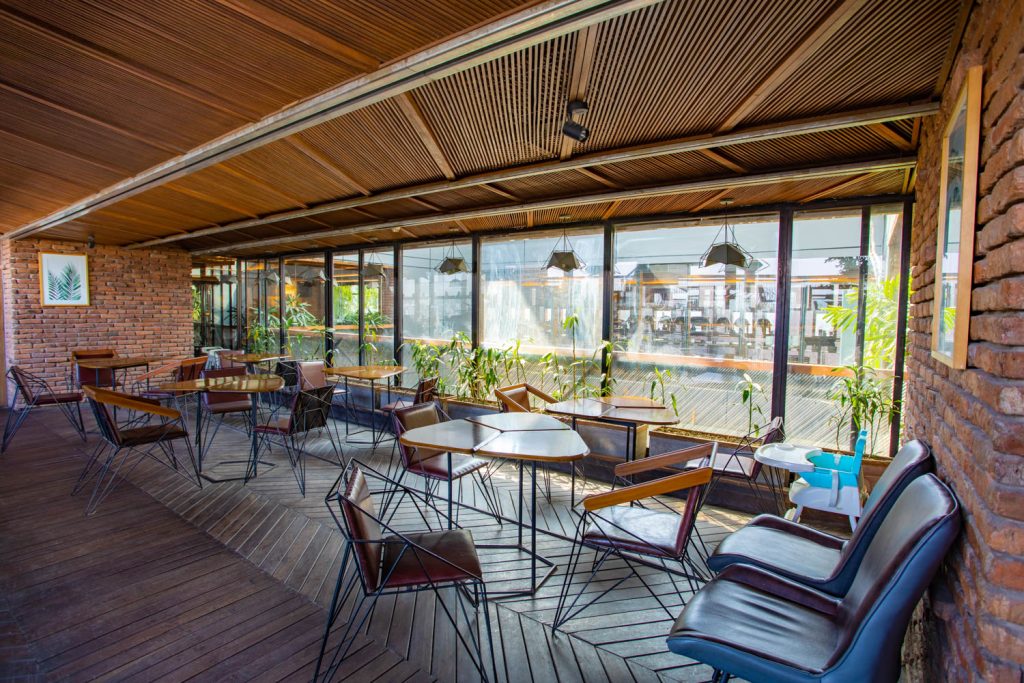
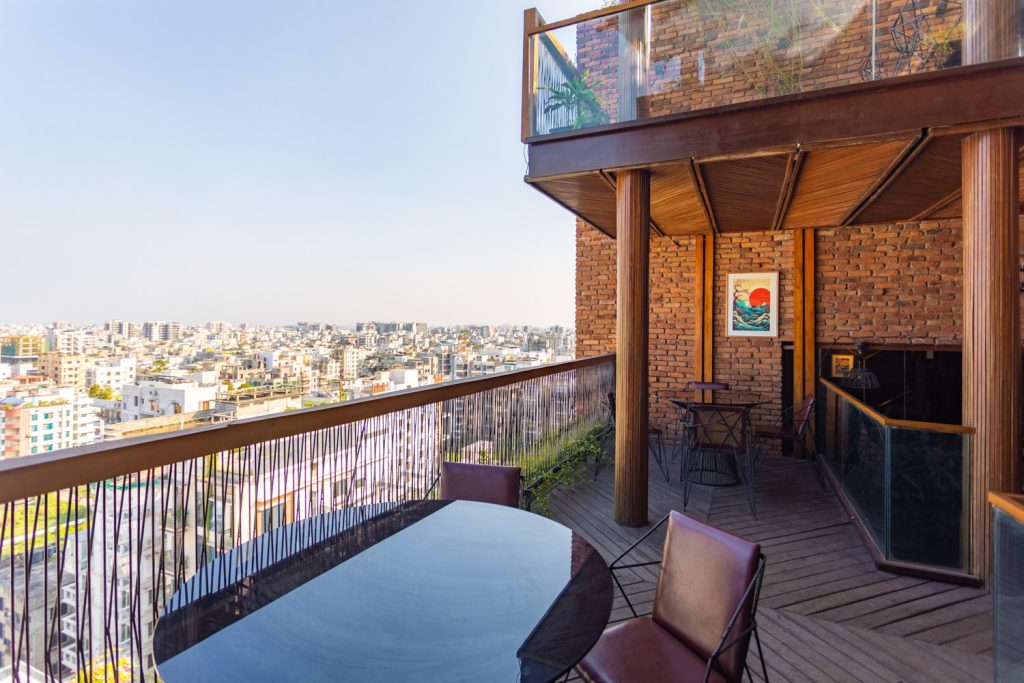
Here, architecture behaves less like an enclosure and more like a landscape. Plants do not decorate; they inhabit. The light filters through this green density with a shy gentleness, recalling mornings clouded just enough to be kind. The Brick walls glow in warm, earthy tones, anchoring the space with memories of Bengali courtyards and village homes, places where architecture was once inseparable from climate and community.
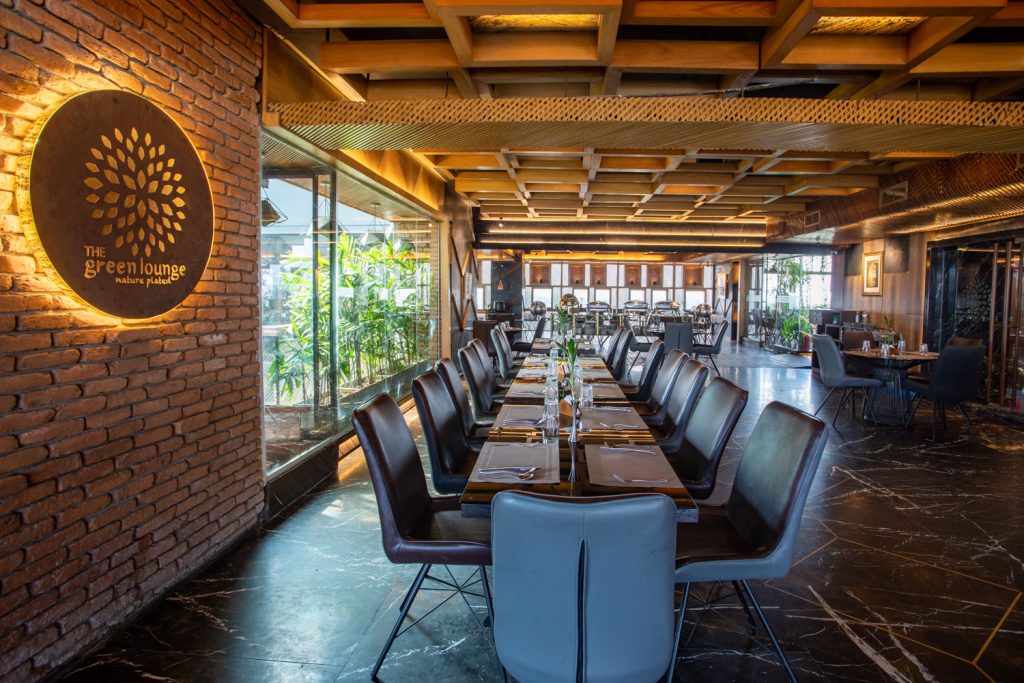
The material language here is carefully and consciously composed. Exposed brick bears the weight of familiarity and memory, while steel, glass, and finely calibrated lighting introduce a measured contemporary rhythm.
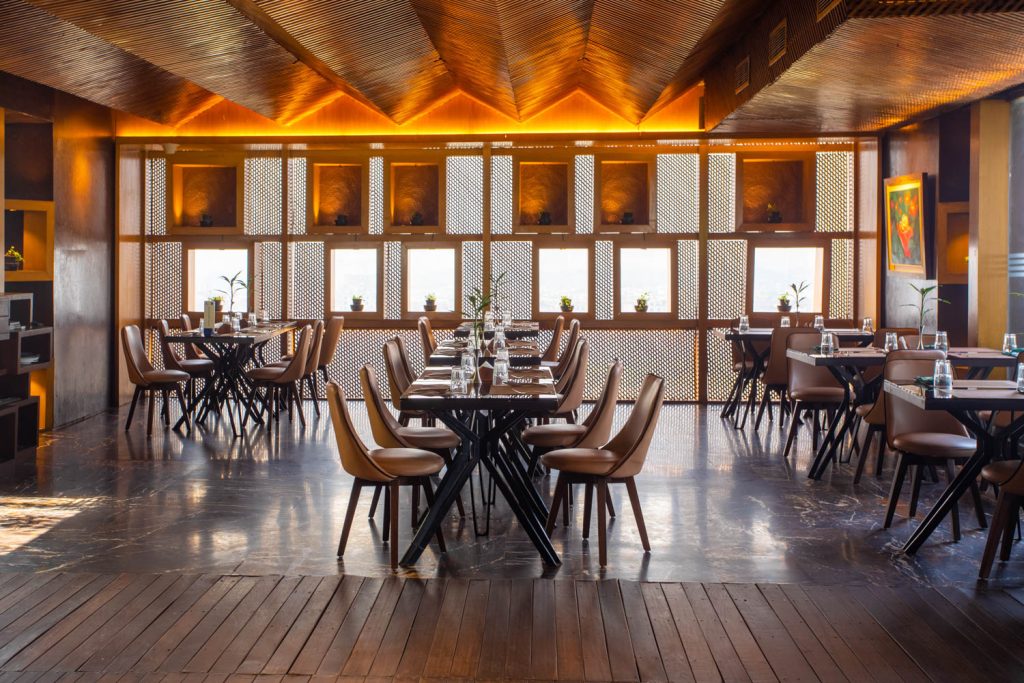
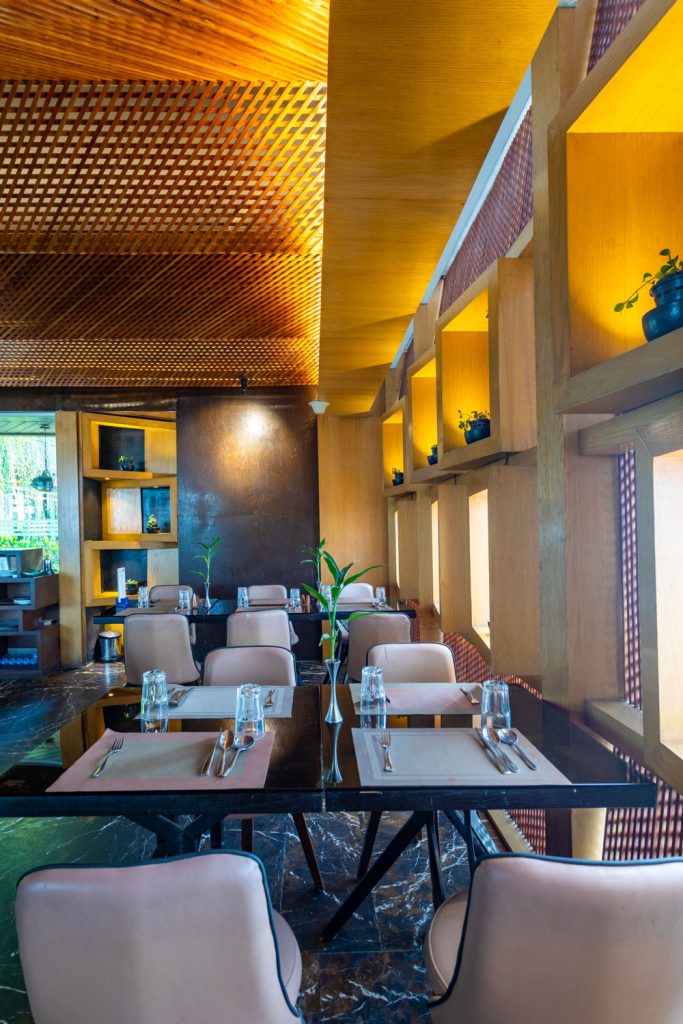
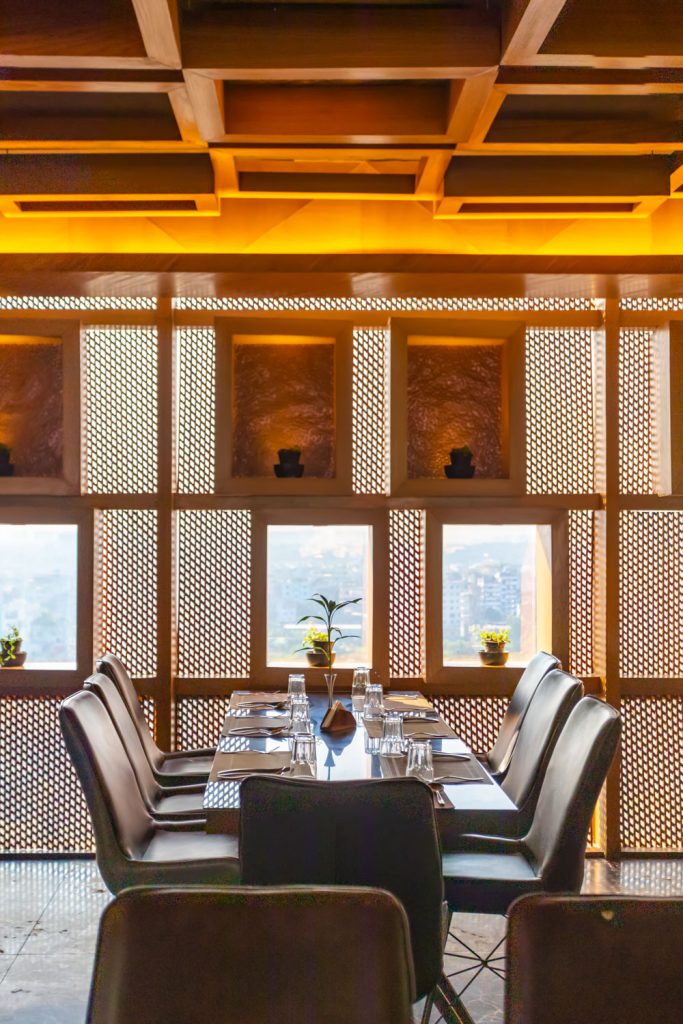
Inside the dining hall, suspended lamps cast muted golden hues that appear to slow time itself. The light rests gently on leaves and plates alike, creating an atmosphere reminiscent of an endless golden hour. Seating is layered and fluid, thoughtfully arranged to accommodate nearly six hundred guests without ever feeling crowded.
The space unfolds vertically as well. Two levels are connected by a wooden staircase, embraced by greenery on both sides, transforming a simple circulation element into an almost ceremonial passage. Visitors often pause midway, not out of fatigue, but in quiet wonder. Someone once described it as “a way to heaven,” and standing there, it is difficult to disagree.
At the heart of the interior, a fountain sits modest, unpretentious, and profoundly effective. Water falls in a steady rhythm into a stone basin, anchoring the space emotionally. Visitors often linger longer than they planned. This is architecture at its finest; it reshapes the perception of time. Tucked within the restaurant is a space affectionately called the Fairy Garden. This corner embraces playfulness without tipping into excess.
Hanging lanterns, low tables, terracotta accents, and dense clusters of plants create an intimate, miniature forest-like atmosphere.
When you step outside onto the rooftop deck, Dhaka suddenly unfolds like a giant tapestry. Yet here, the rhythm softens. Guests often stand along the railing, letting their eyes wander across the skyline, discovering a rare pause within urban chaos.
The live kitchen glows like a hearth from another time. Flames flare briefly, utensils echo softly, and chefs move with practised confidence. The air carries the scent of barbecue, fresh bread, herbs, spices, and desserts that tempt even the already satisfied. Food here is not an afterthought; it is integral to the architecture of experience.
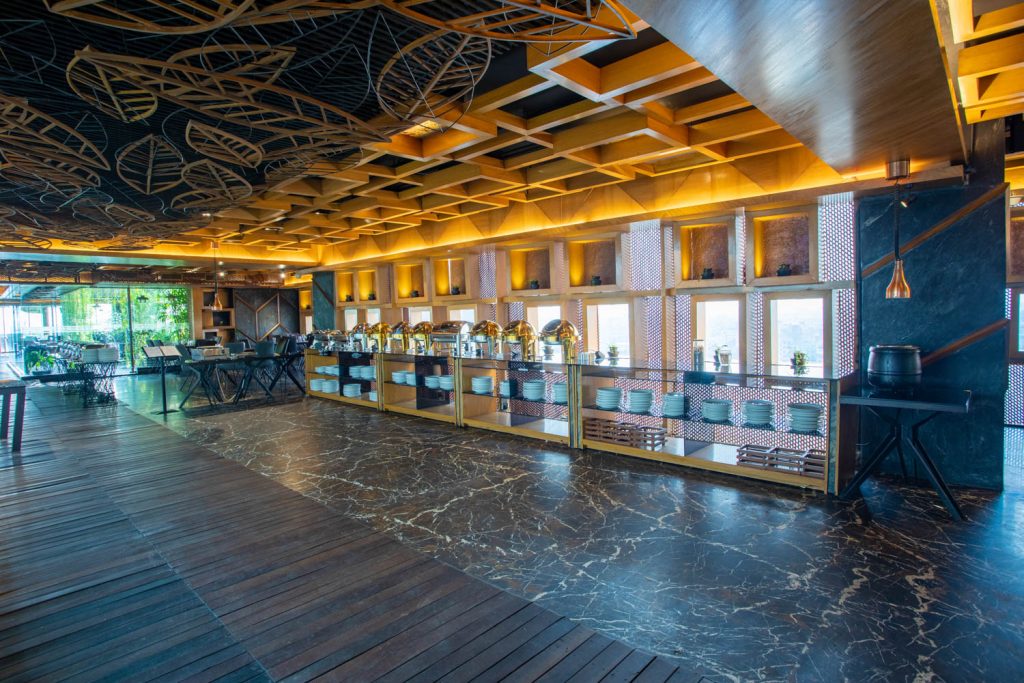
The Green Lounge offers a multi-cuisine buffet that moves fluidly through barbecue, seafood, Indian and Continental kebabs, and richly layered curries. Unlike typical food halls, this space feels curated with each station framed by greenery and gentle light, transforming dining into a walk-through of flavours.
The CEO of The Green Lounge, Sukanta Saikat, has been deeply involved in the project for many years, guiding its vision with dedication. Even the staff contribute to this sense of spatial harmony. Dressed in green, the waiters blend effortlessly into their surroundings. Their movements are quiet, attentive, and respectful, less like service providers and more like caretakers of a shared garden. Along with a dedicated stage, the venue hosts cultural programs, live music, corporate gatherings, and family celebrations.
For owner Ebadul Bin Hoque, The Green Lounge is not a completed dream, but a chapter in a larger narrative of redefining dining culture in Bangladesh. It challenges the idea that restaurants are merely places to eat. Here, dining becomes an immersive, restorative experience, one that engages the senses, memory, and emotion equally.
Architecturally, the project demonstrates how design can go beyond aesthetics to nurture mental and emotional well-being. In a city struggling with unplanned urbanisation, pollution, and shrinking green spaces, The Green Lounge stands as a small yet powerful act of resistance. It proves that even within a dense urban fabric, pockets of nature can be cultivated through thoughtful interventions such as rooftop gardens, vertical greenery, the use of local materials, and considered spatial planning.
Ultimately, The Green Lounge is a place where architecture, nature, and food coexist like good neighbours. Visitors do not come here merely to eat; they come to breathe, to see Dhaka from a different perspective, and to reconnect with a version of themselves that is less hurried, more attentive, and fully present. It is far more than a restaurant in the sky; it is a pause, a green breath, a reminder that even in the densest concrete jungles, gardens can still thrive.