Sanjib Das Apu
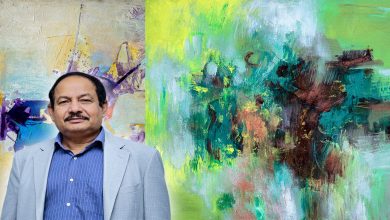
There is a quiet threshold where pigment stops merely describing the world and begins listening to its hidden pulse. Across three decades of practice, Sanjib Das Apu has inhabited that empathetic space, treating every canvas as a site of dialogue between inner memory and collective human endurance. Working from Dhaka as a visual artist, writer, and cultural organizer, his work chronicles resilience across deltaic naturalism, pure abstraction, music inspired reflection, and lived metropolitan reality.
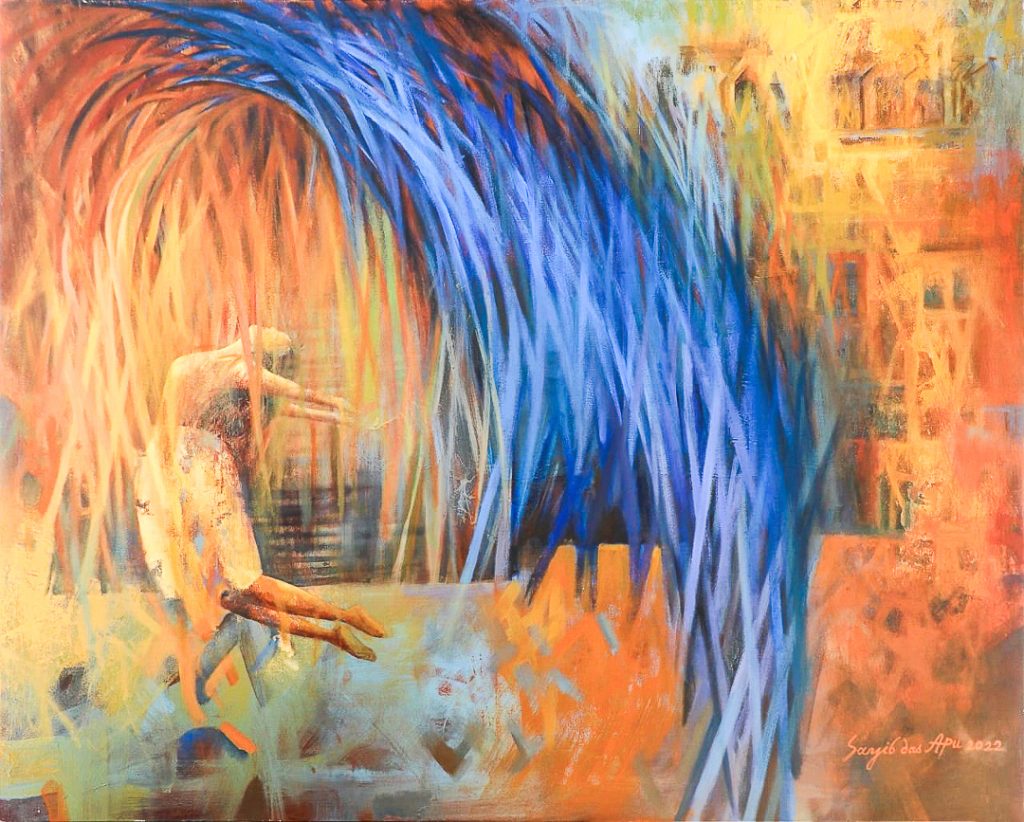
His earliest visual instincts were shaped by the fertile landscape of Madaripur in Greater Faridpur, where he was born in 1965 and spent his childhood and adolescence. Growing up along the banks of the Arial Khan river, surrounded by fields of jute, open blue skies, abundant wetlands, and gliding boats, he developed an intuitive reverence for light and organic balance among agricultural communities. This curiosity led him to pursue formal training at the Faculty of Fine Art, University of Dhaka, earning both his Bachelor of Fine Arts and Master of Fine Arts degrees. That rigorous foundation equipped him with technical precision while leaving his poetic intuition free to evolve.
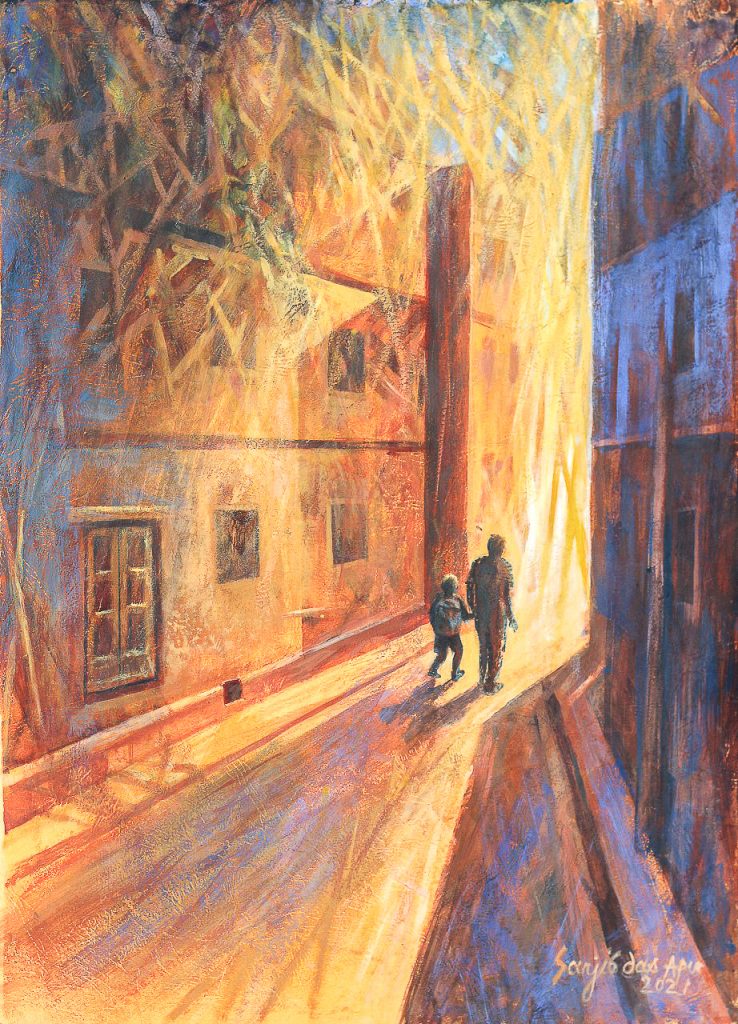
The foundational layer of his creative identity rests in a devotion to the natural world. In his early explorations, he turned toward tranquil riverine light, expansive crop horizons, and native birdlife, cultivating an observant eye for organic harmony. This enduring bond with nature never truly left his canvas, resurfacing even in his mature works where avian motifs and subtle ecological awareness appear with quiet grace. Through those formative years, he mastered spatial composition, learning how light interacts with surface texture to evoke lasting memory.
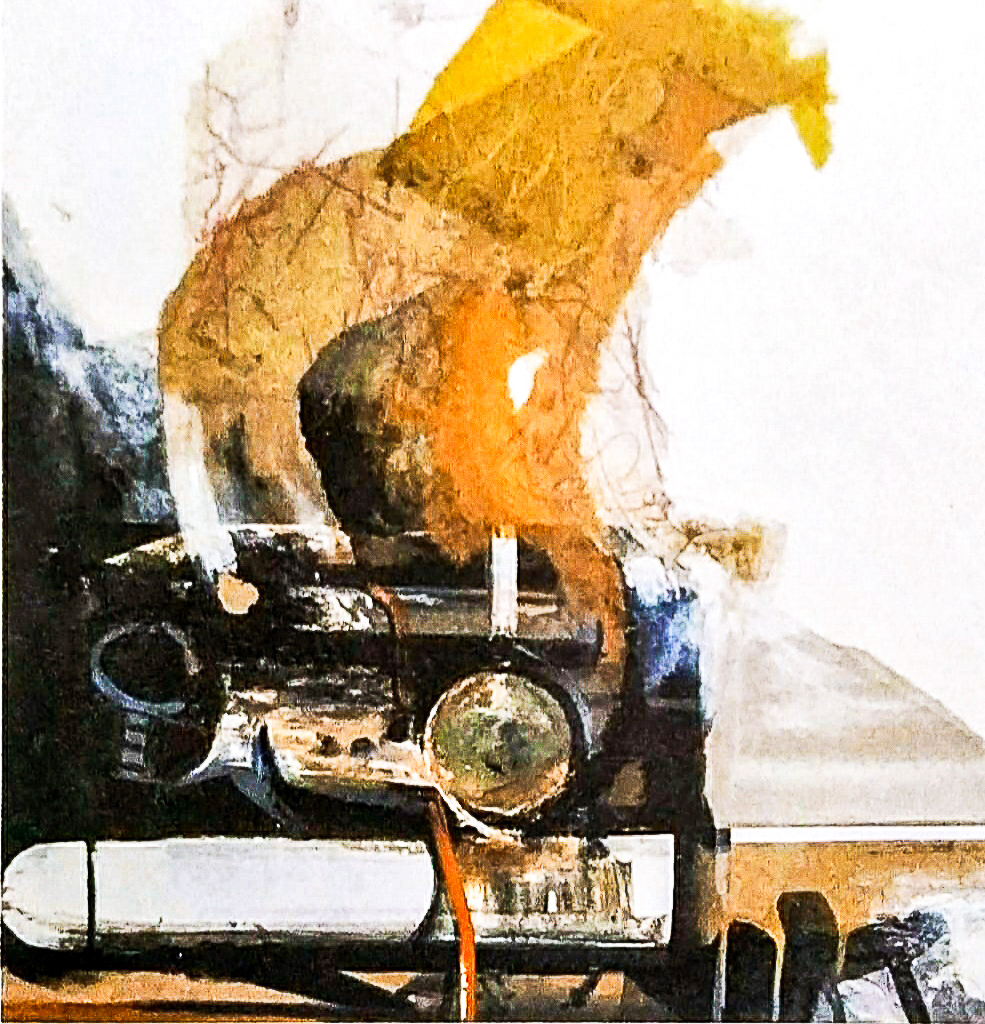
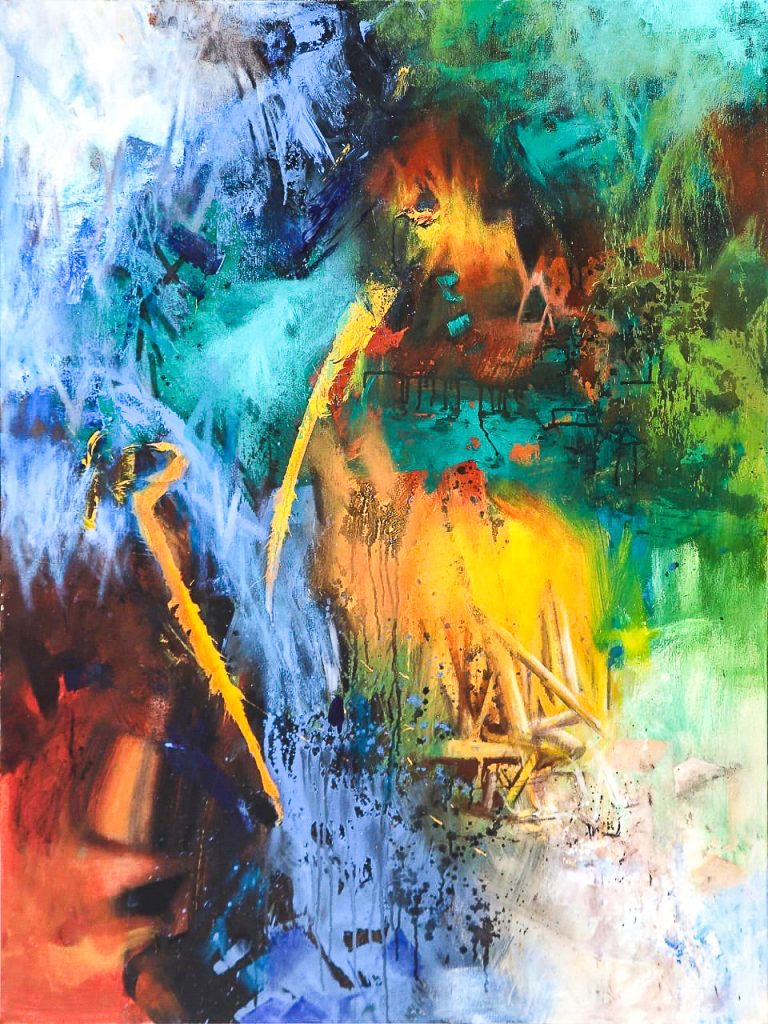
As his visual inquiry deepened, the artist entered a prolonged period dedicated to pure abstraction. For many years, he stepped away from recognizable forms to investigate color, movement, and layered pigment as autonomous emotional forces. During this phase, his canvases became arenas of chromatic energy, where sweeping brushstrokes and rich acrylic textures carried the weight of psychological reflection.
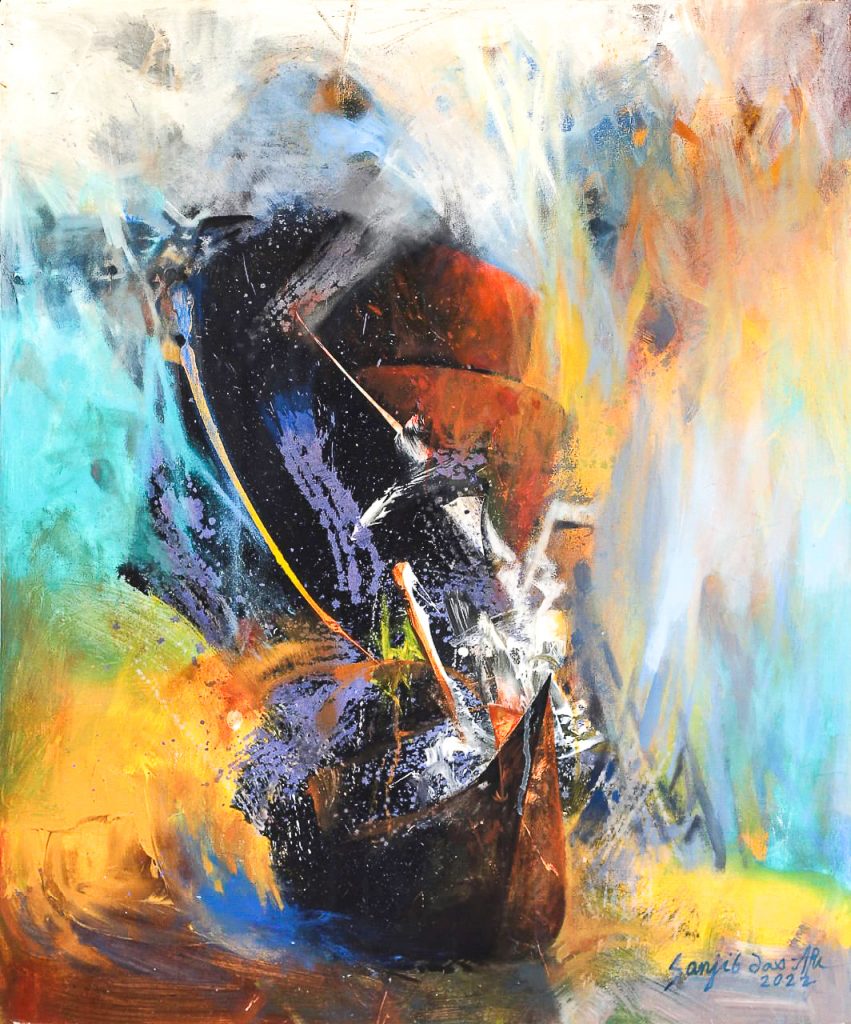
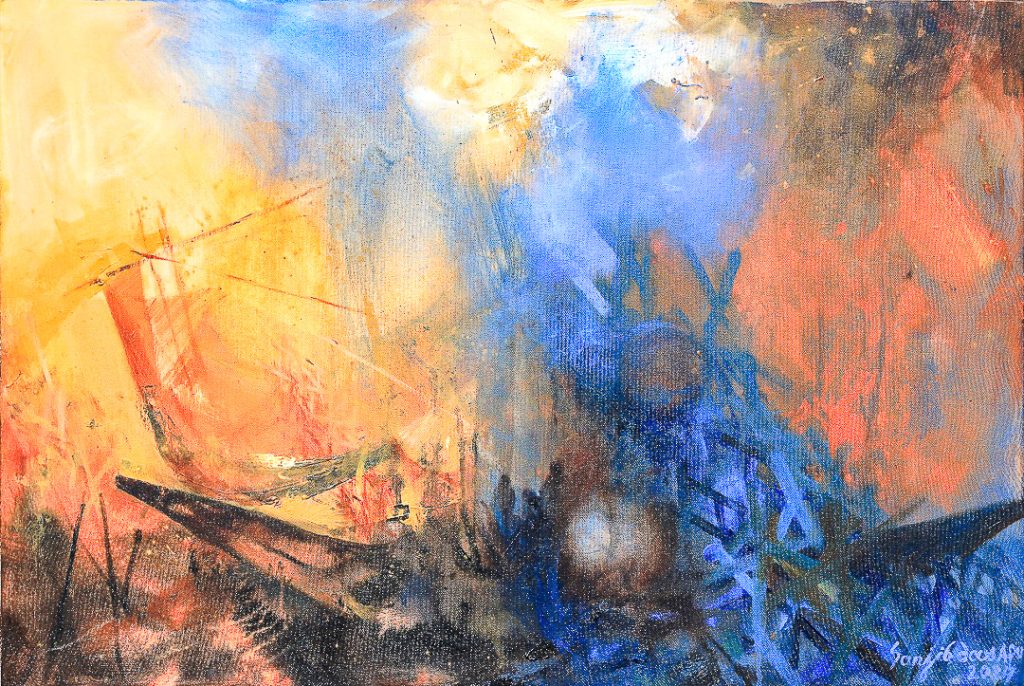
However, the sudden upheaval of the global pandemic in 2020 triggered a decisive turning point. Witnessing the quiet suffering of ordinary citizens navigating economic fragility, he felt compelled to merge his abstract sensibility with tangible human stories. Rather than remaining within non figurative form, he turned his gaze toward the daily perseverance of working people, capturing their silent dignity. Reflecting on this evolution toward socially grounded storytelling, the artist observes:
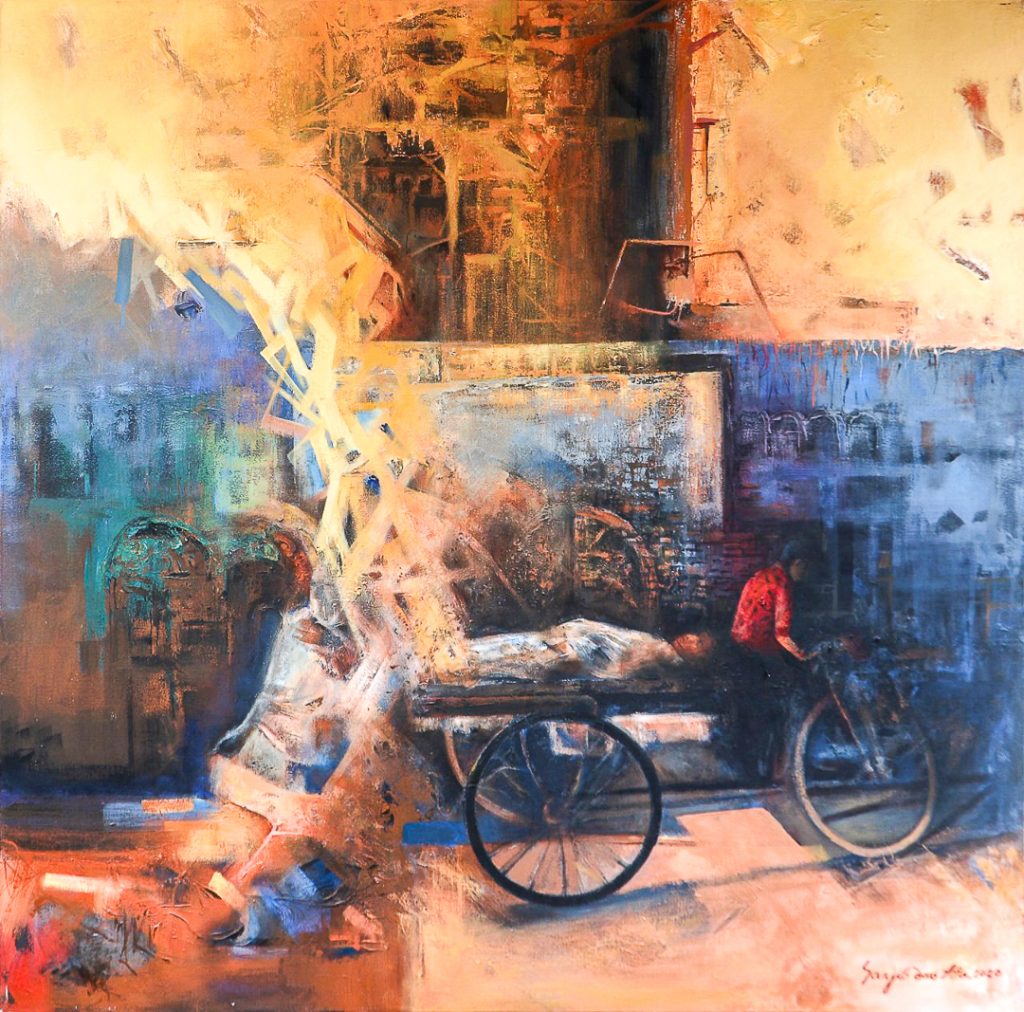
It is the underprivileged who suffered the most during the pandemic, struggling with unstable incomes. Wanting to highlight the daily challenges of the middle and working class, I chose to bring their stories to life through my artwork, to paint them on my canvas.
In this mature synthesis of semi realism and abstraction, familiar urban figures become emblems of endurance and solitude. Straining rickshaws, galloping horses, and tired van pullers move across his canvases, carrying the weight of metropolitan survival. Even while drawing from real life, the artist refuses strict photographic precision, keeping his brushwork fluid so viewers can form their own connections. Explaining this intentional ambiguity,
He notes:
“It is difficult to convey the true essence of the messages I want to convey through my paintings with an exclusively realistic style. I feel like telling the audience the entire message directly takes away from the experience. I want to give my viewers space to come up with their own interpretations as well.”
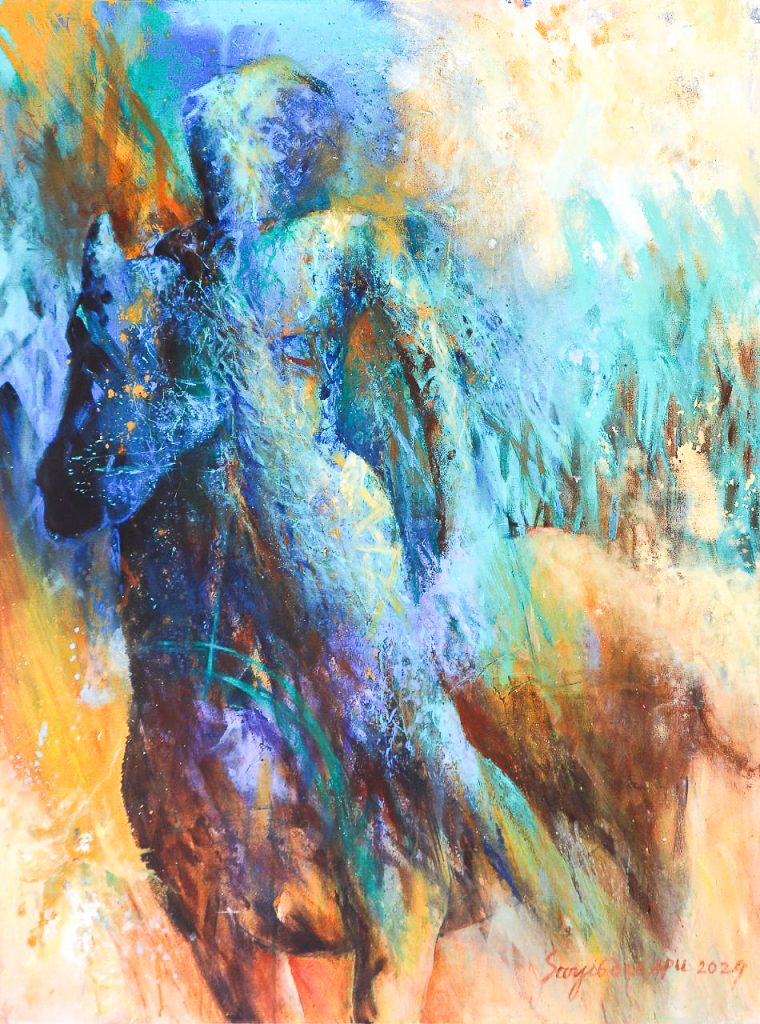
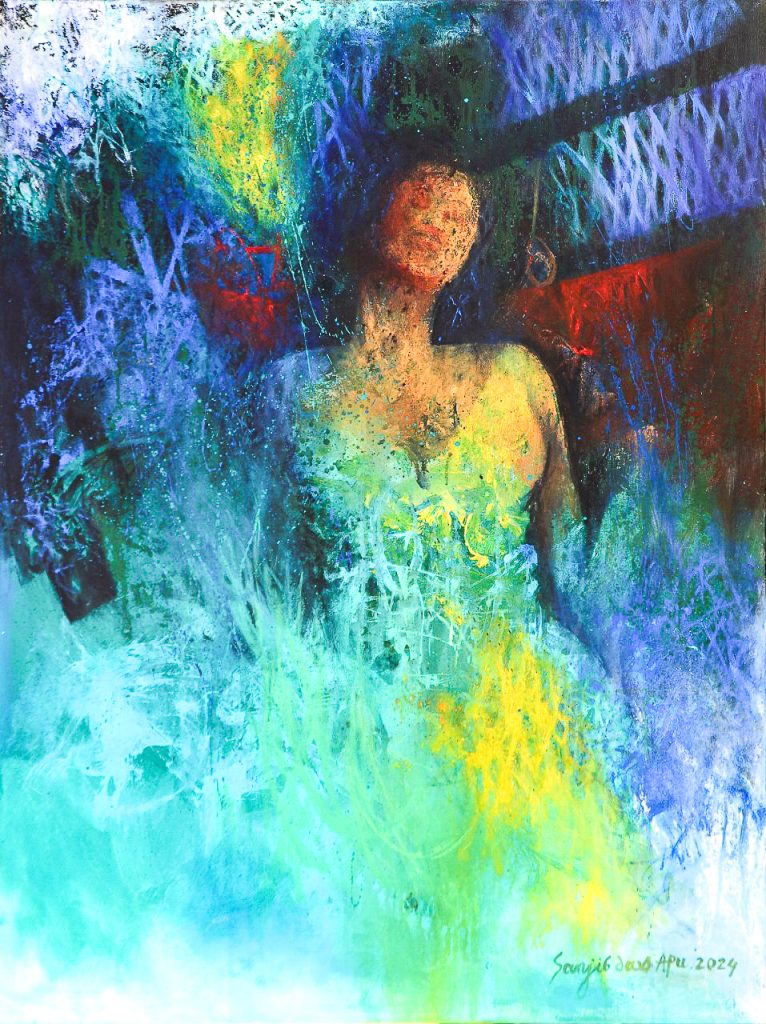
Alongside his chronicles of urban survival, an intimate sanctuary emerges through his music series. Seeking relief from civic pain, metropolitan boredom, and the exhausting noise of daily life, the artist sinks inward, immersing himself in melody and rhythm. In these works, sound translates into fluid visual cadence, where brushwork moves like musical phrasing across the surface. Here, painting ceases to be an outward observation of society and becomes an internal refuge, a meditative space where music heals the fatigue of modern existence.
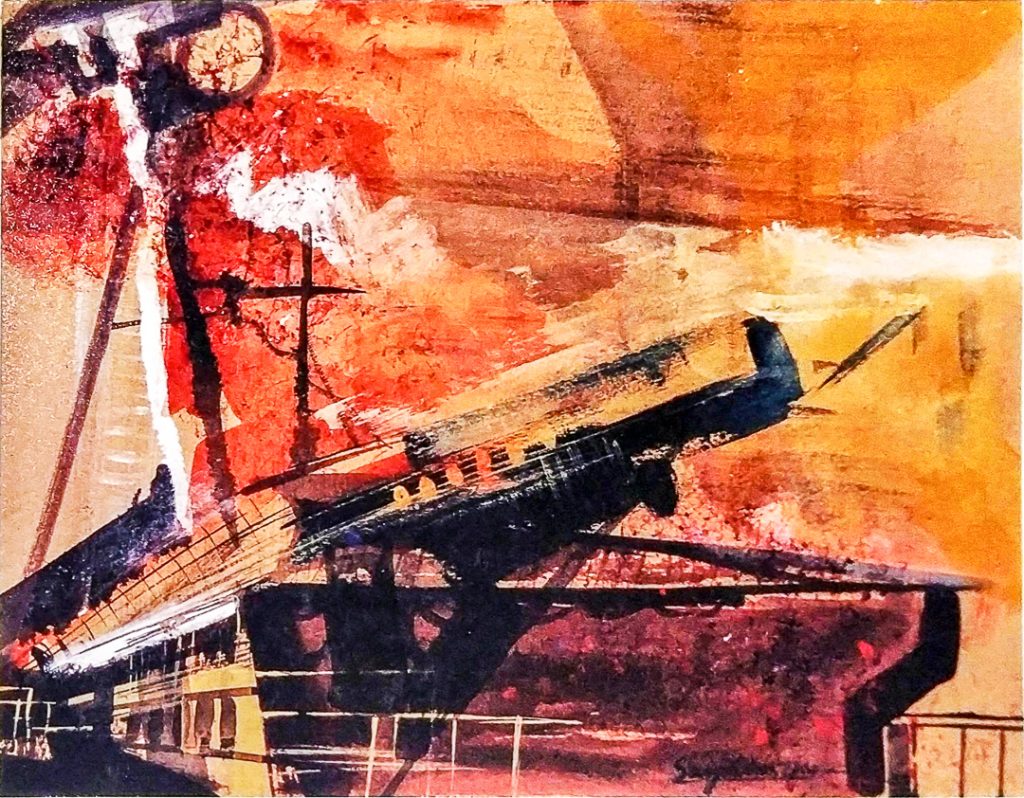
Color operates as a unifying emotional thread across every phase of his career. While hardship and solitude are often depicted through muted grays, he floods his surfaces with luminous blues, deep crimsons, emerald greens, and warm golds. His signature shades of blue hold the quiet ache of reflection, proving that vibrant color can articulate sorrow just as powerfully as monochrome tones.
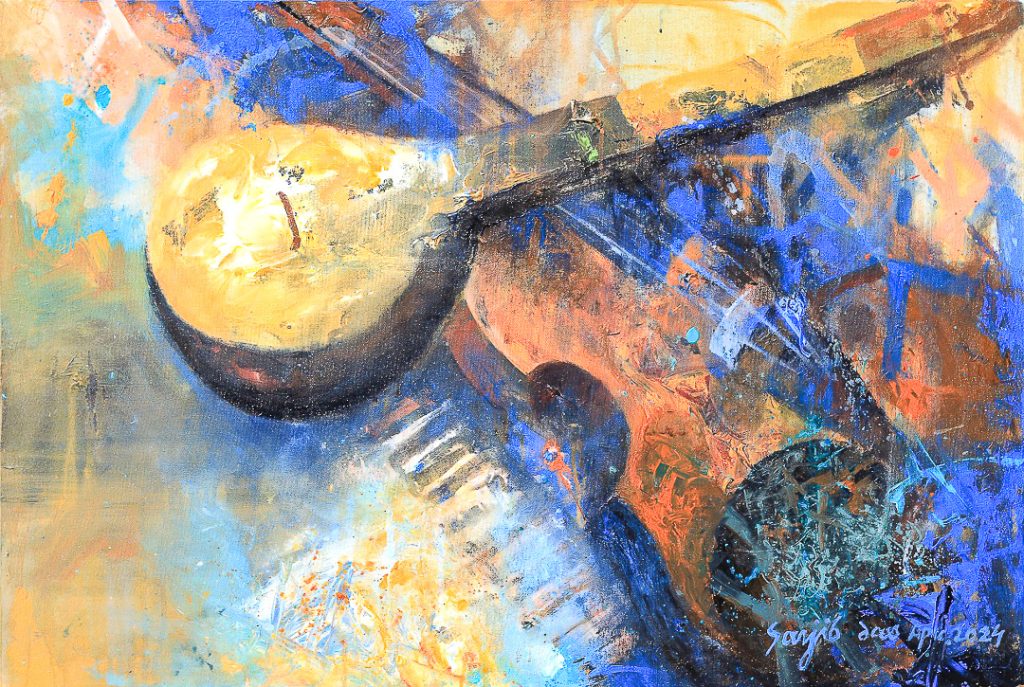
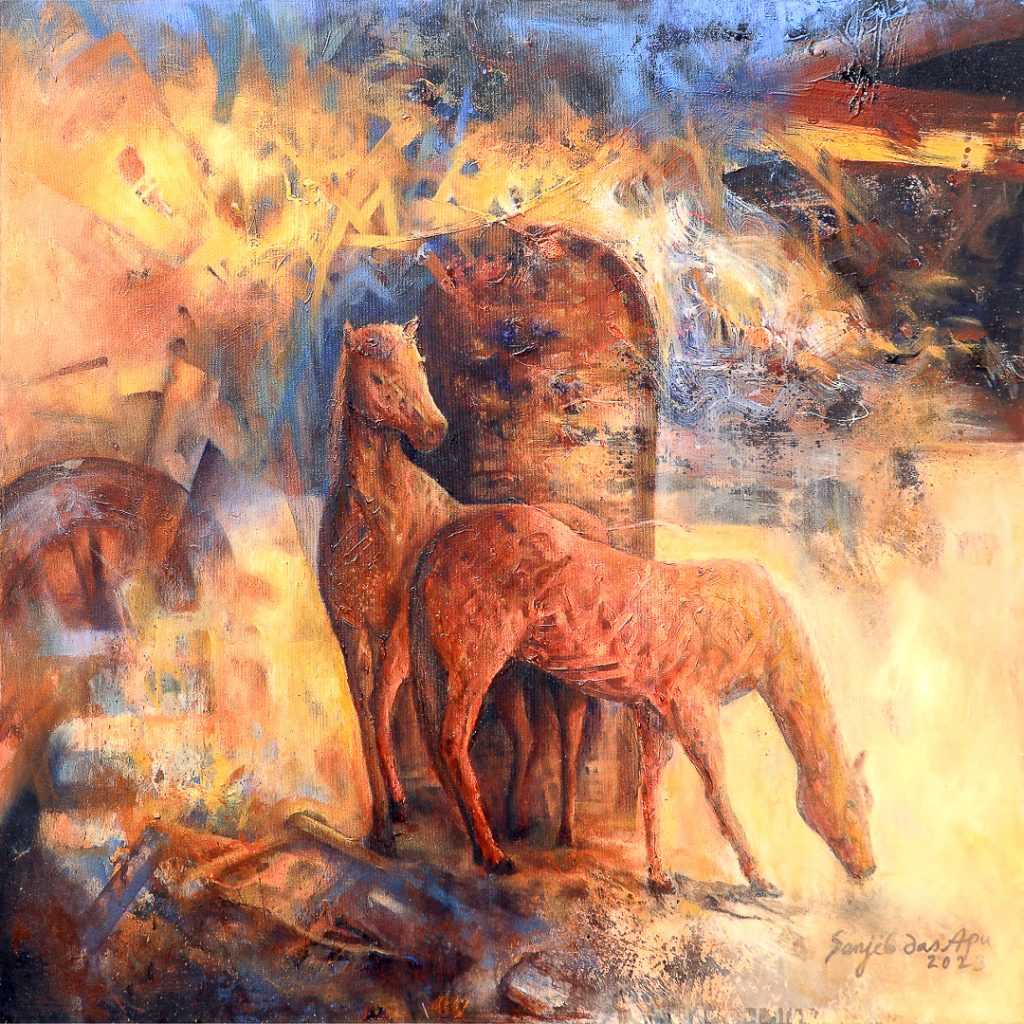
Sharing his thoughts on this philosophy, he explains:
I feel like vibrant colours succeed at conveying sombre moods as much as black and white paintings do. For example, blue, a colour I adore and a prominent colour in my paintings, is the colour of sadness.” For contemporary architects, spatial designers, and collectors, the full arc of Sanjib Das Apu’s work offers warmth, memory, and human presence.
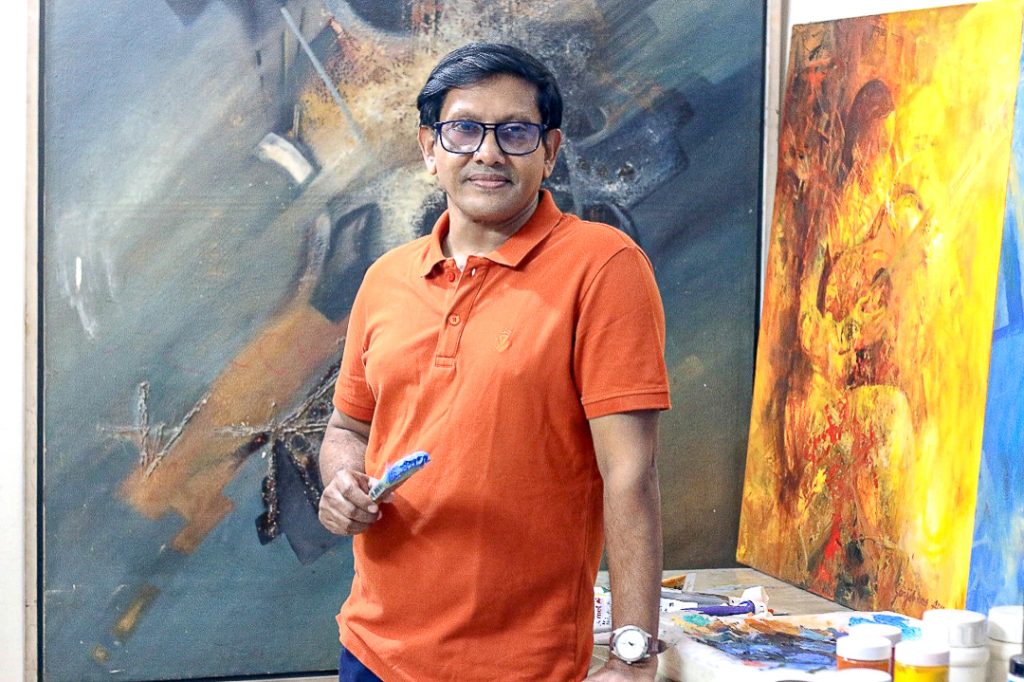
In spaces defined by smooth glass, neutral walls, and minimal surfaces, his textured acrylic paintings introduce soul and narrative depth, transforming fleeting moments of resilience into lasting visual poetry.