True art does not demand space; it creates its own. When encountering the visual world of Avi Shankar Ain, one does not merely look at a canvas; one enters a zone of profound silence. In a contemporary landscape where art often screams for attention through aggressive political commentary or chaotic conceptualism, Ain’s work offers an alternate sanctuary. He is an artist of the invisible, a painter who captures not the tangible objects of nature, but the delicate, trembling atmosphere that exists between them. His canvases function as open windows into the subconscious, where fields of color, unpredictable weather patterns, and shifting light carry the viewer toward a deeply meditative reality.
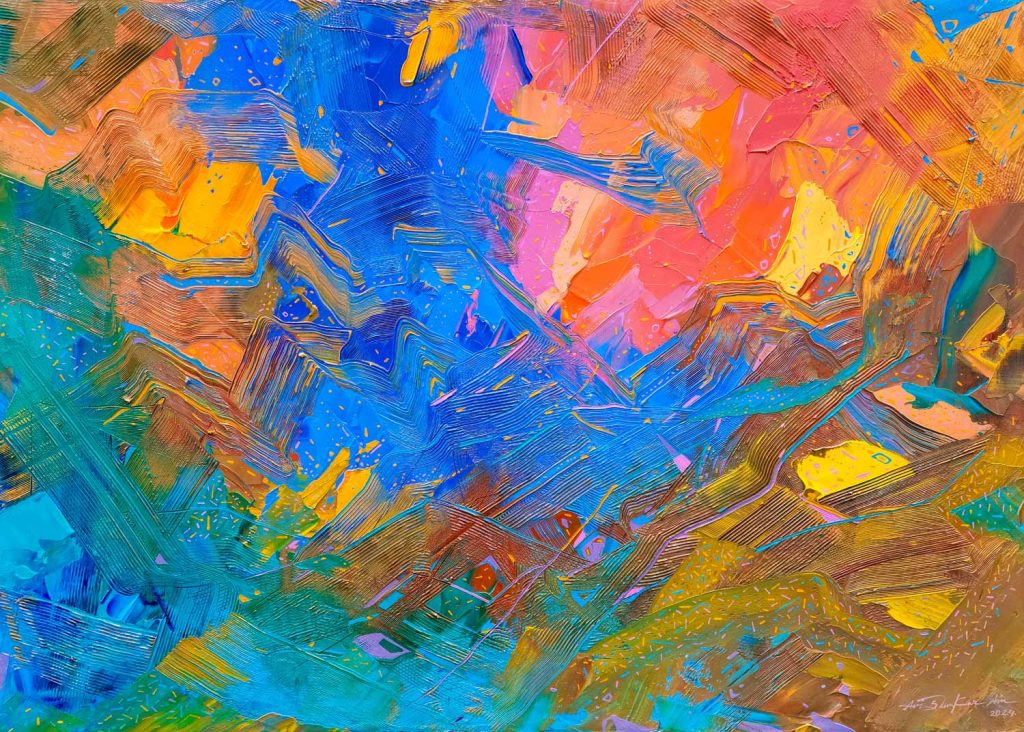
To understand Ain’s unique aesthetic grammar, one must look at the cross-pollination of his artistic environments. Born in 1982, his early training at the Faculty of Fine Arts, University of Dhaka, provided him with a rigorous understanding of form, discipline, and structural draftsmanship. However, it was his time spent under the open skies of Kala Bhavana, Visva-Bharati University in Santiniketan, India, that truly unlocked his spiritual relationship with the environment. Santiniketan dismantled the rigid borders of his canvas, teaching him to view nature not as an external subject to copy, but as an extension of his own internal psyche. Reflecting on this internal transformation, the artist once beautifully noted:
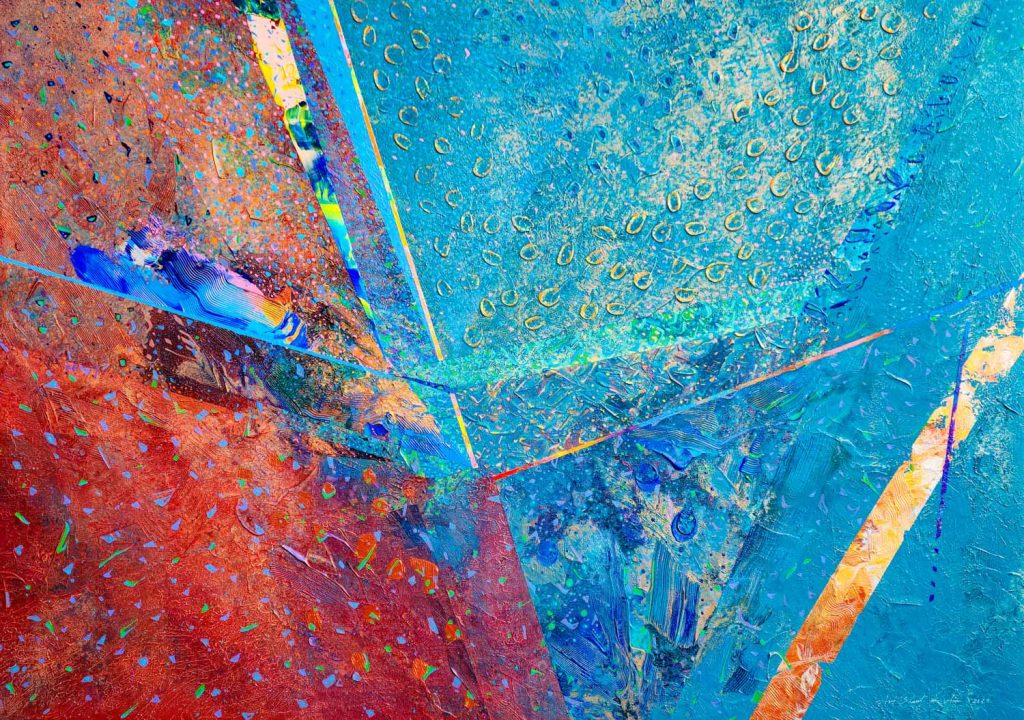
In Dhaka, I learned how to hold the brush with confidence; in Santiniketan, I learned when to let the brush guide itself. Nature is not an object sitting outside of us. It is a mirror. When I paint the morning mist, I am actually painting the stillness of my own mind before the world wakes up.
This intersection of academic mastery and fluid mysticism allowed Ain to develop an entirely personal language of abstraction. He became a master of the liminal hours. Those soft, poetic transitions of the day that evade precise definition. His continuous exploration of dawn, dusk, and midnight reveals a fascination with the temporary nature of existence. In his paintings, landscapes are never static; they are in a constant state of becoming. Horizons dissolve into soft washes of ink and acrylic; forests lose their sharp contours to become brooding monoliths of shadow, and oceans melt into twilight skies. Through his brush, time ceases to be a mechanical measurement and becomes a felt texture. As Ain explains regarding his philosophical relationship with time:
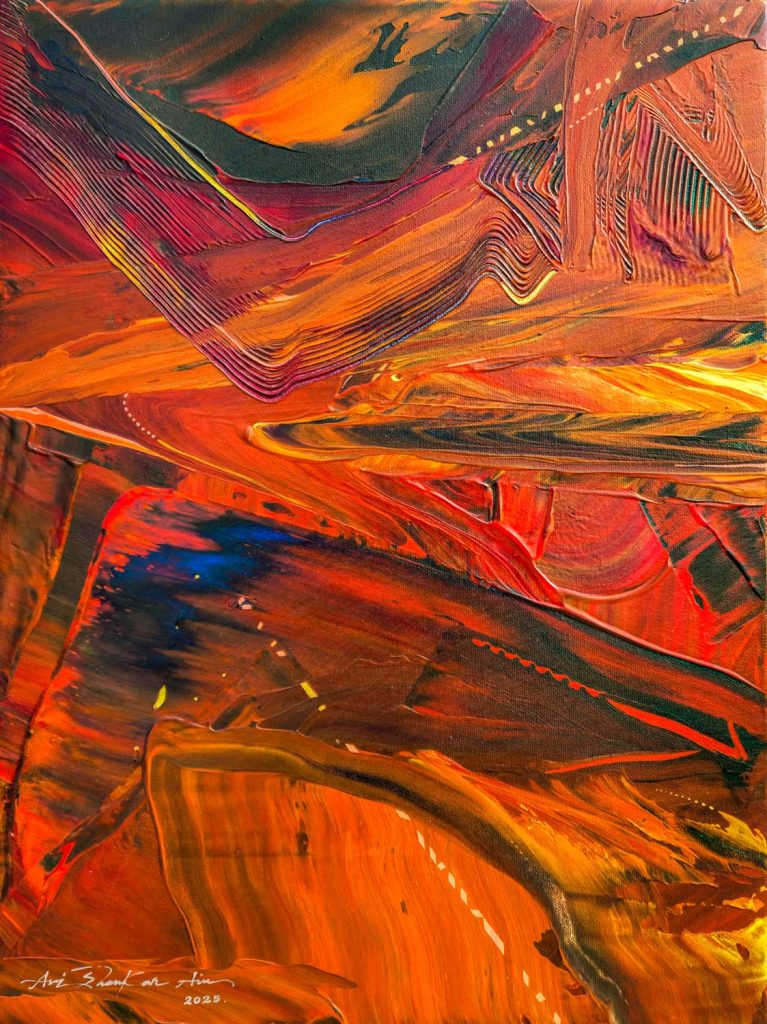
A clock can tell you the hour, but it cannot tell you the weight of a shadow as afternoon turns into evening. That is what I chase. I want to freeze that exact micro-second when light surrenders to darkness, because in that transition lies the ultimate truth of our fragile life.
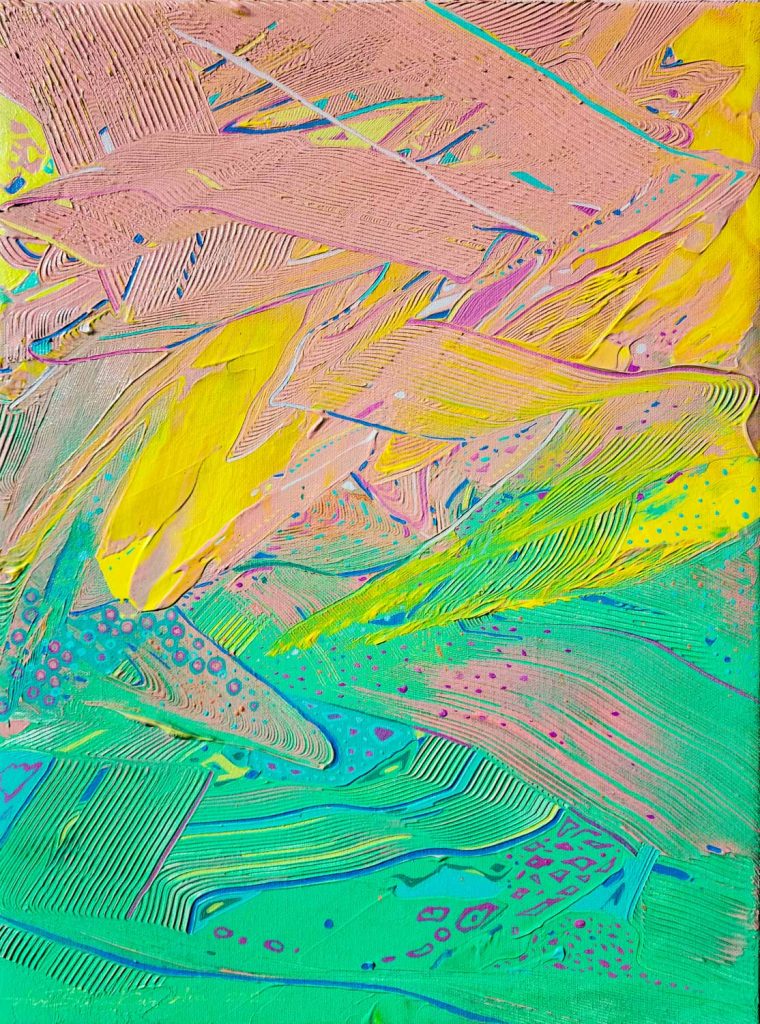
Water behaves as the ultimate spiritual catalyst across his wider portfolio. In his large-scale paintings depicting stormy seas and oceanic tempests, Ain abandons all sense of pastoral tranquility to embrace a wild, abstract expressionism. Yet, even when his brushstrokes are chaotic, frantic, and charged with elemental energy, the underlying emotion of the canvas remains completely serene. There is no violence in his storms; instead, there is a sublime cosmic order. Sky and water collide not in anger, but in an eternal dance of renewal. The viewer is not left terrified by the tempest, but completely mesmerized by its majestic scale.
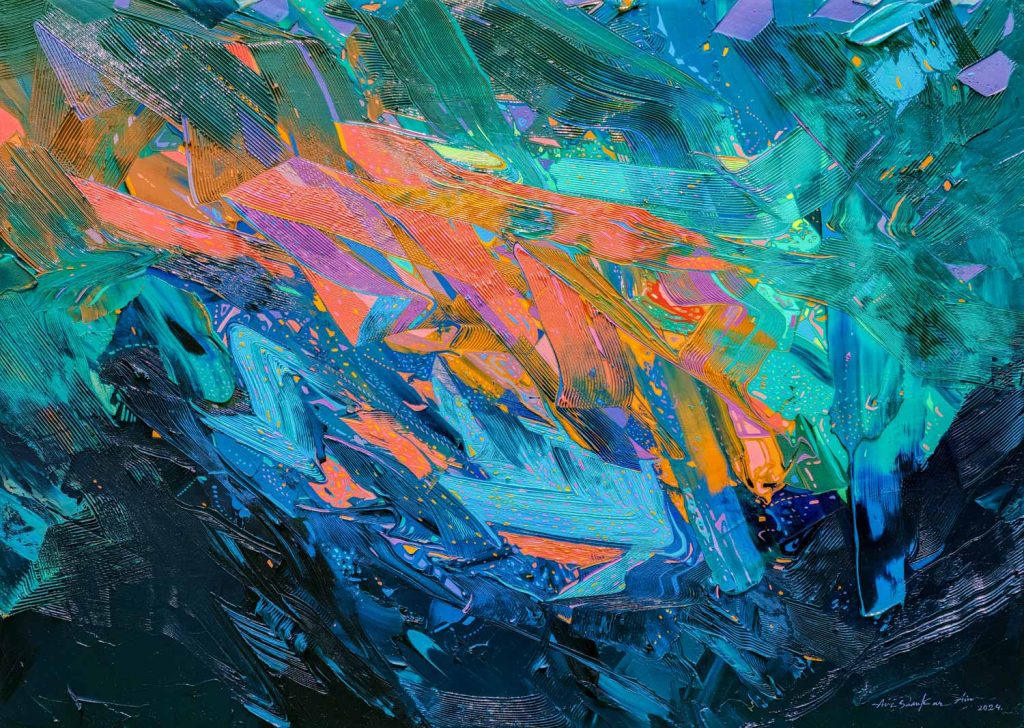
Reflecting on his sensory relationship with the physical medium, Ain once shared: “The canvas is not a flat sheet of cloth; it is a porous skin that absorbs the weather. When I layer oil and acrylic medium together, I am trying to create a physical landscape on the linen itself. I want the viewer to feel that the paint is still moving, still wet, and still breathing long after my brush has left the studio.”
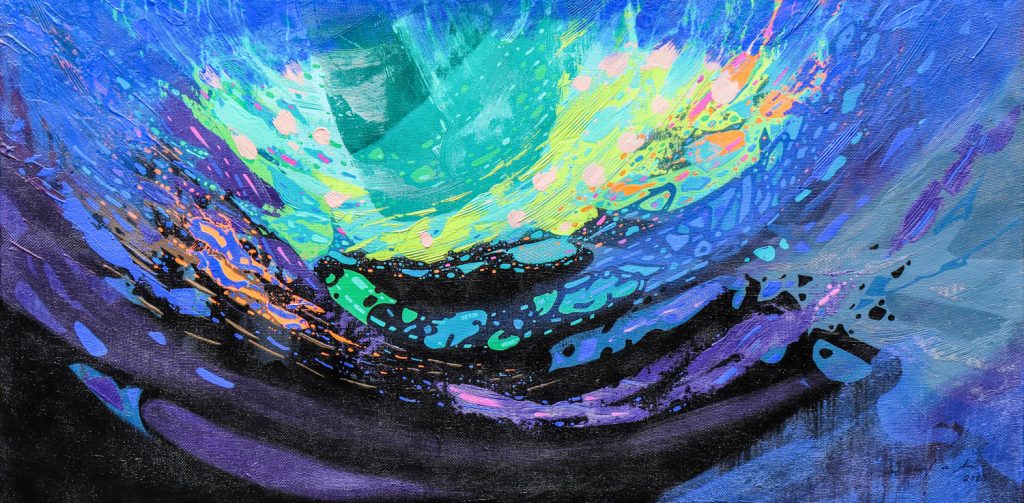
The paint itself mirrors this duality, moving effortlessly from heavy, textured layers that convey the crushing weight of a wave to thin, translucent glazes that allow the underlying canvas to breathe like starlight on a dark sea.
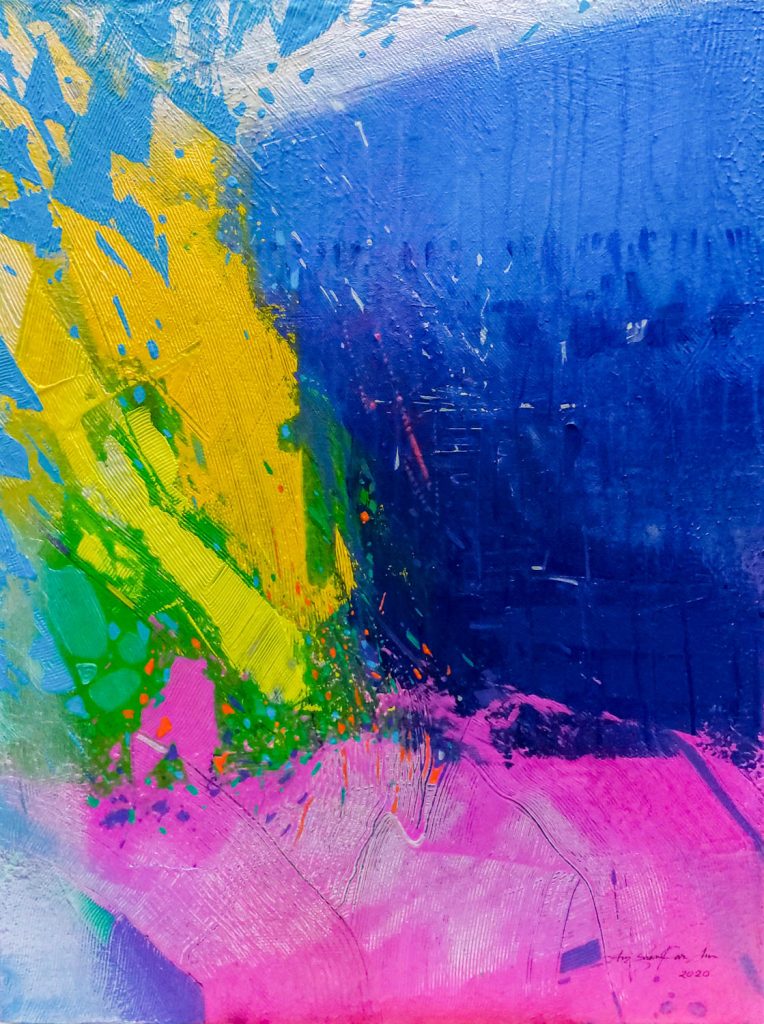
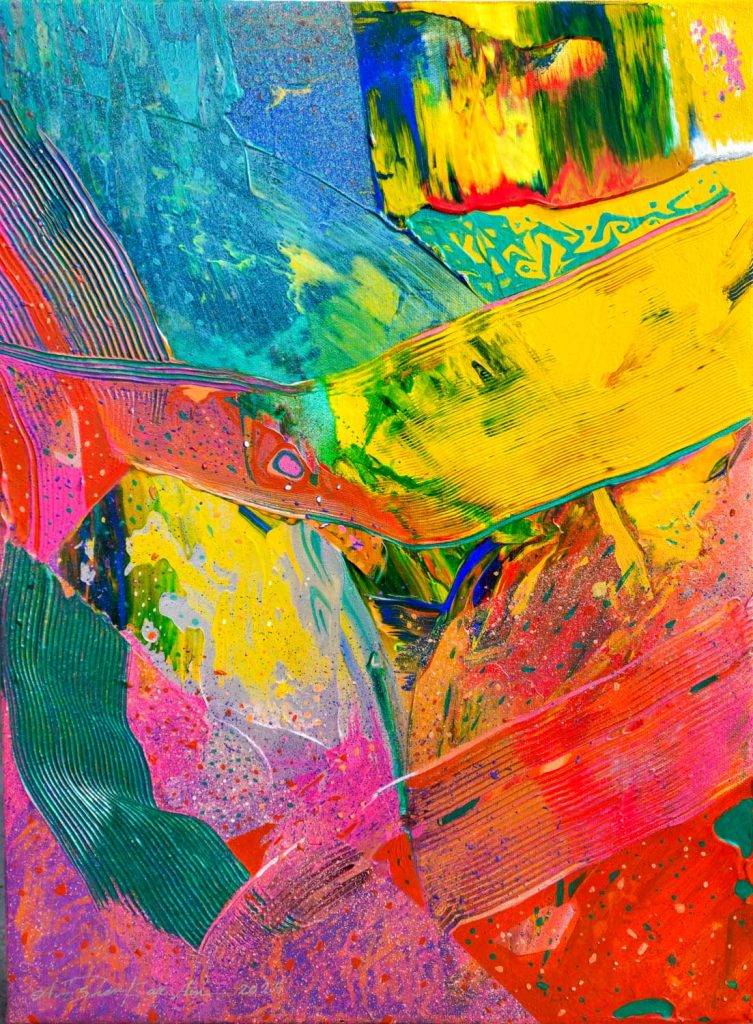
For modern architects and interior designers, Ain’s tactile, layered canvases celebrate the human hand in an era of clinical digital minimalism. His art suggests that built environments should not just look functional, but feel emotional, transforming ordinary structural walls into expansive horizons of the mind.
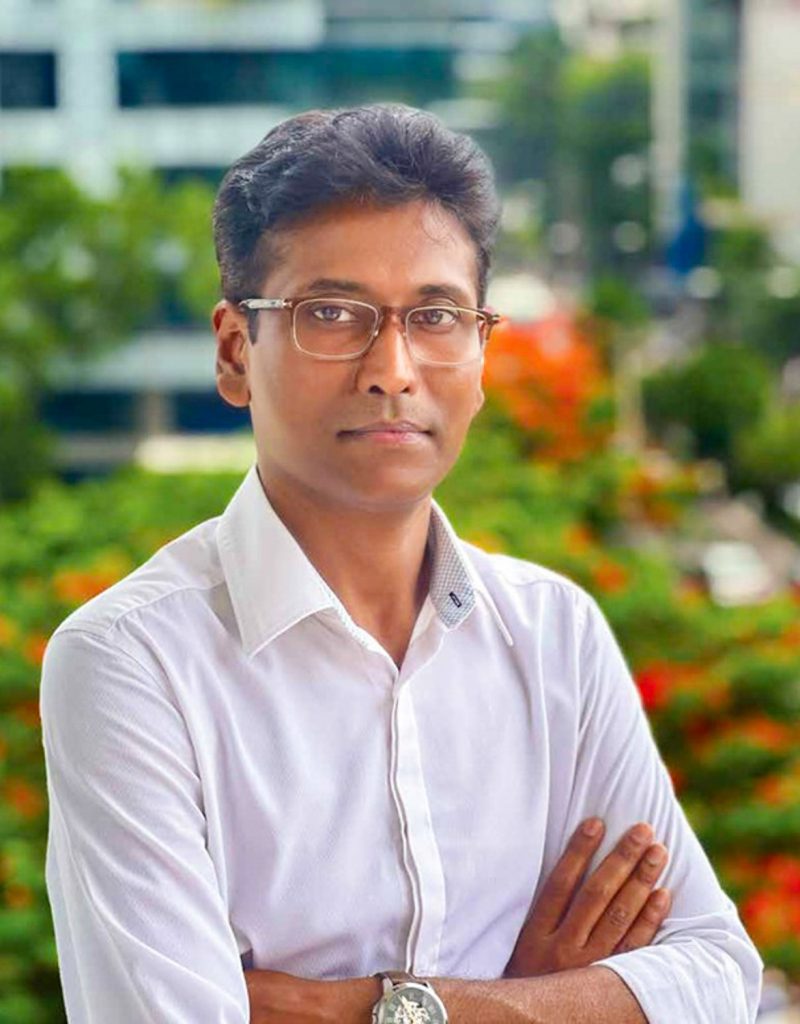
Ultimately, Avi Shankar Ain remains a seeker of the quiet spaces within the human soul. He weaponizes silence against the noise of modern life. His paintings do not tell a linear story, nor do they demand a specific intellectual interpretation. Instead, they demand presence. They invite the viewer to slow down, to breathe with the mist, to drift with the tidal current, and to listen to the whispers of an earth that is constantly changing form. Through his vision, the landscape is no longer a distant view; it becomes a home for our deepest meditations.