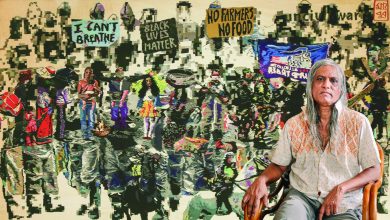
The printed matrix exists as a quiet, sacred boundary where human memory directly confronts the deep, unyielding layers of time. Within the contemporary graphic art space, nature is far too often reduced to a romanticized escape or a sterile, decorative abstraction. However, the artist treats the lithographic surface as a delicate site of ecological reckoning and cosmic observation. Artist Kamruzzaman stands as a visual chronicler of a changing planet, constructing immersive environments where the lines between industrial debris, forced animal migration, and fading starlight are completely blurred.

Through a masterful manipulation of dry point lines and translucent lithographic washes, Kamruzzaman builds a visual landscape that functions as a silent, poetic testament to the vulnerability of our shared world.
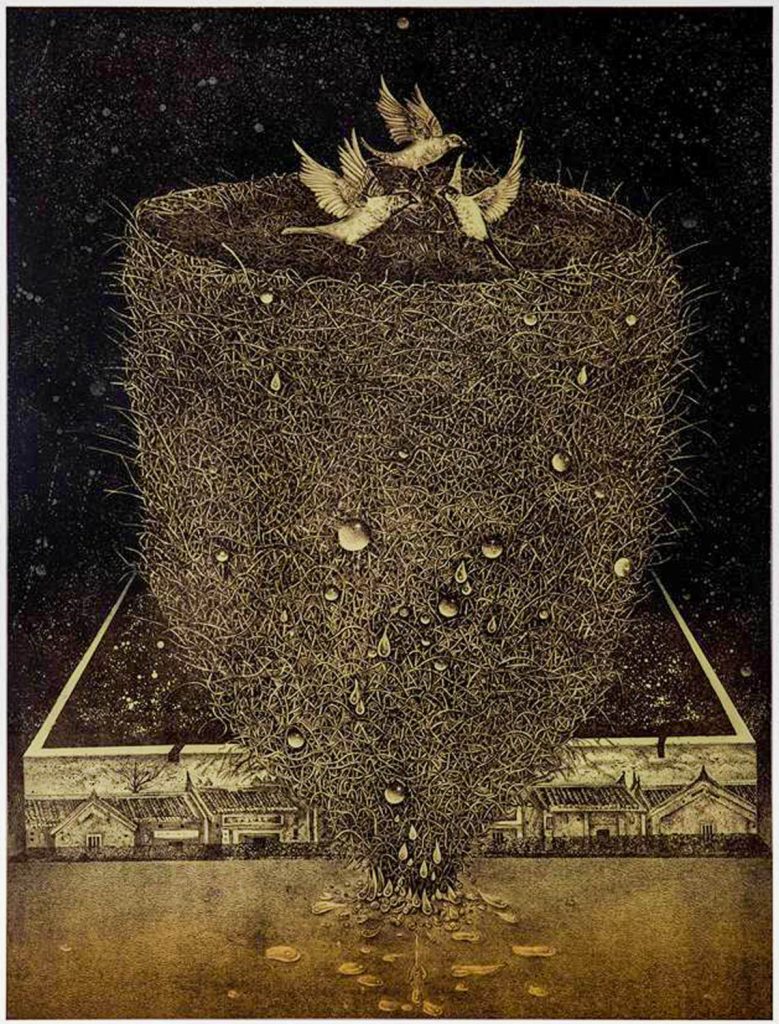
His prints do not merely sit within the frame; they push outward, reshaping how we perceive our place within the fragile architecture of the modern biosphere.
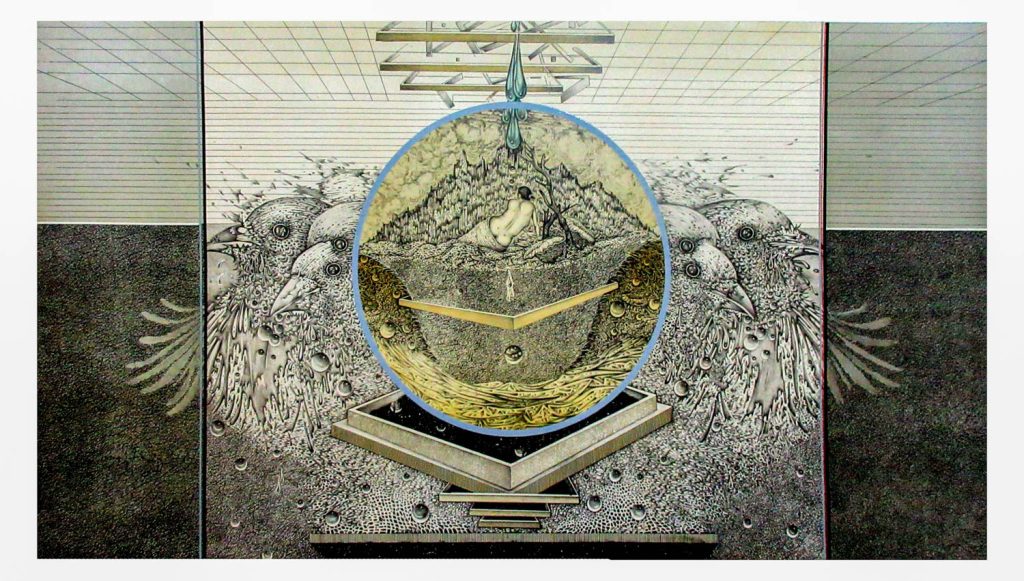
To map this deep visual philosophy, one must understand the silent technical rigor behind the artist’s academic life. Born in 1977, his conceptual thinking was developed at the Faculty of Fine Arts, University of Dhaka, where he achieved his BFA
and MFA, and currently serves as an assistant professor of printmaking in the Department of the Faculty of Fine Arts. University of Dhaka. This institutional training gave him absolute, seamless control over chemical values and tonal weights. Yet, he systematically abandoned the traditional rules of illustrative printmaking, realizing that the chaotic trauma of global warming required a more complex, metaphorical approach. He understood that to speak of the earth today is to speak of its fractures, its missing pieces, and its quiet resilience. Reflecting on this intense dialogue between physical material and creative imagination, Kamruzzaman observes:
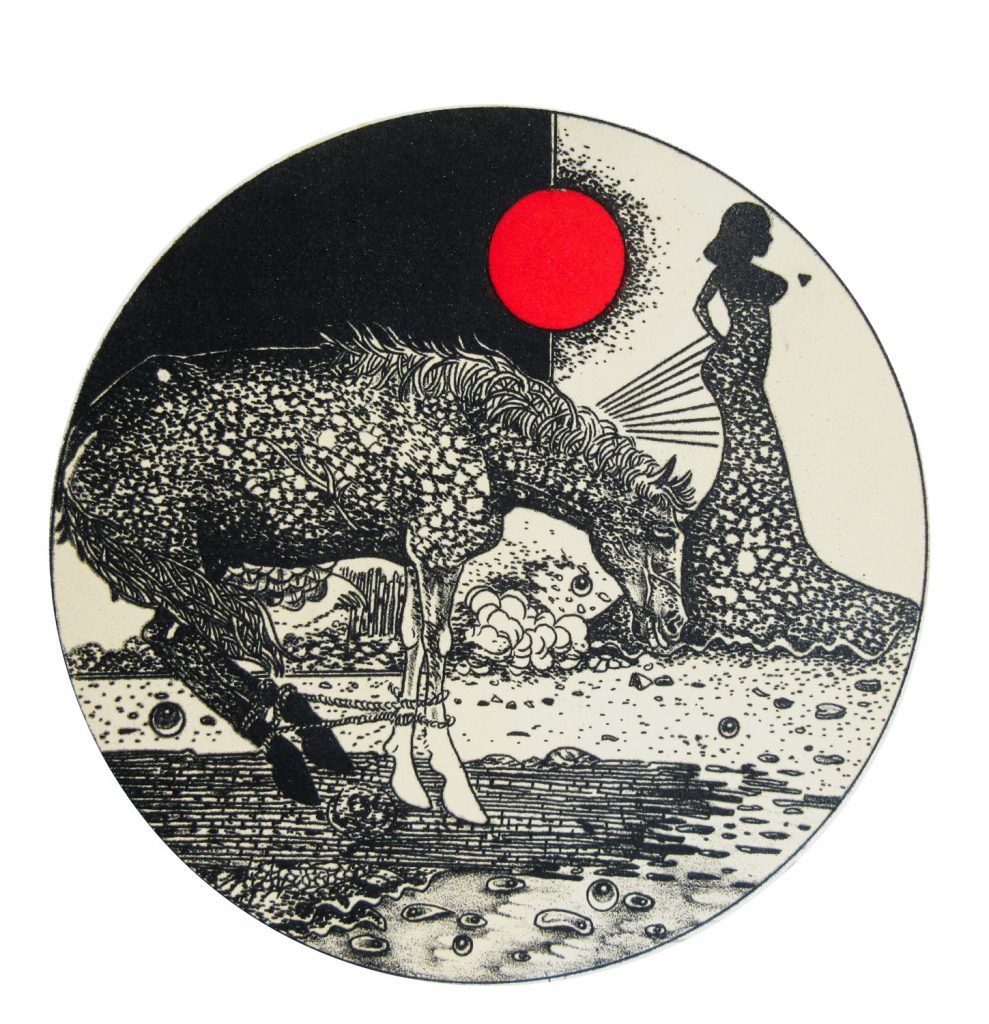
“As I engage in my creative process, I incorporate technical knowledge into my work, pushing the boundaries of both art and science. This fusion transports me to a realm of fantasy, where every technological aspect presents an opportunity for innovation. My work is deeply rooted in themes of nature, reality, unreality, and narrative storytelling. I convey my narratives metaphorically, believing that my creations transcend geographical boundaries and belong to the collective consciousness of the world.”
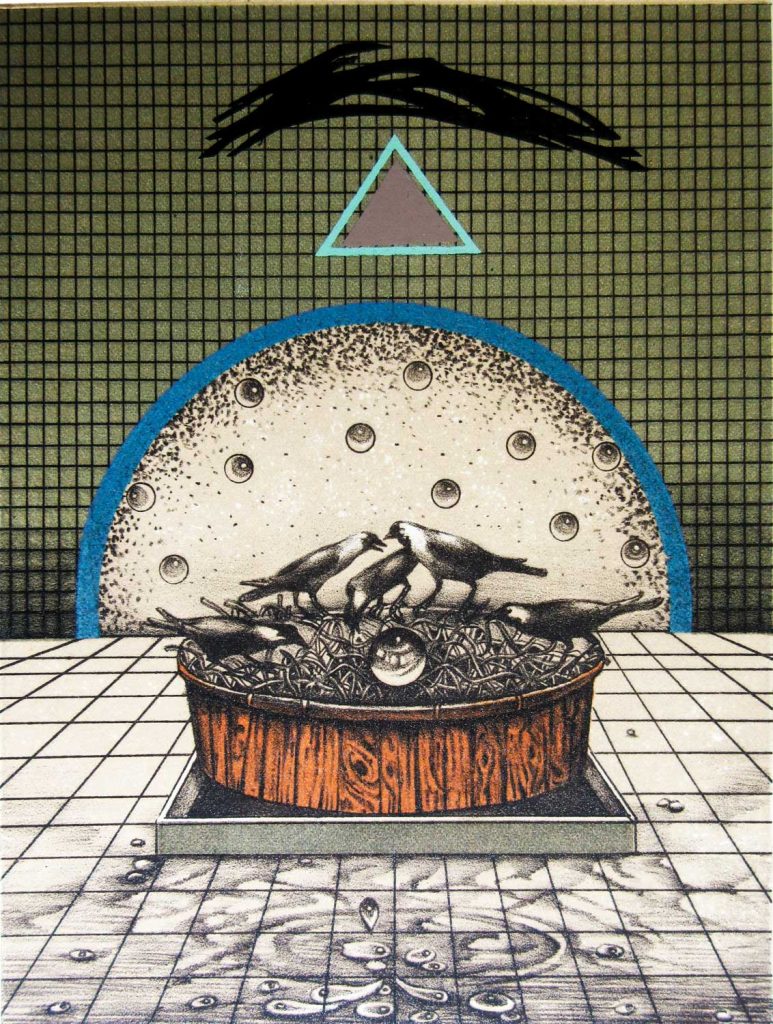
This deep mastery over material allows the artist to break his compositions into independent, geometric fragments. In these prints, the earth is never a peaceful whole; it is a fractured grid that mirrors our damaged ecosystems. Flocks of migrating birds and displaced herds of cattle move across these broken horizons, serving as quiet symbols of innocence caught between urban expansion and planetary collapse. The landscape becomes an allegorical theatre where the familiar structures of our world are quietly unmade and rearranged. By introducing floating celestial spheres and distant planetary forms into his landscapes, the artist lifts the narrative from a local environmental crisis into a universal, existential meditation. The viewer is forced to look beyond the immediate horizons of the city and confront the vast, silent void of the cosmos, recognizing that our earthly struggles are deeply connected to a larger planetary dance.
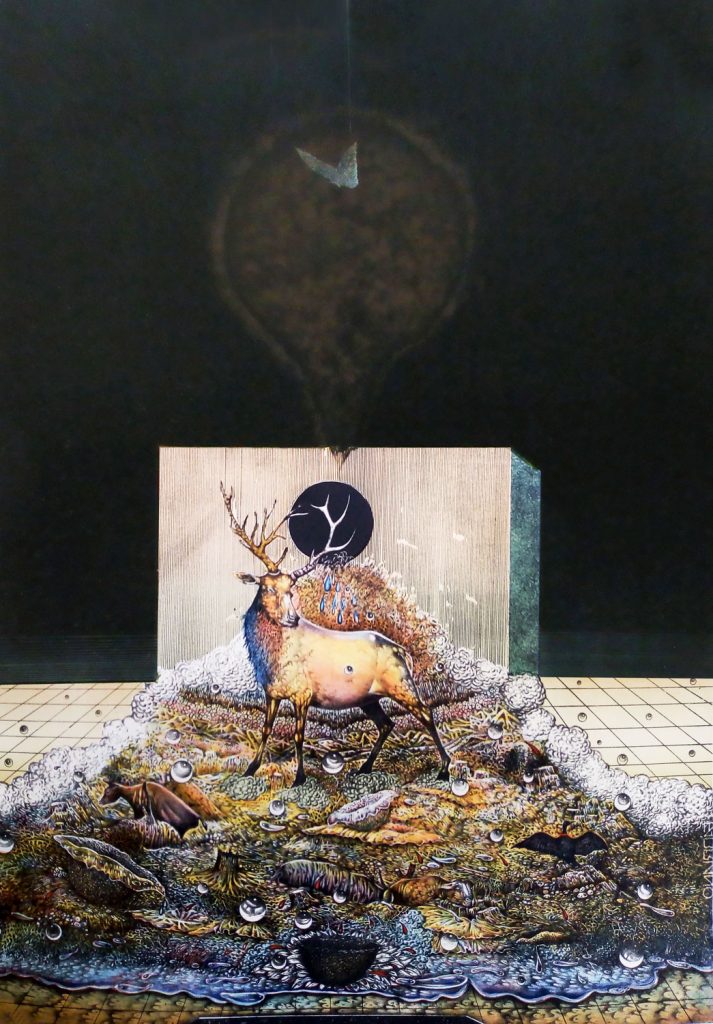
As he notes regarding this generational responsibility: “The urban landscape and the unforgiving nature of the city, along with the widespread challenges of climate change, leave a lasting impression on me. My artistic expression is deeply rooted in the Earth and the interconnected web of life on this planet. I adopt a realistic approach to elucidate my views on the interplay between the environment and society. This pursuit of creation is not solely the artist’s endeavor, but also a social responsibility and mission undertaken by the current generation of young artists.”
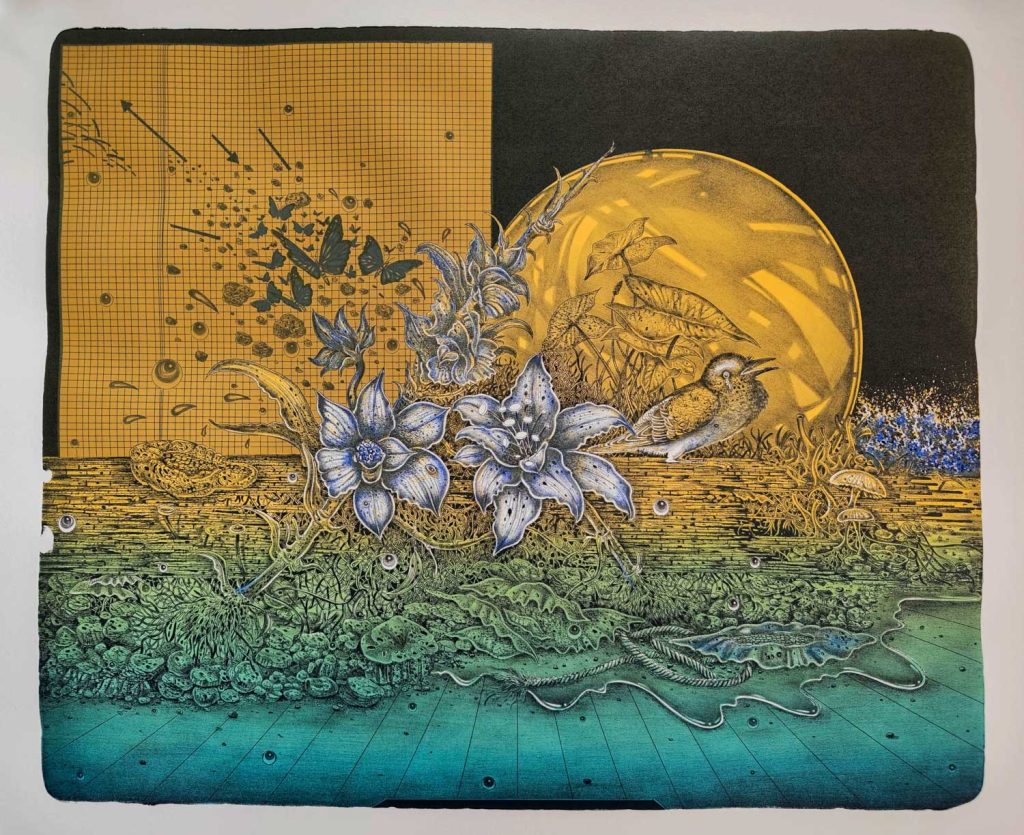
Color and shadow behave as emotional catalysts throughout his major exhibitions, notably celebrated at Galleri Kaya, the Russi Kdrdbiberov Art Gallery in Bulgaria, and the Alliance Française de Dhaka. His landmark solo exhibition, The Metaphorical Representation of the Intricate Nature of Life and Celestial Bodies, revealed an exceptional capacity to transform heavy black ink into an atmospheric experience. The artist builds a highly sophisticated color language dominated by smoky greys, deep charcoal blacks, and rich earth tones, occasionally broken by raw, sharp values that hit the canvas like a sudden gasp of light. This global reputation has been solidified through major international honors, including the Triennial Prize at the 5th Bangkok Print and Drawing Triennial in Thailand, the Special Jury Award from the International Print Biennale ROC in Taiwan, Grand Award Winner, 2019 National Art Exhibition, Bangladesh Shilpakala Academy and the prestigious Honorary Award at the Guanlan International Print Nomination Exhibition in China. Each international milestone emphasizes his rare capacity to communicate universal environmental anxieties through a highly refined, deeply personal aesthetic grammar that speaks across borders.
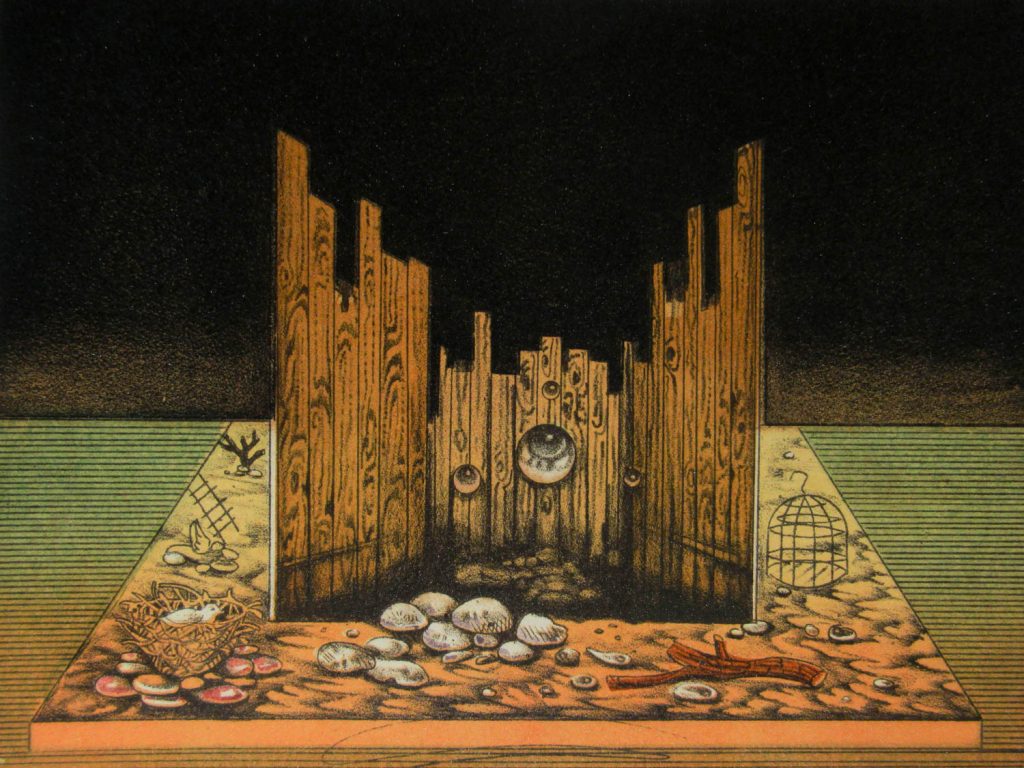
Analyzing the delicate chemical processes behind plate lithography, Artist Kamruzzaman explains his experimental relationship with the medium:
“The lithography process is intricate and challenging, yet it offers a wide range of possibilities, from light shades to deep, rich blacks that are unparalleled in other printing methods. I primarily focus on plate lithography rather than stone lithography, although both methods are essentially the same to me. Plate etching involves the use of phosphoric acid and gum Arabic during the preparation phase. While tannic acid can also be used in the etching solution, the high cost often leads to a preference for phosphoric acid and gum Arabic. Ultimately, our goal is to elevate this medium to a national and international level through continuous progress.”
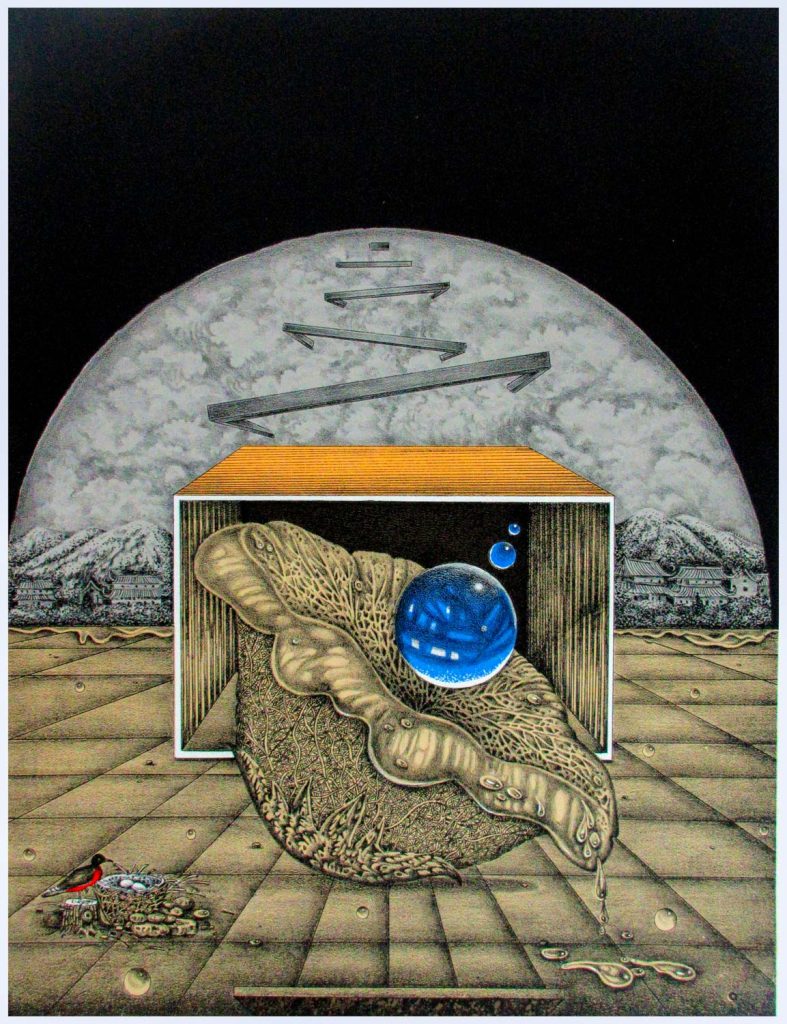
For modern interior designers and spatial thinkers, these prints offer a vital lesson in tactile honesty. In a world saturated with clean digital designs and mass-produced surfaces, his layered prints celebrate the absolute value of the human hand and mechanical pressure. This work suggests that a wall should not simply hold a decorative object, but host a doorway into deeper contemplation. The deep ink deposits and fine, scratched dry point lines offer a counter-narrative to the sterile perfection of modern architectural materials. By introducing his complex textures into a modern architectural environment, a space instantly gains an anchor of stillness and intellectual depth. The presence of these prints within a built space slows the eye’s movement, offering a necessary moment of pause in a restless, fast-paced society.
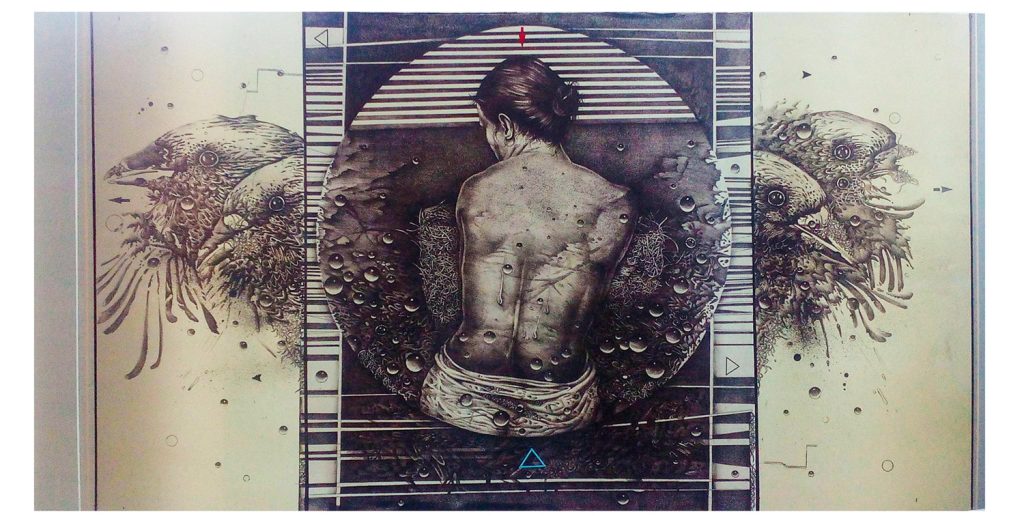
Ultimately, Artist Kamruzzaman operates as a quiet philosopher in an age of planetary noise.
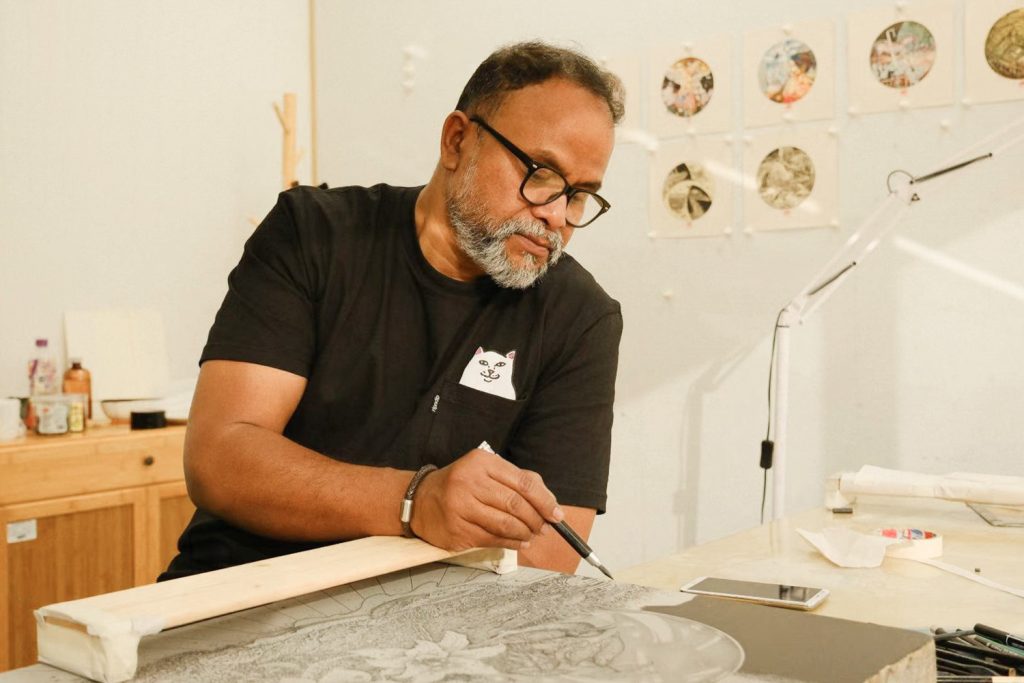
He uses the slow, deliberate craft of printmaking to stand against the rapid speed of modern consumption. His work invites the viewer to slow down, to study the intricate webs of his etched lines, and to feel the eternal connection between the soil beneath our feet and the starlight above. He reminds us that art is not merely an aesthetic luxury, but a spiritual language capable of carrying our deepest fears and highest aspirations. Through his hands, the print becomes an enduring record of survival, a poetic blueprint of human consciousness, and a testament to cosmic balance.