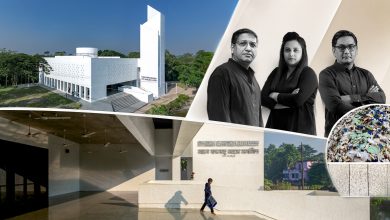
Fariha Khondoker, a student of the Bangladesh University of Engineering and Technology (BUET), developed her undergraduate thesis, “Interlacing Hub for Innovation, Dissemination and Recreation in Khulna,” under the supervision of Dr. S. M. Najmul Imam and Ahammad-Al-Muhaymin. The project reimagines the abandoned Khulna Textile Mill as a public destination where research, knowledge sharing, recreation and ecology come together.
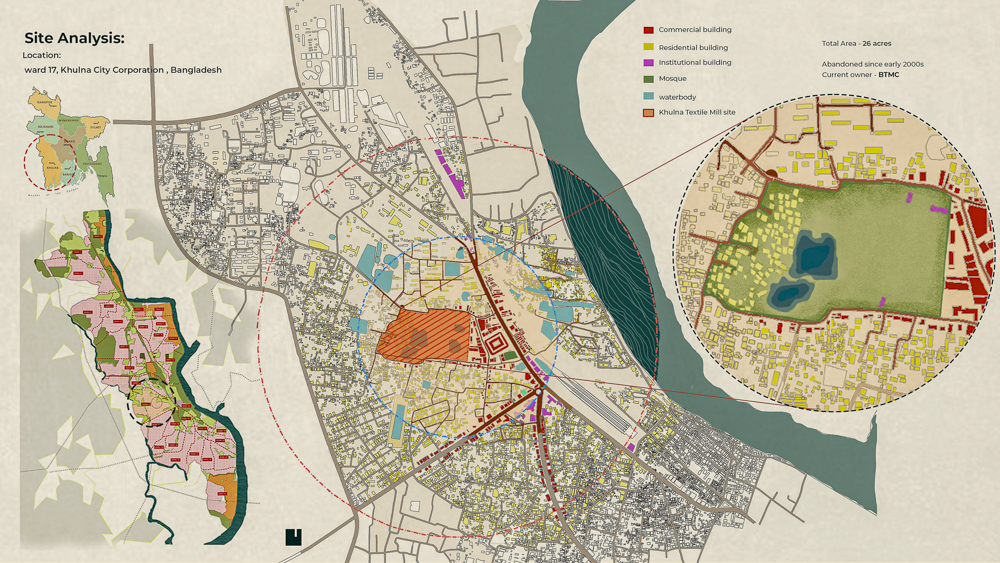
Located on the historic 26-acre industrial site, the proposal explores how architecture can preserve the memory of Khulna’s industrial past while creating new opportunities for innovation and public life.
The site once housed the Acharya Prafulla Chandra Textile Mill, established during the industrial growth of the 1930s. Following Bangladesh’s Liberation War, the mill declined, and the government later took ownership. A proposal to develop the site as a Textile Village in the early 1990s remained unrealised. As Khulna grew around it, industrial redevelopment became less practical. The Bangladesh Textile Mills Corporation subsequently proposed a Mangrove Eco Park to address the city’s shortage of open spaces. Fariha’s thesis takes this idea further, questioning whether a park alone could remain active and useful over time.
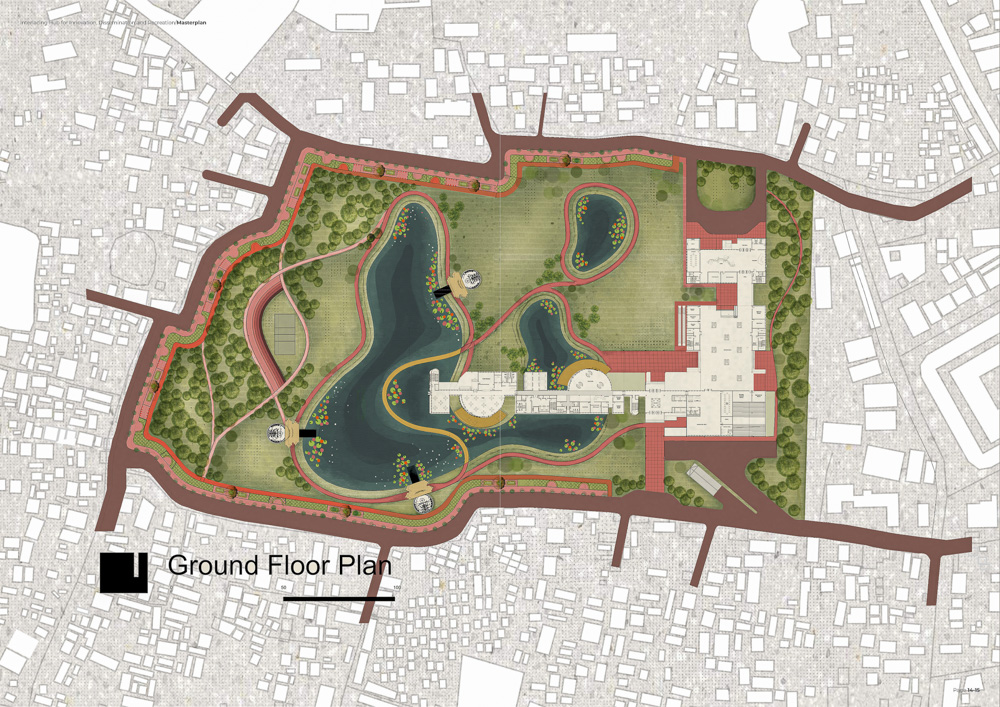
Through qualitative research into the needs of local people, the project identifies two important concerns: the lack of accessible green spaces and the limited availability of public venues for learning, collaboration and exchanging ideas. Its response is a place where researchers, scientists, students, entrepreneurs and visitors can meet beyond conventional academic settings.
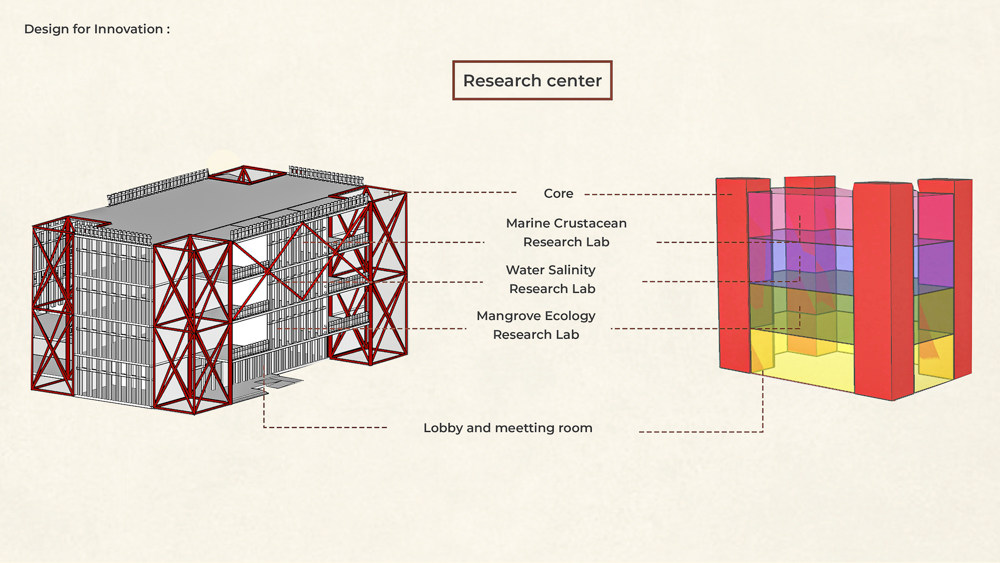
The design follows three connected programmes: innovation, dissemination and recreation. Inspired by the Sundarbans, the research facilities focus on honey, fisheries and saline water, exploring local resources and the challenges created by increasing salinity. Conference halls, auditoriums, exhibition spaces and shaded semi-open plazas allow research findings to reach students, professionals, policymakers and the wider public.
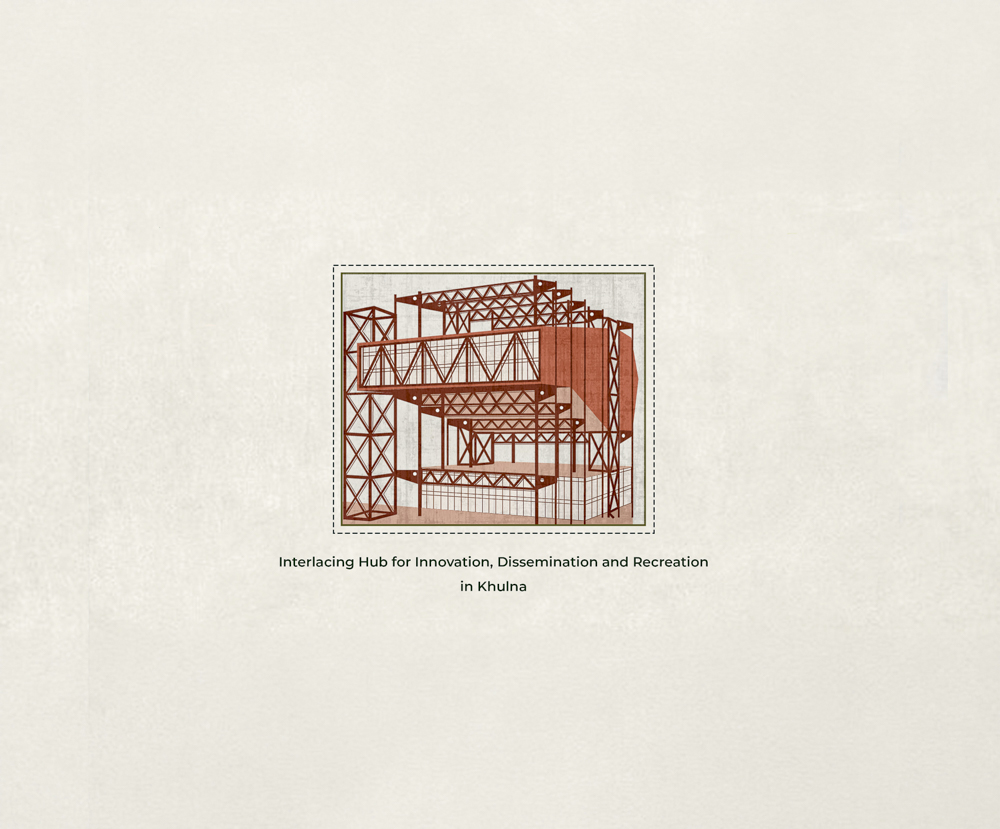
Recreation and hospitality complete the proposal. A world-class hotel, cultural venues, leisure facilities and landscaped outdoor areas provide places for visitors to relax and continue conversations beyond formal meetings. Together, these programmes are intended to keep the site active throughout the day while creating opportunities for economic sustainability.
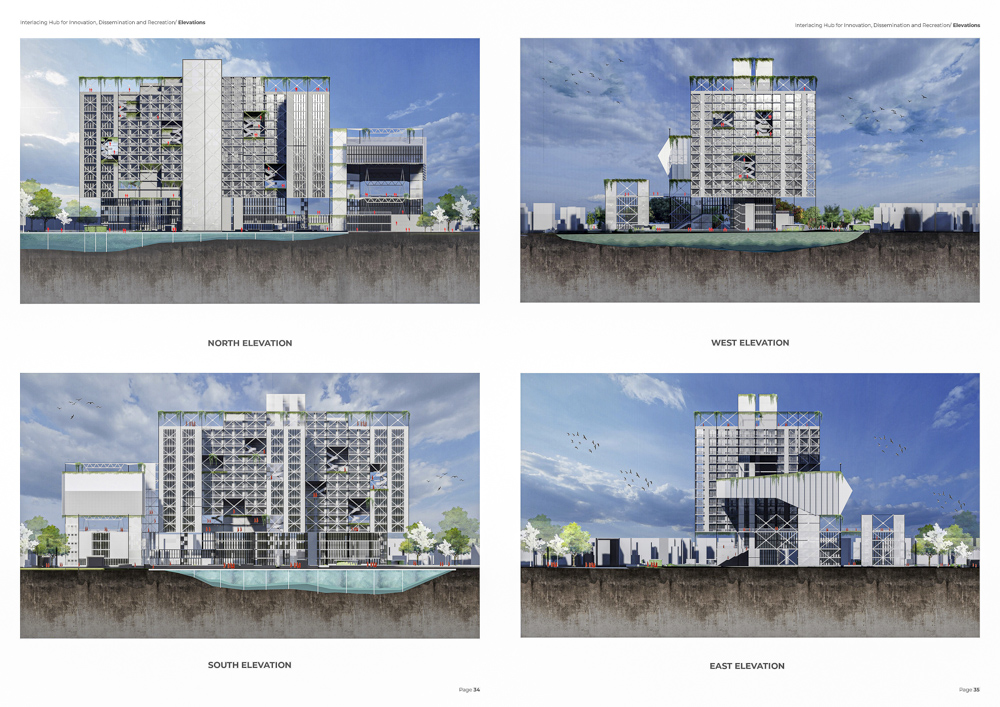
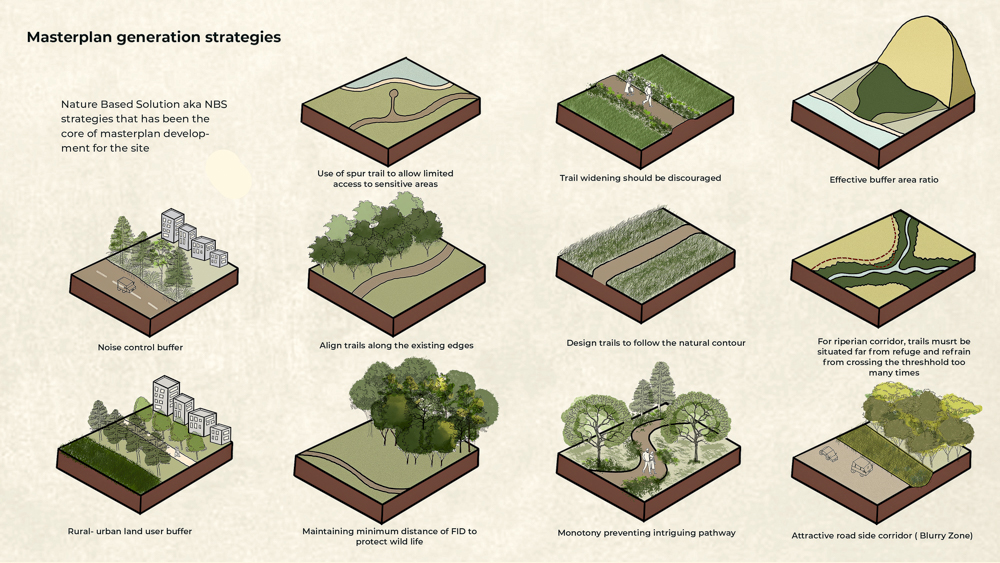
Public access remains central to the design. Around 10 percent of the site is occupied by buildings, leaving most of the land open for greenery and recreation. Parking is placed underground, while pedestrian promenades, cycling routes, public transport stops and organised drop-off points support movement through the campus. A continuous green buffer also helps separate visitors from the surrounding urban congestion.

The project considers both Khulna’s residents and visitors from outside the city. Its location along routes towards the Sundarbans and the UNESCO-listed Sixty Dome Mosque in Bagerhat offers an opportunity to connect innovation with the region’s cultural and ecological heritage. By giving an abandoned industrial site a new purpose, Fariha envisions Khulna moving beyond its former identity as an industrial centre towards a future shaped by knowledge, environmental care and wider connections.