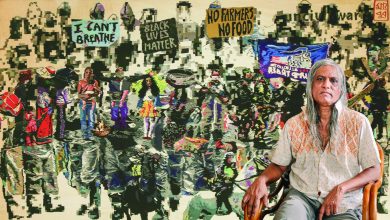
Public art in a developing nation carries a responsibility far heavier than mere decoration. For over five decades, Professor Hamiduzzaman Khan stepped into the vast spaces of Bangladesh and reengineered them. Following the foundational modernism laid down by Novera Ahmed in the 1950s, Hamiduzzaman became the most influential figure in expanding, democratizing, and popularizing public sculpture across Bangladesh. His artistic vocabulary was a flawless synthesis of raw expressionism and minimalist purity. Whether twisting scrap iron into the geometry of freedom fighters or washing canvas with spontaneous watercolors, Hamiduzzaman lived and breathed form.

Born on 16 March 1945 in the village of Sahasram, Kishoreganj, Hamiduzzaman Khan grew up amid the wetlands of rural Bengal, a landscape that later shaped his fluid paintings. He graduated in 1967 from the Faculty of Fine Art, University of Dhaka, then known as the East Pakistan College of Arts and Crafts, studying under Shilpacharya Zainul Abedin, Safiuddin Ahmed, Aminul Islam, and Mustafa Monwar. While the institutional style leaned toward academic realism, Hamiduzzaman gravitated toward a spontaneous approach to creation. Recalling his teachers, he shared this anecdote:
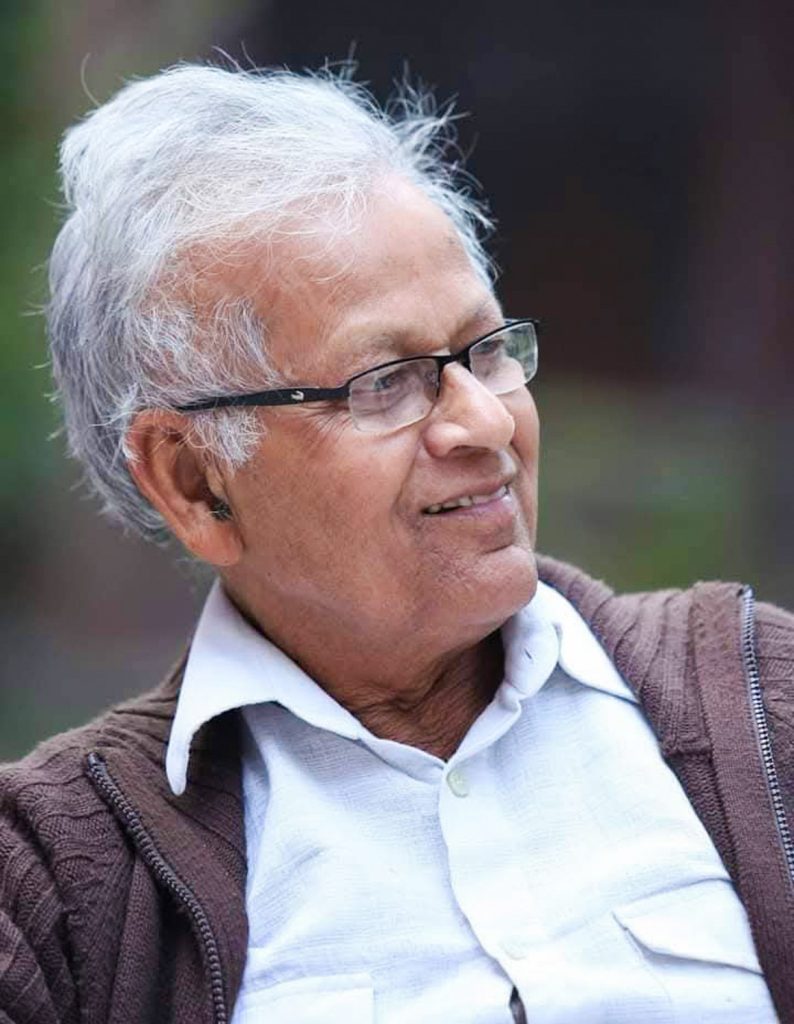
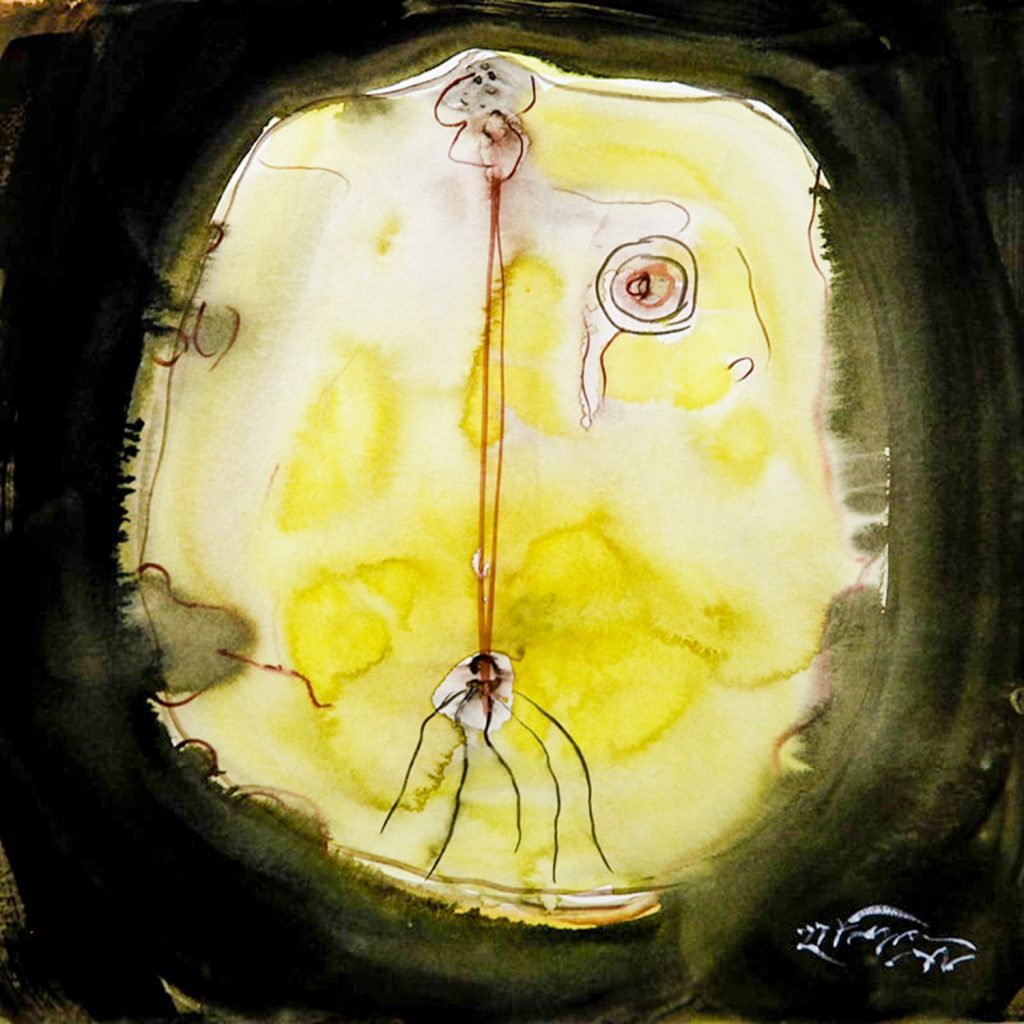
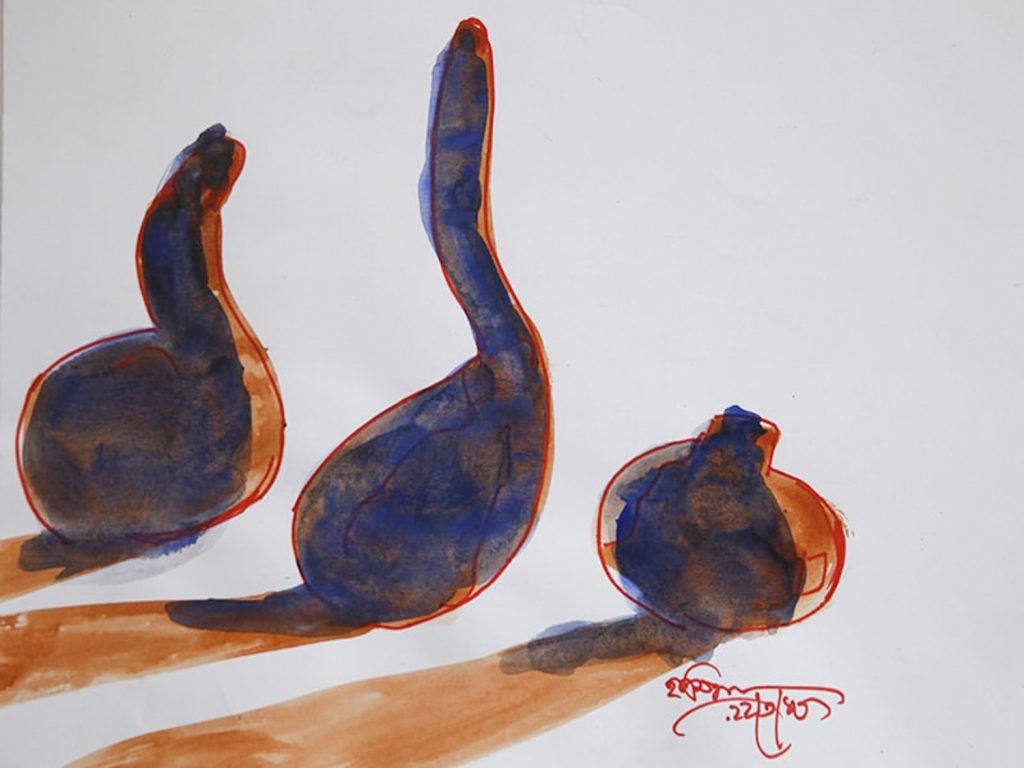
“I loved spontaneous art… It is Mustafa Monowar Sir who attracted me the most. I just loved his use of watercolor. One day, I slept in his class. Sir came to my bench, checked my sketchbook, and found no page vacant. Then he told everyone not to disturb me and stated that this boy will do better in future… My paintings are my silence, while my sculptures are my declarations.”

In 1970, Hamiduzzaman joined the sculpture department of the same faculty, a post he held for life. But it was 27 March 1971 that gave him his ultimate purpose. On the streets of New Market in Dhaka, he witnessed the aftermath of the Pakistani army’s massacre and was himself detained by soldiers that day before being released. The experience never left him; for the first two decades after independence, the Liberation War dominated his sculpture. He realized painting alone could not contain the narrative, and turned to building monuments that could withstand time. To refine his craft, he moved to India, earning his Master of Fine Arts from the Maharaja Sayajirao University of Baroda in 1976, the same year he won the Best Sculptor’s Award at the 1st National Sculpture Exhibition organized by the Bangladesh Shilpakala Academy for his piece Dorja. His early style was expressionistic, marked by jagged lines emulating the distress of war. Yet after travel to the United States and Europe in the early 1980s, his work evolved into minimalism marked by geometric lines, architectural alignment, and reverence for his materials.
His most iconic public monument, Sangsaptak, was begun in 1989 and stands at the Library Chottor of Jahangirnagar University, forged from brass sheets and steel, depicting a freedom fighter, mortally wounded and missing one arm and one leg, yet leaping forward for freedom, a symbol that inspires courage in students. Other war memorials followed: Jagrata Chowrangi in Gazipur, Bijoyketan at Dhaka Cantonment, Unity at the Krishibid Institution in Motijheel, Freedom at the Open University, Shadhinota Chirontone in Agargaon, Mrityunjoyee in Madaripur, and Ebarer Shongram Muktir Shongram, forming a record of a nation’s struggle and sacrifice. Jagrata Bangla, installed within the Ashuganj Fertilizer Factory complex, shows his ability to harmonize art with industry. His international breakthrough came with Steps, installed at Seoul’s Olympic Sculpture Park during the 1988 symposium.

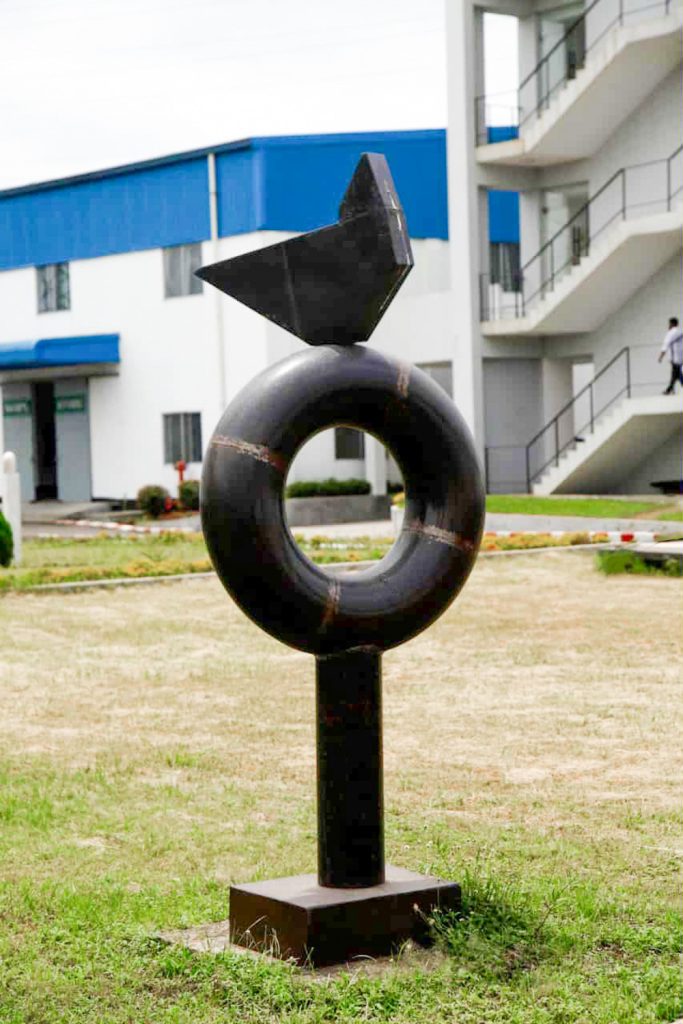
By the 1980s, Hamiduzzaman turned from war toward birds, a gentle symbol of shelter and peace. Flight became abstraction, the bird his second language, one of dreams and freedom amid the emptiness of loss. This vocabulary produced Pakhi Paribar at Bangabhaban, Pakhir Uranto at the United building in Gulshan, and Shantir Pakhi at Dhaka University’s TSC, alongside Flying Birds, suspended in the glass atrium of the World Bank office in Dhaka, its forms catching shifting light and turning the space into quiet tranquility. Driven by the dream of an open-air sanctuary where art could merge with nature
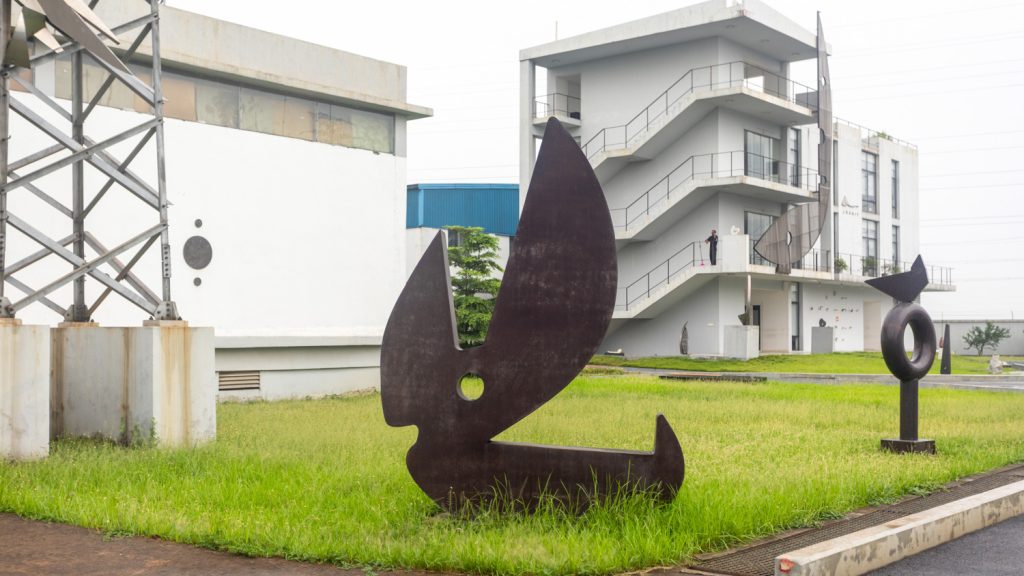
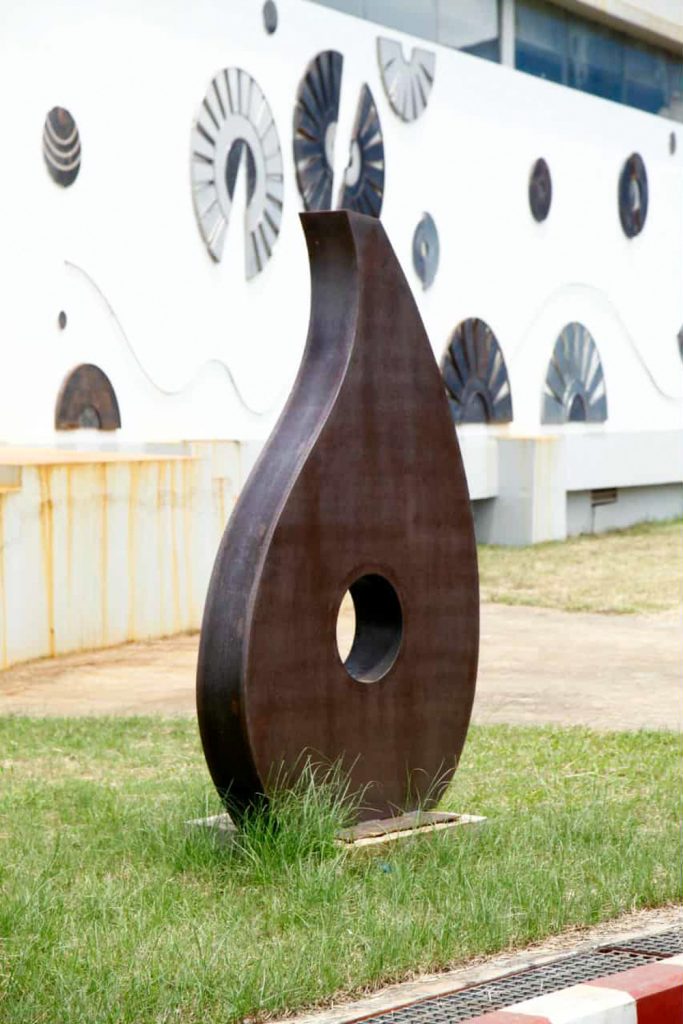
Hamiduzzaman worked with industrial patrons to establish the Hamiduzzaman Sculpture Park in Gazipur, Bangladesh’s first open-air sculpture garden, featuring dozens of his installations and the country’s longest continuous artistic mural.
A close associate recalled his dedication during its creation:
“He wanted to do something big. We had piles of unused metal, industrial scrap, and discarded pipes at our facility. With incredibly patient hands, Hamiduzzaman turned that heavy, unrefined scrap into pure art.”
In his final phase, Hamiduzzaman also designed The Industrial Tree, commissioned by the Meghna Group of Industries for the entrance of the Cumilla Economic Zone, a symbol of permanence and continuity. The work presents industry as a living system, where machines, steel, and human effort connect like the roots of a tree. He began the sculpture in 2024, preparing its design, materials, and placement, but passed away on 20 July 2025 before it was completed and later unveiled at the entrance of the CEZ.
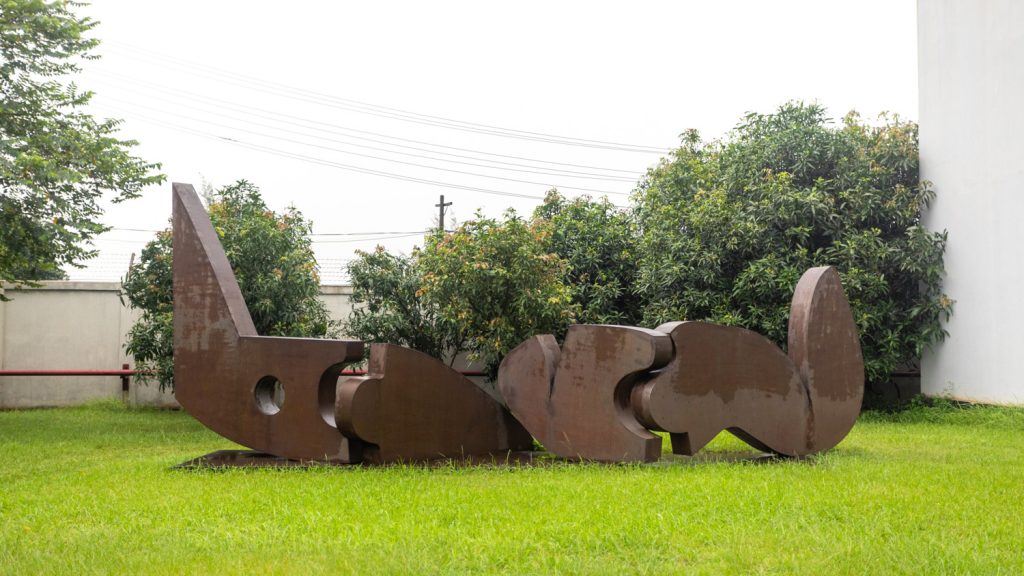
Throughout his career, Hamiduzzaman held over 47 solo exhibitions and created nearly 300 sculptures. He was honored with the Ekushey Padak in 2006, Bangladesh’s second highest civilian award, and elected a Fellow of Bangla Academy in 2023. In 1976, he received the Best Sculptor Award at the inaugural National Sculpture Exhibition organized by the Bangladesh Shilpakala Academy. In 2012, he was honoured with the S. M. Sultan Gold Medal by the Bangladesh Shilpakala Academy. Most recently, in 2024, he received a Special Honour and Gold Medal in recognition of his lifelong contribution to Bangladeshi art and sculpture, as one of Kishoreganj’s most distinguished sons.

Professor Hamiduzzaman Khan died on 20 July 2025 at 10:07 am at United Hospital, Dhaka, after being treated for dengue and pneumonia. He was 80. He left behind a nation transformed by his vision, a chronicler of war and an artist of birds, twin selves fused in bronze, steel, and stone. His work teaches creators to respect the soul of materials, letting steel be strong, marble be heavy, and watercolor be unpredictable. His final words serve as a mandate for the next generation of Bangladeshi makers:
I have visited many countries, but I never settled down there. My root is here. I believe that one day everyone will love this country with a deep intensity. I dream of a landscape where our built spaces, our art, and our nature communicate with absolute harmony. The work never truly stops; it simply changes form.