
Oscar Niemeyer
Oscar Niemeyer had a way of making concrete look almost weightless. His buildings curve, rise and unfold with a sense of movement that feels closer to sculpture than conventional construction. In Brasília, his white concrete forms became part of the city’s identity; in Niterói, a museum appears to hover above the landscape; at Pampulha, a small church helped introduce a new visual language to Brazilian architecture.
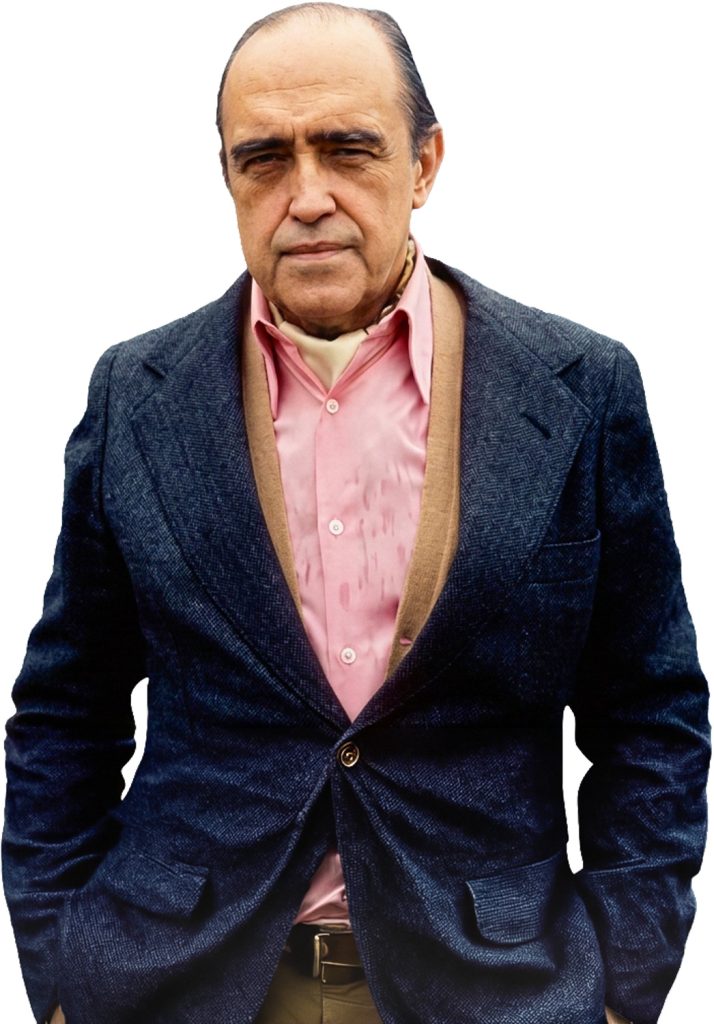
Born in Rio de Janeiro in 1907, Niemeyer spent more than seven decades drawing, designing and experimenting with form. Niemeyer came of age during a period when modern architecture was being shaped by clean lines, functional planning and geometric discipline. His collaboration with Lúcio Costa, his work with Le Corbusier and, later, his role in designing the monumental buildings of Brasília placed him firmly on the international architectural stage.
Across roughly 600 projects, Niemeyer developed a style that remained unmistakable.
Whether designing a presidential residence, a cathedral, a museum or a civic landmark, he gave each building a strong visual presence while keeping his forms remarkably fluid.

Niemeyer emerged during the rise of modernism, when architecture was embracing functionalism, geometry and industrial materials. His early education at the Escola Nacional de Belas Artes in Rio de Janeiro gave him a foundation in art and architecture. His professional journey brought him into the studio of Lúcio Costa, where he contributed to the design of the Palácio Gustavo Capanema in Rio de Janeiro during the 1930s.
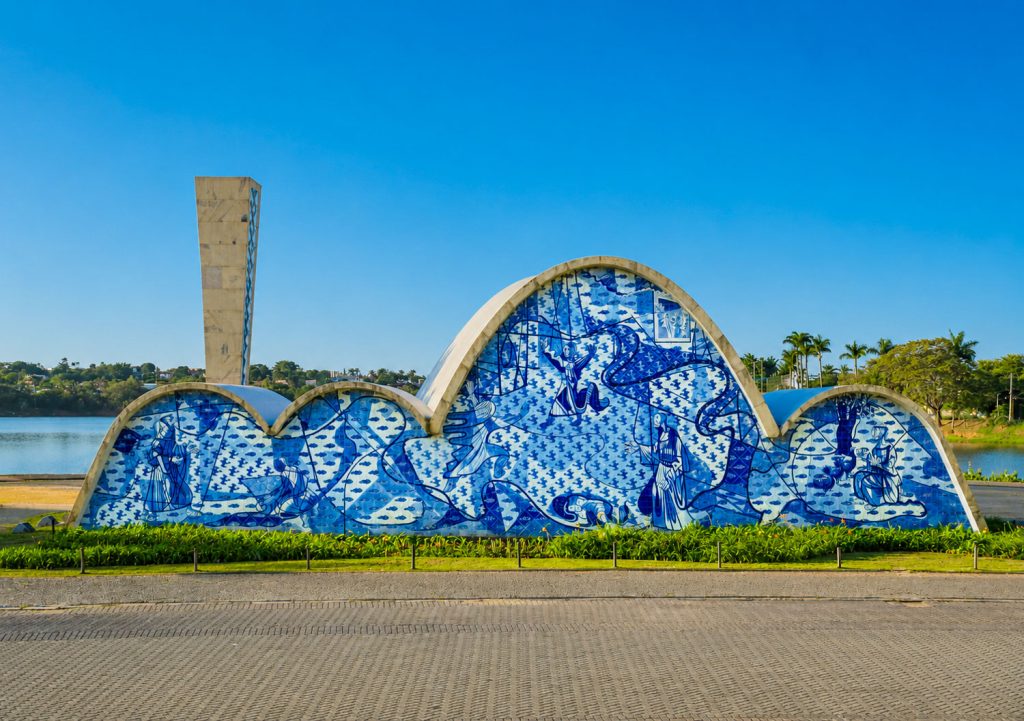
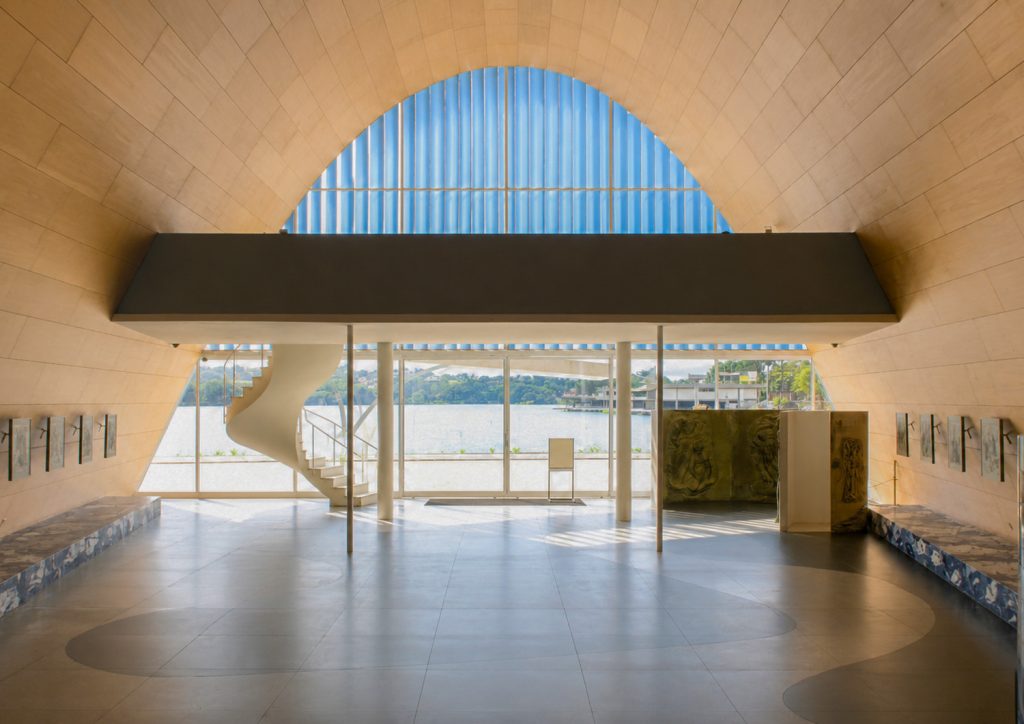
In 1940, Juscelino Kubitschek, then mayor of Belo Horizonte and later president of Brazil, invited Niemeyer to create a cultural and leisure complex around the artificial Pampulha Lake. Completed and inaugurated in 1943, the Pampulha Modern Ensemble became the project that announced Niemeyer as an original architectural voice.
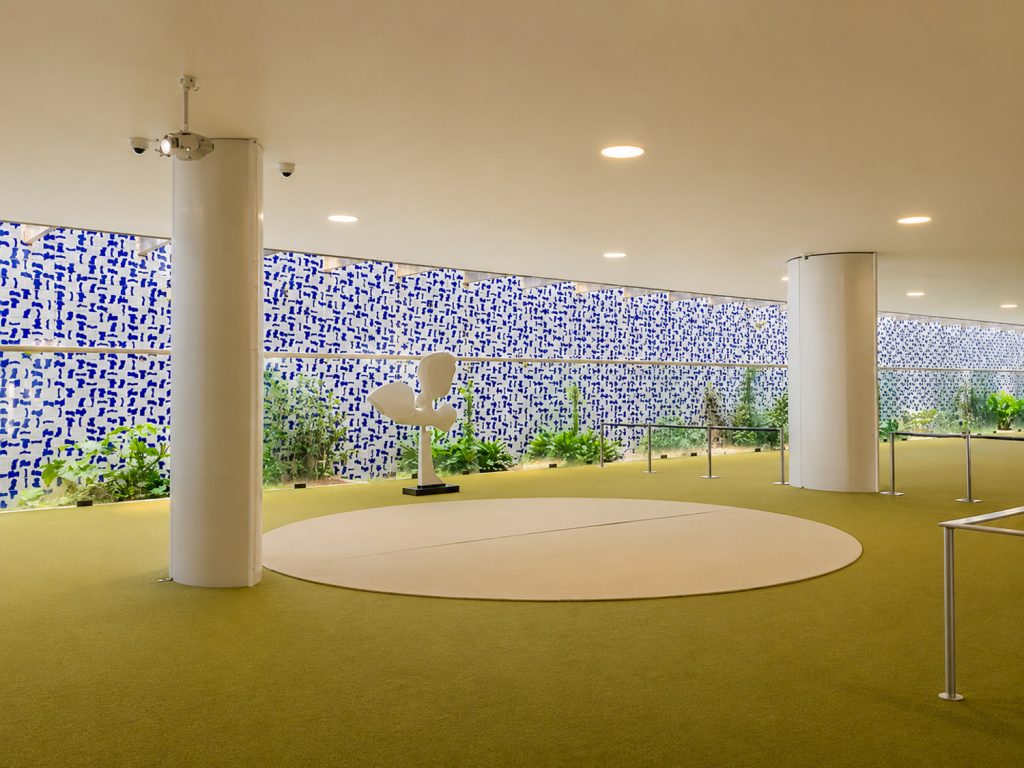
The ensemble brought together architecture, landscape, art and water as a single experience. Its landmarks include the Church of Saint Francis of Assisi, Casa do Baile, the Pampulha Art Museum and the Yacht Tennis Club.
The Church of Saint Francis of Assisi became the centrepiece. Its sweeping concrete vaults created an organic silhouette, while Cândido Portinari’s blue-and-white tile murals added another layer of artistic expression. Roberto Burle Marx shaped the landscape, while engineer Joaquim Cardozo helped translate Niemeyer’s daring forms into structural reality.
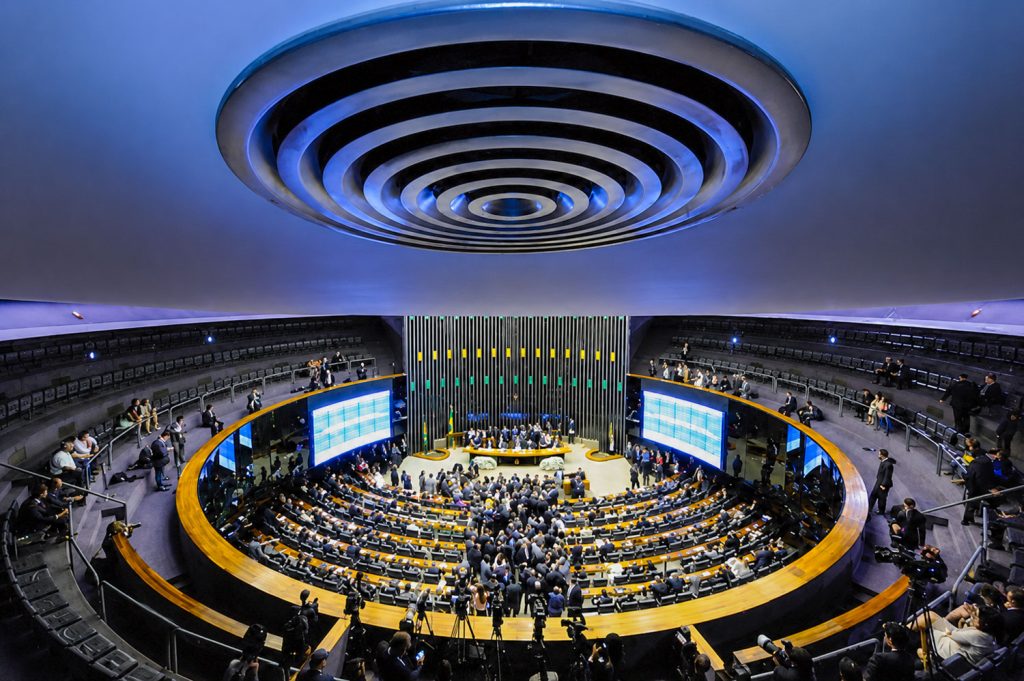
Pampulha represented a new chapter in modern architecture one where local landscape, Brazilian culture and modern technology could exist in complete harmony. In 2016, UNESCO inscribed the Pampulha Modern Ensemble as a World Heritage Site.
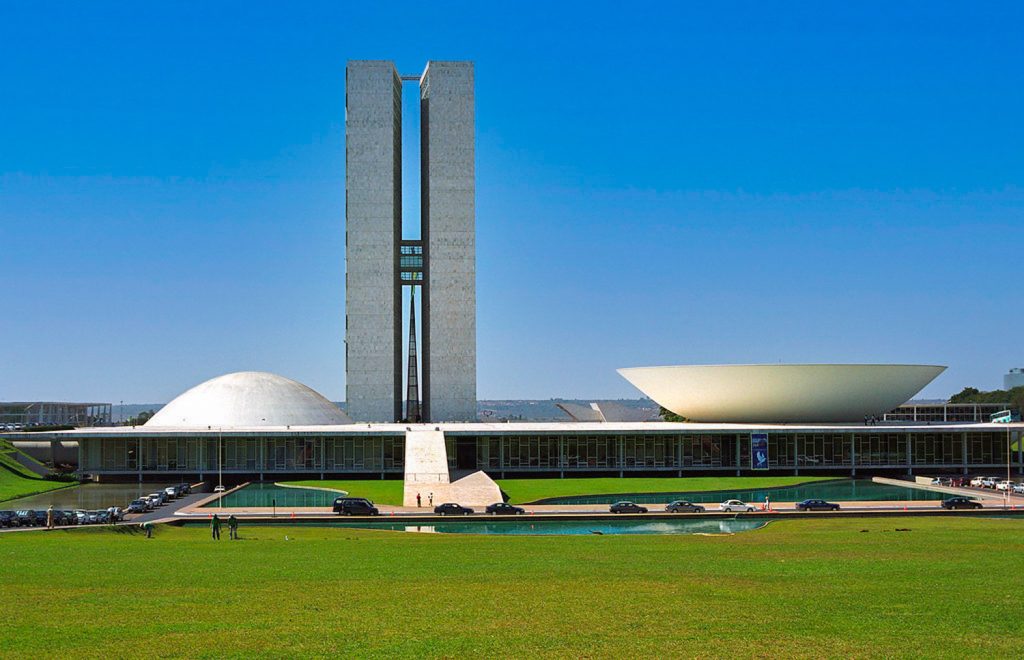
The National Congress became one of his most recognisable works. Completed in 1960, the building presents two contrasting domes beside a pair of slender office towers. The Senate occupies the concave dome, while the convex dome houses the Chamber of Deputies. Together, these forms create a striking composition against the vast open space of Brasília.
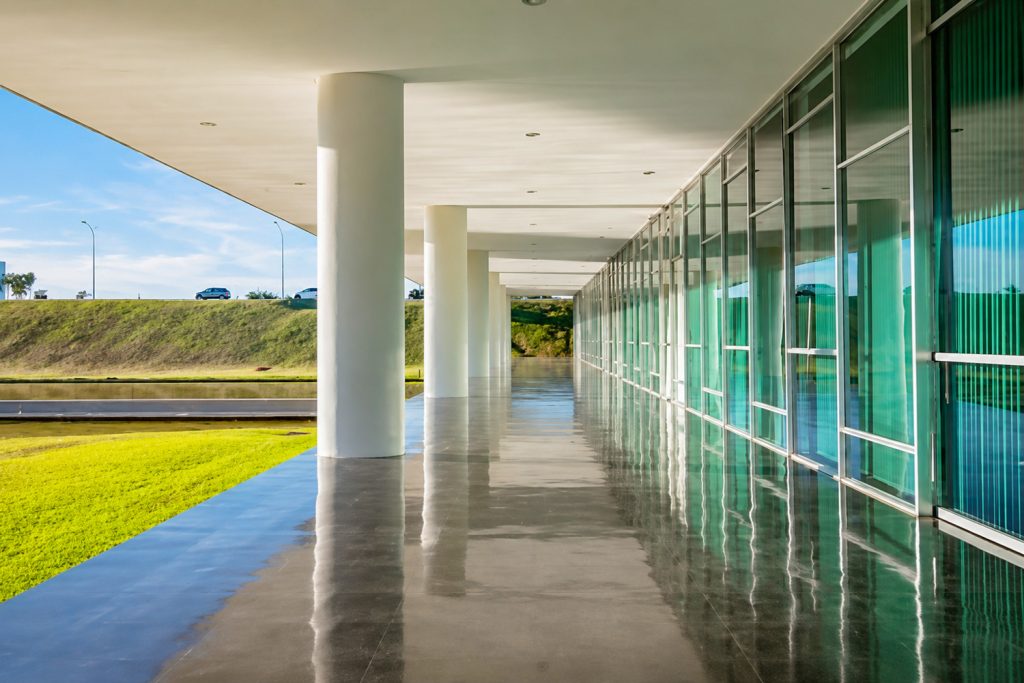
The architecture carries a sense of ceremony while maintaining remarkable visual lightness. Long ramps, expansive plazas, reflecting pools and clean geometric forms create a civic landscape where architecture and public life meet.
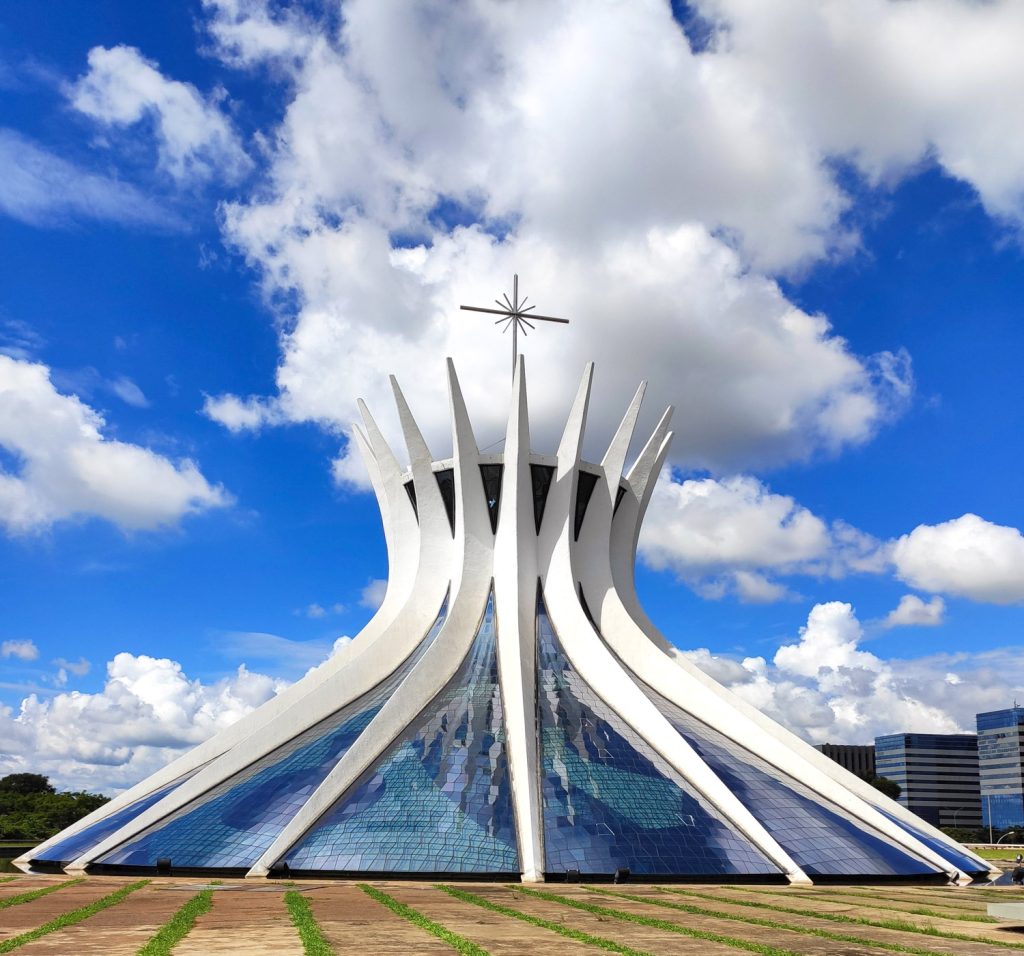
The Cathedral of Brasília designed by Niemeyer and structurally completed in 1960, the cathedral was inaugurated in its completed form in 1970. Sixteen curved reinforced-concrete columns rise dramatically toward the sky, forming a hyperboloid structure that resembles hands lifted in prayer.
Approximately 70 metres in diameter, the circular interior is surrounded by vast areas of stained glass. Here, structure becomes ornament, enclosure becomes light, and engineering becomes an emotional experience.
The Cathedral demonstrates one of Niemeyer’s most enduring ideas: architecture can move people through space as much as it shelters them.
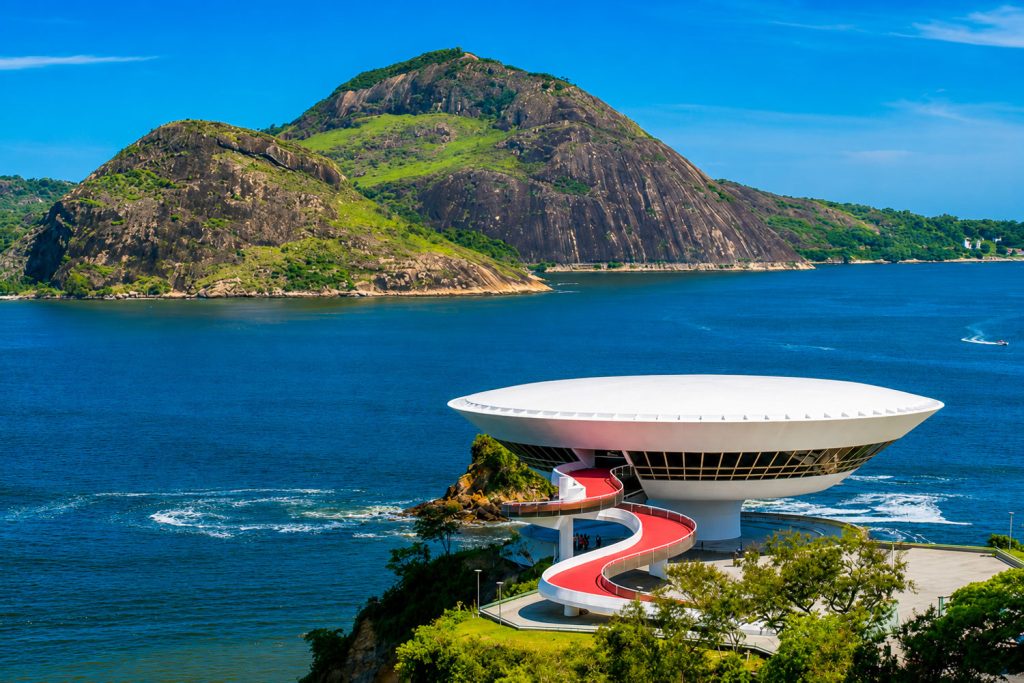
Decades after Brasília established his international reputation, Niemeyer continued to explore new possibilities. The Niterói Contemporary Art Museum, completed in 1996, stands as one of the clearest examples of his lifelong fascination with sculptural form.
Perched above the cliffs of Niterói overlooking Guanabara Bay, the museum resembles a futuristic saucer emerging from the landscape. Its circular structure rises from a central support, while a sweeping red access ramp creates a dramatic procession towards the entrance.
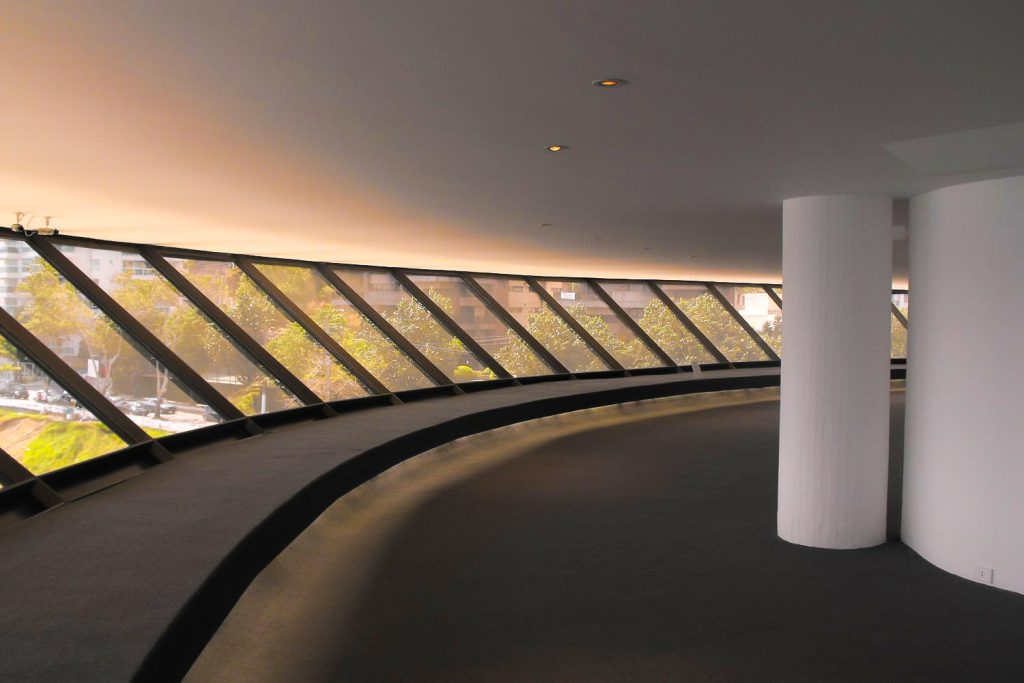
The building frames panoramic views of Rio de Janeiro and the surrounding mountains. Its reflective pool strengthens the illusion of weightlessness, allowing the concrete structure to appear almost suspended above the ground.
Completed when Niemeyer was approaching 90, the museum became a remarkable statement of creative vitality. It showed that his architectural imagination continued to evolve with time.

The Palácio da Alvorada, completed in 1958, represents a more refined and serene side of Niemeyer’s architecture. As the official residence of the President of Brazil, it became the first government building inaugurated in Brasília.
Its name, meaning “Palace of Dawn,” captured the symbolism of a new beginning for Brazil. The building appears to float above the landscape, framed by elegant curved marble-faced concrete columns and expansive glass walls.
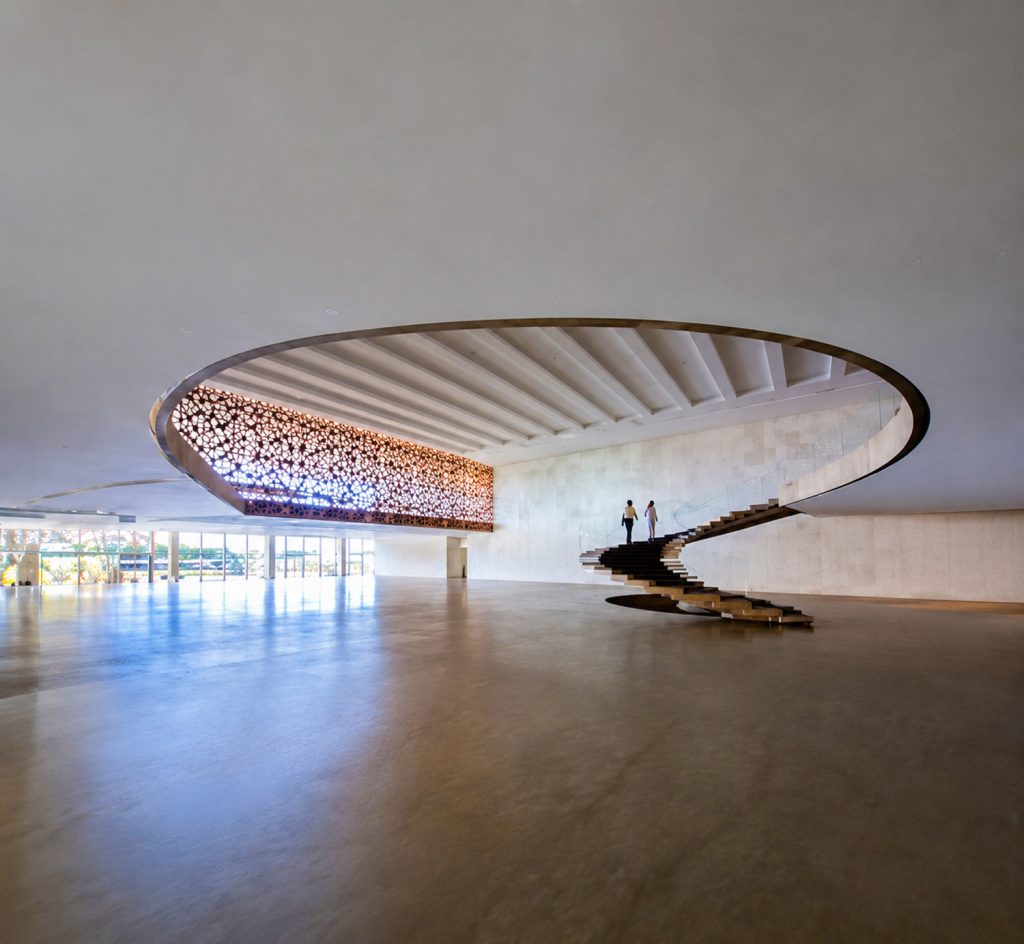
The iconic columns taper towards their ends, creating an extraordinary sense of lightness. Behind them, transparent glass connects the interior with gardens and the surrounding landscape. A large reflecting pool further enhances the composition, mirroring the white architectural forms in the water.
Niemeyer’s contribution reached far beyond individual buildings. Through Brasília, he helped create one of the most important architectural and urban experiments of the modern era. Working alongside urban planner Lúcio Costa, he gave physical form to the civic heart of Brazil’s new capital.
His buildings in Brasília including the National Congress, Cathedral, Palácio da Alvorada, Palácio do Planalto and Supreme Federal Court created a unified visual identity for the city. Brasília received UNESCO World Heritage status in 1987, recognising its exceptional modernist urban and architectural character.
His international work expanded this influence further. He collaborated with Le Corbusier and other architects on the United Nations Headquarters in New York and designed projects across Europe, Africa and the Middle East.
His achievements received some of architecture’s highest honours. In 1988, he received the Pritzker Architecture Prize for his extraordinary contribution to architecture. The jury celebrated the lyrical quality and invention within his work. He later received the Prince of Asturias Award for the Arts, the RIBA Royal Gold Medal and Japan’s Praemium Imperiale, among other international recognitions.

Niemeyer continued designing well into his later years, producing major works such as the Niterói Contemporary Art Museum and the Oscar Niemeyer Museum. He remained creatively active for almost eight decades before his death in Rio de Janeiro on December 5, 2012, just ten days before his 105th birthday.
Oscar Niemeyer’s architecture continues to stand as a celebration of movement, imagination and freedom.
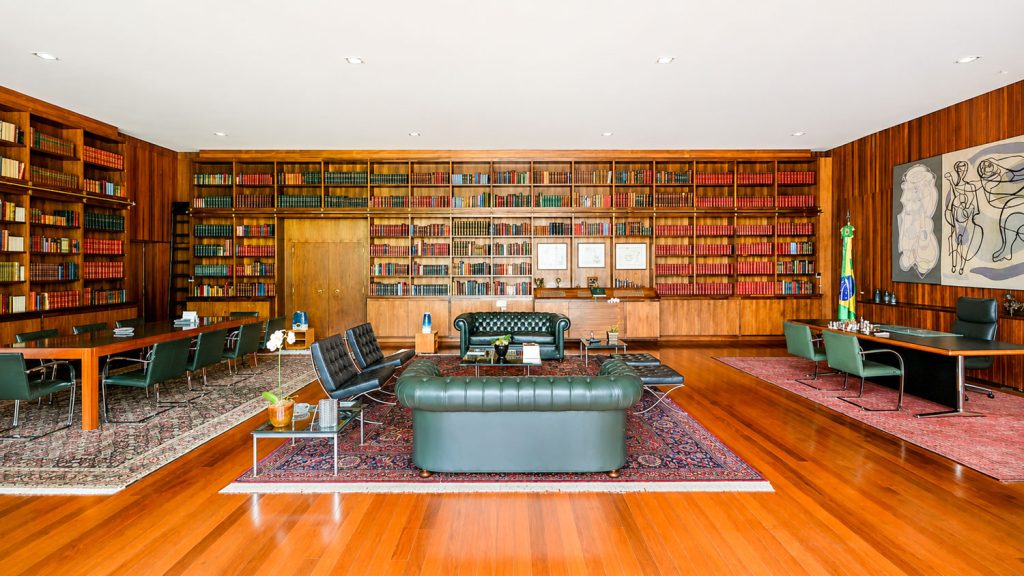
His concrete curves rise across Brazil like frozen waves, graceful gestures and pieces of sculpture shaped by sunlight.