The Barcelona Pavilion was created for the 1929 International Exposition as Germany’s official pavilion, designed to welcome King Alfonso XIII and international guests. From the beginning, the intention was clear: this would be a space that represents a new cultural direction through architecture itself. Designed by Ludwig Mies van der Rohe in collaboration with Lilly Reich, the pavilion introduced a refined and thoughtful expression of modernism. It was meant to represent a new Germany after World War I calm, progressive, and forward-looking.
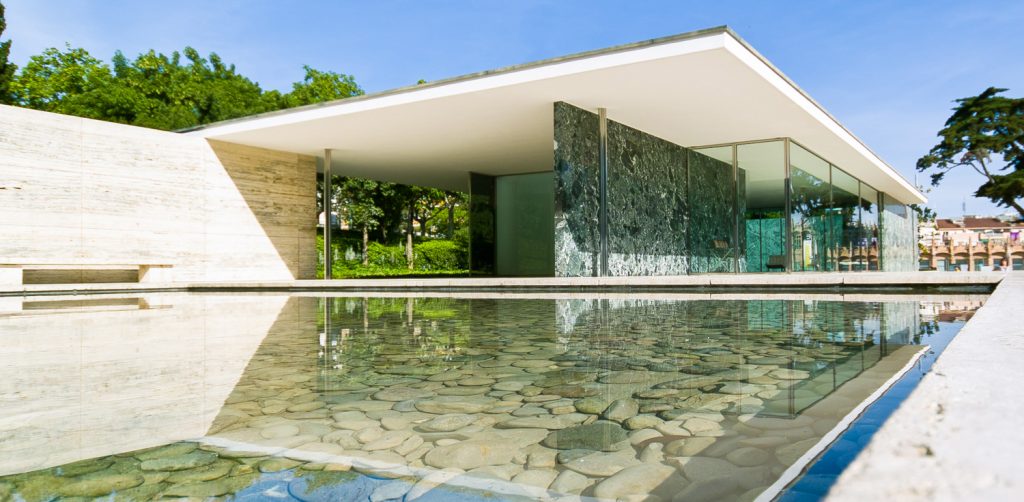
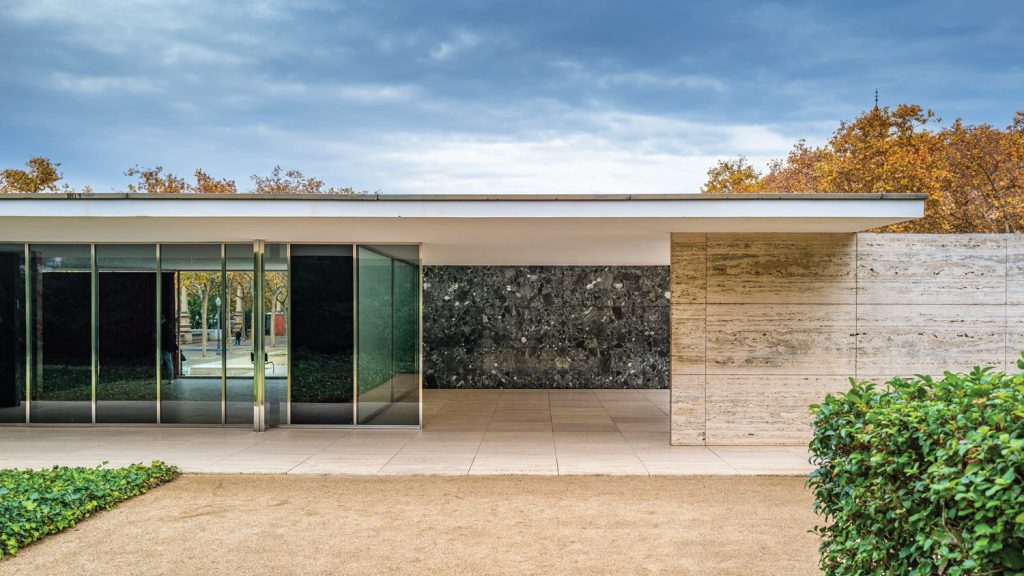
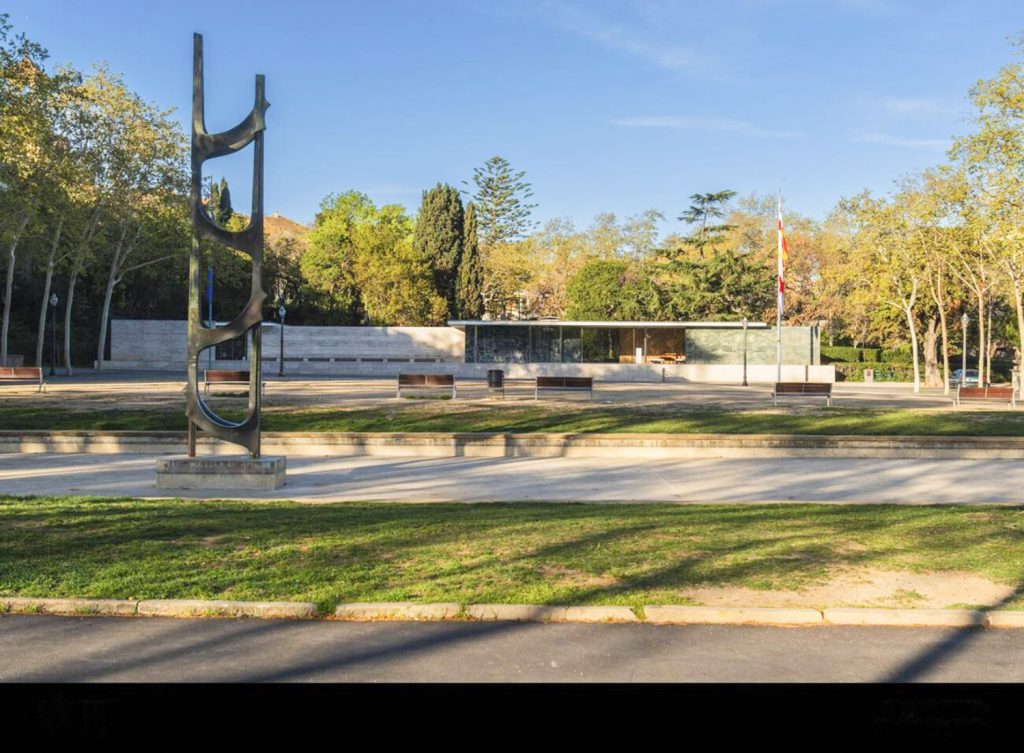
Positioned at the foot of Montjuïc, the pavilion sits on a raised travertine plinth that gently separates it from the surrounding landscape. Its long, horizontal form is defined by a thin, flat roof plane that extends across both interior and exterior spaces. Supported by slender cruciform steel columns, the roof appears light and balanced, creating a sense of openness throughout the structure.
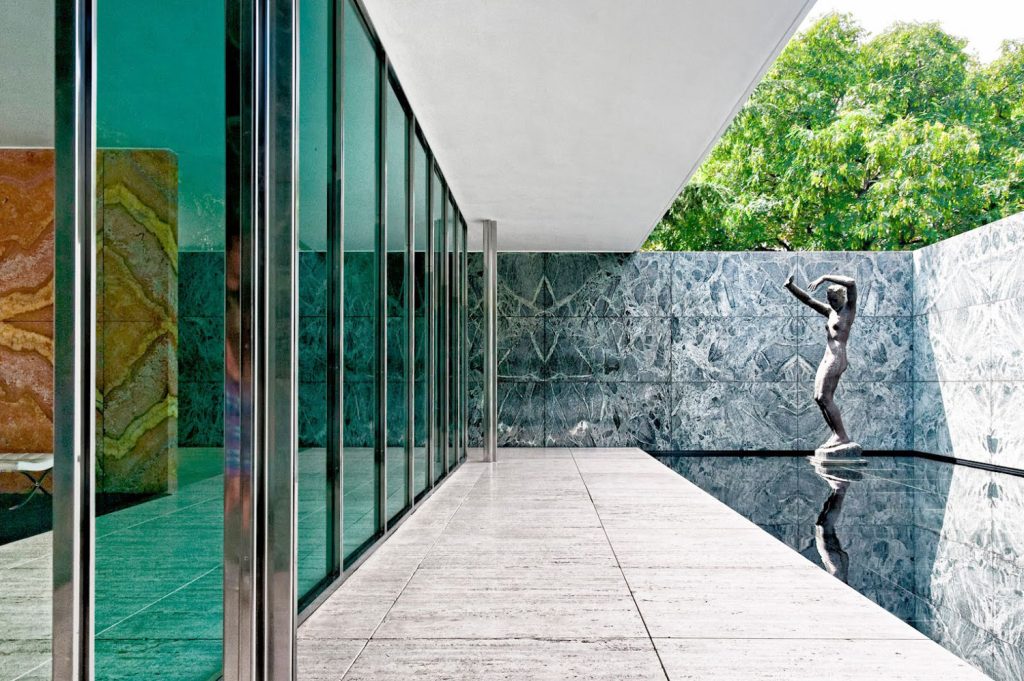
The design is based on a carefully organized grid system that governs the placement of columns, walls, and paving. This underlying structure brings clarity and proportion to the entire composition. The layout follows the idea of a free plan, where walls act as independent planes rather than enclosed boundaries. These planes guide movement through the pavilion, shaping a sequence of spaces that unfold gradually.
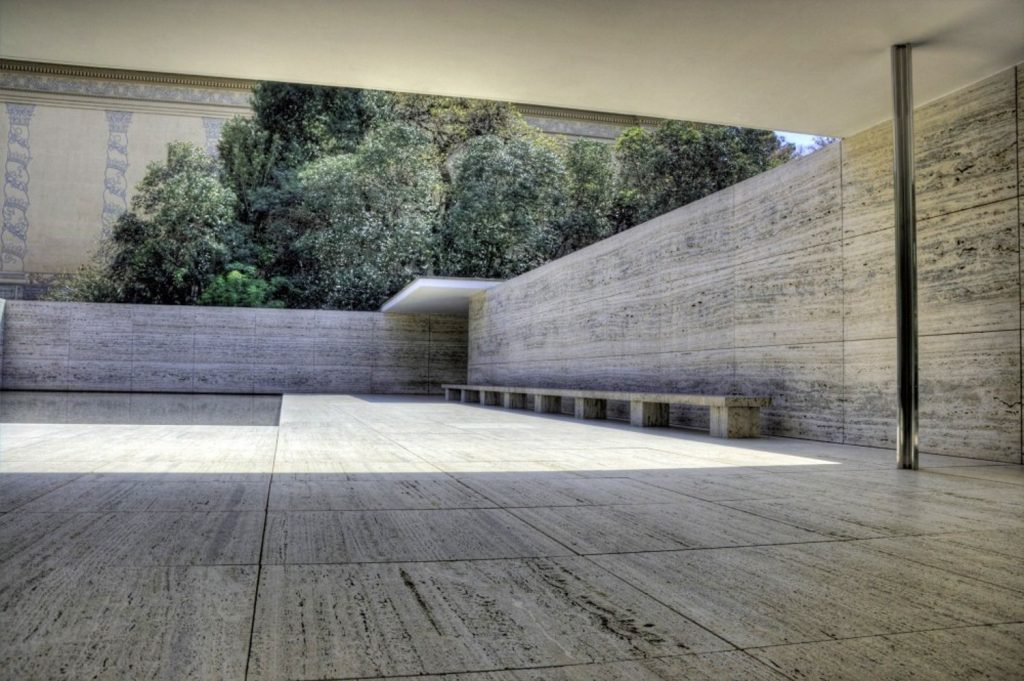
As visitors move through the pavilion, the experience is shaped by shifting perspectives. Narrow passages open into wider areas, and framed views appear through the placement of walls and columns. This creates a continuous flow where movement feels natural and unforced. The spatial arrangement encourages a slow and attentive way ofexperiencing architecture.
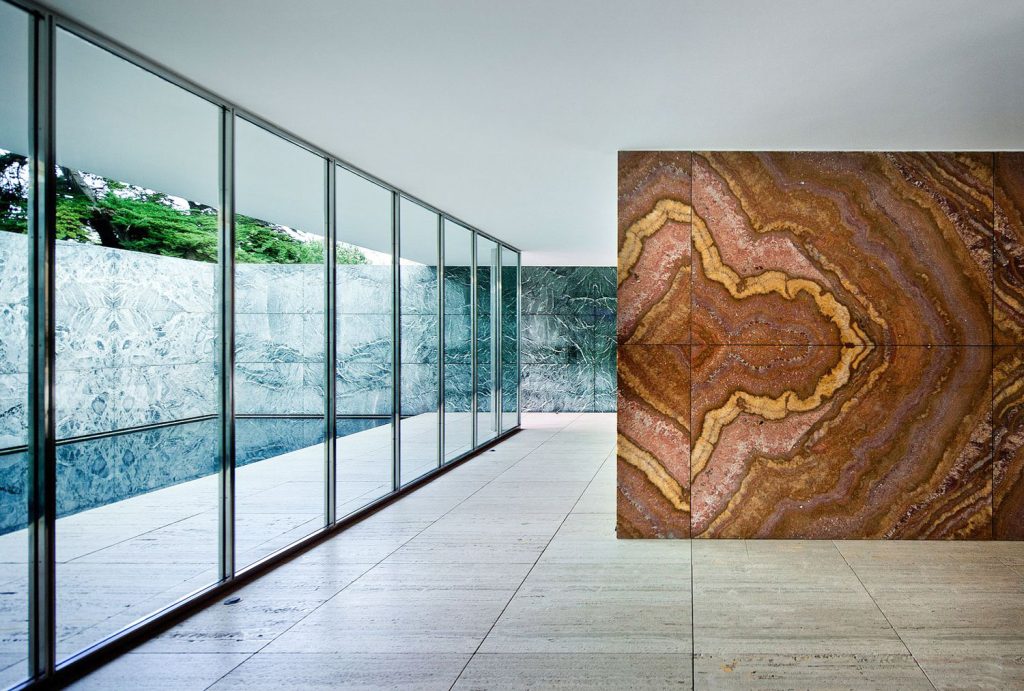
Material selection plays a central role in defining the pavilion’s atmosphere. A combination of industrial materials, such as steel, chrome, and glass is paired with rich natural stones, including travertine, green Alpine marble, and golden onyx. These materials are chosen for their texture, color, and reflective qualities. Light interacts with each surface in a subtle way, adding depth and warmth to the space.
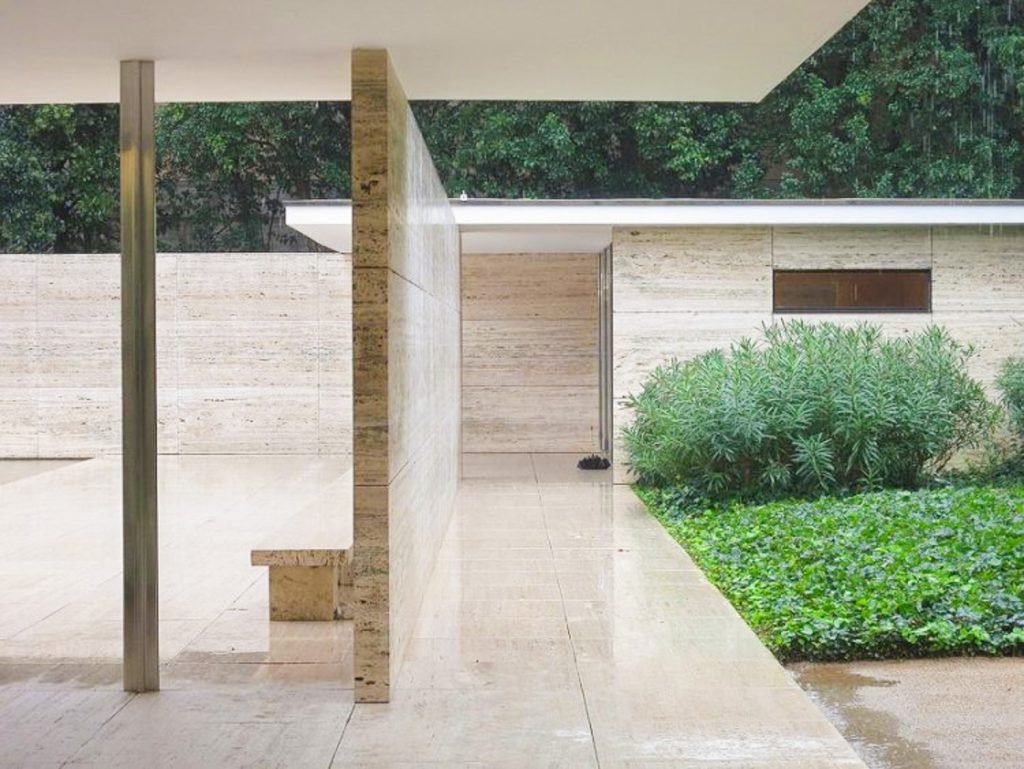
Travertine is used extensively across the plinth and flooring, creating a unified base for the structure. Under natural light, it carries a soft glow that enhances the overall environment. Marble panels are carefully arranged to highlight their natural patterns, introducing a sense of rhythm and visual continuity. Glass surfaces further extend the space, allowing reflections and transparency to become part of the architectural experience.
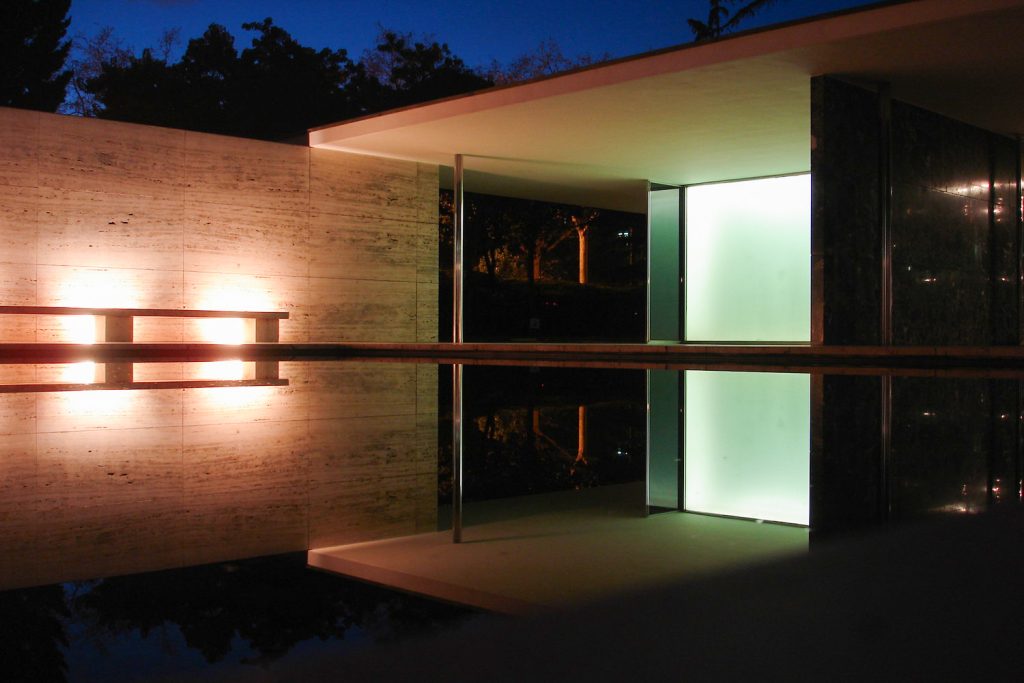
Water elements are integrated into the design through two reflecting pools. One extends along the pavilion’s main axis, while the other sits within a more enclosed area.
These pools mirror the materials and sky, adding another layer of spatial depth. In the smaller pool stands Georg Kolbe’s sculpture Alba (Dawn), its organic form contrasting with the pavilion’s clean geometry while enhancing its reflective qualities.
Furniture was designed specifically for the pavilion, including the well-known Barcelona Chair. Its form reflects the same design principles clarity, proportion, and attention to detail seen throughout the building. Every element within the pavilion contributes to a cohesive architectural language.
Originally intended as a temporary structure, the pavilion was dismantled in 1930 after the exposition. Its influence, however, remained significant in the development of modern architecture. In 1986, it was reconstructed on its original site by a group of Catalan architects, allowing the pavilion to be experienced once again in its intended form.
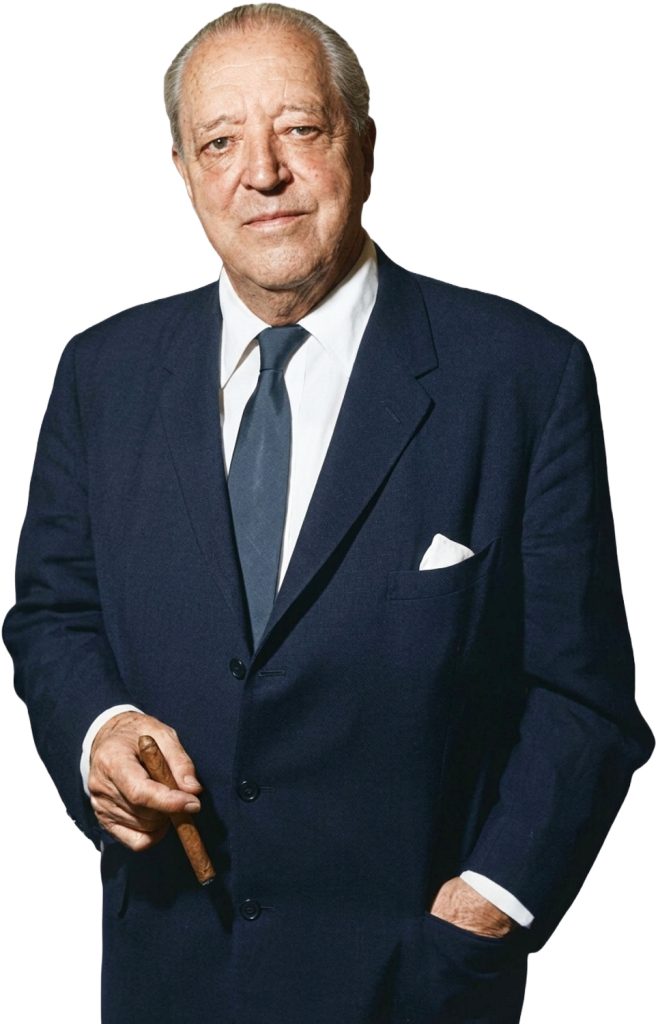
Mies van der Rohe (1886–1969) was one of the leading figures of modern architecture. Born in Germany, he trained through practical experience rather than formal academic study, working with influential architects like Peter Behrens. Before the Barcelona Pavilion, Mies had already gained recognition in Germany for his forward-thinking work. His involvement in the 1927 Werkbund Exhibition in Stuttgart helped establish his reputation, which led to his appointment as the artistic director for the German section of the 1929 International Exposition in Barcelona.
The collaboration between Mies van der Rohe and Lilly Reich played an essential role in shaping the pavilion’s identity. Their shared approach to material, proportion, and spatial composition resulted in a project that continues to inform architectural thinking today.
The Barcelona Pavilion remains an important example of how architecture can be expressed through precision, materiality, and thoughtful design. Its clarity of form and attention to detail continue to offer a lasting reference for contemporary practice.